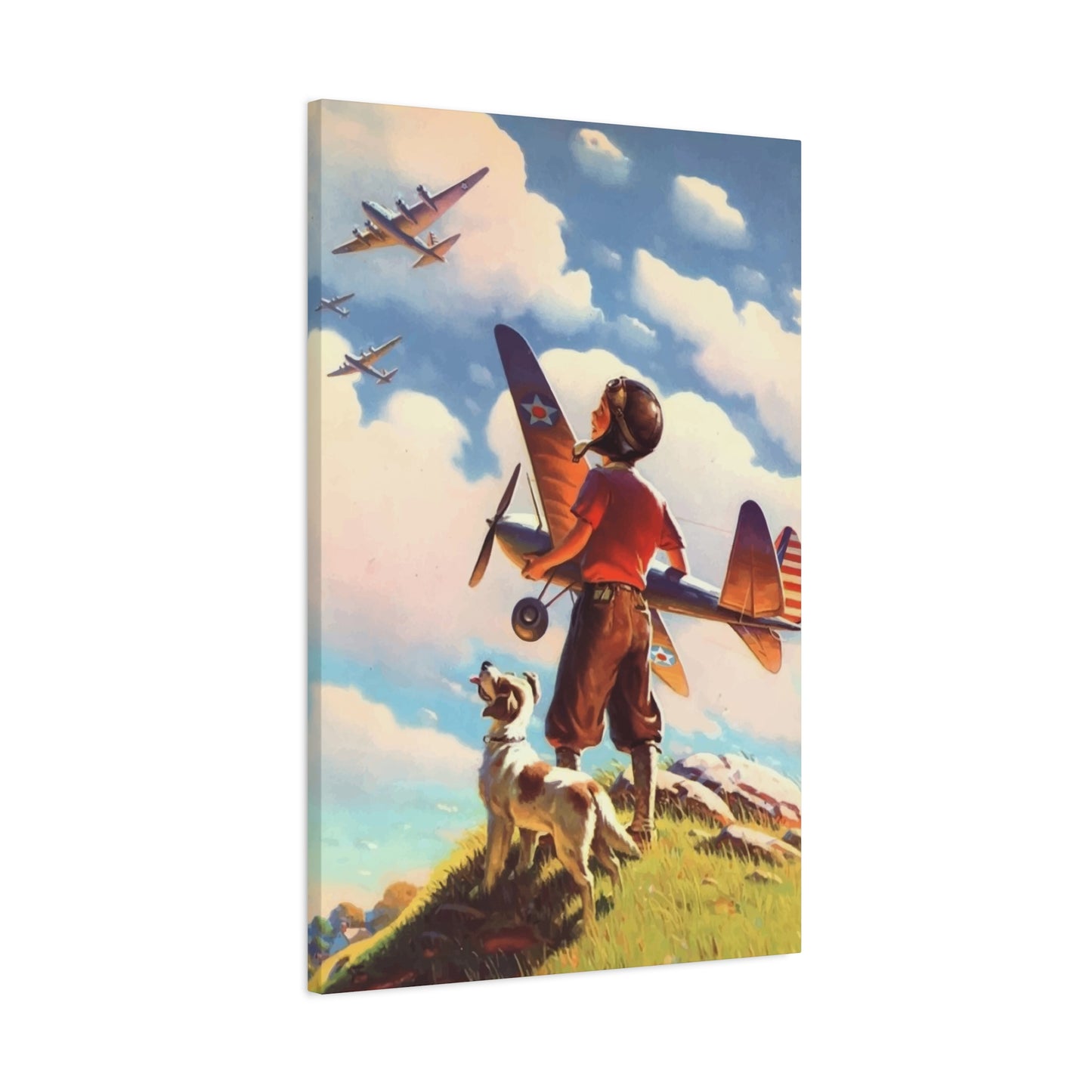
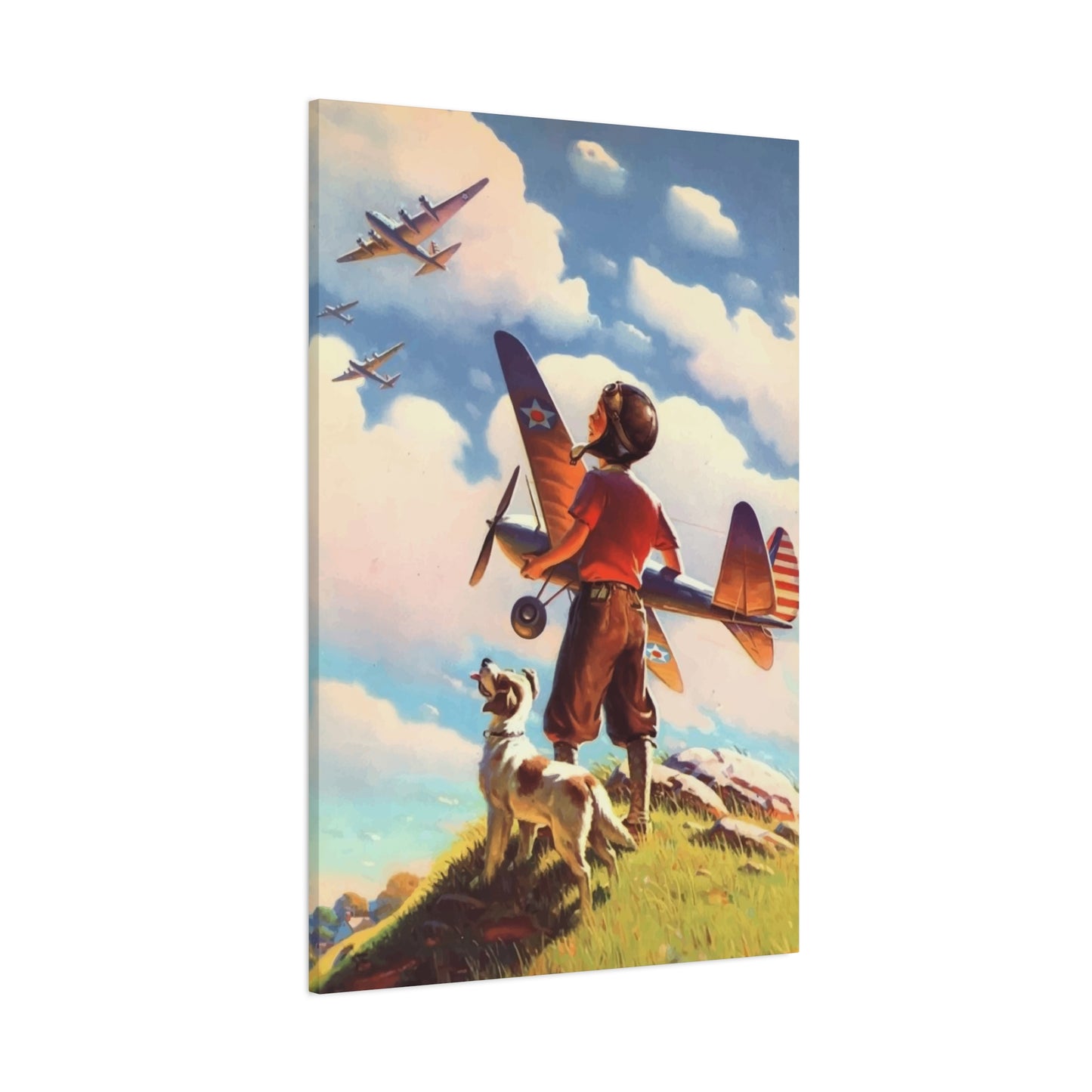
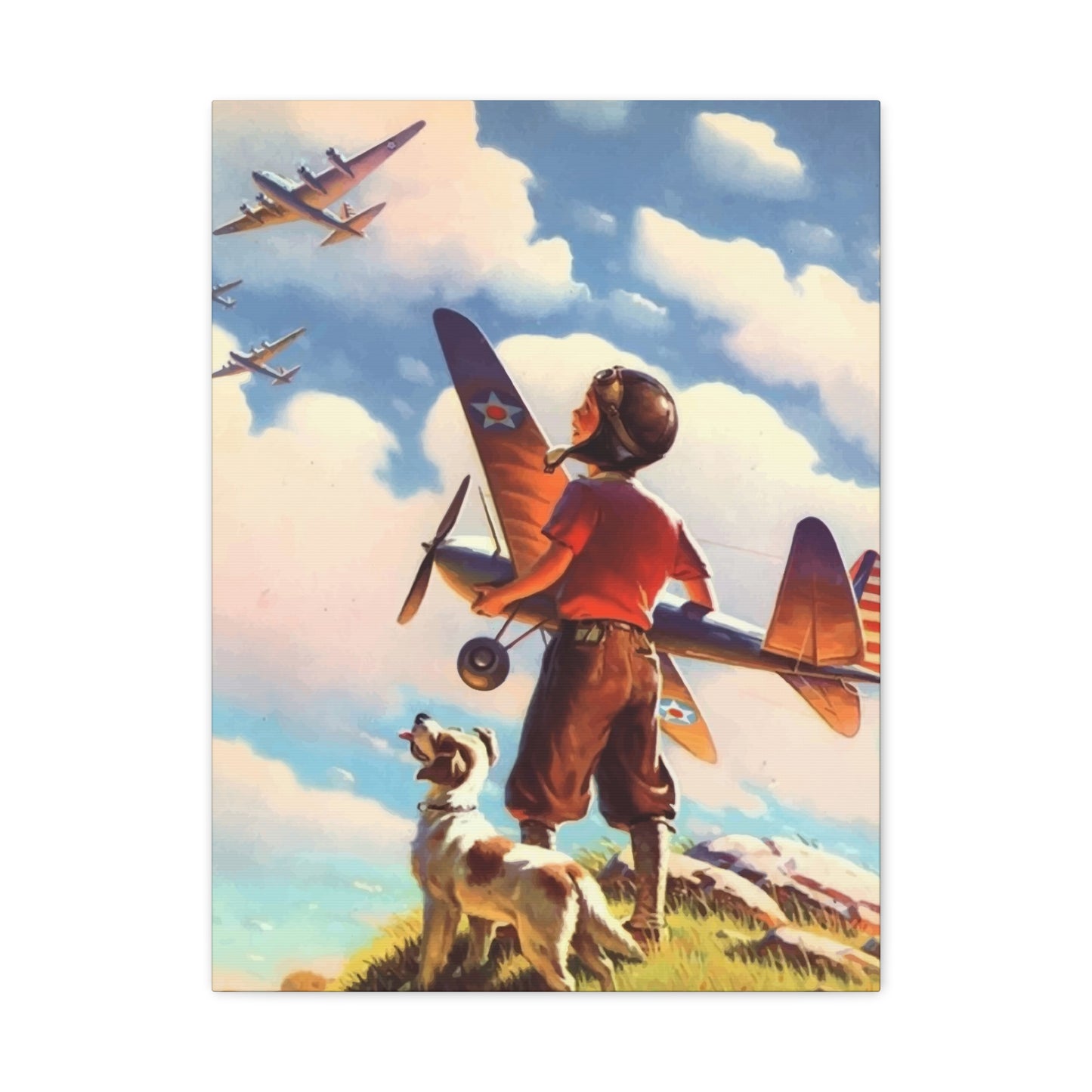
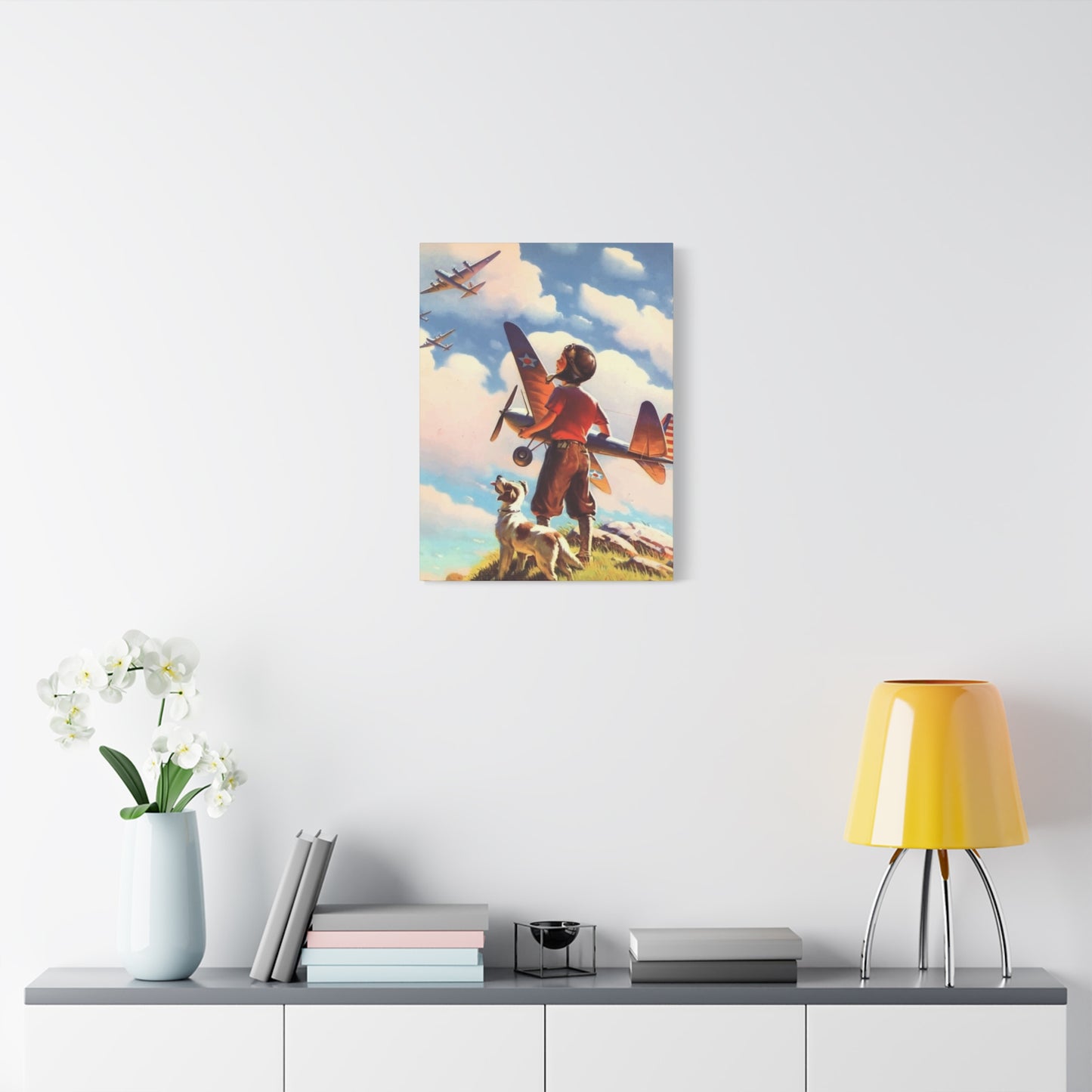
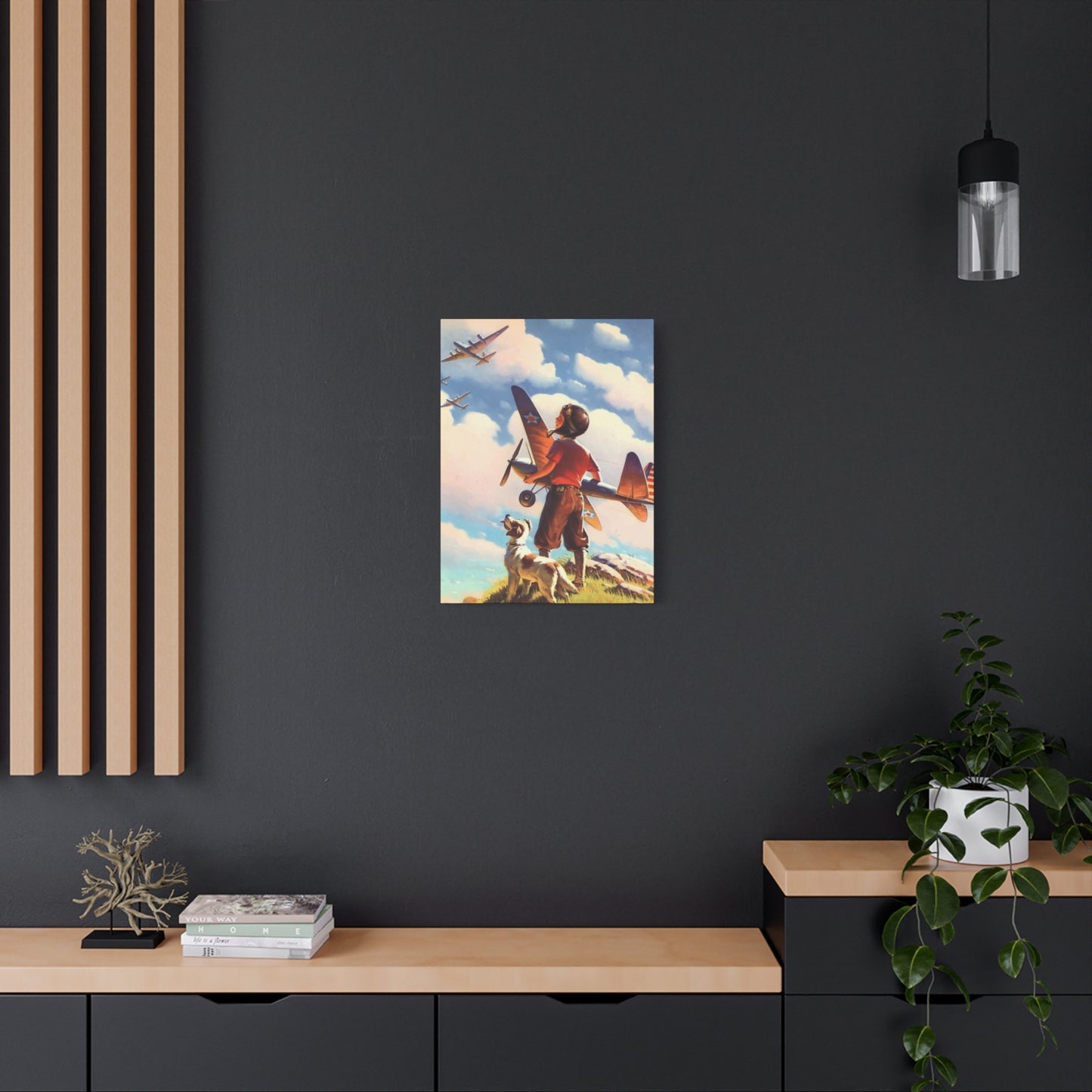
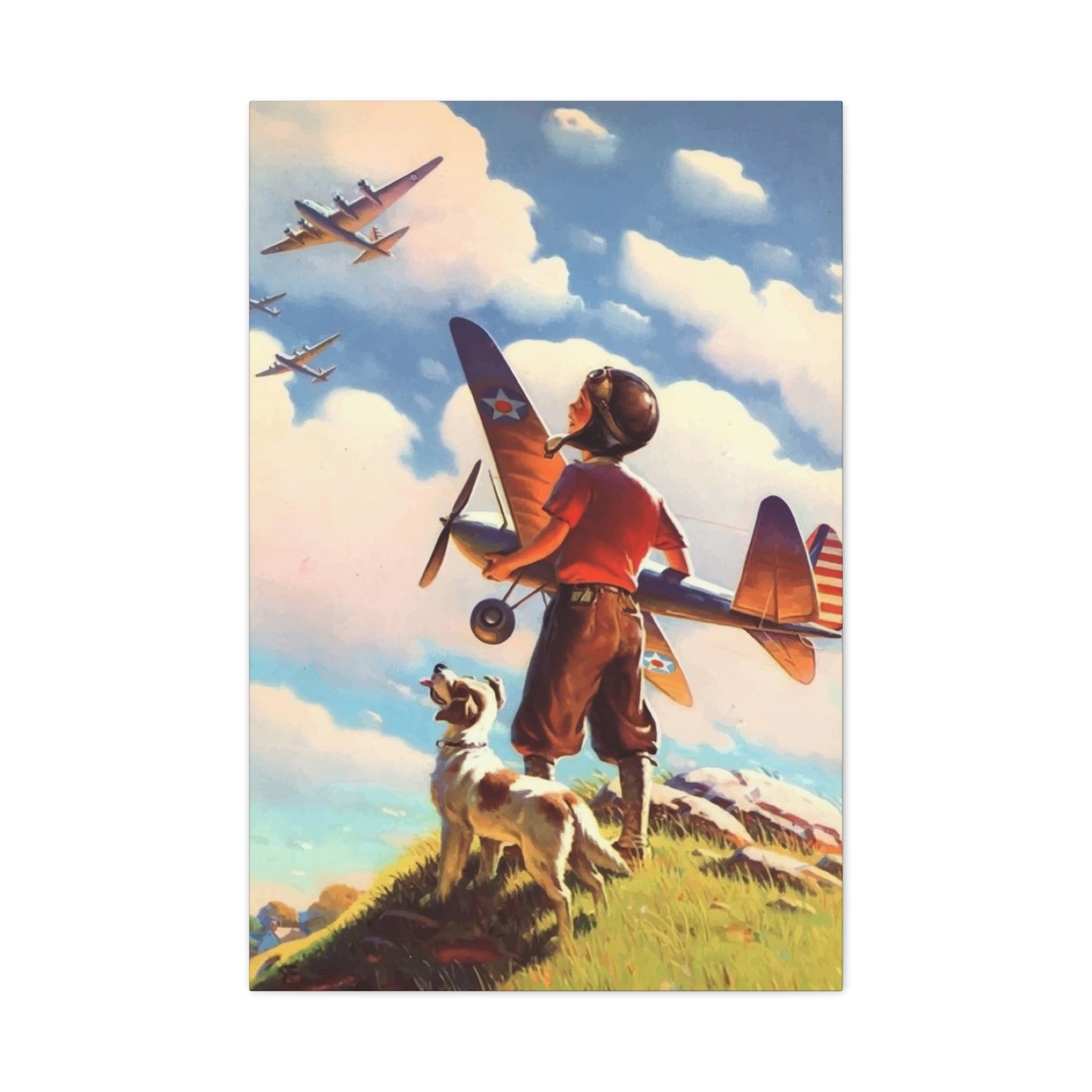
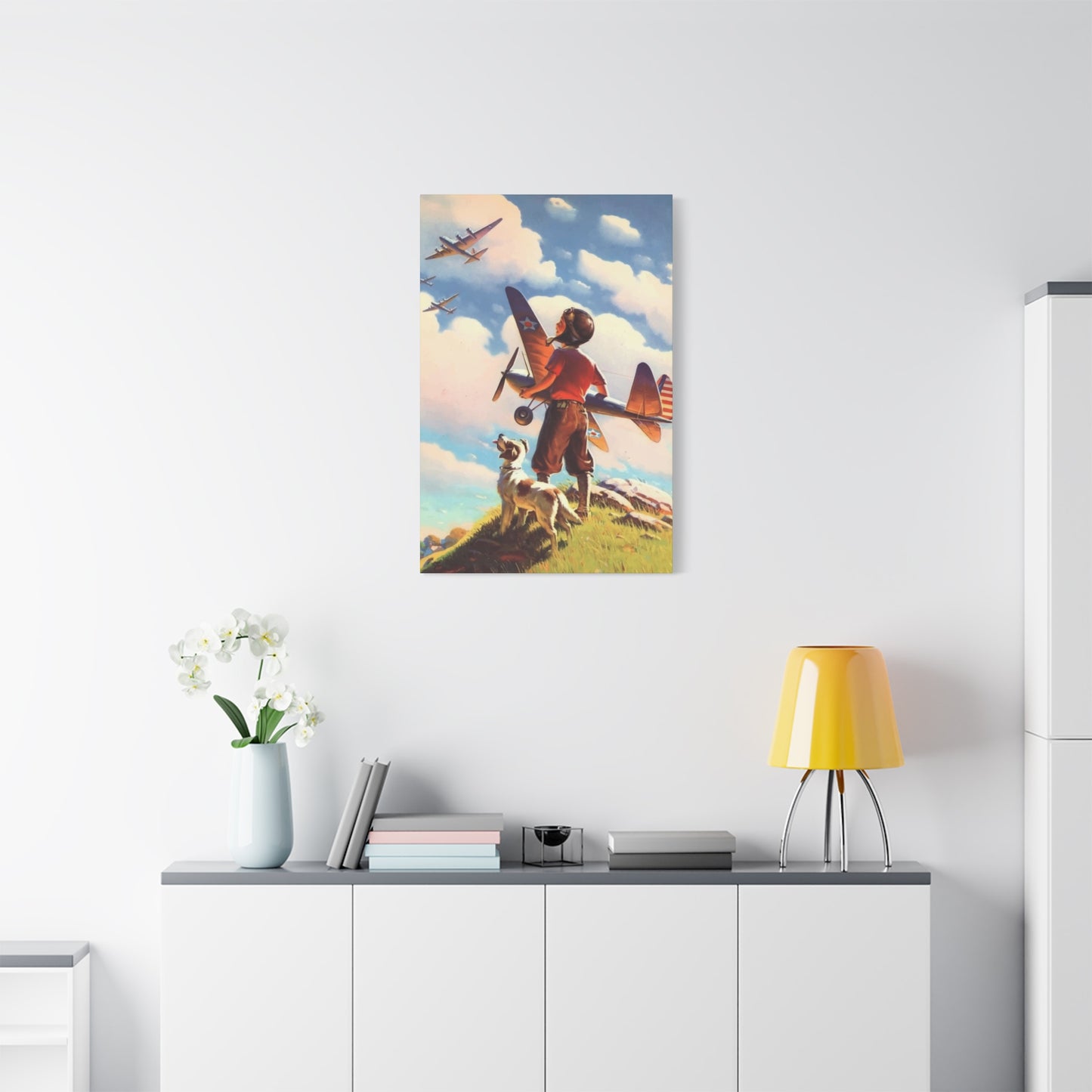
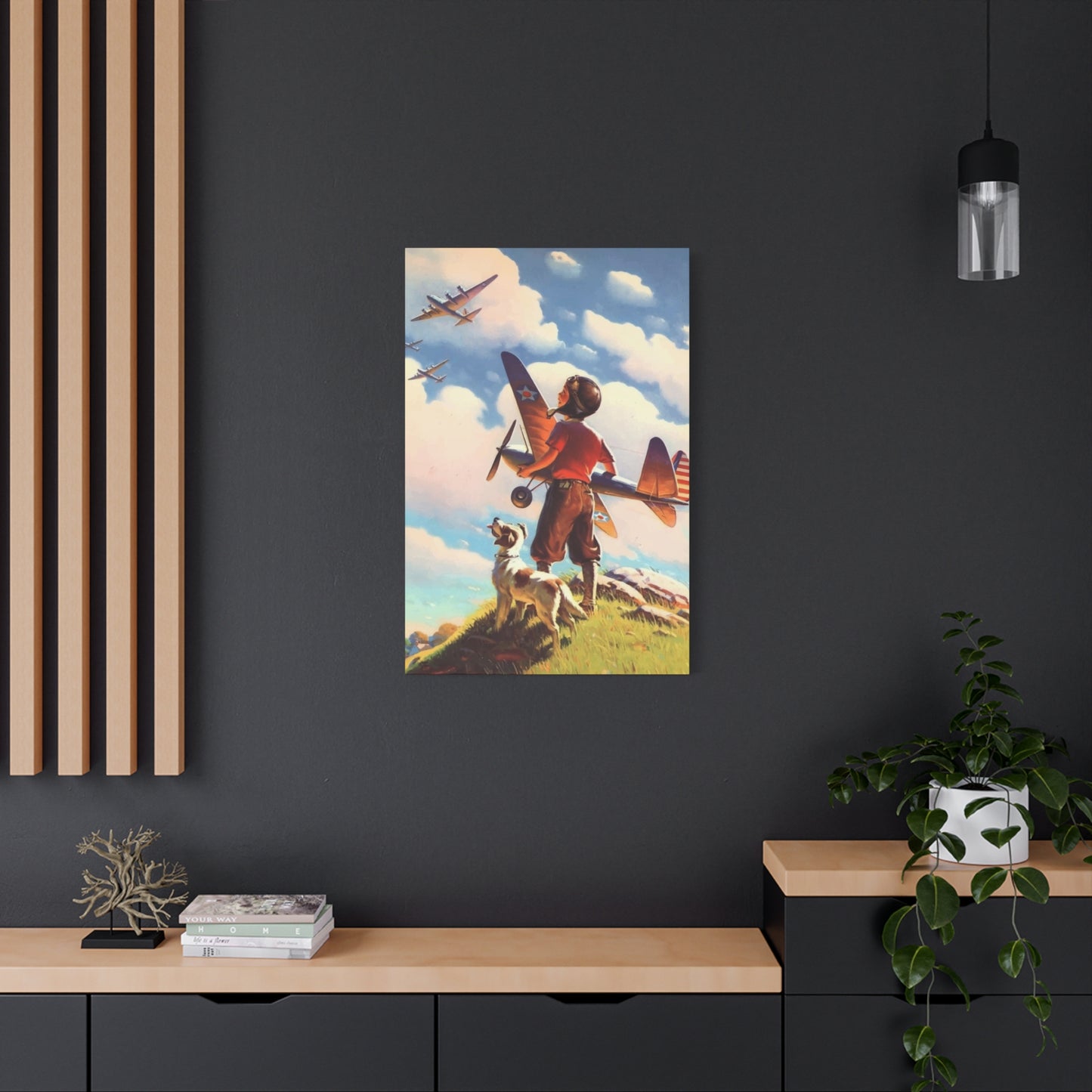
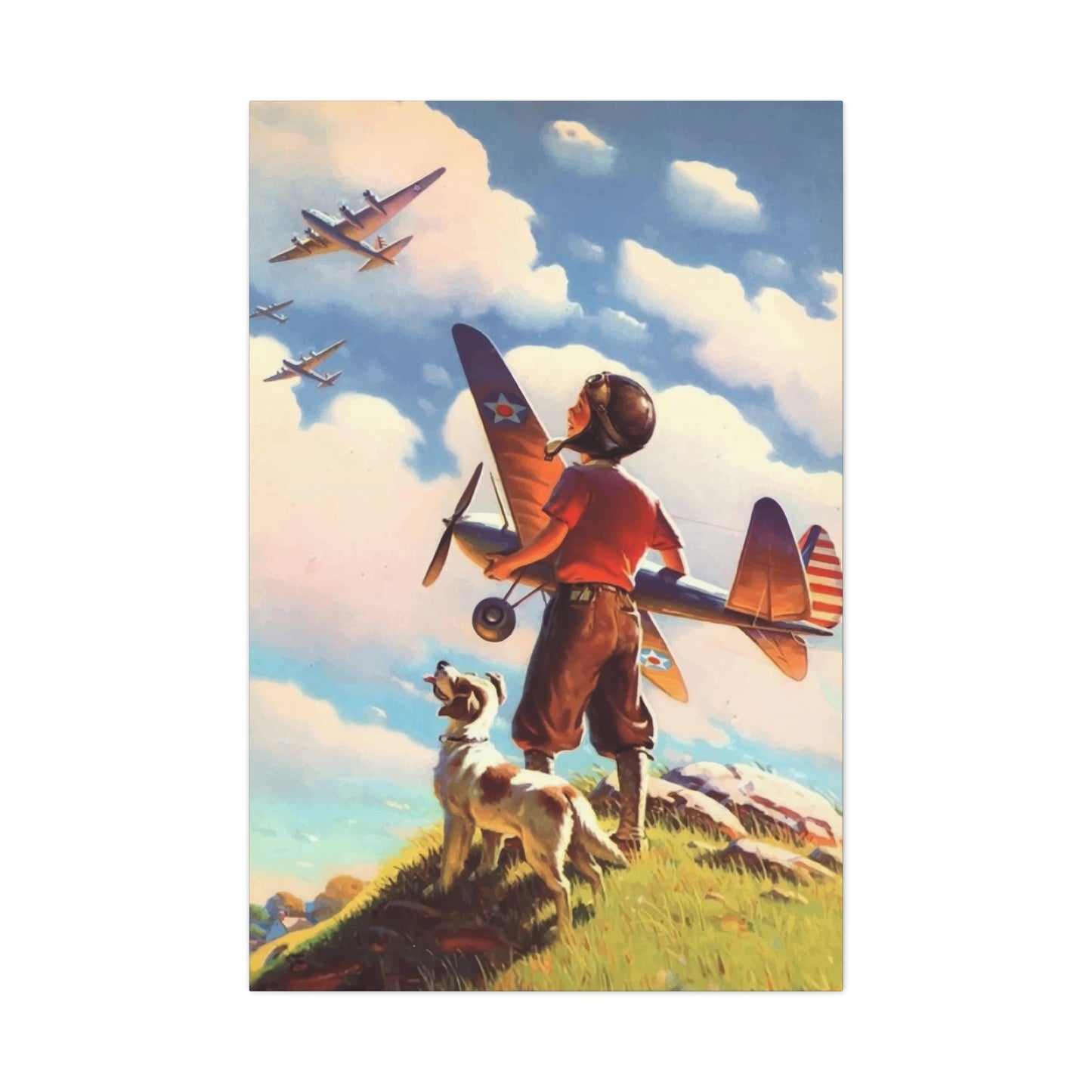
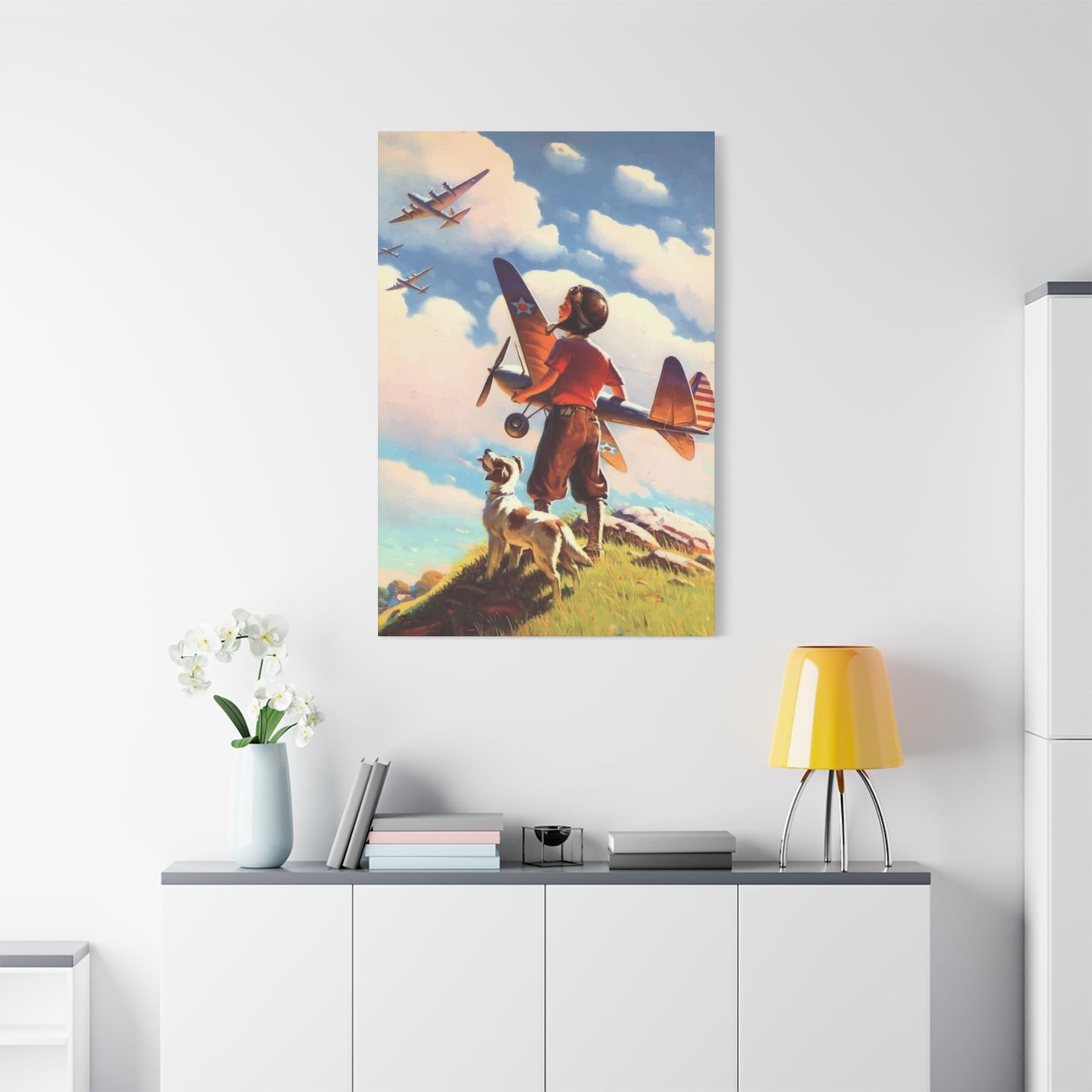
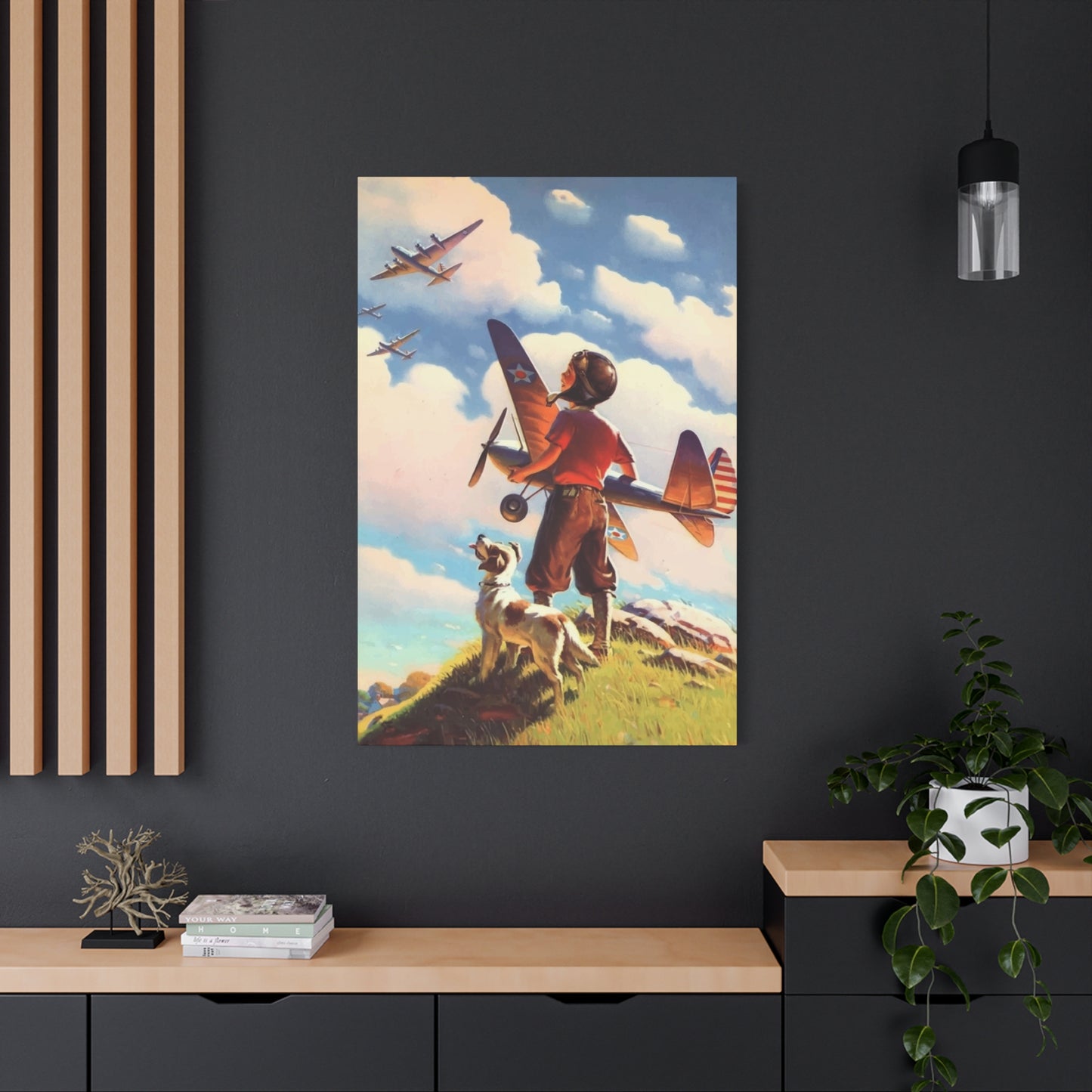
Kid admiring Airplane Wall Art & Canvas Prints
Kid admiring Airplane Wall Art & Canvas Prints
Couldn't load pickup availability
Inspiring Young Minds: How Kid Admiring Airplane Wall Art Creates Lifelong Passion for Aviation and Decorative Brilliance in Children's Spaces
The sight of a kid admiring airplane wall art represents more than just decorative appeal within residential interiors. This profound connection between young observers and aviation-themed visual elements sparks curiosity, imagination, and dreams that often persist throughout their entire existence. When children encounter meticulously crafted representations of aircraft suspended across bedroom walls or playroom surfaces, they embark upon journeys that transcend physical boundaries, exploring atmospheric realms and mechanical marvels that have captivated humanity for generations.
Contemporary residential design increasingly recognizes the significance of thematic visual elements within juvenile environments. Parents, guardians, and interior designers collectively acknowledge that surrounding youngsters with imagery reflecting their interests cultivates engagement, learning enthusiasm, and emotional comfort. Among countless thematic possibilities available today, aviation-themed decorative pieces maintain exceptional prominence due to their universal appeal and multifaceted symbolic meanings.
Captivating Visual Narratives That Spark Childhood Imagination Through Aerial Imagery
Aviation imagery possesses inherent qualities that resonate profoundly with developing minds. The streamlined silhouettes of commercial jetliners, the nostalgic charm of propeller-driven craft from bygone eras, and the futuristic designs of experimental aerospace vehicles collectively create visual vocabularies that speak directly to youthful wonder. When a kid admiring airplane wall art stands before such representations, cognitive processes activate that extend far beyond simple aesthetic appreciation.
Psychologists studying childhood cognitive growth have documented that exposure to complex visual stimuli during formative years significantly influences neural pathway formation. Aircraft representations, with their intricate details, mechanical components, and implied motion, provide exactly the sort of sophisticated visual information that encourages detailed observation skills. Young observers naturally begin questioning how these magnificent machines achieve flight, what purposes they serve, and what adventures they might facilitate.
The emotional resonance created when youngsters encounter aviation artwork establishes foundational connections between visual aesthetics and personal aspirations. Many professional pilots, aerospace engineers, and aviation enthusiasts trace their career trajectories back to childhood moments spent gazing at pictures of aircraft. These early exposures planted seeds of fascination that eventually blossomed into lifelong vocational pursuits.
Contemporary manufacturing processes have elevated aviation wall decorations to unprecedented levels of visual sophistication. High-resolution printing methodologies reproduce photographic aircraft images with stunning clarity, capturing every rivet, panel line, and aerodynamic contour. Hand-painted artistic interpretations offer alternative aesthetic approaches, transforming aircraft into subjects of expressive color palettes and imaginative compositional arrangements. Three-dimensional relief sculptures add tactile dimensions that invite physical interaction alongside visual appreciation.
Diverse Stylistic Approaches Within Aviation-Themed Decorative Elements for Juvenile Environments
The marketplace currently offers remarkable variety within aviation-themed decorative categories. Vintage-inspired designs evoke nostalgic connections to aviation's pioneering eras, featuring biplanes, early passenger airliners, and military aircraft from significant historical conflicts. These pieces often incorporate distressed finishes, sepia tones, and antiquated typography that transport viewers to romantic periods when flight remained relatively novel and adventurous.
Contemporary minimalist interpretations reduce aircraft forms to essential geometric shapes and limited color schemes. These sophisticated approaches appeal to modern design sensibilities while maintaining clear aeronautical references. Silhouette representations, line drawings, and abstract compositions derived from aircraft profiles offer subtle aviation connections suitable for diverse interior aesthetic contexts.
Photorealistic representations capture specific aircraft models with documentary precision. These pieces often showcase iconic commercial airliners like Boeing 747s or Airbus A380s, military jets including F-16 Fighting Falcons or F-22 Raptors, and general aviation aircraft ranging from small Cessnas to luxurious business jets. The meticulous detail in such representations provides educational value alongside decorative function, allowing young observers to study authentic mechanical features.
Whimsical cartoon-style interpretations transform aircraft into friendly characters with expressive faces and exaggerated proportions. These playful designs particularly appeal to younger children who respond enthusiastically to anthropomorphized objects. Such representations make aviation concepts accessible to preschool-aged youngsters who might find realistic mechanical representations less approachable.
Blueprint-style technical drawings present aircraft from engineering perspectives, displaying cross-sections, dimensional specifications, and component arrangements. These sophisticated pieces introduce viewers to technical documentation conventions while celebrating the engineering brilliance underlying flight. Older children with emerging interests in science, mathematics, or engineering often find particular fascination with these analytical representations.
Creating Cohesive Thematic Environments That Extend Beyond Single Decorative Pieces
Observing a kid admiring airplane wall art often inspires comprehensive room design approaches that transform entire spaces into aviation-themed environments. Single artwork pieces serve as anchoring focal points around which complementary elements coalesce. Coordinated bedding featuring aircraft patterns, window treatments incorporating sky and cloud imagery, and carpeting in runway gray or sky blue create immersive atmospheric contexts.
Furniture selections can reinforce thematic continuity through shape, color, or decorative details. Beds designed to resemble aircraft fuselages, desks incorporating propeller or wing-shaped elements, and storage solutions decorated with aviation insignia all contribute to cohesive environmental storytelling. Lighting fixtures resembling aircraft beacons, navigation lights, or cockpit instruments add functional elements that simultaneously support thematic narratives.
Accessory items provide opportunities for nuanced thematic reinforcement without overwhelming sensory experiences. Model aircraft displayed on shelving units, aviation-themed books arranged on bedside tables, and globe representations highlighting flight routes all complement wall-mounted artwork while encouraging interactive engagement. These supplementary elements transform passive observation into active exploration, inviting youngsters to physically manipulate objects related to their visual interests.
Color palette selections significantly influence atmospheric qualities within aviation-themed spaces. Sky blues evoke atmospheric expanses and suggest limitless possibilities. Cloud whites introduce brightness and purity while referencing the aerial environments through which aircraft travel. Metallic silvers and grays echo aircraft construction materials and suggest mechanical sophistication. Accent colors drawn from airline liveries or military insignia add vibrant punctuation that prevents monotonous color schemes.
Psychological Dimensions Underlying Childhood Fascination With Flight Representations
Understanding why youngsters demonstrate such profound engagement when admiring aviation imagery requires examining fundamental aspects of human consciousness. Flight represents humanity's triumph over natural limitations, embodying aspirations toward transcendence, freedom, and expanded horizons. These symbolic associations register deeply within developing psyches, even when youngsters cannot articulate such abstract concepts.
Aircraft represent tangible manifestations of complex scientific principles translated into functional reality. For cognitively curious children beginning to question how the physical world operates, aircraft provide accessible entry points into discussions about aerodynamics, propulsion, materials science, and countless related disciplines. The visible results of engineering ingenuity spark questions that lead naturally toward scientific literacy.
The adventurous narratives associated with aviation provide imaginative frameworks for fantasy play and storytelling. Aircraft connect distant locations, facilitate exotic travel experiences, and enable participation in dramatic scenarios ranging from rescue operations to exploratory missions. When a kid admiring airplane wall art gazes at such imagery, mental narratives spontaneously emerge featuring themselves as pilots, passengers, or crew members engaged in exciting journeys.
Mastery and competence represent crucial developmental objectives during childhood years. Aviation contexts provide metaphorical frameworks for understanding skill acquisition, responsibility, and graduated progression toward expertise. The visible complexity of aircraft operations suggests challenges that can be overcome through dedication, learning, and practice—messages that transfer readily to other life domains beyond aeronautical contexts.
Educational Dimensions Embedded Within Aviation-Themed Visual Elements
Airplane wall decorations offer surprisingly rich pedagogical potential extending well beyond superficial aesthetic contributions. Parents and educators increasingly recognize that environmental features within learning spaces significantly influence engagement levels and knowledge retention. Thoughtfully selected aviation imagery transforms residential spaces into informal learning environments that continuously reinforce curiosity and knowledge acquisition.
Aircraft representations naturally introduce geographic awareness as youngsters begin questioning where different planes might travel. Conversations about destinations, distances, and cultural diversity flow organically from aviation-themed visual prompts. World maps and globes positioned near aircraft artwork create natural associations between transportation mechanisms and global geography, fostering spatial intelligence and cross-cultural awareness.
Mathematical concepts find practical illustrations through aviation contexts. Discussions about aircraft speeds, altitudes, fuel consumption, and passenger capacities provide concrete applications for numerical operations. Older children might explore more sophisticated calculations involving flight times across time zones, weight distribution affecting flight characteristics, or geometric principles underlying wing designs.
Physics principles become tangible when examined through aeronautical lenses. Lift, drag, thrust, and gravity—the four fundamental forces affecting flight—provide frameworks for understanding broader physical laws governing motion and energy. Simple experiments demonstrating these principles, conducted near aviation-themed artwork, create memorable learning experiences that integrate visual, kinesthetic, and cognitive dimensions.
Historical awareness develops naturally through exposure to aircraft from different eras. Vintage aviation artwork prompts discussions about technological progression, historical events influencing aircraft development, and individuals who pioneered various aeronautical achievements. Timelines positioned alongside chronologically arranged aircraft images help youngsters conceptualize technological evolution across generations.
Material Considerations Influencing Durability and Safety Within Juvenile Spaces
Selecting appropriate aviation wall decorations for children's environments requires careful attention to material compositions, construction qualities, and safety characteristics. Unlike decorative elements in adult spaces that primarily emphasize aesthetic qualities, items destined for juvenile environments must withstand active use while maintaining safety standards appropriate for younger occupants.
Canvas prints stretched across wooden frames represent popular choices due to their lightweight profiles, resistance to shattering, and relatively forgiving surfaces that tolerate incidental impacts. High-quality canvas materials maintain color vibrancy over extended periods while resisting moisture damage and fading from sunlight exposure. The textile nature of canvas provides slight flexibility that prevents damage from minor collisions common in active play environments.
Metal prints offer exceptional durability and contemporary aesthetic qualities. Aluminum sheets infused with high-resolution imagery create sleek, modern presentations that resist scratching, moisture, and fading. The lightweight yet rigid nature of aluminum prevents warping while eliminating concerns about shattering. Rounded corners and smooth edges ensure safety even if youngsters accidentally collide with mounted pieces.
Wood-based decorations ranging from printed plywood panels to carved relief sculptures introduce organic warmth and textural variety. Properly sealed wood surfaces resist moisture while maintaining natural aesthetic qualities that complement diverse interior design approaches. Hand-carved or laser-cut wooden aircraft silhouettes add dimensional interest and tactile appeal, though edges must be carefully smoothed to prevent splinter risks.
Acrylic presentations combine visual clarity with practical durability. Lightweight acrylic panels resist breakage far better than glass while maintaining transparent or translucent qualities suitable for backlit displays or layered compositional arrangements. Printed acrylic pieces offer vibrant color saturation and contemporary aesthetic sophistication appropriate for modern interior contexts.
Foam-core and lightweight composite materials provide budget-conscious alternatives suitable for temporary installations or frequently updated displays. While these materials lack the longevity of more substantial options, they enable experimentation with different imagery and arrangements without significant financial commitments. Their minimal weight poses negligible safety risks even if mounting systems fail.
Proper Mounting Strategies Ensuring Safety and Longevity Within Active Environments
Secure attachment of aviation artwork within children's spaces demands greater attention to mounting methodology than similar installations in adult environments. Active play, physical growth spurts prompting furniture rearrangements, and natural curiosity leading to touching or pulling decorative elements all create challenges requiring thoughtful solutions.
Anchoring systems must penetrate wall studs rather than relying solely on drywall attachments when supporting pieces exceeding minimal weights. Stud finders enable precise location of structural members capable of supporting sustained loads without risk of fastener pullout. When stud positions don't align conveniently with desired artwork placement, hollow wall anchors rated for appropriate weight capacities provide alternative securing mechanisms.
Height placement requires balancing visual accessibility with safety considerations. Positioning artwork low enough for youngsters to observe details without straining encourages engagement and appreciation. However, extremely low placements increase risks of accidental damage during active play. Generally, centering artwork at or slightly below adult eye level creates reasonable compromises between accessibility and protection.
French cleat mounting systems offer particular advantages within juvenile environments. These two-part systems distribute weight across extended areas while permitting easy removal and reinstallation if room reconfigurations become necessary. The mechanically interlocking nature of French cleats prevents accidental dislodgement while enabling intentional removal by adults.
Adhesive mounting solutions utilizing removable strips provide damage-free alternatives for lightweight pieces, particularly in rental properties where permanent wall penetrations might be prohibited. Modern adhesive technologies create surprisingly strong bonds capable of supporting moderate weights while releasing cleanly when removal becomes necessary. Such systems work best with lightweight materials like foam-core prints or small canvas panels.
Safety considerations extend beyond mounting security to encompass frame characteristics and glazing materials. Sharp corners represent potential hazards during falls or collisions. Rounded frame corners or protective corner guards mitigate injury risks without significantly compromising aesthetic qualities. If glazing becomes necessary to protect artwork surfaces, acrylic alternatives to glass eliminate shattering risks while maintaining transparency.
Seasonal Variations and Rotating Display Strategies Maintaining Fresh Visual Interest
Children's interests naturally evolve as they mature, encounter new experiences, and develop expanding knowledge bases. Static decorative schemes that remain unchanged for extended periods risk becoming invisible through habituation, losing their capacity to inspire wonder or maintain engagement. Implementing rotation strategies keeps visual environments dynamic while accommodating developmental shifts in interests and comprehension levels.
Seasonal variations provide natural frameworks for periodic updates. Winter installations might emphasize snow and ice flying conditions, historical polar exploration flights, or commercial aviation connecting families during holiday travel seasons. Spring themes could highlight agricultural aviation, air show announcements, or migratory birds alongside mechanical flight. Summer displays might feature vacation travel, military air parades, or vintage barnstorming exhibitions. Autumn presentations could incorporate cargo aircraft transporting harvest yields, migration patterns, or preparations for reduced-visibility flying conditions.
Age-appropriate progressions ensure decorative elements remain aligned with developmental stages. Preschool years benefit from simple, colorful, cartoon-style representations that establish positive associations with aviation concepts. Early elementary years accommodate more realistic imagery and beginning technical details. Middle childhood welcomes sophisticated photographs, blueprint-style drawings, and historical representations supporting academic learning. Adolescence permits complex compositions, abstract interpretations, and imagery aligned with emerging specific interests within aviation subcategories.
Rotating display systems permit flexible updates without requiring new mounting installations. Gallery wall arrangements featuring multiple smaller pieces rather than single large statements enable partial updates that refresh overall presentations while maintaining continuity. Interchangeable frame systems accept different prints or canvases within consistent mounting frameworks. Digital display screens offer ultimate flexibility, cycling through curated aviation image collections that can be updated remotely as interests evolve.
Involving youngsters in decorative selection processes fosters ownership and personal investment in their environmental surroundings. Age-appropriate participation might include choosing between parent-curated options for younger children or conducting independent research to identify preferred aircraft types or artistic styles for older youth. Collaborative decision-making teaches aesthetic literacy, preference articulation, and compromise while ensuring resulting selections genuinely reflect individual interests.
Economic Considerations Balancing Quality Investment With Budget Realities
Aviation wall decorations span remarkable price ranges reflecting material qualities, production methodologies, artistic reputation, and market positioning. Budget-conscious approaches enable creation of engaging aviation-themed environments without excessive financial outlays, while premium investments deliver heirloom-quality pieces that might accompany children throughout their developmental years and potentially beyond.
Mass-produced prints utilizing digital reproduction methodologies represent entry-level options accessible to most budgets. These pieces deliver visual appeal and thematic appropriateness without requiring substantial financial commitments. While they may lack the distinctive character of original artwork or limited-edition releases, their affordability enables frequent updates to match evolving interests.
Original paintings, drawings, or mixed-media compositions command premium prices justified by their uniqueness, artistic merit, and investment potential. Commission pieces created specifically for individual clients incorporate personalized elements reflecting specific aircraft preferences, color scheme requirements, or narrative themes significant to particular families. Such investments create distinctive environmental features unlikely to appear in other settings while potentially appreciating in value over time.
Limited-edition prints signed and numbered by recognized aviation artists occupy middle ground between mass-produced reproductions and original artworks. These pieces offer artistic sophistication and collectible status at fractions of original artwork costs. Certificate of authenticity documentation and edition size limitations contribute to their value retention and potential appreciation.
Used and vintage aviation posters, advertisements, and promotional materials available through antique markets, online auction platforms, and specialty dealers provide character-rich alternatives to contemporary productions. Authentic period pieces carry historical resonance and distinctive aesthetic qualities reflecting their creation eras. Condition variations affect pricing significantly, with pristine examples commanding premium values while damaged pieces offer budget-friendly options for casual collectors.
Do-it-yourself approaches minimize monetary investments while maximizing creative involvement and personalization opportunities. Printing high-resolution aviation photographs on home photo printers or through professional printing services creates custom decorations at modest costs. Framing options ranging from budget readymade frames to custom solutions accommodate varying financial parameters. Hand-painted murals transform entire walls into aviation-themed environments using only paint supplies and artistic effort.
Complementary Learning Resources Extending Beyond Visual Decorative Elements
The presence of a kid admiring airplane wall art within a residential space ideally catalyzes broader engagement with aviation concepts through complementary resources supporting active learning and skill building. Visual decorations establish atmospheric foundations upon which richer, more interactive explorations can develop.
Literature collections featuring aviation themes provide narrative contexts that transform abstract fascinations into story-driven engagement. Picture books for younger readers introduce basic flight concepts through accessible language and engaging illustrations. Chapter books for developing readers explore adventures of young pilots, historical aviation achievements, or fictional scenarios involving aircraft. Reference volumes appropriate for various age levels deliver technical information, historical details, and photographic documentation supporting deeper understanding.
Documentary films and streaming content bring motion, sound, and dynamic perspectives to aviation subjects. Age-appropriate programming ranges from animated series featuring anthropomorphized aircraft for preschoolers to sophisticated documentaries examining engineering challenges, historical conflicts, or contemporary aerospace developments for older youth. Viewing such content near aviation-themed decorations creates environmental cohesion between passive and active learning modalities.
Model construction activities translate two-dimensional visual representations into three-dimensional tangible creations. Plastic model kits ranging from simple snap-together assemblies for beginners to complex glue-required projects for advanced builders teach patience, following instructions, fine motor skills, and mechanical understanding. Completed models displayed alongside wall artwork create layered thematic presentations combining static imagery with physical objects.
Interactive digital resources including flight simulator software, aviation-themed video games, and educational websites extend engagement into technological domains. Age-appropriate gaming experiences introduce flight control concepts, navigation principles, and aircraft systems through entertaining interactive contexts. Serious simulation software used by professional pilots becomes accessible to motivated adolescents, offering remarkably realistic flight experiences.
Local aviation attractions provide real-world connections to visual representations encountered at home. Air museums display historic aircraft that youngsters recognize from bedroom artwork, creating tangible links between decorative imagery and authentic machines. Airport observation areas permit safe viewing of active flight operations, demonstrating dynamic versions of static images. Air shows featuring aerobatic performances, vintage aircraft flights, and military demonstrations deliver spectacular experiences that deepen aviation appreciation.
Cognitive Developmental Benefits Associated With Sustained Aviation Interest
Longitudinal studies examining children who maintain strong interests in specific domains through childhood and adolescence reveal numerous cognitive advantages compared to peers lacking comparable focused enthusiasments. Aviation fascination, when nurtured through supportive environments including appropriate decorative elements, frequently correlates with enhanced capabilities across multiple developmental dimensions.
Spatial reasoning abilities benefit substantially from exposure to aircraft imagery and related activities. Understanding three-dimensional aircraft structures, visualizing flight paths through atmospheric space, and comprehending perspective representations all exercise mental faculties governing spatial intelligence. These capabilities transfer beneficially to mathematical geometry, map reading, mechanical assembly tasks, and various professional domains from architecture to surgery.
Sequential thinking and procedural understanding develop through engagement with aviation operational concepts. Flight operations require strict adherence to checklists, pre-departure preparations, systematic trouble-shooting protocols, and emergency response procedures. Even simplified age-appropriate introductions to such methodical approaches cultivate disciplined thinking patterns beneficial throughout academic and professional pursuits.
Scientific literacy accelerates when abstract principles find concrete illustrations through aviation contexts. Physics concepts become tangible when examined through aerodynamic lenses. Chemistry gains relevance when considering fuel combustion processes. Meteorology achieves immediate practical significance when understanding weather impacts on flight operations. Mathematics transcends abstract manipulation of symbols when applied to navigation calculations or performance computations.
Historical consciousness expands as youngsters explore aviation heritage. Technological evolution from Wright Brothers' first powered flight through contemporary jet airliners illustrates innovation processes and cumulative knowledge building. Military aviation history connects to broader conflict narratives and geopolitical developments. Commercial aviation growth reflects economic expansion and cultural globalization. Such historical awareness cultivates temporal reasoning and contextual understanding.
Social Dimensions Created Through Shared Aviation Enthusiasm
Aviation interest frequently serves as social catalyst enabling connection with peers, mentors, and community members sharing similar fascinations. A kid admiring airplane wall art within their bedroom might discover that decorative choice opens conversational pathways and relationship-building opportunities extending well beyond immediate family circles.
Peer relationships often strengthen around shared interests. Classmates discovering mutual aviation enthusiasm naturally gravitate toward each other, forming friendships anchored by common conversational ground. Collaborative activities including model building sessions, flight simulator competitions, or joint visits to aviation attractions deepen such relationships while providing structured social contexts comfortable for youngsters who might struggle with unstructured peer interactions.
Intergenerational connections flourish through aviation conversations. Grandparents who witnessed earlier aviation eras share firsthand accounts of technological changes they've observed across lifetimes. Military veterans recount service experiences involving aircraft operations. Professional pilots or aerospace workers describe vocational realities and career pathways. Such mentoring relationships provide youngsters with expanded perspectives and role models embodying potential future trajectories.
Organized youth groups centered on aviation interests create structured communities supporting learning and skill development. Civil Air Patrol cadet programs introduce adolescents to aerospace concepts while emphasizing leadership, physical fitness, and character building. Young Eagles programs sponsored by Experimental Aircraft Association provide free introductory flights for youth, creating memorable experiences that often prove transformational. Model aircraft clubs bring enthusiasts together for collaborative building and flying activities.
Online communities enable connections transcending geographic limitations. Moderated forums and social media groups focused on specific aircraft types, historical periods, or aviation subcategories permit youngsters to interact with knowledgeable enthusiasts worldwide. While appropriate parental supervision remains essential when youngsters participate in digital communities, such platforms provide access to expertise and perspectives unavailable within immediate physical communities.
Gender Considerations Within Aviation-Themed Environmental Designs
Historical associations between aviation and masculine identity persist despite decades of conscious efforts toward gender-neutral approaches. Contemporary decorative strategies increasingly recognize that aviation fascination transcends gender categories, with equal numbers of girls and boys demonstrating enthusiastic responses to aircraft imagery when presented appropriately.
Color palette selections significantly influence perceived gender associations. Traditional defaults assigning blue to masculine spaces and pink to feminine environments unnecessarily restrict design possibilities and reinforce limiting stereotypes. Contemporary approaches embrace diverse color schemes including purples, greens, yellows, and multi-colored presentations that appeal across gender spectrums. Neutral backgrounds in grays, whites, or beiges permit aviation imagery to dominate visual attention without gender-coded color associations.
Narrative contexts surrounding aviation imagery affect gendered interpretations. Military aircraft presented exclusively within combat contexts might skew toward masculine associations, while the same aircraft presented within rescue operation frameworks read more neutrally. Including female pilots, astronauts, and aerospace professionals within composite presentations normalizes female participation in aviation domains. Historical figures like Amelia Earhart, Bessie Coleman, and contemporary female commercial and military pilots provide inspiring role models disrupting masculine default assumptions.
Artistic style choices carry subtle gender connotations worth considering. Highly technical blueprint presentations might stereotypically appeal more to masculine sensibilities, while watercolor interpretations might traditionally read as feminine. However, individual youngsters frequently defy such generalizations, with many girls enthusiastically embracing technical representations and boys appreciating artistic interpretations. Offering diverse stylistic options and observing individual responses proves more effective than assuming gender-based preferences.
Inclusive language surrounding aviation discussions helps establish that aerospace domains welcome all participants regardless of gender identity. Referring to "pilots" rather than "airmen," "flight crew" instead of gender-specific terminology, and "aerospace professionals" rather than gendered job titles subtly communicates universal accessibility. Ensuring that conversational examples and hypothetical scenarios feature diverse characters across gender spectrums reinforces these inclusive messages.
Long-term Impacts of Early Aviation Exposure on Vocational Pathways
While most children who express aviation enthusiasm during early years won't ultimately pursue aerospace careers, meaningful percentages do maintain sufficient interest to influence educational choices and eventual vocational trajectories. Understanding potential pathways that might emerge from childhood fascinations helps parents and educators provide appropriate support and opportunities.
Professional piloting represents the most obvious career pathway aligned with aviation interest. Commercial airline pilots, cargo aircraft operators, corporate flight crews, flight instructors, and charter service pilots all require specific certification pathways beginning with private pilot licenses and progressing through advanced ratings. Military aviation offers alternative piloting pathways with government-funded training in exchange for service commitments. Helicopter pilots serve medical transport, news gathering, agricultural, and tourism industries.
Aerospace engineering encompasses diverse specialization opportunities designing aircraft structures, propulsion systems, avionics, or spacecraft. Educational pathways typically involve mechanical, electrical, or aerospace engineering degrees from accredited universities. Entry-level positions progress through increasing responsibility toward senior engineering roles, program management, or entrepreneurial ventures. Related fields including aerodynamics research, materials science, and computational fluid dynamics offer alternatives for scientifically-oriented individuals.
Air traffic control careers involve managing aircraft movements through controlled airspace and at airports. These mentally demanding positions require excellent spatial reasoning, stress management capabilities, and communication skills. Training programs operated by national aviation authorities provide necessary certifications following aptitude testing and security clearances. The profession offers stable employment with excellent compensation despite mandatory retirement ages.
Aircraft maintenance and avionics specializations provide hands-on career pathways for mechanically-inclined individuals. Airframe and powerplant mechanic certifications enable maintenance work on aircraft structures and engines. Avionics specialists focus on electronic systems, navigation equipment, and communication devices. These roles combine technical knowledge with practical skills, offering stable employment across commercial, corporate, and military sectors.
Aerospace manufacturing encompasses production roles from assembly line positions through quality control, supply chain management, and manufacturing engineering. Major manufacturers and countless suppliers collectively employ hundreds of thousands of workers globally. Career pathways range from entry-level assembly work through advanced engineering and management positions.
Aviation management and business operations include airport management, airline operations, aviation insurance, aircraft sales and acquisition, flight school administration, and aviation law. These careers leverage aviation knowledge within business contexts, appealing to individuals with combined aeronautical and commercial interests. Educational backgrounds typically combine aviation-specific studies with business administration coursework.
Environmental Consciousness Within Contemporary Aviation Imagery Selections
Growing societal awareness regarding environmental sustainability increasingly influences all consumer choices, including decorative selections for children's spaces. Progressive parents seek aviation-themed decorations that acknowledge ecological considerations while maintaining engagement and aesthetic appeal.
Sustainable production methodologies reduce environmental impacts associated with manufacturing decorative elements. Water-based inks eliminate toxic solvents from printing processes. Recycled canvas, paper, and frame materials minimize virgin resource extraction. Local production reduces transportation-related carbon emissions compared to internationally-sourced alternatives. Certifications from environmental standards organizations help consumers identify genuinely sustainable products amid widespread greenwashing.
Subject matter selections increasingly feature environmentally-progressive aviation concepts. Solar-powered experimental aircraft demonstrate renewable energy applications within aerospace contexts. Electric propulsion developments including battery-powered trainers and hybrid airliner concepts illustrate technological evolution toward reduced emissions. Biofuel-powered military and commercial aircraft show interim pathways toward sustainable aviation fuels. Such imagery introduces youngsters to environmental challenges and innovative solutions simultaneously.
Vintage aircraft representations, particularly those from earlier eras predating mass air travel, carry inherent nostalgia that can prompt discussions about aviation's evolution and future directions. Historical context helps youngsters understand that current environmental challenges associated with aviation weren't present during earlier periods, and that conscious efforts toward sustainability represent relatively recent priorities. This historical perspective prevents simplistic condemnation while encouraging thoughtful consideration of complex trade-offs.
Conservation messaging integrated into aviation-themed spaces maintains enthusiasm for flight while cultivating environmental awareness. Composite presentations might juxtapose aircraft imagery with endangered species, pristine wilderness areas accessible only by air, or research aircraft gathering climate data. Such presentations acknowledge aviation's environmental costs while highlighting its contributions to scientific understanding and conservation efforts.
Cultural Variations in Aviation Symbolism and Aesthetic Preferences
Aviation imagery carries different cultural meanings and aesthetic associations across global societies. Understanding these variations becomes increasingly relevant in multicultural communities and globally-connected families where children encounter diverse perspectives and traditions.
Western societies, particularly North American and European cultures, generally associate aviation with progress, freedom, technological achievement, and individual mobility. Commercial aviation represents democratized travel once restricted to wealthy elites. Military aviation evokes national defense and technological supremacy. These associations inform decorative preferences favoring sleek, modern aircraft presentations or nostalgic vintage representations.
Asian cultures increasingly embrace aviation enthusiasm as rapidly expanding commercial markets introduce air travel to unprecedented population segments. Recent economic development across many Asian nations correlates with explosive aviation growth, creating associations between aircraft and modernization, prosperity, and global connection. Aesthetic preferences often favor contemporary commercial airliners over vintage aircraft or military jets, reflecting contemporary experiences rather than historical military conflicts.
Middle Eastern societies demonstrate sophisticated appreciation for aviation given their central geographic positions connecting Europe, Asia, and Africa. Several Gulf states have developed internationally prominent airlines serving as national symbols and economic engines. This regional context creates particular enthusiasm for wide-body international airliners and prestige business jets. Cultural values emphasizing hospitality translate into appreciation for commercial aviation's role facilitating global connectivity.
Latin American aviation enthusiasm often centers on bush flying, agricultural aviation, and regional transport connecting remote communities. Geographic realities including extensive rainforests, mountainous terrain, and dispersed populations make aviation uniquely significant for transportation and development. Decorative preferences frequently feature smaller aircraft types serving practical regional purposes rather than international jet airliners.
Indigenous peoples across various continents often maintain complex relationships with aviation given its historical roles in colonization, resource extraction, and cultural disruption. However, contemporary indigenous communities increasingly utilize aviation for traditional territory access, cultural exchange, and economic development. Decorative approaches might emphasize indigenous pilots, culturally-specific aircraft liveries, or narrative contexts highlighting beneficial aviation applications.
Therapeutic Contexts Where Aviation Imagery Serves Clinical Functions
Mental health professionals and medical practitioners increasingly recognize environmental modifications including strategic decorative selections can support various clinical objectives. Aviation-themed visual elements serve multiple therapeutic functions when appropriately matched to individual needs and clinical contexts.
Anxiety reduction benefits from engagement with focused interests that redirect attention from worry-generating thoughts. Children experiencing generalized anxiety, social anxiety, or situational fears often find relief through absorption in compelling subjects. A kid admiring airplane wall art within their bedroom creates opportunities for calming focus during anxious episodes. Therapeutic discussions might leverage aviation metaphors about navigation through turbulence, maintaining course toward destinations despite challenges, or trusting expertise during difficulties.
Autism spectrum individuals frequently develop intense specialized interests that serve multiple regulatory functions. These focused fascinations provide predictable structure, manageable complexity, and reliable pleasure in lives often dominated by confusing social demands and sensory challenges. Aviation topics offer particularly suitable special interest possibilities given clear categorizations, extensive factual information availability, and logical mechanical principles. Environmental saturation with aviation imagery validates these interests while providing continuous visual engagement.
Attention deficit challenges benefit from environmental features supporting sustained focus and organizational thinking. Aviation contexts naturally incorporate sequential procedures, systematic preparations, and methodical operations that model organized approaches applicable to daily life challenges. Visual prompts including checklists, procedure diagrams, and systematic presentations support executive function development while maintaining engagement through inherently interesting content.
Trauma recovery processes sometimes benefit from positive imagery representing escape, safety, and autonomy. For children who've experienced adverse circumstances, aviation representations can symbolize possibilities for leaving difficult situations behind, reaching safer destinations, or gaining agency over life directions. Therapeutic narratives might frame recovery journeys using aviation metaphors about repairing damage, conducting safety checks, and ultimately achieving successful flight.
Grief processing occasionally finds support through aviation metaphors about journeys, transitions, and transcendence. Some grieving children find comfort in representations of flight heavenward or conceptualizing deceased loved ones as having embarked on ultimate journeys. While such frameworks don't suit everyone, certain families and faith traditions find meaningful resonance with aviation imagery during bereavement periods.
Practical Considerations for Rental Properties and Temporary Residences
Families residing in rental properties face particular challenges when creating engaging, personalized environments for children given typical lease restrictions against permanent modifications. Aviation-themed decorating approaches accommodating rental constraints enable meaningful personalization without jeopardizing security deposits or violating lease terms.
Removable adhesive mounting systems enable wall decorations without permanent nail holes or screw anchors. Modern adhesive technologies create surprisingly robust bonds capable of supporting moderate weights while releasing cleanly when removal becomes necessary. Manufacturers typically specify maximum weight capacities and surface compatibility, with optimal performance on smooth painted walls rather than textured surfaces. Following manufacturer instructions regarding surface preparation and adhesive curing times ensures successful bonds.
Freestanding display solutions eliminate wall-mounting requirements entirely. Floor easels accommodate canvas prints or framed artwork at adjustable heights. Decorative room dividers or folding screens featuring aviation imagery define spaces while avoiding permanent installations. Bookcase backing panels decorated with aviation themes create focal points without wall contact. Such approaches sacrifice some integration with architectural features but maintain complete flexibility for removal.
Furniture-mounted decorations utilize existing furnishings as display surfaces. Headboards, dresser backs, or desk hutches can support adhesive-mounted or leaning artwork without touching walls. This approach creates functional relationships between decorative and utilitarian elements while avoiding lease-prohibited modifications. Weight-bearing furniture pieces permit heavier or larger decorations than wall-mounted alternatives might support in rental contexts.
Temporary wall covering systems including peel-and-stick wallpaper, fabric panels, or large-format decals enable dramatic transformations that reverse completely upon removal. Aviation-themed options within these categories range from photorealistic aircraft imagery to stylized patterns incorporating aeronautical motifs. Proper installation following manufacturer guidelines ensures damage-free removal, with particular attention to avoiding cheap products with aggressive adhesives that might damage paint.
Window treatments offer additional personalization opportunities without permanent modifications. Aviation-themed curtains, valances, or Roman shades introduce color and pattern while serving practical light control functions. These easily replaced elements enable thematic reinforcement without requiring landlord approval or risking security deposit deductions. Tension rods eliminate hardware installation requirements, supporting window treatments without wall penetrations.
Blending Aviation Themes With Other Childhood Interests and Developmental Phases
Most children demonstrate multiple concurrent interests that fluctuate in relative priority as they mature and encounter new experiences. Decorative strategies that acknowledge this multiplicity create flexible environments accommodating evolving enthusiasms without requiring complete redesigns.
Combination themes integrate aviation with complementary interests including space exploration, automotive passion, nautical fascination, or travel enthusiasm. Such blended approaches create conceptual umbrellas encompassing transportation broadly, exploration generally, or engineering comprehensively. Composite presentations might juxtapose aircraft with rockets, ships, or race cars, unified through shared qualities of human ingenuity, mechanical sophistication, or adventure facilitation.
Zoned arrangements partition spaces into distinct thematic areas. One wall might feature aviation imagery while opposite surfaces showcase dinosaurs, sports heroes, or fantasy characters. This approach validates multiple interests simultaneously while maintaining visual organization that prevents chaotic overcrowding. Transition elements including neutral-colored furniture or flooring provide visual breaks between thematic zones.
Transitional strategies permit gradual evolution as interests shift rather than requiring abrupt complete replacements. Introducing new elements while temporarily maintaining established decorations eases transitions while enabling evaluation of emerging enthusiasms' durability. This incremental approach prevents premature investments in fleeting fascinations while maintaining supportive environments for sustained interests.
Foundational neutral backdrops permit flexible foreground elements that change without requiring comprehensive redecorations. Walls painted in adaptable colors including soft grays, warm beiges, or gentle blues accommodate diverse decorative overlays. This approach separates permanent architectural decisions from temporary decorative choices, enabling frequent updates responding to developmental changes without repeated painting projects.
Conclusion
In conclusion, the impact of airplane wall art on young minds is both profound and enduring. By introducing children to captivating imagery of airplanes and aviation, these artworks do more than simply decorate a space—they inspire dreams, cultivate a sense of wonder, and spark a lifelong passion for flight. Whether through bright, bold illustrations or sleek, detailed renditions of aircraft, airplane-themed wall art acts as a gateway to imagination, encouraging children to envision the sky as a realm of possibilities.
For many young admirers, a fascination with airplanes can evolve into a deep interest in aviation, science, and engineering, laying the groundwork for future careers in the aerospace industry. Seeing a favorite airplane, whether it's a vintage biplane or a modern jetliner, hung proudly on their walls can help kids connect with the excitement of flight and spark curiosity about how these machines work. The visual representation of airplanes not only fills children's rooms with energy and excitement but also nurtures a love for exploration, adventure, and discovery—values that are deeply tied to the world of aviation.
Beyond its educational potential, airplane wall art also plays a key role in creating a visually stimulating and dynamic environment in children's spaces. The vibrant colors, shapes, and dynamic compositions associated with aviation-themed art add a sense of movement and vitality to a room. Whether the art is a bold, abstract rendering of an airplane or a realistic portrayal of an aircraft soaring through the sky, it contributes to a playful and inspiring atmosphere. The addition of airplane artwork can turn an otherwise simple or neutral space into a room that actively engages a child's imagination, creating an environment where curiosity thrives.
Moreover, airplane wall art has the power to personalize a child's space in a way that reflects their unique interests and aspirations. It allows children to express their dreams and passions, whether they're fascinated by flying, the science behind aviation, or simply captivated by the beauty and design of airplanes. This sense of ownership over their space can enhance a child's sense of identity and confidence, making their room feel like a sanctuary for both play and learning.
On a deeper level, airplane wall art fosters an appreciation for the beauty of engineering and the marvels of human achievement. As children grow and learn about aviation history, technology, and the groundbreaking achievements of pioneers like the Wright brothers, they develop a greater appreciation for the accomplishments that shaped the aviation industry. The wall art serves as an ever-present reminder of human ingenuity, perseverance, and the constant drive to push boundaries and reach new heights—literally and figuratively.
For parents, gifting airplane-themed art to children can be a way of encouraging a passion that may lead to an exploration of a wide range of fields beyond aviation, including technology, space exploration, and even environmental science. These early exposures to subjects like flight and aviation can help shape a child’s academic interests, encouraging them to pursue knowledge in areas like physics, engineering, and design. Furthermore, the beauty of airplane wall art is that it can grow with the child. As they mature, the art can serve as a reminder of their evolving dreams and aspirations, helping them to stay connected to their youthful curiosity.
In summary, airplane wall art is more than just a decorative choice—it's a tool that fuels curiosity, encourages exploration, and nurtures lifelong passions. By adorning children's spaces with aviation-themed artwork, parents can inspire young minds to aim high, dream big, and always look to the skies. In the process, these pieces of art become an integral part of the child's journey—both as an aesthetic addition to their room and as a visual symbol of the infinite possibilities that lie ahead.
Share