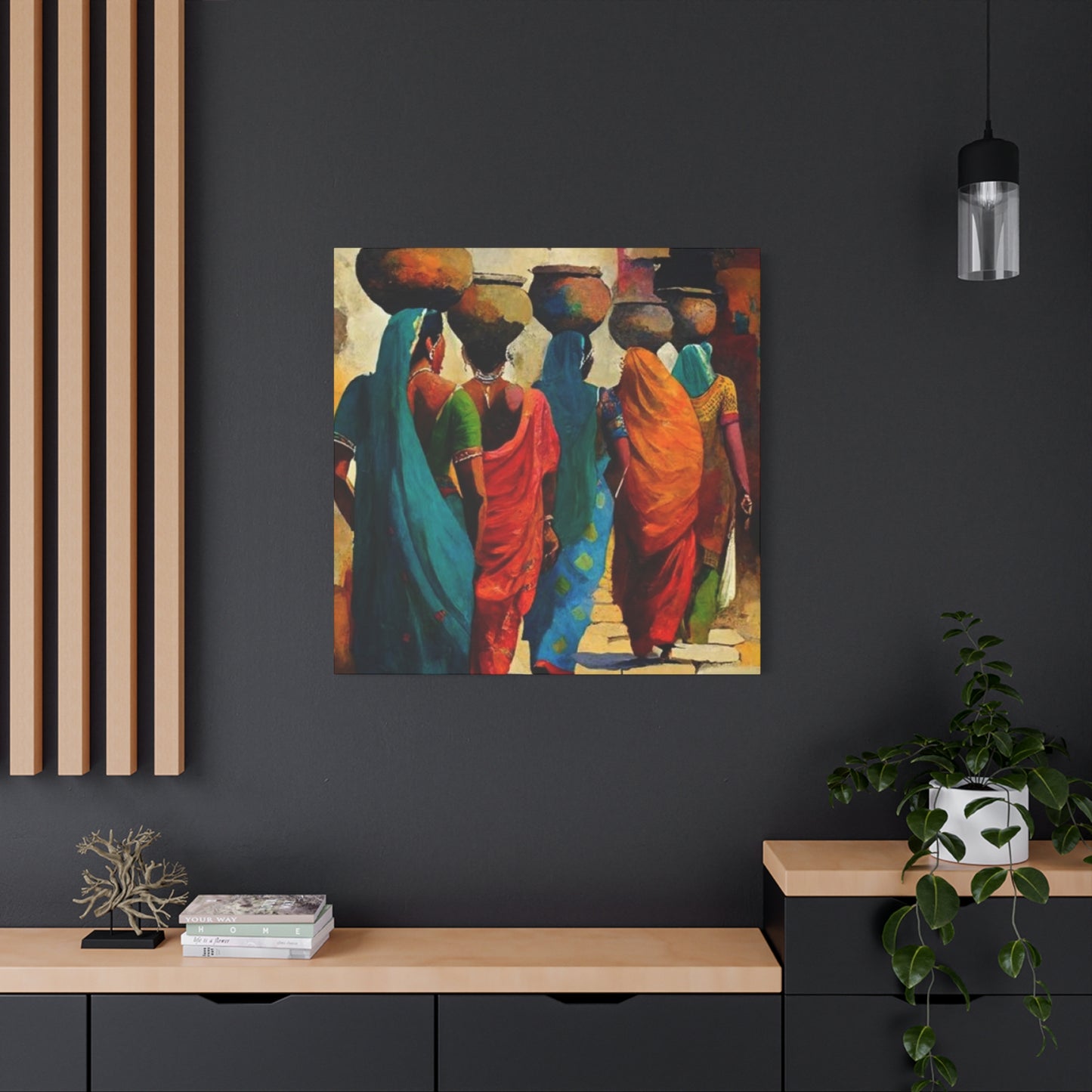
Indian Cultural Women Wall Art & Canvas Prints
Indian Cultural Women Wall Art & Canvas Prints
Couldn't load pickup availability
Celebrating Heritage Through Indian Cultural Women Wall Art: A Comprehensive Exploration of Feminine Grace in Traditional Décor
The portrayal of women in Indian artistic traditions represents one of the most captivating and enduring themes throughout centuries of creative endeavor. This magnificent form of visual storytelling transcends mere decoration, serving as a profound medium that captures the essence of feminine strength, grace, and cultural identity. When we examine the intricate details present in these artistic creations, we discover layers of meaning that speak to both ancient wisdom and contemporary sensibilities.
The significance of depicting female figures in wall décor extends far beyond aesthetic considerations. These representations embody the collective consciousness of a civilization that has always recognized and celebrated the multifaceted nature of womanhood. From the regal bearing of maharanis to the gentle devotion of village women, each image tells a story that resonates across generations. The artistic interpretations showcase women in various roles—as nurturers, warriors, scholars, and spiritual seekers—reflecting the complex tapestry of Indian society.
Traditional artistic methods employed in creating these masterpieces involve meticulous attention to detail and adherence to time-honored principles. The artists who craft these works often spend years perfecting their skills, learning from masters who have preserved these traditions through countless generations. Every brushstroke, every color choice, and every compositional element carries symbolic weight, contributing to a visual language that communicates across cultural and temporal boundaries.
The materials used in creating authentic pieces demonstrate a deep connection to natural elements. Pigments derived from minerals, plants, and precious stones create colors that not only capture the eye but also carry energetic properties according to ancient beliefs. The surfaces upon which these works are created—whether canvas, silk, or specially prepared walls—are chosen with careful consideration for their ability to hold and display the artwork effectively.
Diverse Regional Styles Showcasing Feminine Beauty Across the Subcontinent
India's vast geographical expanse has given birth to numerous distinct artistic traditions, each with its own approach to depicting women in visual art. The diversity of these styles reflects the rich cultural mosaic of the subcontinent, where different regions have developed unique aesthetic vocabularies while maintaining connections to broader national traditions.
In the northern regions, the Mughal miniature tradition has left an indelible mark on artistic representations of women. These delicate paintings, characterized by their fine detail and sophisticated use of perspective, often depict courtly scenes where women appear as epitomes of refined elegance. The artists working in this tradition paid extraordinary attention to textile patterns, jewelry, and architectural backgrounds, creating compositions that transport viewers to the opulent world of imperial courts.
Moving toward the western territories, we encounter the vibrant tradition of Rajasthani painting, where women are portrayed with bold lines and striking colors. The Mewar, Marwar, and Hadoti schools each developed their distinctive approaches, yet all share a common tendency toward dramatic compositions and rich ornamentation. These paintings frequently illustrate mythological narratives or historical events, with female characters playing central roles in the unfolding dramas.
The eastern regions contribute their own magnificent traditions, with Bengal's Kalighat paintings and Odisha's Pattachitra art offering unique perspectives on feminine representation. Kalighat paintings, which emerged in the vicinity of the famous temple, feature bold, sweeping lines and a folk aesthetic that captures the everyday lives of women alongside mythological subjects. Pattachitra artists, working on cloth, create intricate narrative scrolls where female deities and legendary heroines command attention through their dynamic poses and elaborate ornamentation.
Southern artistic traditions bring yet another dimension to the representation of women in Indian art. The Tanjore paintings, with their characteristic use of gold leaf and embedded precious stones, create images of resplendent female deities that seem to glow with divine radiance. The Mysore painting tradition, similar yet distinct, emphasizes delicate features and subtle color gradations, producing works of exceptional refinement.
Symbolic Meanings Embedded Within Feminine Imagery
Every element present in traditional depictions of women carries layers of symbolic significance that extend far beyond their immediate visual impact. Understanding these symbols allows viewers to appreciate the depth of meaning encoded within these artistic works, transforming them from mere decorative objects into profound statements about existence, spirituality, and social values.
The postures and gestures depicted in these artworks follow elaborate systems of meaning known as mudras in classical traditions. A woman shown with hands in a particular position might be conveying concepts such as protection, blessing, teaching, or meditation. The slight tilt of the head, the direction of the gaze, and the positioning of the body all contribute to a complex language that trained observers can read and interpret.
Colors employed in these representations carry specific associations rooted in philosophical and spiritual frameworks. Red, frequently used in depictions of married women, symbolizes vitality, passion, and auspiciousness. Yellow represents knowledge, learning, and spiritual awakening. Green connects to fertility, growth, and harmony with nature. Blue evokes the infinite, the cosmic, and the transcendent. Artists carefully select color palettes not merely for aesthetic harmony but to convey specific emotional and spiritual qualities.
The ornaments and clothing depicted on female figures provide another rich source of symbolic communication. Different types of jewelry indicate social status, regional identity, and life stage. The patterns woven into saris or embroidered onto garments often contain geometric or floral motifs with deep cultural resonance. A lotus pattern might reference spiritual purity and enlightenment, while peacock feathers could invoke beauty, pride, or divine grace.
Facial features and body proportions in traditional Indian art often follow established canons that have evolved over millennia. These standards, far from being arbitrary, reflect philosophical concepts about ideal beauty and divine manifestation. The elongated eyes, for instance, are not merely stylistic choices but represent the all-seeing wisdom attributed to enlightened beings. Similarly, the graceful curves and balanced proportions embody concepts of harmony and perfection drawn from sacred geometry.
Materials and Methods: Craftsmanship Behind Enduring Masterpieces
The creation of authentic Indian cultural women wall art involves a fascinating array of materials and procedures that have been refined over countless generations. Understanding these processes deepens our appreciation for the skill and dedication required to produce these magnificent works.
Traditional artists begin their work by carefully preparing their surfaces. For works on cloth, this might involve stretching fine cotton or silk over wooden frames and applying multiple layers of natural adhesives mixed with chalk powder. This creates a smooth, absorbent surface that will hold pigments effectively. For paintings on paper or specialized boards, similar preparation processes ensure optimal results.
The preparation of colors represents one of the most critical and time-consuming aspects of traditional artwork creation. Artists who work in authentic traditional styles often insist on preparing their own pigments from natural sources. Mineral-based colors might be created by grinding lapis lazuli for blue, malachite for green, or cinnabar for red. Plant-based dyes extracted from roots, leaves, flowers, and bark provide another range of hues. The process of grinding, mixing, and binding these materials requires extensive knowledge and considerable physical effort.
The actual painting process follows carefully prescribed sequences and methods. Many traditional artists begin with preliminary sketches created using charcoal or light washes of color. These initial compositions establish the placement of figures, architectural elements, and decorative details. Once satisfied with the basic structure, artists gradually build up layers of color, often working from lighter to darker tones or vice versa, depending on the specific tradition.
Detail work constitutes the final and often most painstaking phase of creation. Using brushes made from squirrel hair, which can be incredibly fine—sometimes containing only a few hairs—artists add minute details such as individual strands of jewelry chains, intricate textile patterns, or delicate facial features. Some traditions employ gold leaf or gold paint for highlighting, applying these precious materials with utmost precision to create areas of luminous brilliance.
The Role of Feminine Divinity in Sacred Artistic Traditions
One of the most profound aspects of Indian artistic traditions involves the depiction of feminine divine forces. The concept of Shakti—the primordial feminine energy that animates the cosmos—finds expression in countless artistic representations that adorn temples, homes, and public spaces throughout the subcontinent.
The goddess Lakshmi, embodiment of prosperity, beauty, and grace, appears in numerous artistic forms. Artists depict her seated on a lotus, standing amid showering gold coins, or accompanied by elephants performing ritual ablutions. Each variation of her imagery carries specific significance, with particular forms invoked for different purposes or celebrated during specific festivals. The artistic conventions surrounding her depiction have remained remarkably consistent across centuries, even as individual artists bring their personal interpretations to the work.
Saraswati, the goddess associated with learning, music, and creative expression, presents another popular subject for artistic exploration. Typically shown with a stringed instrument called the veena, seated on a white lotus or accompanied by a swan, her iconography emphasizes purity, knowledge, and refined culture. Artists take special care in rendering the delicate features and serene expression that characterize this deity, striving to capture the sense of focused concentration and intellectual depth she represents.
The fierce aspect of feminine divinity finds powerful expression in depictions of goddesses like Durga and Kali. These figures, shown wielding weapons and vanquishing demonic forces, represent the protective and transformative powers of the feminine. Far from being merely frightening, these images convey profound philosophical concepts about the destruction of ignorance and the protection of cosmic order. Artists working with these themes must balance the fierce energy of the subjects with the overall aesthetic requirements of sacred art.
Regional variations in goddess worship have produced distinctive iconographic traditions. The folk goddesses venerated in village communities often receive artistic treatment that differs markedly from classical depictions. These images might emphasize local costume elements, incorporate symbols specific to particular regions, or present the deities in poses and contexts relevant to local mythologies and practices.
Contemporary Interpretations Bridging Tradition and Modern Sensibilities
The living nature of Indian artistic traditions manifests in the ongoing dialogue between classical forms and contemporary expressions. Modern artists and craftspeople continue to engage with traditional themes while bringing fresh perspectives and innovative approaches to their work. This dynamic interplay ensures that the art form remains vital and relevant to current audiences while maintaining connections to its rich heritage.
Contemporary artists working with traditional subjects often experiment with scale, moving beyond the intimate dimensions of classical miniatures to create large-format works suitable for modern architectural contexts. These expanded compositions might maintain traditional compositional principles while adapting them to the requirements of contemporary interior design. The challenge lies in preserving the essential character of the traditional forms while making them work effectively in new contexts.
Color palettes in contemporary works sometimes diverge from classical norms, incorporating modern pigments that offer different saturation levels or introducing color combinations that would have been unusual in traditional settings. Some artists consciously maintain strict adherence to traditional color symbolism, while others allow themselves greater freedom to explore emotional and aesthetic effects through unconventional chromatic choices.
The subjects depicted in contemporary pieces may expand beyond classical themes to include representations of ordinary women in everyday situations. These works, while employing traditional artistic vocabularies, speak to modern concerns about women's roles, social change, and cultural identity. An artist might depict a woman in traditional dress but engaged in contemporary activities, creating a visual bridge between past and present.
Mixed media approaches represent another avenue of contemporary exploration. Artists might combine traditional painting methods with elements of collage, digital manipulation, or three-dimensional embellishment. Gold leaf might be supplemented with modern metallic materials, or traditional pigments might be combined with acrylic or oil paints. These hybrid techniques expand the expressive possibilities while raising interesting questions about authenticity and tradition.
Selecting Appropriate Pieces for Different Spatial Contexts
Choosing the right artwork for a particular space involves considerations that extend beyond simple aesthetic preference. The interplay between artwork and environment affects both the impact of the piece and the overall character of the space it inhabits. Understanding these dynamics helps ensure that the artwork enhances rather than conflicts with its surroundings.
The scale of the artwork relative to the wall space and room dimensions represents a critical consideration. A large, bold composition demands adequate wall space and viewing distance to be appreciated properly. Cramming an expansive piece into a small room can feel overwhelming, just as a small, delicate work might disappear on a vast wall. Achieving the right balance requires careful measurement and visualization before making final decisions.
Lighting conditions profoundly affect how artwork appears and should influence selection decisions. Works with subtle color gradations or fine detail require good illumination to be seen properly, while pieces with bold contrasts can succeed even in lower light levels. Consider both natural light throughout the day and artificial lighting options when evaluating potential placements. Some traditional paintings, particularly those with gold or metallic elements, create magical effects under specific lighting conditions that enhance their spiritual or aesthetic impact.
The existing décor and color scheme of the space should inform but not overly constrain artwork selection. Sometimes the most effective approach involves choosing a piece that introduces new colors or tones that complement rather than match existing elements. A room dominated by neutral colors might benefit from artwork that introduces vibrant accents, while a space with strong colors might welcome a piece with more subdued tones that provide visual relief.
The purpose and atmosphere of the space should align with the character of the artwork. A serene depiction of a woman in contemplation might suit a bedroom or meditation space, while a more dynamic composition showing dancers or festive scenes could energize a living area or entrance hall. Consider who uses the space and for what purposes, allowing these practical considerations to guide aesthetic choices.
Preservation Principles for Maintaining Artistic Integrity Over Time
Artworks that embody centuries of tradition deserve care that ensures their longevity and continued beauty. Understanding proper preservation methods protects these cultural treasures while allowing their enjoyment by current and future generations. The specific requirements vary depending on the materials and methods used in creating the piece, but certain general principles apply broadly.
Environmental control represents perhaps the most crucial aspect of artwork preservation. Extreme temperatures, rapid temperature fluctuations, and high humidity levels can all damage artwork through various mechanisms. Organic materials like paper, cloth, and natural pigments are particularly vulnerable to environmental stresses. Maintaining stable, moderate conditions—typically around sixty-eight to seventy-two degrees Fahrenheit with relative humidity between forty and fifty-five percent—provides optimal preservation conditions for most works.
Light exposure poses another significant threat to artwork longevity. Ultraviolet radiation, whether from sunlight or certain artificial sources, can cause fading, discoloration, and degradation of materials. Direct sunlight should never fall upon valuable artwork. Even indirect natural light should be managed carefully, perhaps through the use of UV-filtering window films or curtains. Artificial lighting should employ LED or other sources with minimal UV emission, positioned to provide adequate illumination without excessive intensity.
Physical protection involves shielding artwork from various potential hazards. Framing under glass or acrylic provides a barrier against dust, pollutants, and accidental contact while allowing viewing. The materials used in framing should be acid-free and specifically designed for artwork preservation to prevent chemical interactions that might damage the piece over time. Proper hanging hardware ensures secure mounting that prevents falls or stress on the artwork structure.
Regular inspection allows early detection of any developing issues. Examining the artwork periodically for signs of fading, discoloration, mold growth, insect damage, or other problems enables timely intervention before minor issues become serious. Any conservation work should be undertaken only by qualified professionals who understand traditional materials and methods, as improper restoration can cause irreparable harm.
The Market Landscape: Navigating Authenticity and Value
The world of collecting and acquiring Indian cultural women wall art presents both exciting possibilities and significant challenges. Understanding the market dynamics, recognizing authenticity indicators, and developing relationships with reputable sources all contribute to successful collecting experiences.
Authentic traditional artworks created by skilled practitioners using time-honored methods represent one category within the market. These pieces, which may range from contemporary works following ancient traditions to genuine antiques, typically command premium prices reflecting the skill, time, and materials invested in their creation. Collectors drawn to authenticity should develop the ability to recognize hallmarks of genuine traditional workmanship, including characteristic pigment properties, appropriate aging patterns in older works, and stylistic features consistent with claimed origins.
The reproduction market offers another avenue for acquiring artwork, with quality ranging from crude copies to sophisticated reproductions created by skilled artisans. High-quality reproductions can provide aesthetic satisfaction at lower price points, making beautiful imagery accessible to broader audiences. The ethical issues arise when reproductions are misrepresented as originals, highlighting the importance of dealing with honest vendors who clearly represent what they offer.
Contemporary interpretations by trained artists working in traditional or traditional-influenced styles constitute yet another market segment. These works, while not strictly traditional in the sense of following ancient methods exactly, maintain aesthetic and thematic connections to classical forms. They offer the advantage of being original creations by living artists, potentially representing both current artistic value and future investment potential.
Price factors reflect numerous considerations including artist reputation, artwork size, complexity, materials employed, age, provenance, and market demand. Works by recognized masters in specific traditions command significantly higher prices than pieces by lesser-known artists. Documenting provenance—the history of ownership and authenticity—adds value and provides assurance to purchasers. Collectors should request and preserve all documentation, certificates, and information provided with purchases.
Geographic sourcing affects both authenticity and price. Acquiring artwork directly from regions known for specific traditions often provides better access to authentic pieces at reasonable prices. However, this approach requires travel and the ability to evaluate works independently. Galleries, dealers, and online platforms offer greater convenience but typically include markups reflecting their operating costs and profit margins. Auction houses occasionally offer fine examples but require careful pre-sale research and familiarity with bidding processes.
Stylistic Evolution Across Historical Periods
The depiction of women in Indian wall art has undergone remarkable transformations throughout history, with each era leaving its distinctive imprint while building upon earlier foundations. Tracing these stylistic developments provides insight into changing cultural values, aesthetic preferences, and artistic capabilities across the centuries.
The earliest known representations of female figures in Indian artistic contexts date back thousands of years to ancient civilizations that flourished in the subcontinent. Archaeological discoveries reveal sophisticated understanding of human form and movement even in these remote periods. The fertility goddesses and female figurines recovered from ancient sites demonstrate that the celebration of feminine form and symbolism has deep roots in the cultural consciousness of the region.
During the classical period, roughly spanning from the second century BCE to the sixth century CE, artistic conventions became increasingly refined and codified. The sculptures and paintings from this era show women with idealized proportions and graceful poses that would influence artistic standards for centuries to come. The frescoes discovered in cave complexes display remarkable skill in depicting female figures engaged in various activities, from courtly entertainments to spiritual practices.
The medieval period saw the flourishing of regional artistic schools, each developing distinctive approaches to feminine representation. The influence of different ruling dynasties, each with their aesthetic preferences and cultural backgrounds, created a rich diversity of styles. Court patronage supported extensive artistic production, including illustrated manuscripts, wall paintings, and portable artworks that frequently featured women as central subjects.
The arrival of Mughal rule brought significant artistic innovations, particularly in the realm of miniature painting. The synthesis of Persian artistic traditions with indigenous Indian elements created a new visual vocabulary that influenced artistic production far beyond the imperial courts. Women depicted in Mughal miniatures exhibit refined features, elaborate clothing, and participation in courtly activities that provide fascinating windows into historical social contexts.
The colonial period introduced new influences and tensions into Indian artistic traditions. Exposure to European artistic methods led some artists to experiment with techniques such as realistic perspective and chiaroscuro lighting. Simultaneously, efforts to preserve and revive traditional forms emerged as responses to perceived cultural threats. The resulting artistic production reflects these complex dynamics, with some works showing hybrid characteristics and others consciously adhering to pre-colonial traditions.
The post-independence era has witnessed both continued evolution and deliberate preservation efforts. Some contemporary artists engage deeply with traditional forms, dedicating themselves to learning and practicing historical methods. Others use traditional themes and imagery as departure points for experimental work that addresses contemporary social and political concerns. This ongoing creative dialogue ensures the continued relevance and vitality of these artistic traditions.
Color Symbolism and Its Philosophical Foundations
The sophisticated use of color in Indian cultural women wall art extends far beyond aesthetic considerations to encompass elaborate symbolic systems rooted in ancient philosophical and spiritual frameworks. Understanding these color associations enhances appreciation for the intentionality behind artistic choices and reveals deeper layers of meaning within the works.
Red occupies a particularly significant position in the traditional color palette, associated with energy, vitality, passion, and auspiciousness. In depictions of married women, red appears prominently in clothing, bindis, and other elements, signaling marital status and invoking blessings for prosperity and longevity. During certain festivals and ceremonies, the prevalence of red in artistic representations connects the visual imagery to celebratory and devotional contexts. The specific shades of red—from deep crimson to bright vermillion—carry slightly different associations while sharing the basic energetic and positive character of the color family.
Yellow and gold tones relate to knowledge, learning, spiritual illumination, and divine radiance. Depictions of goddesses associated with wisdom often feature golden skin tones or yellow garments, visually communicating their elevated spiritual status. The use of actual gold leaf in some traditional paintings adds not only visual splendor but also symbolic weight, as gold represents incorruptibility and eternal value. Saffron, a shade between yellow and orange, carries specific religious and spiritual connotations, often appearing in the garments of renunciates and in contexts emphasizing spiritual dedication.
Blue encompasses a range of symbolic meanings depending on shade and context. Deep blue or indigo often appears in depictions of divine figures, representing the infinite, the cosmic, and the transcendent. Lighter blues might evoke water, sky, and coolness, introducing visual balance and serene atmospheres into compositions. The blue skin tone traditionally given to certain deities in artistic representations derives from elaborate mythological and philosophical concepts about divine nature and cosmic function.
Green connects strongly to fertility, growth, renewal, and harmony with natural forces. In artistic compositions, green often appears in landscape elements, but when featured in clothing or other prominent positions, it can signal youth, freshness, and vitality. The various shades of green available to traditional artists—from the deep tones derived from minerals to lighter hues from plant sources—allow subtle modulation of these basic associations.
White signifies purity, knowledge, peace, and in some contexts, asceticism or widowhood. The association with widowhood relates to historical practices where widows wore white clothing, a custom that finds reflection in period artworks. In spiritual contexts, white represents the transcendence of worldly attachments and the pursuit of higher truth. The technical challenges of achieving luminous whites using natural pigments meant that skillful deployment of this color demonstrated artistic mastery.
Black, while sometimes associated with negative qualities in certain contexts, also represents power, mystery, and the absolute. Depictions of fierce protective deities sometimes employ black or very dark blues, emphasizing their formidable nature and their role in destroying evil forces. The use of black for outlining and creating contrast serves important compositional functions while also participating in the symbolic vocabulary of color.
The interplay of colors within a single composition creates additional layers of meaning through their relationships and proportions. Complementary color pairings generate visual dynamism and symbolic tension, while harmonious combinations create unity and balance. Traditional artists carefully orchestrated these color relationships according to both aesthetic principles and symbolic requirements, ensuring that every element contributed to the overall message and impact of the work.
Architectural Contexts: Wall Art in Traditional Structures
The relationship between wall art depicting women and the architectural spaces it adorns represents a fascinating dimension of Indian cultural expression. These artworks were not created in isolation but as integral components of larger environmental experiences encompassing architecture, ritual practices, and social functions.
Palace complexes of various kingdoms featured extensive wall paintings in chambers designated for different purposes. Private quarters of royal women, known by various regional terms, often contained intimate scenes depicting courtly life, romantic encounters, or devotional subjects. These paintings served multiple functions: they beautified the spaces, provided subjects for contemplation, and communicated cultural values and expectations regarding feminine behavior and status. The artists who created these works understood the architectural contexts intimately, scaling compositions appropriately and positioning them to be viewed from specific vantages.
Religious structures employed wall paintings in ways that supported devotional practices and communicated theological concepts. Temples dedicated to feminine deities naturally featured extensive imagery of goddesses in various forms and manifestations. The placement of these images within the temple complex followed precise rules derived from religious texts and architectural treatises. Certain images might appear only in particular locations—outer walls versus inner sanctums, public areas versus restricted spaces—according to their sacred significance and the hierarchical organization of temple space.
Haveli architecture, characteristic of merchant communities in certain regions, incorporated painted facades and interior walls featuring elaborate decorative schemes. Women appeared in these paintings as participants in festivals, as idealized beauties exemplifying aesthetic standards, or as figures from popular narratives and devotional literature. The semi-public nature of many haveli spaces meant these paintings communicated family status and cultural sophistication to guests while also serving the aesthetic and spiritual needs of residents.
Domestic architecture in various forms incorporated wall art appropriate to household contexts. Painted walls in living areas might feature auspicious symbols, narrative scenes, or decorative motifs that protected the home and its inhabitants. Threshold areas and entrances received special attention, with paintings or decorative elements invoking divine protection. The women of households often participated in creating certain types of wall decoration, particularly temporary forms renewed during festivals, creating direct connections between feminine creativity and decorated domestic space.
The deterioration of many historical architectural sites has resulted in the loss of countless painted walls and their artistic treasures. Preservation efforts now recognize the importance of maintaining these artworks in their original architectural contexts whenever possible, as the reciprocal relationship between artwork and setting contributes significantly to the meaning and impact of both. Museums and cultural institutions face ongoing challenges in determining when removal for preservation purposes outweighs the value of maintaining in-situ contexts.
Narrative Traditions Depicted Through Sequential Imagery
Many works of Indian cultural women wall art participate in broader narrative traditions, telling stories through sequential images or complex compositions that require interpretive viewing. Understanding these narrative dimensions transforms individual artworks from isolated images into components of larger storytelling frameworks.
Epic narratives drawn from ancient texts provide rich sources for artistic interpretation. The roles of women in these stories range from devoted wives and mothers to fierce warriors and cunning strategists. Artists depicting scenes from these narratives must balance recognition of familiar story elements with opportunities for creative interpretation. The challenge involves communicating sufficient visual information for viewers to identify the specific episode depicted while also creating aesthetically satisfying and spiritually meaningful images.
Devotional narratives focusing on the lives of divine figures often feature episodes emphasizing their feminine aspects and relationships. The childhood stories of deities, their courtships and marriages, their roles as mothers and nurturers—all provide material for artistic exploration. These narratives allow artists to depict divine figures in more intimate, approachable contexts than the formal icons used in worship, creating emotional connections between devotees and the subjects of devotion.
Historical narratives commemorating the lives of notable women from various periods offer another narrative source. Queens who demonstrated political acumen, women warriors who defended their communities, scholars and poets who contributed to intellectual and artistic life—all merit artistic commemoration. These historical narratives serve purposes beyond mere decoration, functioning as didactic tools that communicate values and inspire emulation of admirable qualities.
Folk narratives particular to specific regions or communities often center on female protagonists who navigate challenges through wit, courage, or supernatural assistance. These stories, passed down through generations and interpreted by countless artists, maintain living connections to oral traditions while taking visual form. The variations in how different artists depict the same basic narratives reveal individual creative choices and regional style differences.
The pictorial conventions used to facilitate narrative understanding include various devices that modern viewers might need to learn to interpret correctly. Multiple appearances of the same character within a single composition indicate sequential moments in the narrative rather than suggesting multiple people. Scale variations might represent status hierarchies rather than actual size differences. Specific objects, garments, or colors serve as identifying attributes that help viewers recognize particular characters or understand their roles in the narrative.
Textile Traditions Influencing and Reflecting Painting Styles
The intimate relationships between textile arts and painting traditions in Indian culture create fascinating cross-influences that enrich both domains. Understanding these connections deepens appreciation for the visual elements present in wall art depicting women and illuminates broader patterns in material culture.
The saris painted onto female figures in artworks often mirror actual textile designs produced by weavers and dyers working in the same regions and periods. Artists paid careful attention to rendering the characteristic patterns, border designs, and draping styles that would allow knowledgeable viewers to identify regional origins, social status, and even caste affiliations of depicted figures. This attention to textile detail provides valuable documentation of historical clothing practices while also contributing to the overall visual richness of the artworks.
Embroidered textiles influenced painting aesthetics through their elaborate surface decorations and techniques for creating texture and dimensionality. The gold thread work characteristic of certain embroidery traditions found parallel expressions in paintings through the use of actual gold leaf or gold-colored pigments applied in patterns echoing embroidered motifs. The tactile qualities of richly embroidered fabrics inspired painters to develop techniques for suggesting similar visual effects through purely pictorial means.
Block-printed and resist-dyed fabrics with their characteristic motifs and color patterns appear frequently in paintings from regions where these textile traditions flourished. The geometric precision of block-printed patterns and the flowing organic forms of tie-dyed or wax-resist patterns provided visual vocabularies that painters incorporated into their work. Sometimes these borrowings remained closely tied to actual textile designs; in other cases, painters abstracted and elaborated textile motifs into purely decorative elements.
The professional boundaries between textile work and painting were sometimes fluid, with artists moving between media or working in both simultaneously. Painted cloths intended for hanging—whether as religious banners, narrative scrolls, or decorative panels—occupied a space between textile and painting traditions. Some temples and shrines commissioned both painted and embroidered textiles to serve similar devotional and decorative functions, with artistic programs coordinating across media.
The patronage systems supporting both textile production and painting often overlapped significantly. Royal courts, wealthy merchant families, and religious institutions all commissioned both elaborately designed textiles and painted artworks. The aesthetic sensibilities guiding these commissions created coherence across different art forms, with similar color preferences, motif selections, and quality standards applied to textiles and paintings alike.
Contemporary artists and designers continue to explore relationships between textile and painting traditions, sometimes creating works that deliberately blur boundaries between the two. Textile artists might incorporate painted elements into their weavings or embroideries, while painters might reference textile construction methods or employ fabric as a support for works that challenge conventional categorization. These explorations honor traditional connections while pushing into new creative territories.
Regional Costume Elements as Identity Markers
The careful depiction of clothing and ornamental details in Indian cultural women wall art serves important functions in communicating identity, status, and regional affiliation. Artists encode substantial information through these visual elements, creating images that reward close observation and informed interpretation.
Head coverings and hairstyling provide particularly rich sources of identifying information. The styles of veiling practiced in different regions—whether covering the entire head and face, draping across the shoulders, or simply placed loosely over the hair—indicate geographic origins and social contexts. Hairstyles similarly vary significantly, with the ways hair is parted, braided, wound, and ornamented all carrying specific significance. Artists rendering these details drew upon direct observation of actual practices, creating valuable ethnographic records alongside aesthetically accomplished artworks.
Jewelry styles represent another crucial category of identity markers. The types of ornaments worn, the materials from which they are crafted, and the specific ways they are configured all communicate detailed information about the wearer. Nose ornaments vary from delicate studs to elaborate nose rings or chains connecting the nose to the ear. Necklaces range from simple chains to elaborate multi-strand compositions incorporating various pendant elements. Earrings, bangles, anklets, toe rings, forehead ornaments, and other jewelry categories all offer opportunities for distinctive regional expression that artists faithfully recorded.
The garments themselves—their construction methods, the ways they are worn, their colors and patterns—provide essential information about identity and context. While the sari represents a garment worn throughout much of the subcontinent, regional variations in draping styles create distinctive appearances that signal geographic origins. Other garment types specific to particular regions appear in artworks from those areas, documenting clothing practices that may have since disappeared or significantly changed.
The occasions for which figures are dressed provide another layer of interpretive complexity. Festival attire differs from everyday clothing, with artistic depictions of celebrations showcasing the finest garments and most elaborate ornaments. Bridal costume represents an especially important category, with weddings providing occasions for maximum display of wealth, cultural identity, and aesthetic sensibility. Artists depicting brides incorporated the specific costume elements characteristic of particular communities, creating images that would have been instantly recognizable to contemporary viewers familiar with those traditions.
Occupational and social status indicators embedded in costume details help viewers understand the roles and positions of depicted figures. Certain types of servants, attendants, or workers might be shown in simplified clothing or without the elaborate ornaments worn by elite figures. Religious roles often carry distinctive costume requirements that artists carefully observed. The ability to read these visual cues requires cultural knowledge that modern viewers may need to develop through study and exposure.
Conclusion
The artistic depictions of women in religious contexts connect to elaborate systems of spiritual practice that remain vital in contemporary Indian religious life. Understanding these practices illuminates the purposes and significance of religious imagery while revealing the ongoing cultural importance of these artistic traditions.
Goddess worship in its many forms represents perhaps the most obvious connection between artistic imagery and spiritual practice. Devotees of various goddesses maintain home shrines featuring images of their chosen deities, engaging in daily worship practices that might include offerings of flowers, incense, lights, and food, accompanied by prayers and hymns. The images—whether paintings, prints, or sculptures—serve as focal points for devotion, understood not as mere representations but as embodiments of divine presence that can receive worship and bestow blessings.
Tantric spiritual traditions, which emphasize the feminine aspect of divinity and the energy inherent in creation, make particular use of visual imagery in their practices. Certain forms of meditation involve sustained contemplation of deity images or abstract visual diagrams called yantras. The precise details of iconography matter significantly in these contexts, as practitioners work to internalize the visual forms and the spiritual qualities they represent. Artists creating images for tantric use follow strict traditional requirements to ensure the images function properly within these spiritual systems.
Festival observances throughout the yearly cycle frequently involve the creation, veneration, and sometimes ritual destruction of images depicting goddesses and other female figures. Temporary installations of deity images during major festivals transform public spaces into sites of collective worship. The artistry involved in creating these festival images ranges from simple folk craft to elaborate works requiring great skill. The ephemeral nature of many festival images—created to be worshiped for days or weeks before being ritually immersed or otherwise returned to nature—reflects spiritual concepts about impermanence and the cyclical nature of existence.
Votive practices involving the commissioning or gifting of artwork represent another intersection of artistic production and spiritual life. Devotees might commission artwork depicting a particular goddess in gratitude for answered prayers or to invoke divine assistance with challenges. These commissioned works, often donated to temples or other community religious sites, allow multiple people to benefit from their spiritual presence while also serving as visible testimony to divine grace and devotee faith.
Women's specific ritual practices sometimes involve the creation of ephemeral art forms, particularly drawing patterns on floors or walls during festivals and auspicious occasions. While distinct from the permanent wall art under primary consideration, these temporary artistic expressions connect to similar aesthetic sensibilities and symbolic vocabularies. The women who create these designs participate in artistic traditions passed down through generations, maintaining living links to cultural heritage while also allowing for personal creativity and innovation.
The protective functions attributed to certain images provide another motivation for displaying artwork depicting powerful feminine figures. Images placed near entrances or in vulnerable positions within homes or businesses serve apotropaic purposes, warding off negative influences and inviting benevolent energies. The specific iconographic features that make images effective for these purposes relate to the mythological roles and powers attributed to different deity figures.
Share