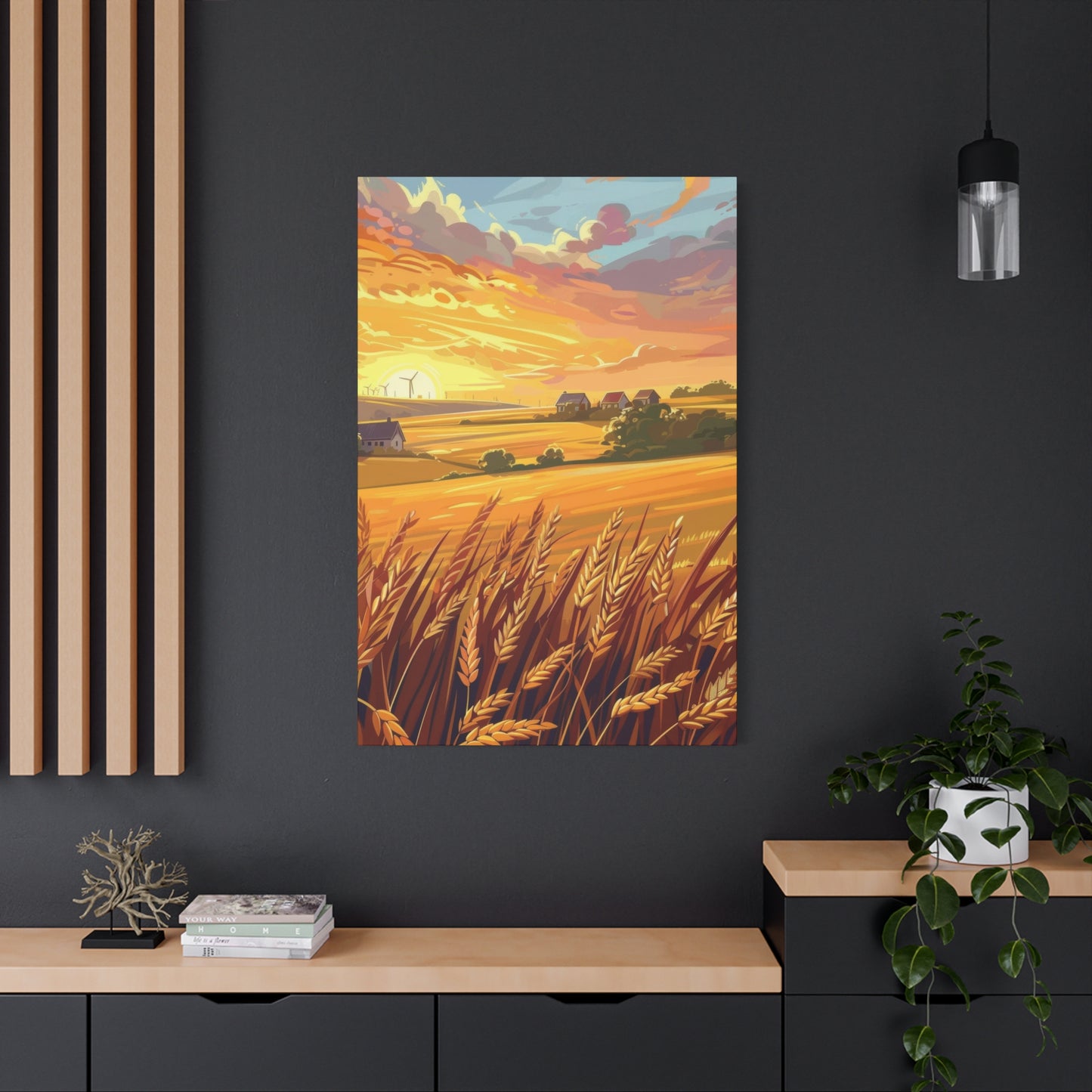
Golden Wheat Fields Countryside Wall Art & Canvas Prints
Golden Wheat Fields Countryside Wall Art & Canvas Prints
Couldn't load pickup availability
Capturing Rural Splendor Through Golden Wheat Fields Countryside Wall Art: A Comprehensive Exploration of Agricultural Landscape Decoration
The allure of sprawling grain farmlands bathed in sunlight has captivated artists and homeowners for centuries. Golden wheat fields countryside wall art represents more than mere decoration—it embodies the essence of pastoral living, agricultural heritage, and the timeless beauty of rural landscapes. This form of artistic expression transforms interior spaces by bringing the serenity and warmth of harvest season indoors, creating environments that resonate with natural elegance and cultural significance.
The phenomenon of agricultural landscape artwork has experienced remarkable growth in recent decades, with homeowners increasingly seeking connections to nature and simpler times. Golden wheat fields countryside wall art serves this desire perfectly, offering visual representations of abundance, prosperity, and the cyclical rhythms of farming life. These pieces range from photographic prints capturing actual harvest scenes to painted interpretations that emphasize the emotional and aesthetic qualities of grain-covered hillsides.
The Aesthetic Appeal and Visual Characteristics of Harvest Landscape Artwork
The magnetic charm of golden wheat fields countryside wall art stems from its inherent visual warmth and textural complexity. Amber-hued grain stalks swaying in gentle breezes create natural patterns that artists have long sought to capture. The interplay between sunlight and mature crops produces a luminous quality that few other natural subjects can match, making these artworks particularly effective at brightening and energizing interior environments.
Color palettes in these artistic works typically feature rich golden yellows, burnt oranges, and warm amber tones that evoke feelings of comfort and contentment. These hues work harmoniously with various design schemes, from rustic farmhouse aesthetics to contemporary minimalist spaces. The natural color spectrum found in wheat field imagery provides designers with versatile options that complement both neutral and vibrant interior palettes.
Textural elements within golden wheat fields countryside wall art contribute significantly to its visual impact. Artists often emphasize the tactile qualities of grain stalks, the roughness of agricultural land, and the organic irregularity of natural farmland. Whether rendered through impasto painting styles, high-resolution photography, or mixed media approaches, these textural components add depth and dimensionality that engage viewers on multiple sensory levels.
The compositional structures common in harvest landscape artwork frequently employ classic artistic principles such as leading lines, vanishing points, and golden ratio proportions. Rows of planted grain naturally create perspective lines that draw the eye through the composition, while expansive skies overhead provide breathing room and spatial balance. These compositional elements make golden wheat fields countryside wall art particularly effective at creating focal points within rooms or extending perceived space in smaller areas.
The Cultural Significance and Symbolism Behind Agricultural Landscape Imagery
Throughout human civilization, wheat and grain cultivation have represented foundational elements of societal survival and prosperity. Golden wheat fields countryside wall art taps into this deep cultural reservoir, carrying symbolic meanings that resonate across generations and geographic boundaries. The imagery speaks to fundamental human experiences related to harvest, sustenance, and the relationship between people and land.
In numerous cultures worldwide, grain fields symbolize abundance, fertility, and successful cultivation. Displaying golden wheat fields countryside wall art within homes can serve as visual affirmations of prosperity and gratitude for life's provisions. This symbolism operates on both conscious and subconscious levels, influencing the emotional atmosphere of spaces where such artwork resides.
The pastoral ideal—a romanticized vision of rural life—has influenced Western art and literature for centuries. Golden wheat fields countryside wall art participates in this tradition, offering urban dwellers visual connections to agricultural roots and simpler lifestyles. This connection becomes particularly meaningful in contemporary society, where increasing numbers of people live removed from farming communities and natural landscapes.
Seasonal associations embedded within harvest imagery carry their own symbolic weight. Golden wheat fields typically represent late summer and early autumn—seasons associated with maturity, fulfillment, and the rewards of patient labor. These temporal markers can influence how spaces feel throughout the year, with harvest artwork providing constant reminders of nature's productive cycles regardless of actual weather conditions outside.
Exploring Different Artistic Styles and Mediums for Grain Field Representations
The versatility of golden wheat fields countryside wall art manifests through diverse artistic approaches and execution methods. Photographic interpretations capture realistic details with precision, documenting actual farmlands in specific locations and lighting conditions. These photographic works appeal to viewers seeking authentic representations of agricultural landscapes, often featuring dramatic skies, weather phenomena, or specific times of day that enhance the emotional impact of the scene.
Impressionistic renderings of wheat fields emphasize atmospheric qualities and emotional responses over precise detail. Artists working in this style use visible brushstrokes, vibrant color applications, and loose compositional structures to convey the sensory experience of standing amid ripening grain. This approach creates golden wheat fields countryside wall art that feels dynamic and alive, capturing movement and light in ways that rigid realism cannot achieve.
Abstract interpretations push further from literal representation, extracting essential qualities of color, texture, and form from harvest landscapes. These works might reduce wheat field imagery to geometric patterns, color field compositions, or textural explorations that suggest agricultural themes without depicting recognizable landscapes. Such pieces offer sophisticated design options for contemporary interiors where overt traditionalism might feel incongruous.
Watercolor treatments bring delicate, ethereal qualities to grain field subjects. The translucent layering possible with aqueous media creates luminous effects particularly suited to capturing sunlight filtering through wheat stalks or the hazy atmosphere of harvest mornings. Golden wheat fields countryside wall art executed in watercolor often features softer edges and more atmospheric perspectives than works in opaque media.
Oil painting remains a classic medium for agricultural landscape artwork, offering rich color saturation and textural possibilities that enhance the sensory appeal of wheat field subjects. The ability to layer paint, create impasto effects, and blend colors seamlessly makes oil particularly effective for capturing the complex visual information present in golden grain fields under various lighting conditions.
Digital art and mixed media approaches expand creative possibilities further, allowing artists to combine photographic elements with painted or drawn components, incorporate textural additives, or manipulate imagery in ways impossible through traditional methods alone. These hybrid approaches produce golden wheat fields countryside wall art that bridges multiple aesthetic categories while offering unique visual experiences.
How Different Interior Design Styles Incorporate Harvest Landscape Artwork
The farmhouse aesthetic provides perhaps the most natural home for golden wheat fields countryside wall art, where such imagery reinforces thematic consistency and cultural authenticity. Within these spaces, harvest artwork complements reclaimed wood furniture, vintage agricultural implements used as decoration, and color schemes drawn from natural materials. The artwork functions as both decoration and cultural statement, affirming connections to agricultural heritage.
Contemporary interiors surprisingly accommodate wheat field imagery quite effectively when pieces are selected thoughtfully. Large-scale photographic prints with minimal framing, abstract interpretations of grain fields, or monochromatic renderings can harmonize with modern furnishings and clean architectural lines. The key lies in selecting golden wheat fields countryside wall art that emphasizes formal qualities—composition, color relationships, textural interest—rather than sentimental or overtly rustic characteristics.
Transitional design schemes benefit from harvest landscape artwork that balances traditional subject matter with contemporary execution. A classically composed wheat field scene printed on canvas with gallery wrapping, for instance, bridges traditional and modern sensibilities. These spaces often feature neutral backgrounds that allow the warm tones within golden wheat fields countryside wall art to provide controlled color accents without overwhelming other design elements.
Rustic lodge and cabin interiors find natural affinity with agricultural landscape imagery, particularly pieces that emphasize rugged natural beauty and weathered authenticity. Within these contexts, golden wheat fields countryside wall art often appears alongside other nature subjects—mountains, forests, wildlife—creating comprehensive natural themes that transport inhabitants away from urban environments mentally if not physically.
Scandinavian-inspired interiors occasionally incorporate wheat field artwork when pieces align with Nordic aesthetic values of simplicity, natural connection, and restrained color palettes. Lighter, airier interpretations of harvest landscapes—perhaps featuring wheat fields under overcast skies or rendered in pale, washed-out tones—can complement the characteristic whites, grays, and natural woods of Scandinavian design while adding warmth through subject matter.
Industrial loft spaces sometimes employ golden wheat fields countryside wall art as deliberate counterpoint to hard architectural surfaces and urban contexts. The soft, organic qualities of grain field imagery provide visual and emotional relief from exposed brick, concrete floors, and metal fixtures, creating balance between natural and manufactured elements within the same environment.
Selecting Appropriate Sizes and Scales for Maximum Visual Impact
The physical dimensions of golden wheat fields countryside wall art significantly influence its effectiveness within specific spaces. Oversized pieces create dramatic focal points that command attention and anchor entire rooms around their presence. In living rooms with substantial wall space, large-scale harvest artwork measuring five feet or more in width can establish design direction while providing immersive visual experiences that transport viewers into depicted landscapes.
Medium-sized pieces offer versatility for various applications, working effectively above furniture, in hallways, or as components within gallery wall arrangements. Golden wheat fields countryside wall art at this scale—typically measuring between two and four feet in any dimension—provides sufficient visual presence without overwhelming adjacent elements or requiring excessive wall space for proper display.
Smaller harvest landscape artworks function well in intimate spaces such as powder rooms, home offices, or reading nooks where larger pieces would feel oppressive. These compact works can also combine effectively in grouped arrangements, with multiple small wheat field images creating collective impact greater than individual pieces might achieve alone.
Vertical orientations of golden wheat fields countryside wall art emphasize height and can make rooms with standard ceiling heights feel more spacious. Portrait-format harvest scenes might focus on single wheat stalks in detail or crop field views that emphasize foreground-to-horizon depth rather than lateral expanse. These vertical compositions work particularly well in narrow wall spaces beside windows or doors.
Horizontal formats naturally suit wheat field subjects, mirroring the typically lateral expanse of actual agricultural landscapes. Panoramic proportions especially enhance the sense of spaciousness and open rural vistas. Golden wheat fields countryside wall art in wide, shallow formats can visually expand narrow rooms or provide grounding horizontal elements in spaces with predominantly vertical features.
Square formats offer balanced, stable compositions that work well in symmetrical design schemes or contemporary interiors where unconventional proportions might feel discordant. Wheat field imagery composed within square boundaries requires careful cropping and compositional consideration to avoid feeling arbitrarily constrained, but successful examples create harmonious, centered visual experiences.
The Role of Framing and Presentation in Enhancing Harvest Artwork
Frame selection dramatically influences how golden wheat fields countryside wall art integrates with surrounding decor and the emotional tone it projects. Traditional wooden frames with warm finishes complement the natural subject matter while reinforcing rustic or farmhouse aesthetics. Wider moldings with visible wood grain echo the organic qualities within the artwork itself, creating visual continuity between image and presentation.
Distressed or weathered frame finishes enhance authenticity perceptions when applied to golden wheat fields countryside wall art, suggesting age and heritage that align with agricultural themes. These treatments work particularly effectively with vintage-style prints or artwork deliberately aged in appearance, though they can also create interesting contrasts when paired with crisp contemporary photography of grain fields.
Sleek metal frames in bronze, brass, or gold tones provide elegant presentations that honor the warm color palette of wheat field imagery while introducing refined sophistication. These frames suit transitional or contemporary interiors where purely rustic treatments might feel incongruous, allowing golden wheat fields countryside wall art to maintain thematic integrity while adapting to more polished design contexts.
Minimalist float frames or simple gallery wrapping without external frames emphasize contemporary presentation while allowing artwork to speak without decorative interference. This approach works well with photographic prints or paintings where composition extends to canvas edges, creating clean, modern appearances that suit minimalist or industrial interiors.
Matting options influence perceived formality and visual breathing room around golden wheat fields countryside wall art. Wide mats in neutral tones create formal, gallery-like presentations while providing visual separation between artwork and frame. Narrower mats or their complete absence produce more casual, intimate relationships between image and viewer, with artwork feeling more immediate and less formally presented.
Shadow box framing creates dimensional depth particularly effective with mixed media or three-dimensional elements incorporated into harvest landscape artwork. This presentation method adds physical depth that can mirror spatial depth within depicted wheat fields, enhancing immersive qualities while protecting delicate artistic elements behind glass or acrylic glazing.
Color Coordination Strategies Between Wheat Field Artwork and Interior Palettes
The warm golden tones inherent in wheat field imagery provide natural starting points for broader interior color schemes. Rooms featuring golden wheat fields countryside wall art often incorporate complementary warm neutrals—beiges, tans, creams—that echo harvest colors while providing cohesive backgrounds. This monochromatic approach creates serene, harmonious environments where artwork integrates seamlessly rather than contrasting sharply with surroundings.
Cooler accent colors create dynamic tension when paired with warm wheat field artwork, providing visual interest through temperature contrast. Soft blues suggesting sky elements, sage greens referencing foliage or distant vegetation, or muted grays can balance the warmth of golden wheat fields countryside wall art while preventing spaces from feeling monotonously warm-toned. These cooler elements might appear in textiles, secondary furniture pieces, or architectural details.
Earth tone palettes naturally accommodate harvest landscape imagery, with browns, terracottas, and ochres reinforcing connections to soil and agricultural themes. Spaces employing these schemes feel grounded and organic, with golden wheat fields countryside wall art functioning as natural extensions of the established palette rather than contrasting elements requiring visual reconciliation.
Unexpected color pairings can produce striking results when sophisticated designers deliberately juxtapose wheat field artwork with unconventional palette choices. Deep charcoal or navy backgrounds, for instance, dramatically showcase the luminous quality of golden grain fields, creating high-contrast presentations that feel both bold and refined. Such approaches work particularly well in contemporary or eclectic interiors where conventional matching feels too predictable.
Seasonal palette rotations allow homeowners to vary the relationship between golden wheat fields countryside wall art and surrounding colors throughout the year. Lighter, airier textiles and accessories during spring and summer might create one aesthetic relationship with harvest artwork, while richer, deeper tones introduced during autumn and winter can dramatically shift the same piece's integration within its space, demonstrating remarkable versatility.
Metallic accents in gold, bronze, or copper tones create subtle harmonies with wheat field imagery without literally matching colors. These reflective elements catch and play with light similarly to how sunlight interacts with actual grain fields, establishing material connections that feel sophisticated rather than matchy. Golden wheat fields countryside wall art gains additional visual poetry when surrounded by carefully placed metallic details that echo without duplicating its inherent glow.
Lighting Considerations for Properly Illuminating Grain Field Artwork
Natural light interactions with golden wheat fields countryside wall art create dynamic viewing experiences that change throughout the day. Positioning harvest artwork where indirect daylight reaches it produces ever-shifting appearances as sun angles and intensity vary. Morning light might cool tones slightly, while afternoon sun intensifies warm golden hues, creating temporal variety that keeps artwork feeling fresh and responsive to actual environmental conditions.
Direct sunlight exposure requires careful consideration, as prolonged UV radiation damages many artistic media, causing fading, discoloration, and material degradation. When golden wheat fields countryside wall art occupies spaces receiving direct sun, protective measures become necessary—UV-filtering glass or acrylic glazing, window treatments that diffuse intense light, or positioning that avoids the sun's most direct rays while still receiving ambient natural illumination.
Artificial lighting schemes dramatically influence how wheat field artwork appears after dark and in spaces lacking natural light. Warm-toned LED or halogen bulbs complement the inherent warmth of harvest imagery, maintaining color accuracy while creating inviting atmospheres. Cooler fluorescent or daylight-balanced bulbs can drain life from golden tones, making careful bulb selection crucial for proper presentation of golden wheat fields countryside wall art.
Picture lights mounted directly above or below artwork provide focused illumination that highlights pieces as deliberate focal points. When applied to golden wheat fields countryside wall art, these fixtures create gallery-quality presentations while allowing viewers to appreciate textural details and color subtleties that might disappear under general ambient lighting alone. Adjustable fixtures offer flexibility for highlighting different portions of larger pieces.
Track lighting and directional spotlights allow precise control over how light strikes golden wheat fields countryside wall art, enabling designers to emphasize particular compositional elements or create dramatic shadows and highlights. This approach works especially well with textured paintings where raking light reveals surface variations, adding dimensional interest beyond the two-dimensional image alone.
Ambient lighting strategies integrate harvest artwork into overall room illumination schemes rather than spotlighting pieces individually. This approach creates more subtle, integrated presentations where golden wheat fields countryside wall art contributes to environmental atmosphere without demanding singular attention. Such lighting suits spaces where artwork functions as part of holistic design rather than standalone feature.
Placement Strategies for Different Rooms and Functional Spaces
Living rooms provide ideal canvases for prominent golden wheat fields countryside wall art, where large-scale pieces can anchor seating arrangements and establish design themes. Positioning harvest artwork above sofas creates natural focal points that organize furniture layouts while providing conversation starters and visual interest. The scale of living room spaces accommodates substantial pieces that might overwhelm more intimate areas.
Dining rooms benefit from wheat field imagery that reinforces themes of sustenance, harvest, and gathering. Golden wheat fields countryside wall art in these spaces subtly acknowledges food sources and agricultural foundations of meals shared around tables. The formal or semiformal nature of many dining rooms suits more carefully composed, balanced harvest landscape compositions rather than casual or abstract interpretations.
Bedroom environments welcome the serene, pastoral qualities of grain field artwork, which promotes restful atmospheres conducive to relaxation and sleep. Golden wheat fields countryside wall art in sleeping spaces often features softer treatments—gentler color saturations, less dramatic contrasts, more ethereal or dreamlike renderings—that calm rather than energize. Positioning such pieces where they're visible from bed provides peaceful imagery for morning waking and evening unwinding.
Home office spaces gain unexpected benefits from agricultural landscape artwork, which provides mental respite from work demands while subtly suggesting growth, cultivation, and eventual harvest of professional efforts. Golden wheat fields countryside wall art in work environments offers visual breaks where eyes can rest during intensive tasks, potentially reducing fatigue and maintaining mental freshness throughout workdays.
Kitchen and dining area walls provide thematically appropriate locations for wheat field imagery given these spaces' connections to food and nourishment. More casual, perhaps smaller-scale golden wheat fields countryside wall art works well in these active, functional areas where formal presentation might feel pretentious. The warmth of harvest imagery complements kitchen gathering functions while reinforcing connections between meals and agricultural origins.
Entryway and foyer spaces create first impressions that wheat field artwork can significantly influence. Golden wheat fields countryside wall art in these transitional areas immediately communicates aesthetic preferences while offering welcoming warmth to arriving guests. These locations often receive visitors' full attention briefly, making them suitable for striking or particularly beautiful pieces that reward focused observation.
Hallway galleries provide excellent opportunities for serial presentations where multiple wheat field images at various scales or representing different seasons or times of day create narrative sequences. These transitional spaces often feature longer, narrower wall expanses ideally suited to horizontal harvest landscape formats. Golden wheat fields countryside wall art in hallways guides movement through homes while maintaining visual interest along otherwise potentially monotonous passages.
Bathroom spaces, particularly larger master baths, can unexpectedly accommodate wheat field artwork where moisture-resistant materials and protective glazing prevent damage. The contemplative privacy of bathrooms suits peaceful pastoral imagery, with golden wheat fields countryside wall art providing calming views during personal care routines. Smaller powder rooms benefit from compact harvest scenes that add character to spaces otherwise treated as purely functional.
Creating Gallery Walls and Grouped Arrangements with Harvest Imagery
Cohesive gallery walls featuring exclusively wheat field imagery at various scales and in different artistic styles create focused thematic presentations with substantial visual impact. This approach allows homeowners to explore harvest landscape subject matter comprehensively while filling significant wall space with coordinated yet varied content. Golden wheat fields countryside wall art benefits from this treatment by demonstrating the subject's versatility and richness through multiple interpretations.
Mixed subject gallery walls that include wheat field pieces alongside complementary imagery—other agricultural subjects, rural buildings, farm animals, or natural landscapes—create broader pastoral themes without monotonous repetition. In these arrangements, golden wheat fields countryside wall art functions as anchor pieces that establish thematic direction while related images elaborate on rural life and natural beauty more comprehensively.
Grid arrangements impose geometric order on multiple wheat field pieces, creating contemporary, organized presentations that feel intentional and designed rather than casually accumulated. This systematic approach works particularly well with uniformly sized golden wheat fields countryside wall art pieces, perhaps photographic series capturing the same field under different conditions or abstract variations on harvest themes. The regularity of grid layouts provides structure that balances organic subject matter.
Salon-style asymmetric arrangements embrace apparently casual, accumulated-over-time appearances while actually requiring careful planning for visual balance. Within these compositions, varied sizes and orientations of golden wheat fields countryside wall art pieces combine with negative space to create dynamic, interesting walls that reward extended viewing. This approach suits eclectic or bohemian interiors where overly formal organization might feel constraining.
Leaning arrangements where artwork rests on mantels, shelves, or ledges rather than hanging create flexible, easily changeable presentations. This casual approach allows frequent rotation of golden wheat fields countryside wall art pieces, preventing visual stagnation while accommodating seasonal mood changes or acquisition of new works. The relaxed aesthetic suits contemporary farmhouse or casual transitional interiors particularly well.
Triptych and multi-panel presentations divide single harvest landscape compositions across multiple canvases, creating segmented yet unified visual experiences. Golden wheat fields countryside wall art executed as triptychs generates contemporary appeal while maintaining traditional subject matter. The divisions between panels add structural interest and allow larger overall dimensions while keeping individual pieces manageable in size and weight.
Seasonal Variations and How Wheat Field Artwork Adapts Throughout the Year
The intrinsic seasonal associations of harvest imagery mean golden wheat fields countryside wall art maintains relevance differently across months. During late summer and autumn, when actual grain harvests occur, wheat field artwork feels particularly timely and connected to concurrent natural cycles. The warmth and golden tones within these pieces harmonize perfectly with autumn's characteristic light quality and seasonal color transitions in nature.
Winter months might seemingly conflict with harvest imagery, yet golden wheat fields countryside wall art provides visual warmth precisely when outdoor landscapes turn cold and colorless. The piece functions as memory of warmer seasons and promise of returning abundance, offering psychological comfort during darker, colder periods. The contrast between snow-covered actual views outside windows and golden harvest scenes inside creates poignant reminders of seasonal cycles.
Spring environments transition toward renewal and fresh growth that differs from harvest's mature fulfillment themes. However, golden wheat fields countryside wall art during spring months can represent aspirational goals—the eventual fruition toward which springtime planting and growth aim. The artwork becomes future-oriented rather than present or past-focused, maintaining relevance through shifted temporal perspective.
Summer's green growth phases contrast most sharply with golden harvest imagery, creating either interesting tension or perceived disconnect depending on individual sensibilities. Some viewers appreciate the anticipatory quality this creates, with artwork previewing what growing crops will become. Others might find the contrast jarring, preferring artwork that mirrors current seasonal conditions more directly.
Accompanying decor rotations allow homeowners to shift golden wheat fields countryside wall art's seasonal integration through surrounding textiles, accessories, and accent colors. Autumn introduces complementary russet, burgundy, and deeper brown elements that amplify harvest themes. Spring and summer might surround the same artwork with lighter, fresher colors that create contrast rather than harmony, demonstrating the piece's versatility across different contextual relationships.
Permanent installations of wheat field artwork benefit from selecting pieces with broader seasonal appeal—perhaps those featuring elements like expansive skies, varied weather conditions, or less obviously autumnal color saturation. Golden wheat fields countryside wall art with these qualities maintains visual freshness year-round by emphasizing timeless landscape qualities over specifically harvest-moment characteristics.
The Psychological Effects and Emotional Responses to Agricultural Landscapes
Color psychology research demonstrates warm tones like those predominant in wheat field imagery produce feelings of comfort, security, and contentment. Golden wheat fields countryside wall art leverages these inherent color effects, subtly influencing emotional atmospheres within spaces where pieces reside. The amber and honey tones characteristic of ripe grain fields trigger associations with warmth, both literally in terms of temperature and metaphorically regarding emotional states.
Biophilic design principles suggest humans possess innate connections to nature that influence wellbeing when architectural and interior environments incorporate natural elements. Golden wheat fields countryside wall art provides nature connections for urban residents separated from actual agricultural landscapes, potentially satisfying biophilic needs through visual representation even when direct nature contact remains impossible or impractical.
The horizontal emphasis common in harvest landscape compositions produces calming effects associated with horizons and expansive views. Human visual systems evolved interpreting distant horizons as indicators of safety—expansive views providing early warning of approaching threats. Golden wheat fields countryside wall art taps into these evolutionary preferences, creating subconscious comfort through compositional structures that suggest safe, open environments.
Pastoral imagery's romanticized simplicity offers mental escape from contemporary life's complexity and rapid pace. Golden wheat fields countryside wall art provides visual portals to slower, more grounded existences tied to seasonal rhythms and physical labor's tangible results. This escapist quality holds particular appeal for individuals feeling overwhelmed by modern life's demands, offering psychological refuges within their own homes.
Nostalgia and memory associations frequently accompany agricultural landscape imagery, particularly for individuals with rural backgrounds or childhood farm experiences. Golden wheat fields countryside wall art can trigger powerful reminiscences that strengthen sense of identity and continuity across life stages. Even without direct rural experience, cultural memories transmitted through literature, film, and collective consciousness create emotional resonance with harvest imagery.
Mindfulness and meditative qualities emerge when viewers engage contemplatively with wheat field artwork. The repetitive patterns of grain stalks, subtle color variations, and sense of natural order create visual experiences conducive to mental quieting. Golden wheat fields countryside wall art can function similarly to mandala patterns or Zen garden views, providing focal points for calming visual meditation.
Sourcing Authentic and High-Quality Harvest Landscape Artwork
Local artist communities and farmer's markets provide excellent sources for discovering unique, handcrafted golden wheat fields countryside wall art. Regional artists often bring authentic perspectives on agricultural landscapes they've personally witnessed or inhabited, imbuing works with genuine understanding of rural environments. Supporting local creators simultaneously provides homes with original artwork while contributing to creative economies within communities.
Online marketplaces specializing in independent artists offer vast selections spanning numerous styles, media, and price points. Platforms connecting buyers directly with creators enable discovery of golden wheat fields countryside wall art from artists worldwide while often providing more affordable pricing than traditional gallery representation entails. Careful attention to reproduction quality, printing methods, and material specifications ensures satisfactory purchases despite inability to view pieces physically before buying.
Print-on-demand services allow reproduction of golden wheat fields countryside wall art at custom sizes using personal images or selections from available libraries. This approach provides maximum flexibility regarding dimensions and substrate materials while typically offering lower costs than limited edition prints. Quality varies significantly between services, making research regarding printing processes, color accuracy, and material longevity essential for satisfactory results.
Antique shops and estate sales occasionally yield vintage harvest landscape artwork with authentic age and historical character. These sources require patience and persistent searching but reward dedicated hunters with unique golden wheat fields countryside wall art pieces possessing genuine patina and stories. Original vintage artwork often surpasses contemporary reproductions in craftsmanship quality while offering investment potential as collectible items appreciate over time.
Commercial art retailers provide convenient access to curated selections of golden wheat fields countryside wall art designed specifically for home decoration markets. While perhaps lacking uniqueness of individual artist pieces, commercial offerings deliver consistent quality, coordinated framing options, and return policies that reduce purchasing risk. These sources work well for buyers prioritizing convenience and predictability over absolute originality.
Photography directly capturing actual wheat fields allows creation of completely personalized golden wheat fields countryside wall art reflecting specific locations or memories. Amateur photographers with decent equipment can produce exhibition-quality images when understanding composition principles and properly processing files for printing. This approach results in artwork with personal significance exceeding purchased pieces' emotional value.
Understanding Print Quality, Materials, and Longevity Factors
Substrate selection fundamentally impacts both appearance and durability of golden wheat fields countryside wall art. Canvas prints provide textured, artistic surfaces that suit painterly styles while offering lightweight, wrap-around presentation options. High-quality canvas properly prepared with archival coatings maintains color fidelity and resists environmental degradation over decades, making it excellent for pieces intended as permanent installations.
Paper prints encompass quality ranges from inexpensive posters to museum-grade fine art papers produced specifically for archival longevity. Golden wheat fields countryside wall art printed on cotton rag papers or alpha-cellulose stocks with neutral pH ratings resists yellowing, brittleness, and fading significantly better than wood-pulp papers containing lignins and acids that deteriorate over time. The surface characteristics of fine art papers—smooth, textured, matte, or glossy—dramatically affect final appearances.
Metal prints create contemporary presentations with exceptional durability, vivid color saturation, and unique visual depth. The dye-sublimation process permanently infuses images into polymer-coated aluminum sheets, producing golden wheat fields countryside wall art resistant to moisture, UV exposure, and physical damage. The luminous quality and dimensional depth characteristic of metal prints particularly suit photographic wheat field images, though the modern aesthetic may not harmonize with traditional design schemes.
Acrylic prints sandwich images between clear acrylic face sheets and backing materials, creating glossy, glass-like appearances with impressive visual depth. This presentation method enhances color vibrancy while protecting imagery from environmental damage. Golden wheat fields countryside wall art executed as acrylic prints gains contemporary sophistication, though glossy surfaces may produce reflections problematic in certain lighting conditions.
Wood prints transfer images directly onto natural wood substrates, allowing wood grain to show through and become part of the artistic composition. This rustic presentation method naturally suits agricultural subjects, with golden wheat fields countryside wall art on wood creating authentic farmhouse aesthetics. Durability depends on proper sealing and finishing, with quality wood prints lasting decades when appropriately protected.
Ink quality and printing technology profoundly affect longevity and color accuracy. Pigment-based archival inks resist fading far better than dye-based alternatives, maintaining color integrity for 100+ years under proper conditions. Golden wheat fields countryside wall art intended as heirloom pieces or significant investments warrant premium archival printing using museum-quality materials and processes that ensure multi-generational survival.
Proper Hanging Methods and Hardware for Different Wall Types
Drywall installations require appropriate anchors matching artwork weight and dimensions. Lightweight golden wheat fields countryside wall art under fifteen pounds typically hangs securely on standard picture hooks with angled nails driven into drywall. Heavier pieces necessitate wall anchors—toggle bolts, molly bolts, or threaded drywall anchors—that distribute weight across larger drywall areas rather than relying solely on surface fastening.
Plaster wall mounting demands different approaches respecting older materials' brittle characteristics. Pre-drilling pilot holes prevents cracking when installing screws or anchors in plaster surfaces. Golden wheat fields countryside wall art in historic homes with plaster walls often hangs most securely on picture rail systems original to many period structures, avoiding wall penetration entirely while providing flexible positioning along rails.
Brick and masonry surfaces require specialized hardware like masonry screws, concrete anchors, or adhesive hooks rated for textured surfaces. Installing golden wheat fields countryside wall art on brick involves drilling holes with masonry bits and inserting anchors that grip porous brick material effectively. Alternative methods include brick clips that hook over individual bricks without drilling, though these suit only lighter pieces.
Picture rail and crown molding hanging systems provide damage-free alternatives particularly suited to rental properties or situations where wall penetration is undesirable. These systems suspend golden wheat fields countryside wall art from rails via adjustable cables or chains, allowing repositioning without creating new holes. The visible hardware becomes part of the presentation aesthetic, suiting certain design styles while potentially conflicting with others.
French cleat systems offer secure mounting for heavier golden wheat fields countryside wall art pieces while enabling easy removal and releveling. This method involves attaching interlocking Z-shaped brackets to both wall and artwork back, distributing weight across entire mounting strips rather than single points. The security and adjustability of french cleats particularly suits large, heavy, or valuable pieces warranting extra installation care.
Wire and D-ring combinations provide traditional hanging methods effective across various artwork sizes and weights. Golden wheat fields countryside wall art with wire hanging systems requires securing wire firmly to frame sides with D-rings or eye screws, then suspending wire over wall hooks. This approach allows minor leveling adjustments and positions hanging hardware invisibly behind frames.
Conclusion
Botanical elements in dried or preserved forms create natural harmonies with golden wheat fields countryside wall art. Arrangements featuring wheat stalks themselves, other grain varieties, or wildflowers common to agricultural regions extend artwork themes dimensionally into physical space. These organic decorations can occupy shelves, mantels, or tables near harvest artwork, strengthening overall design cohesion through material and subject connections.
Vintage agricultural implements repurposed as decoration reinforce farmhouse aesthetics established by wheat field imagery. Antique wooden rakes, yokes, milk cans, or smaller hand tools displayed as sculptural objects near golden wheat fields countryside wall art create layered rural narratives within interiors. The authentic history and patina of genuine vintage farm equipment lends credibility and depth to agricultural design themes.
Textile selections incorporating natural fibers and neutral earth tones complement harvest artwork without competing visually. Linen, burlap, wool, and cotton fabrics echo agricultural origins while providing textural variety. Golden wheat fields countryside wall art gains supportive context from surrounding textiles in complementary colors—creams, tans, soft browns—that extend palette consistency throughout spaces.
Wooden furniture pieces, particularly those with visible grain and warm finishes, create material connections with both wheat field subject matter and typical framing choices. The organic irregularity of natural wood harmonizes with agricultural imagery's natural qualities. Golden wheat fields countryside wall art in rooms featuring reclaimed barn wood, rustic pine, or oak furniture pieces participates in comprehensive natural material themes.
Pottery and ceramic objects in earth tones provide three-dimensional accents that share color palettes with harvest artwork. Stoneware crocks, terracotta vessels, or glazed pottery in amber, sienna, and umber tones echo golden wheat fields countryside wall art hues while introducing different textures and forms. These pieces work effectively on surfaces visible near or below wall-mounted artwork.
Metalwork in brass, copper, bronze, or wrought iron contributes material variety while maintaining warm tonal relationships with wheat field imagery. Candleholders, mirror frames, decorative trays, or architectural elements in these metals catch and reflect light similarly to sunlit grain fields. Golden wheat fields countryside wall art gains subtle reinforcement from metallic elements that echo without duplicating its golden luminosity.
Dust accumulation threatens artwork appearance and potentially damages surfaces over extended periods. Regular gentle dusting using soft, clean cloths or feather dusters prevents buildup that can abrade surfaces or dull colors. Golden wheat fields countryside wall art behind glass requires exterior glass cleaning with appropriate solutions, while unglazed pieces need careful direct surface attention avoiding excess moisture or pressure.
Environmental conditions dramatically affect artwork longevity, with humidity and temperature fluctuations causing expansion, contraction, and material degradation. Maintaining stable conditions between 35-55% relative humidity and avoiding temperature extremes protects golden wheat fields countryside wall art from warping, cracking, or mold growth. Climate-controlled interior environments automatically provide much of this protection, though pieces in basements, attics, or poorly insulated rooms face greater risks.
Light exposure remains among the most significant threats to artwork preservation, with both natural and artificial light causing gradual fading and material breakdown. Positioning golden wheat fields countryside wall art away from direct sunlight, using UV-filtering glazing, and employing window treatments to control light exposure extends color vibrancy and material integrity across decades. Even indirect natural light contains UV radiation requiring protective measures for valuable pieces.
Physical damage from impact, scratching, or handling necessitates protective measures during cleaning, moving, or nearby activities. Golden wheat fields countryside wall art in high-traffic areas or homes with children or pets benefits from protective glazing even when archival considerations alone might not require it. Careful handling during any relocation or storage using appropriate padding and support prevents costly damage to frames, surfaces, or substrates.
Professional conservation becomes necessary when damage occurs or valuable pieces show deterioration signs. Qualified art conservators possess expertise and materials for properly restoring golden wheat fields countryside wall art without causing further harm through inappropriate interventions.
Share