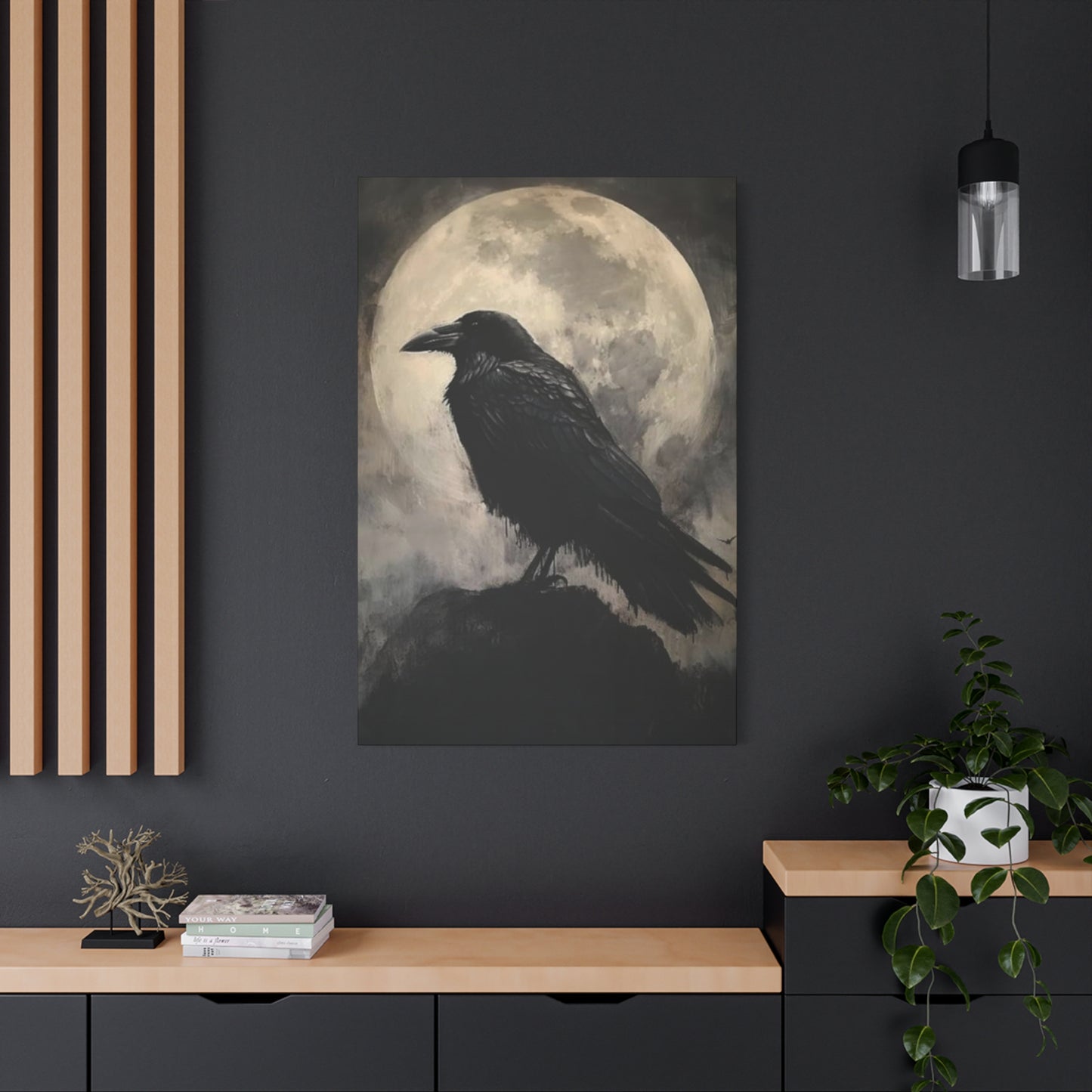
Full Moon Crow Painting Wall Art & Canvas Prints
Full Moon Crow Painting Wall Art & Canvas Prints
Couldn't load pickup availability
Captivating Full Moon Crow Painting Wall Art: Discover the Mystical Beauty and Symbolic Depth Behind Dark Avian Decor
The haunting silhouette of a crow perched against a luminous moon has captured human imagination for centuries. Full moon crow painting wall art represents more than mere decoration—it embodies mystery, transformation, and the eternal dance between light and darkness. This striking visual motif has become increasingly popular in contemporary home design, offering homeowners a way to infuse their spaces with both elegance and enigmatic energy.
Why Dark Avian Imagery Resonates With Modern Interior Design Sensibilities
The allure of crow-themed artwork extends far beyond superficial aesthetics. These intelligent birds have long been associated with wisdom, magic, and the liminal spaces between worlds. When combined with the celestial beauty of a full moon, the resulting imagery creates a powerful focal point that draws the eye and stimulates contemplation.
Interior designers have noted a significant shift toward incorporating nature-inspired elements with darker, more dramatic tones. Full moon crow painting wall art fits perfectly within this trend, offering a sophisticated alternative to conventional floral or landscape pieces. The stark contrast between the bird's dark plumage and the moon's ethereal glow creates visual tension that energizes any room.
Contemporary living spaces benefit from artwork that tells a story or evokes emotion. The crow against the moon serves as a narrative device, suggesting tales of nocturnal adventures, ancient folklore, and natural cycles. This storytelling aspect makes the artwork a conversation starter, inviting guests to interpret the piece through their own experiences and cultural backgrounds.
The monochromatic palette typically associated with these pieces—blacks, grays, silvers, and whites—provides versatility that complements various design schemes. Whether your home features minimalist Scandinavian aesthetics, gothic revival elements, or eclectic bohemian touches, a well-chosen crow and moon piece can harmonize with existing decor while adding dramatic flair.
The Rich Symbolic Heritage That Crows Carry Across Different Cultures
Throughout human civilization, crows have occupied a unique position in mythology and folklore. In Norse traditions, these birds served as messengers for Odin, the all-father, with two ravens named Huginn and Muninn flying across the world to gather information. This association with knowledge and divine communication has persisted through centuries.
Celtic cultures viewed crows as guardians of sacred law and prophetic creatures capable of moving between the physical realm and the spirit world. Their appearance was often interpreted as an omen, though not necessarily negative—these birds could herald transformation, change, or the need for deeper introspection.
Native American tribes across the continent developed diverse relationships with corvids. Some traditions celebrated the crow as a creator figure, while others recognized its role as a trickster who taught important lessons through mischief. The Haida people of the Pacific Northwest considered Raven a transformer who shaped the world and brought light to humanity.
In Japanese culture, crows possess a more benevolent reputation than in many Western traditions. The three-legged crow Yatagarasu serves as a symbol of divine intervention and guidance, often depicted in art and shrine decorations. This creature represents the sun's will and appears in stories as a protector of heroes.
Eastern European folklore presents crows as creatures that exist between life and death, capable of perceiving truths hidden from ordinary mortals. This liminal quality makes them perfect subjects for artwork that seeks to capture mystery and depth. When paired with the full moon—itself a symbol of completion, intuition, and feminine power—the imagery becomes doubly potent.
Exploring Different Artistic Styles That Bring Crow and Moon Imagery to Life
Full moon crow painting wall art manifests in numerous artistic styles, each offering distinct visual experiences. Realistic renderings capture every feather detail, creating almost photographic representations that showcase the bird's natural beauty. These pieces appeal to nature enthusiasts who appreciate ornithological accuracy and the subtle variations in corvid anatomy.
Silhouette-based designs take a minimalist approach, reducing the crow to its essential form against the moon's circular backdrop. This style emphasizes shape and negative space, creating clean compositions that work particularly well in modern interiors. The stark contrast demands attention without overwhelming the space.
Watercolor interpretations introduce fluidity and atmospheric effects, with soft washes of color bleeding across the canvas. These pieces often incorporate purples, blues, and indigos alongside traditional blacks and grays, creating dreamlike scenes that suggest emotion and mood rather than literal representation. The transparency of watercolor allows for layering that adds dimensional depth.
Abstract expressionist versions deconstruct the crow and moon into geometric forms, color fields, or gestural marks. These pieces challenge viewers to engage more actively with the artwork, finding the familiar imagery within unconventional presentations. Such approaches suit collectors who prefer art that provokes thought and resists immediate interpretation.
Gothic and neo-Victorian styles emphasize ornamental details, often incorporating decorative frames, intricate border patterns, or additional symbolic elements like branches, gravestones, or antique keys. These elaborate compositions create rich visual narratives that reward close examination and repeated viewing.
Contemporary digital art brings new possibilities to the genre, utilizing techniques impossible in traditional media. Artists create surreal compositions where multiple moons orbit the crow, where the bird dissolves into starlight, or where reality bends in impossible ways. These pieces appeal to those who appreciate boundary-pushing creativity and aren't bound by naturalistic constraints.
How to Select the Perfect Crow and Moon Artwork for Your Specific Space
Choosing the right full moon crow painting wall art requires consideration of multiple factors. Size represents the first crucial decision—a piece too small will disappear on a large wall, while oversized artwork can overwhelm a cozy space. Measure your wall area carefully, leaving appropriate margins on all sides to ensure the piece breathes within its environment.
The color palette within the artwork should either complement or deliberately contrast with your existing decor. If your room features warm earth tones, a crow painting with cooler blue-grays might provide refreshing contrast. Conversely, spaces dominated by cool colors might benefit from warmer-toned pieces that incorporate browns, sepias, or amber highlights in the moon.
Consider the emotional atmosphere you wish to cultivate. Some crow and moon pieces exude tranquility and meditation, with the bird posed peacefully in contemplative silence. Others radiate energy and dynamism, showing the crow in flight or calling out to the heavens. Your personal preference and the room's purpose should guide this choice—a bedroom might benefit from calmer imagery, while a home office could draw inspiration from more energetic compositions.
The frame or presentation method significantly impacts the overall effect. Traditional wooden frames with ornate details suit classic or vintage-inspired interiors, while sleek metal frames or frameless canvas wraps align better with contemporary aesthetics. Some collectors prefer to float-mount their pieces, creating shadows that add dimensional interest.
Lighting conditions in the display location matter tremendously. Natural light changes throughout the day, affecting how colors and contrasts appear. Artwork placed in dimly lit areas might require illumination from picture lights or strategically positioned lamps. Consider how the piece will look under various lighting conditions before committing to a location.
The viewing distance should inform your size selection. Artwork intended for hallway display, where viewers pass quickly, might benefit from bolder, simpler compositions. Pieces placed in living areas where people linger can sustain more intricate details that reward extended contemplation.
Creative Placement Ideas That Maximize the Visual Impact of Your Artwork
Strategic placement transforms good artwork into stunning focal points. Above a mantelpiece represents classic positioning, drawing the eye upward and anchoring the room's vertical axis. The moon's circular form echoes the hearth's arch, creating geometric harmony. Ensure the piece hangs at appropriate height—typically with the center at eye level, approximately sixty inches from the floor.
Creating gallery walls allows you to incorporate your crow and moon piece within a larger collection. Surround it with complementary artwork that shares thematic or color elements. This approach works exceptionally well in eclectic spaces where curated collections tell personal stories. Mix different sizes and shapes, maintaining consistent spacing between pieces for visual cohesion.
Bedroom placement offers opportunities for personal connection with the imagery. Positioning the artwork above the headboard creates a dramatic backdrop for rest and dreams. The moon's association with night and sleep cycles makes this placement particularly appropriate. Ensure the piece doesn't extend beyond the bed's width—ideally, it should be two-thirds to three-quarters the furniture's width.
Dining spaces benefit from artwork that encourages conversation and contemplation. A large crow and moon piece on the dining room wall becomes a topic of discussion during meals, adding atmosphere to gatherings. The mysterious quality of the imagery can make evenings feel more intimate and special.
Home offices and creative studios draw inspiration from symbolic imagery. The crow's association with intelligence and problem-solving makes it an appropriate companion for work environments. Positioning the piece where you can view it during breaks provides moments of mental refreshment and creative stimulation.
Stairway walls offer often-underutilized display opportunities. A vertical arrangement of crow-themed pieces following the stair's ascent creates dynamic visual flow. Alternatively, a single large piece on a stairway landing becomes a destination, rewarding those who climb the stairs with compelling imagery.
Unexpected locations like powder rooms or entryways can benefit from dramatic artwork. A striking crow and moon piece in a small bathroom creates memorable impact, transforming a utilitarian space into an experience. Entry halls establish tone immediately upon arrival, making bold artistic statements that preview your home's character.
Understanding Different Canvas and Print Options for Long-Lasting Quality
The physical medium carrying the artwork significantly affects both appearance and longevity. Stretched canvas remains the most popular choice, offering texture and depth that printed paper cannot match. The fabric surface adds tactile interest, and when properly stretched over wooden frames, creates a three-dimensional presence on the wall.
Canvas wraps extend the image around the frame's edges, eliminating the need for traditional framing. This modern presentation style works beautifully with crow and moon imagery, allowing the composition to float against the wall. The continuous image creates immersive effects, particularly with pieces showing expansive skies or atmospheric backgrounds.
Giclee prints represent the gold standard for reproduction quality. This method uses archival-quality inks and acid-free materials to create prints that resist fading for decades when properly cared for. Museums use giclee printing for their reproduction programs, testifying to its reliability and color accuracy.
Metal prints offer contemporary alternatives that create luminous, vivid images. The process infuses dyes directly into specially coated aluminum sheets, resulting in weatherproof, incredibly durable pieces. The metallic surface adds subtle shimmer that enhances the moon's luminosity, creating ethereal effects impossible with other media.
Acrylic face-mounted prints sandwich the image between acrylic and backing material, creating stunning depth and color saturation. The glossy surface intensifies blacks and makes colors pop, ideal for dramatic crow silhouettes against glowing moons. These pieces work particularly well in modern spaces with clean lines and contemporary furnishings.
Framed paper prints suit traditional or budget-conscious collectors. High-quality paper stocks with proper matting and UV-protective glass create beautiful presentations. This approach allows for easy frame customization, letting you match the artwork precisely to your decor's style and color scheme.
Wood-mounted prints bring rustic charm, particularly effective for crow imagery. The natural grain visible through thinner print areas adds organic texture that complements nature-themed subjects. These pieces work wonderfully in cabins, lodges, or homes featuring exposed beams and natural materials.
Color Theory Principles That Make Crow and Moon Compositions So Striking
The visual power of full moon crow painting wall art stems partly from sophisticated color relationships. The most common palette—black, white, and gray—creates maximum contrast, the fundamental principle that makes visual elements distinct and attention-grabbing. This high contrast ensures the artwork remains visible and impactful even from across the room.
Value gradients within monochromatic schemes add depth and dimensionality. The moon often features subtle shifts from brilliant white at its center to soft grays near its edges, creating the illusion of three-dimensional form. Similarly, crow feathers might show gradations from deep black to charcoal, suggesting volume and texture through tonal variation.
When artists introduce color, they often employ complementary schemes. Blue moons paired with orange-tinted crows create vibration at their meeting edges, making both elements appear more vivid. Purple-tinged night skies complement yellow moons, producing harmonious yet dynamic compositions that guide the eye around the canvas.
Analogous color schemes using adjacent hues—such as blues, purples, and greens—create cohesive, mood-driven pieces. These combinations evoke specific atmospheres: cooler tones suggest mystery and tranquility, while warmer palettes incorporating reds and oranges imply energy and passion.
The principle of color temperature affects emotional response significantly. Cool-toned crow paintings feel meditative and calming, suitable for bedrooms or quiet contemplation spaces. Warm-toned versions create energized, dynamic feelings appropriate for social areas or creative workspaces.
Saturation levels determine intensity and visual weight. Highly saturated colors demand attention and create excitement, while desaturated, muted tones promote subtlety and sophistication. Many successful crow and moon pieces employ mostly desaturated tones with small areas of intense color, creating focal points that draw the eye strategically.
The phenomenon of simultaneous contrast means that colors appear different depending on surrounding hues. A gray crow against a warm-toned moon appears cooler than the same gray against a cool-toned moon. Skilled artists manipulate these perceptual effects to enhance dimensionality and create visual interest.
Caring for Your Artwork to Preserve Its Beauty Through the Years
Proper maintenance ensures your full moon crow painting wall art remains vibrant for decades. Canvas pieces require regular dusting with soft, dry cloths or specialized art dusters. Avoid using cleaning products or water, which can damage paint and fabric. For stubborn dust accumulation, gentle brushing with a soft-bristled brush removes particles without abrading the surface.
Light exposure represents the primary threat to artwork longevity. Direct sunlight causes fading and deterioration, particularly in pieces created with less-stable pigments. Position artwork away from windows, or use UV-filtering glass and window treatments to minimize exposure. Even indirect bright light accelerates aging, so consider rotating pieces periodically if display locations receive significant illumination.
Humidity control prevents canvas warping and mold growth. Maintain indoor humidity levels between forty and sixty percent, using dehumidifiers in damp climates or humidifiers in dry environments. Avoid hanging artwork in bathrooms or near heating vents where humidity and temperature fluctuate dramatically.
Temperature stability matters as much as humidity. Extreme temperature changes cause materials to expand and contract, potentially damaging paint adhesion and canvas tension. Keep artwork away from fireplaces, radiators, and air conditioning vents. Maintain consistent indoor temperatures year-round whenever possible.
Professional cleaning becomes necessary when regular dusting proves insufficient. Conservators possess specialized knowledge and tools for safely cleaning delicate artwork. If you notice discoloration, staining, or surface degradation, consult a professional rather than attempting repairs yourself. Amateur restoration efforts often cause irreversible damage.
Proper hanging hardware prevents accidents and damage. Use appropriate wall anchors rated for your artwork's weight, particularly with large pieces. Check mounting hardware annually to ensure screws haven't loosened and wires remain intact. Wire hangers should have sufficient weight capacity with a safety margin.
Insurance coverage protects valuable artwork from theft, damage, or loss. Document your collection with photographs and purchase receipts. Some homeowners' policies limit coverage for art, so specialized fine art insurance might be necessary for valuable pieces. Update documentation whenever you acquire new works.
Pairing Your Crow Artwork With Complementary Decorative Elements
Building cohesive design around your full moon crow painting wall art enhances both the piece and the entire room. Textile choices create foundational connections—throw pillows featuring geometric patterns in the artwork's color palette tie the piece to seating areas. Curtains in complementary tones frame windows while echoing the artwork's atmosphere.
Natural elements reinforce the crow's connection to the outdoor world. Driftwood sculptures, stone accents, or living plants create dialogue between the artwork and three-dimensional objects. A strategically placed potted tree near the painting extends the natural theme into the living space, blurring boundaries between indoors and outdoors.
Metallic accents enhance the moon's luminosity through sympathetic materials. Silver candleholders, brass picture frames, or copper decorative objects catch light and create sparkle that echoes the celestial body in the painting. These reflective surfaces add visual interest while maintaining thematic consistency.
Furniture selection can either complement or contrast with the artwork's mood. Dark wood pieces with substantial presence match the crow's weight and solidity, creating gothic or dramatic atmospheres. Conversely, light-colored, minimalist furniture allows the artwork to dominate visually, serving as the room's undisputed focal point.
Lighting fixtures become sculptural elements that can reference the artwork's themes. Pendant lights with spherical shapes echo the moon's form, while fixtures featuring branch-like arms suggest the trees where crows perch. The quality and color of light these fixtures produce should enhance rather than compete with the artwork.
Additional artwork creates thematic collections. Pieces featuring other corvids, nocturnal creatures, or celestial bodies build a curated collection that tells a larger story. Alternatively, abstract pieces sharing the color palette maintain visual harmony without literal repetition.
Books and decorative objects on shelves near the artwork can extend its narrative. Volumes about ornithology, mythology, or astronomy create intellectual connections. Decorative objects like feathers under glass domes, antique keys, or vintage telescopes add layers of meaning and visual interest.
The Symbolic Meanings That Make These Pieces More Than Simple Decoration
Full moon crow painting wall art carries profound symbolic weight that resonates on conscious and subconscious levels. The crow itself represents transformation and change—in many traditions, these birds guide souls through transitions, making them appropriate symbols for life phases. Hanging such artwork during periods of personal growth or change can serve as visual affirmation of the transformative journey.
The full moon symbolizes completion, culmination, and the peak of cyclical processes. Combined with the crow, the imagery suggests the apex of transformation—the moment when change becomes manifest and visible. This makes the pairing particularly meaningful for those celebrating achievements or acknowledging personal evolution.
Intelligence and wisdom flow through crow symbolism across cultures. These remarkably clever birds solve complex problems, use tools, and demonstrate self-awareness. Artwork featuring them can serve as reminders to approach challenges thoughtfully, to value knowledge, and to recognize that intelligence takes many forms.
The duality inherent in the imagery—light and dark, day and night, conscious and unconscious—speaks to the complexity of existence. Rather than presenting simplistic good-versus-evil narratives, the crow against the moon acknowledges that wholeness requires integrating shadow aspects with light, embracing the full spectrum of human experience.
Magic and mystery permeate the visual metaphor. The nocturnal setting suggests hidden knowledge, secrets revealed only in darkness, and the enchantment of moonlit hours. For those drawn to mystical practices or who value intuition and the unseen dimensions of life, this artwork serves as a visual anchor for those interests.
Messages and communication form another layer of meaning. Crows vocalize extensively and share information within their communities. The painting might represent the importance of speaking truth, sharing knowledge, or staying connected with others. In an increasingly isolated world, this reminder of communication's value carries particular relevance.
Commissioning Custom Artwork That Perfectly Matches Your Vision
While commercially available pieces offer convenience and affordability, commissioned artwork provides personalized expression. Finding the right artist begins with research—explore portfolios to identify creators whose style resonates with your aesthetic preferences. Social media platforms and artist marketplaces showcase diverse talents working in various styles and media.
Initial consultations establish the project's scope and possibilities. Discuss your vision in detail: preferred size, color palette, style approach, and specific elements you wish included. Share images of your space, existing decor, and other artwork you admire. This information helps the artist understand your taste and create something truly suited to your environment.
Budget discussions should occur early and transparently. Custom artwork prices vary enormously based on artist reputation, piece size, medium, and complexity. Established artists command higher fees, but emerging talents often produce exceptional work at more accessible price points. Be realistic about what your budget allows and communicate clearly about financial constraints.
The creation process typically involves preliminary sketches or digital mockups for your approval before the artist proceeds to the final piece. This checkpoint ensures the direction aligns with your expectations and allows adjustments before significant work investment. Review these drafts carefully, considering how the piece will function in your intended space.
Timeline expectations should be established upfront. Custom pieces require time—sometimes weeks or months depending on size, complexity, and the artist's current workload. Rushing the process rarely yields optimal results, so plan accordingly if you need the piece by a specific date.
Contracts protect both parties by documenting agreed-upon terms: size, medium, price, deposit amount, completion timeline, and revision policies. Clear contracts prevent misunderstandings and provide recourse if disputes arise. Both parties should retain signed copies for reference throughout the project.
Final delivery arrangements require coordination. Large pieces might need special shipping considerations or professional installation. Discuss framing expectations—some artists deliver work ready to hang, while others provide unframed pieces. Clarify these details before the project begins to avoid surprises.
Seasonal Styling Ideas That Keep Your Crow Artwork Fresh Year-Round
While full moon crow painting wall art remains timelessly appealing, seasonal styling updates prevent the decor from feeling static. Autumn naturally suits crow imagery, with the birds' association with harvest season and the thinning veil between worlds. Surround the piece with seasonal elements: dried wheat bundles, burgundy and orange textiles, mini pumpkins, or fallen leaves arranged in shallow bowls.
Winter styling emphasizes the contrast between the artwork's darkness and the season's brightness. Silver and white accents—crystalline ornaments, white pillar candles, frosted branches in tall vases—create a winter wonderland effect that makes the crow appear to preside over a snow-covered landscape. String lights with cool white bulbs add magical ambiance.
Spring requires subtler touches to avoid clashing with the artwork's darker tones. Introduce life through potted bulbs—hyacinths, paperwhites, or tulips—in containers that match your color scheme. Pale green accents suggest renewal without overwhelming the piece. Sheer curtains that filter incoming light create atmospheric effects that change throughout the day.
Summer styling can embrace the dramatic contrast between bright outdoor light and the artwork's nocturnal mood. Fresh flowers in deep purples, blues, or whites echo nighttime blooms. Lightweight textiles in indigo or charcoal replace heavier winter fabrics, maintaining the color story while adapting to warmer weather.
Holiday styling offers creative opportunities without compromising the artwork's integrity. During festive seasons, incorporate decorations in complementary colors—black and silver for Christmas, orange and black for Halloween. The crow painting becomes part of the seasonal narrative rather than competing with it.
Lighting adjustments throughout the year dramatically affect the piece's appearance. Summer's long, bright days call for sheer curtains or blinds that soften intense light. Winter's shorter days might require picture lights or nearby lamps that illuminate the artwork during dark afternoons. Candles create atmospheric lighting that enhances the mystical quality of crow and moon imagery.
Rotating complementary artwork seasonally keeps the space feeling fresh without requiring new purchases. Store pieces not currently displayed properly—wrapped in acid-free paper, stored flat or upright in climate-controlled areas. This rotation approach allows you to enjoy various pieces throughout the year while preventing visual fatigue.
Combining Crow Imagery With Other Nature-Inspired Artistic Themes
Full moon crow painting wall art integrates beautifully within broader nature-inspired design schemes. Pairing it with botanical prints creates interesting contrast—the dark, dramatic crow balances lighter, detailed plant studies. This combination suggests the full spectrum of natural beauty, from delicate blossoms to powerful predators.
Forest and woodland themes provide natural context for crow imagery. Artwork featuring trees, particularly those with bare branches reminiscent of the crow's perching spots, creates environmental continuity. Moss-covered stones, pinecones, or bark-textured elements extend the forest feeling into three dimensions.
Mountain landscapes with their dramatic peaks and expansive skies share the crow painting's sense of grandeur. The vertical thrust of mountains echoes the crow's upward gaze toward the moon, creating compositional harmony. Stone and slate decorative elements reinforce the connection to wild, elemental places.
Ocean and coastal themes might seem unlikely pairings, but crows inhabit shorelines worldwide. Weathered driftwood, sea glass, and rope accents create maritime connections. The moon's influence on tides adds symbolic resonance—both celestial body and ocean embody cyclical rhythms and mysterious depths.
Desert and southwestern aesthetics complement crow imagery through shared emphasis on dramatic spaces and survival. Adobe colors—terra cottas, warm tans, and sage greens—provide warm contrasts to the crow's cool tones. Cactus plants and sand-smoothed stones bring desert character indoors while maintaining natural themes.
Garden-inspired spaces filled with living plants create lush counterpoints to the artwork's stark drama. The crow becomes a guardian figure presiding over the indoor garden, adding a sense of wildness to cultivated spaces. Hanging plants at varying heights create dimensional layering that draws the eye around the room.
Seasonal nature photography rotated throughout the year provides ever-changing context for the permanent crow piece. Spring blossoms, summer meadows, autumn foliage, and winter frost—each season's imagery creates new dialogues with the crow painting while celebrating the natural world's continuous transformation.
Incorporating Crow Artwork Into Different Interior Design Styles
Gothic and Victorian-inspired interiors provide natural homes for full moon crow painting wall art. Rich, dark colors—deep purples, burgundies, and blacks—create dramatic backdrops that make the artwork feel integral rather than decorative. Ornate furniture with carved details, heavy draperies, and antique accessories complete the moody, romantic atmosphere.
Modern minimalist spaces benefit from the crow painting's bold simplicity. Clean lines, neutral color palettes, and uncluttered surfaces allow the artwork to command attention without competition. The high contrast of black crow against white moon aligns perfectly with minimalism's emphasis on essential elements and purposeful design.
Industrial lofts with exposed brick, metal fixtures, and concrete floors gain warmth and narrative interest from crow artwork. The raw, unfinished quality of industrial spaces pairs surprisingly well with the natural subject matter, creating tension between constructed and organic elements. Metal-framed artwork or pieces mounted on reclaimed wood emphasize the industrial aesthetic.
Bohemian interiors with their eclectic collections and layered textiles embrace crow imagery as part of broader storytelling. Mix patterns freely—paisleys, geometrics, ikats—in colors that complement the artwork. Vintage finds, travel souvenirs, and handmade objects create the collected-over-time feeling that defines boho style.
Scandinavian design principles of simplicity, functionality, and connection to nature accommodate crow artwork beautifully. Light wood tones, white walls, and cozy textiles provide subtle backdrops that let the artwork shine. The Nordic appreciation for long winter nights and nature's harsher aspects aligns perfectly with crow symbolism.
Farmhouse and rustic styles incorporate crow paintings as nods to rural life and agricultural traditions. Distressed wood furniture, vintage enamelware, and farm-table dining spaces gain character from the artwork's presence. Crows' association with fields and harvests makes them appropriate symbols for farmhouse aesthetics.
Contemporary eclectic spaces that resist easy categorization thrive on unexpected combinations. The crow painting might hang alongside pop art, abstract expressionism, and traditional landscapes. This approach requires confidence and careful color coordination, but when executed well, creates dynamic, personality-filled spaces.
Understanding the Artistic Process Behind Creating Crow and Moon Paintings
Artists approach crow and moon compositions through various creative processes, each yielding distinct results. Some begin with detailed preliminary sketches, working out composition, proportions, and lighting before touching paint to canvas. This methodical approach ensures technical accuracy and allows experimentation without wasting materials.
Plein air studies—observing real crows and natural moonlight—inform realistic renditions. Artists photograph these subjects extensively, building reference libraries that capture anatomical details, flight patterns, and how moonlight actually appears. This research foundation enables convincing naturalistic portrayals.
Expressive approaches prioritize emotion over accuracy, using the crow and moon as vehicles for feeling rather than literal representation. These artists might begin directly on the canvas without preliminary drawings, allowing intuition to guide mark-making. The resulting pieces often feel more energetic and personal than carefully planned works.
Mixed media techniques combine multiple materials—acrylic paint with ink, watercolor with collage elements, traditional paint with digital enhancements. Each material contributes unique qualities: ink's fluidity, collage's texture, digital's precision. The layered complexity creates rich visual experiences that reward close examination.
Color studies precede final pieces for artists concerned with achieving specific moods or effects. Multiple small paintings exploring different color relationships reveal which palettes best serve the intended atmosphere. This experimentation prevents costly mistakes on large-scale final pieces.
Scale considerations affect every aspect of creation. Large-scale works require different techniques than small intimate pieces—broader brushes, more physical painting motions, stepped-back viewing distances to judge overall composition. Some artists prefer working large to create immersive experiences, while others favor smaller works that invite close, personal viewing.
Drying time influences process, particularly with oils and acrylics. Some artists work wet-into-wet, blending colors directly on canvas before drying. Others prefer letting layers dry completely between applications, building depth through transparency and glazing. These technical choices profoundly affect the final appearance.
The Role of Negative Space in Effective Crow and Moon Compositions
Negative space—the empty areas around and between subjects—proves as important as the crow and moon themselves. Skilled artists use this "emptiness" purposefully, creating breathing room that prevents compositions from feeling cluttered or claustrophobic. In crow paintings, negative space often represents the night sky, its vastness emphasizing the subjects' isolation or prominence.
The shape of negative space deserves as much attention as positive elements. Interesting negative spaces possess their own aesthetic appeal—they might echo the moon's curve, mirror the crow's silhouette, or create secondary shapes that add visual interest. Viewers' eyes move through both positive and negative areas, making both essential to overall composition.
Balance between filled and empty areas affects visual weight and emotional impact. Compositions dominated by negative space feel contemplative, quiet, and meditative. Those with minimal empty space create density and intensity, potentially feeling claustrophobic or urgent. The ratio between positive and negative space determines the piece's emotional character.
Strategic negative space directs viewer attention to focal points. Empty areas surrounding the crow draw eyes directly to the bird, ensuring it commands attention despite occupying relatively small canvas space. This technique proves particularly effective in large-scale works where the tiny crow might otherwise be overwhelmed by vast expanses of sky.
Gradation within negative space prevents monotony. Rather than uniform black skies, subtle value shifts suggest atmospheric depth. Lighter areas near the moon transition to darker regions at canvas edges, creating implied dimensionality even in two-dimensional work. These gradual transitions make negative space feel alive and atmospheric rather than flat and static.
Edge quality where positive meets negative affects the composition's overall feel. Hard, crisp edges create graphic impact and modern sensibility. Soft, blurred transitions suggest mystery and atmospheric effects. Many artists vary edge quality throughout a piece—sharp where they want focus, soft where they prefer ambiguity.
Exploring the Spiritual and Metaphysical Connections to Crow Imagery
Many who feel drawn to full moon crow painting wall art experience resonance beyond aesthetic appreciation. Crows appear frequently in shamanic traditions as psychopomps—guides between the living world and the realm of spirit. Artwork featuring these birds can serve as reminders of life's mysteries and the existence of dimensions beyond physical perception.
Those practicing moon-centered spiritual paths find particular meaning in the combined imagery. The full moon represents peak energy, manifestation, and the visible culmination of invisible processes. Displaying crow and moon artwork might serve as a focal point for moon rituals, meditation, or intention-setting practices aligned with lunar cycles.
The crow's black plumage symbolizes the void, the fertile darkness from which creation emerges. This connects to mystical concepts of the Cosmic Night or Primordial Darkness—not absence of light, but rather the undifferentiated wholeness that precedes and contains all possibilities. Meditating on crow imagery can facilitate exploration of one's own unconscious depths.
Synchronicity often surrounds crow encounters. People report seeing crows during significant life moments, interpreting these appearances as meaningful signs or confirmations. Displaying crow artwork might be seen as maintaining connection with that synchronistic energy, keeping one attuned to subtle messages and symbolic communications.
Divination practitioners sometimes interpret crow sightings as omens. While meanings vary by tradition and context, crows generally signal transformation, truth-telling, or the need for heightened awareness. Artwork can serve as a constant reminder to remain observant, trust intuition, and recognize that surface appearances rarely tell complete stories.
The liminal quality of dusk and dawn—threshold times when crows are particularly active—connects to spiritual concepts of being "between worlds." The painting captures this betwixt-and-between quality, making it a visual anchor for those who feel most alive during transitional moments or who work with threshold consciousness in their spiritual practices.
Conclusion
Full moon crow painting wall art gains depth through textural contrast with surrounding elements. Smooth, flat canvas becomes more interesting when paired with rough, tactile materials. Place the artwork above a textured stone fireplace, against exposed brick walls, or near rough-hewn wood beams. These material contrasts create sensory richness that engages viewers beyond pure visual appreciation.
Textile textures introduce softness that balances the artwork's visual intensity. Velvet throw pillows, nubby wool blankets, or smooth silk curtains each contribute distinct tactile qualities. Layering multiple textile textures creates dimensional interest while keeping the color palette cohesive with the artwork's tones.
Natural materials like rattan, jute, and seagrass add organic texture that complements the crow's natural subject matter. A jute rug beneath the seating area, rattan baskets for storage, or seagrass window shades introduce texture without color competition, maintaining focus on the artwork.
Metallics catch light differently than matte surfaces, creating movement and sparkle. Hammered copper bowls, brushed nickel picture frames, or glossy metallic vases add dimensional interest through reflective qualities. These pieces interact with changing light conditions, creating dynamic visual experiences throughout the day.
Ceramic and pottery introduce hand-crafted texture. The subtle imperfections of handmade objects—visible throwing lines, glaze variations, irregular edges—add human warmth to spaces featuring dramatic artwork. Choose ceramics in complementary colors or neutral tones that don't compete with the painting.
Plant foliage provides living texture that changes seasonally. Broad-leafed plants create bold textural statements, while fine, feathery foliage adds delicate contrast. Hanging plants with trailing vines introduce vertical texture that draws eyes upward toward wall-mounted artwork.
Mixed-media approaches to framing add textural interest directly to the artwork's presentation. Frames might incorporate leather details, carved wood, hammered metal, or other materials that create tactile richness. These details transform the frame from mere support into an integral part of the artistic experience.
Lighting makes or breaks artwork presentation. Picture lights mounted directly above or below the piece provide focused illumination that makes the work visible regardless of ambient light conditions. Choose fixtures with adjustable brightness to control intensity, and select color temperatures that complement the artwork—warmer tones for pieces with brown or sepia elements, cooler tones for pure black-and-white compositions.
Track lighting offers flexibility for rooms with multiple artworks. Position adjustable heads to highlight the crow painting while providing general illumination for the space. This approach works particularly well in galleries or large rooms where multiple focal points require attention.
Share