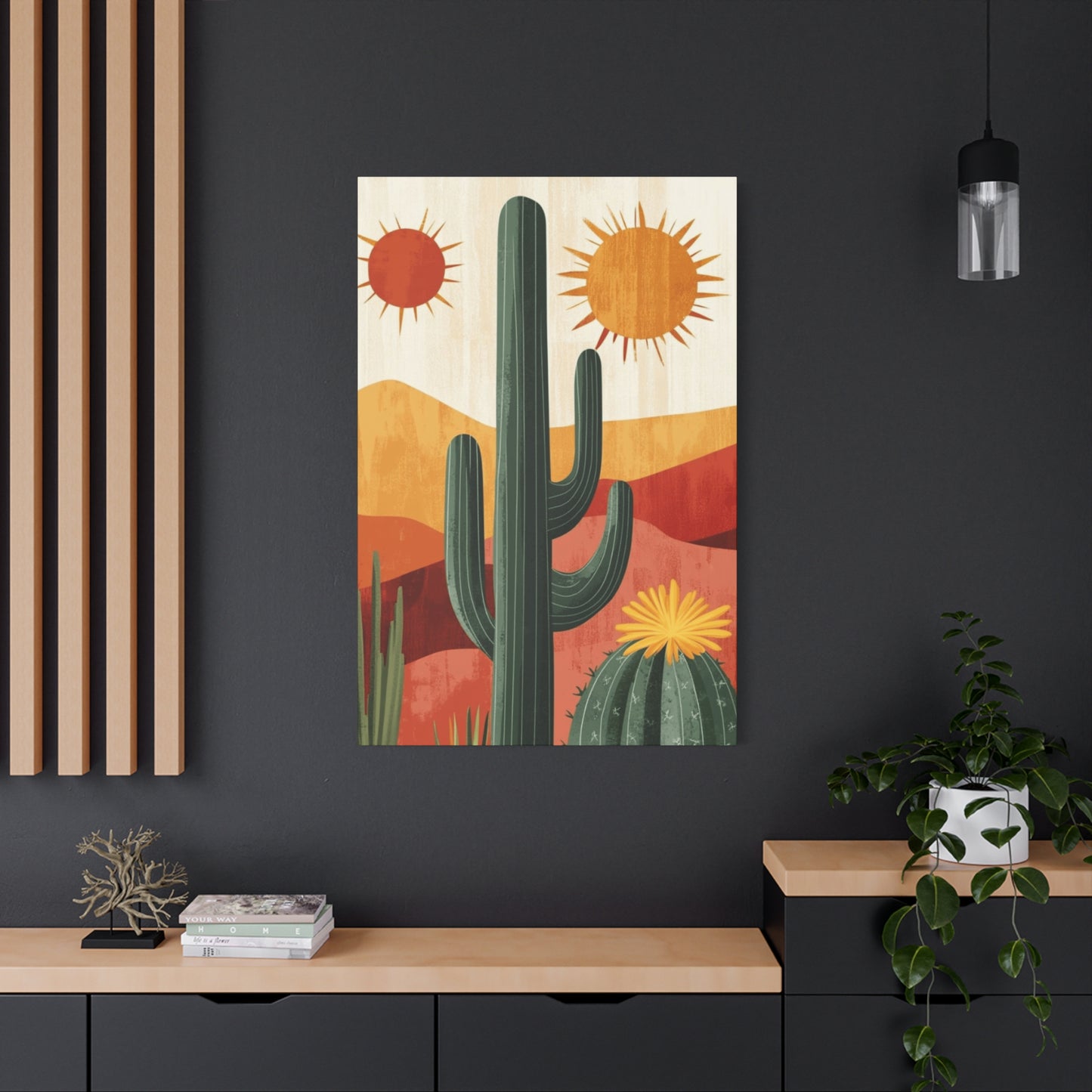
Desert Painting with Two Suns Wall Art & Canvas Prints
Desert Painting with Two Suns Wall Art & Canvas Prints
Couldn't load pickup availability
Captivating Desert Painting with Two Suns Wall Art: A Journey Through Arid Landscapes and Celestial Wonders
The allure of desert landscapes has captivated artists and art enthusiasts for centuries, offering a unique blend of stark beauty, mysterious horizons, and endless possibilities for creative expression. Among the most enchanting artistic interpretations of these arid environments is the desert painting with two suns wall art, a fascinating genre that combines realistic desert scenery with surrealistic celestial elements. This remarkable art form transports viewers to otherworldly realms where imagination meets the raw power of nature, creating visual narratives that challenge our perception of reality while celebrating the timeless beauty of desert vistas.
Desert painting with two suns wall art represents more than just decorative pieces for modern interiors. These captivating works embody a philosophical exploration of existence, duality, and the infinite possibilities that lie beyond our conventional understanding of the natural world. The presence of dual celestial bodies in desert scenes evokes feelings of wonder, mystery, and contemplation, making these artworks perfect focal points for spaces that seek to inspire creativity and introspection.
The concept of multiple suns appearing in desert landscapes taps into ancient mythologies, science fiction narratives, and contemporary artistic movements that embrace the extraordinary. When skillfully executed, desert painting with two suns wall art creates a harmonious balance between the familiar and the fantastical, grounding viewers in recognizable terrain while simultaneously lifting their imagination toward unexplored horizons. The interplay of light, shadow, color, and form in these compositions demands careful attention from artists who must master both realistic rendering and imaginative conceptualization.
Throughout this comprehensive exploration, we will delve deep into every aspect of desert painting with two suns wall art, from the fundamental principles that guide their creation to the cultural significance they hold in contemporary art circles. Whether you are an aspiring artist seeking to develop your skills in this genre, a collector looking to understand the nuances that distinguish exceptional pieces, or simply an admirer of striking visual art, this extensive guide will provide invaluable insights into the world of dual-sun desert artworks.
Understanding the Symbolic Resonance of Dual Celestial Bodies in Arid Landscapes
The inclusion of two suns in desert artwork carries profound symbolic weight that resonates across multiple dimensions of human experience. Throughout various cultures and time periods, dual celestial bodies have represented concepts such as balance, duality, parallel dimensions, and alternative realities. In the context of desert painting with two suns wall art, these symbolic elements gain additional layers of meaning when juxtaposed against the harsh yet beautiful desert environment.
Desert landscapes themselves symbolize endurance, survival, transformation, and the stripped-down essence of existence. When artists introduce a second sun into these already powerful settings, they create a visual paradox that invites viewers to question their assumptions about reality. The desert becomes not just a physical location but a liminal space where the normal rules of nature bend and shift, opening doorways to philosophical contemplation about existence, consciousness, and the nature of our universe.
The symbolic duality present in desert painting with two suns wall art often reflects internal human conflicts and the eternal dance between opposing forces. Light and darkness, life and death, isolation and connection, harshness and beauty all find expression in these compositions. The two suns might represent different aspects of consciousness, parallel timelines, or the coexistence of multiple truths within a single framework of reality. This rich symbolic vocabulary makes these artworks particularly appealing to viewers who seek depth and meaning beyond superficial aesthetic pleasure.
Ancient civilizations often depicted multiple suns or celestial bodies in their artistic and religious iconography, recognizing the power these images held over human imagination. Desert painting with two suns wall art draws upon this ancient wellspring of archetypal imagery while translating it into contemporary visual language. The result is artwork that feels simultaneously timeless and modern, connecting viewers to both ancestral wisdom and cutting-edge artistic vision.
The psychological impact of viewing dual suns in desert scenes cannot be overstated. These images trigger cognitive dissonance that forces the brain to reconcile the familiar with the impossible, creating a state of heightened awareness and engagement. This neurological response makes desert painting with two suns wall art particularly effective in spaces designed for contemplation, creative work, or spiritual practice. The artwork becomes a catalyst for expanded thinking and imagination.
Color Theory and Palette Selection for Extraordinary Desert Scenes with Multiple Suns
Creating compelling desert painting with two suns wall art requires masterful command of color theory and strategic palette selection. The presence of two light sources dramatically complicates the color dynamics within the composition, as each sun contributes its own spectrum of illumination, creating overlapping zones of color temperature, intensity, and atmospheric effects. Artists must carefully consider how these dual light sources interact with the desert environment and each other to produce believable yet extraordinary visual results.
The base palette for desert scenes typically includes warm earth tones such as ochres, siennas, umbers, and various sand-colored neutrals. However, when incorporating two suns into the composition, artists often introduce unexpected color variations that suggest alien or otherworldly qualities. One sun might emit traditional warm yellow-orange light, while the second could cast cooler blue-white rays, creating fascinating color interactions across the landscape. This temperature contrast produces visually striking effects that immediately signal to viewers that they are witnessing something beyond ordinary reality.
Shadow theory becomes exponentially more complex in desert painting with two suns wall art. Each sun casts its own set of shadows, and where these shadows overlap, artists must render deeper, richer darks that contrast sharply with areas illuminated by both light sources. The interplay between single-shadow zones, double-shadow zones, and fully illuminated areas creates a rhythmic pattern across the canvas that guides the viewer's eye through the composition. Skilled artists use these shadow zones to establish spatial depth and dimensional relationships between foreground, middle ground, and background elements.
Atmospheric perspective takes on new dimensions when rendering desert painting with two suns wall art. The desert atmosphere, often filled with dust particles, heat distortion, and varying humidity levels, scatters and filters light in distinctive ways. With two suns present, atmospheric effects multiply, creating gradient transitions and color shifts that would be impossible under normal lighting conditions. Artists might employ subtle violet and pink tones in shadow areas, while highlights shimmer with complex blends of yellows, oranges, and even touches of green or cyan where the two light sources converge.
Color harmony in dual-sun desert compositions often relies on split-complementary or triadic schemes that accommodate the expanded color range introduced by multiple light sources. Artists might anchor the composition with a dominant warm palette while introducing strategic accents of complementary cools in specific zones where atmospheric conditions or reflected light justify their presence. The goal is to maintain visual coherence while embracing the inherent strangeness of the scenario, creating desert painting with two suns wall art that feels both cohesive and wonderfully alien.
Compositional Strategies for Balancing Dual Focal Points in Desert Landscapes
Compositional mastery represents one of the most critical skills for creating effective desert painting with two suns wall art. The presence of two prominent celestial bodies immediately creates competing focal points that could potentially fragment the viewer's attention if not handled with deliberate strategic planning. Successful compositions in this genre employ sophisticated visual hierarchies that guide the eye through the scene while maintaining interest and coherence throughout the entire picture plane.
The positioning of the two suns within the composition carries enormous weight in determining the overall mood and narrative of the piece. Placing both suns relatively close together in the sky creates a concentrated light source with intensified illumination effects, while positioning them at opposite ends of the composition generates dynamic tension and encourages the viewer's eye to travel across the entire canvas. Some artists position one sun prominently in the upper portion of the composition while placing the second lower on the horizon, creating a sense of temporal progression or suggesting one sun rising while another sets.
Desert painting with two suns wall art benefits from strong geometric underpinnings that provide structural stability beneath the apparent chaos of natural forms. Many successful compositions employ triangular arrangements, with the two suns forming two points of a triangle and a prominent foreground element such as a rock formation, cactus, or architectural feature completing the geometric structure. This triangular framework creates inherent visual stability while establishing clear pathways for eye movement throughout the composition.
The rule of thirds and other classical compositional guidelines remain relevant even in fantastical desert scenes with dual suns. However, artists working in this genre often deliberately violate certain conventions to enhance the otherworldly quality of their work. Placing both suns along the central vertical axis might typically be considered compositionally weak, but in desert painting with two suns wall art, this symmetrical arrangement can reinforce themes of balance, duality, and cosmic order. The key lies in understanding the rules thoroughly enough to break them intentionally for specific effects.
Depth creation through overlapping forms, size gradation, and atmospheric diminishment becomes particularly important in desert compositions featuring two suns. The vast, open nature of desert landscapes can sometimes result in flat, dimensionally ambiguous paintings if not carefully structured. Artists creating desert painting with two suns wall art often include strong foreground elements such as weathered rocks, desert plants, or wind-sculpted sand formations that establish clear spatial relationships and lead the viewer's eye deeper into the composition toward the distant horizon where the suns dominate the sky.
Rendering Sand Dunes and Desert Terrain Under Extraordinary Lighting Conditions
The technical execution of sand dunes and desert terrain constitutes a fundamental skill set for any artist working with desert painting with two suns wall art. Sand dunes present unique rendering challenges due to their continuously shifting surfaces, subtle color variations, and the way they respond to light. When illuminated by two distinct light sources, these challenges multiply, requiring artists to develop sophisticated approaches to capturing the interplay of light, shadow, and form across undulating sandy surfaces.
Sand itself possesses complex optical properties that affect how it appears under various lighting conditions. Individual sand grains reflect, refract, and scatter light in ways that create aggregate effects visible at the scale of entire dunes. In desert painting with two suns wall art, artists must consider how dual light sources activate different facets of these optical properties simultaneously. One sun might illuminate the windward face of a dune with warm, direct light, while the second casts cooler, angled rays across the leeward slope, creating a rich tapestry of color and value transitions.
The distinctive ripple patterns created by wind action on sand surfaces provide excellent opportunities for demonstrating lighting effects in desert painting with two suns wall art. These rhythmic ridges and valleys catch light differently depending on their orientation relative to each sun, creating alternating patterns of highlight and shadow that add visual interest and reinforce the three-dimensional quality of the terrain. Artists often exaggerate these patterns slightly to enhance their graphic impact without sacrificing believability.
Texture rendering techniques vary depending on the medium employed for desert painting with two suns wall art. Oil painters might use impasto techniques to build up physical texture suggesting sandy surfaces, while digital artists employ various brush engines and texture overlays to achieve similar effects. Regardless of medium, successful sand rendering requires careful attention to edge quality, with soft, diffused transitions in areas of gradual slope change and sharper, more defined edges along the crests of dunes where they meet the sky.
The color of desert sand varies dramatically depending on mineral content, moisture levels, and lighting conditions. Base sand colors might range from nearly white calcium-rich deposits to deep red iron-oxide-rich formations, with countless variations in between. In desert painting with two suns wall art, artists often introduce subtle color shifts across dune surfaces that reflect the influence of dual light sources. Warm apricot tones might dominate areas directly illuminated by one sun, while cooler lavender and gray notes appear in regions lit primarily by the second celestial body.
Depicting Atmospheric Phenomena Unique to Environments with Multiple Light Sources
Atmospheric rendering separates competent desert painting with two suns wall art from truly exceptional pieces that transport viewers to fully realized alternative worlds. The atmosphere of desert environments behaves in distinctive ways due to factors including extreme temperature differentials, low humidity, and the presence of suspended dust particles. When artists introduce a second sun into these environments, atmospheric effects become even more complex and visually spectacular, offering opportunities for stunning visual displays that captivate and intrigue viewers.
Heat shimmer and mirage effects are signature characteristics of desert atmospheres that appear prominently in convincing desert painting with two suns wall art. These optical phenomena occur when light rays bend while passing through air layers of different temperatures, creating distorted, wavy appearances in distant objects and sometimes producing false images of water or inverted landscape features. With two suns generating potentially different heating patterns across the landscape, artists can create more complex and intriguing mirage effects that enhance the surreal quality of their compositions.
Dust devils and sand vortices add dynamic energy to desert painting with two suns wall art. These spinning columns of air and sand particles become visible through their interaction with light, and when illuminated by dual suns from different angles, they create complex light-scattering effects with multiple shadow directions and illuminated edges. Artists rendering these phenomena must carefully consider the physics of how each sun's rays would penetrate and reflect off the swirling particles, creating believable yet extraordinary visual effects.
The quality of light in desert atmospheres differs markedly from humid or temperate climates due to lower atmospheric moisture content and particulate distribution. In desert painting with two suns wall art, artists often exaggerate the crystalline clarity of desert air while simultaneously showing how suspended dust particles catch and scatter light from both celestial sources. This creates a luminous quality where the atmosphere itself seems to glow with captured sunlight, particularly during what would traditionally be dawn or dusk periods when low-angle illumination creates maximum atmospheric interaction.
Cloud formations, when included in desert painting with two suns wall art, provide excellent opportunities for demonstrating complex lighting effects. Clouds simultaneously receive direct illumination from both suns while casting shadows onto the desert floor below. The undersides of clouds might show reflected light bouncing up from the sand, tinted by the desert's warm coloration. Artists skilled in atmospheric rendering can create clouds that display multiple highlight areas corresponding to each sun's position, separated by transitional zones where the form of the cloud turns away from direct illumination.
Incorporating Desert Flora and Fauna into Surrealistic Scenes with Dual Suns
Desert painting with two suns wall art gains authenticity and narrative richness through the thoughtful inclusion of desert-adapted plants and animals. These living elements serve multiple compositional functions, providing scale references, creating foreground interest, breaking up vast expanses of sand and sky, and reinforcing the desert setting while simultaneously existing within an impossible scenario. The juxtaposition of familiar desert life forms against the backdrop of dual suns creates a compelling tension between the known and the fantastical.
Cacti species such as saguaro, barrel, cholla, and prickly pear frequently appear in desert painting with two suns wall art, particularly when the scene represents North American desert environments. These distinctive plants possess strong, recognizable silhouettes that register clearly even when rendered as distant elements. Their columnar or rounded forms also interact interestingly with dual lighting scenarios, with portions of their surfaces illuminated by one sun while other sections receive light primarily from the second source, creating complex patterns of highlight and shadow across their distinctive forms.
Desert trees including mesquite, palo verde, ironwood, and joshua trees contribute organic, irregular shapes that contrast effectively with the geometric precision of dunes and rock formations. In desert painting with two suns wall art, these plants often serve as compositional anchors in the middle ground, bridging the gap between detailed foreground elements and distant horizon features. The fine, detailed structure of their branches and leaves provides opportunities for demonstrating how multiple light sources create overlapping shadow patterns on surrounding terrain.
Smaller desert plants such as ocotillo, creosote bush, brittlebush, and various grasses add textural variety and natural detail to desert painting with two suns wall art. These elements help establish the specific geographic character of the desert being depicted, as different desert regions support different plant communities. Artists can use clusters of these smaller plants to create rhythm and repetition across the composition, guiding the viewer's eye while suggesting the stubborn persistence of life even in harsh environments illuminated by impossible celestial configurations.
Desert animals, when included in desert painting with two suns wall art, add narrative interest and scale while raising intriguing questions about how life might adapt to environments with dual suns. Species such as roadrunners, coyotes, kit foxes, rattlesnakes, lizards, and birds of prey might be depicted going about their survival activities seemingly oblivious to the extraordinary sky above them. Alternatively, artists might show animals pausing to observe the unusual celestial display, creating a moment of shared wonder between the depicted creatures and human viewers.
Exploring Various Artistic Styles for Dual-Sun Desert Compositions
Desert painting with two suns wall art encompasses a remarkably diverse range of artistic styles, each bringing unique qualities and appealing to different aesthetic sensibilities. From photorealistic precision to loose, expressionistic interpretation, the flexibility of this genre allows artists to employ whatever stylistic approach best serves their creative vision while maintaining the essential elements that define desert painting with two suns wall art as a recognizable category.
Hyperrealistic or photorealistic approaches to desert painting with two suns wall art emphasize meticulous attention to detail, accurate rendering of textures, and convincing portrayal of light and atmospheric effects. Despite the fantastical premise of dual suns, hyperrealistic artists ground their work in observable reality, carefully considering how the addition of a second light source would actually affect the appearance of every element within the scene. The result is artwork that feels like documentary evidence of an impossible place, creating cognitive dissonance that enhances the power of the piece.
Impressionistic interpretations of desert painting with two suns wall art prioritize the capture of light, color, and atmosphere over precise detail. These works often employ visible brushstrokes, broken color, and strategic simplification of forms to convey the essential character of the scene. The dual suns in impressionistic desert paintings might appear as brilliant focal points of thick, luminous paint, radiating energy across the canvas through expressive mark-making. This approach emphasizes the emotional and sensory experience of witnessing such an extraordinary landscape over literal documentation.
Abstract approaches to desert painting with two suns wall art reduce the scene to its essential geometric and color components, sometimes maintaining recognizable references to landscape elements while pushing toward pure form and color relationships. In these works, the two suns might appear as simple circular forms or even just as color zones that emanate warm and cool palettes across the composition. Desert terrain might be suggested through horizontal bands of color or organic shapes that evoke sand and rock without literally describing them.
Surrealistic desert painting with two suns wall art embraces the impossible nature of the scenario and often amplifies it through additional fantastical elements. Artists working in this mode might include melting landforms, floating objects, unexpected scale shifts, or impossible architectural elements alongside the dual suns. The surrealist approach transforms the desert setting into a dreamscape where normal physical laws are suspended and metaphorical associations take precedence over literal representation.
Expressionistic styles bring emotional intensity and personal interpretation to desert painting with two suns wall art. Bold color choices, dynamic brushwork, and dramatic distortions of form convey the artist's subjective response to the scene rather than attempting objective representation. The two suns might appear as aggressive, almost threatening presences in the sky, or as benevolent sources of spiritual illumination, depending on the emotional content the artist wishes to communicate.
Material Choices and Surface Preparation for Creating Lasting Desert Artworks
The physical materials selected for creating desert painting with two suns wall art significantly impact both the working process and the final appearance of finished pieces. Different painting media offer distinct advantages and challenges when rendering desert landscapes with complex lighting scenarios, and understanding these material properties allows artists to make informed choices that support their creative vision while ensuring the longevity and archival quality of their work.
Oil paint remains a favored medium for many artists creating desert painting with two suns wall art due to its extended working time, rich color saturation, and versatility in handling. The slow drying time of oils allows for extensive blending and subtle gradations crucial for rendering atmospheric effects and smooth transitions across sand dunes. Oil paint's inherent luminosity also serves the depiction of brilliant desert light particularly well. Artists working in oils can build up complex surfaces through glazing, scumbling, and impasto techniques that create both optical and physical depth.
Acrylic paint offers advantages including rapid drying time, water cleanup, and permanent flexibility that resists cracking. For artists creating desert painting with two suns wall art on a production schedule, acrylics allow for efficient layering and overpainting without the extended drying periods required by oils. Modern acrylic formulations include retarders and flow improvers that extend working time and enhance blendability, addressing traditional limitations of the medium. The matte finish of acrylic paints can effectively capture the chalky, non-reflective quality of desert surfaces.
Watercolor brings unique translucency and luminosity to desert painting with two suns wall art, allowing artists to build up complex color effects through successive transparent washes. The interaction between water, pigment, and paper creates organic textures and gradations that can beautifully suggest atmospheric phenomena, cloud formations, and the subtle color shifts across desert terrain. However, watercolor's unforgiving nature demands confident execution and careful planning, as corrections become difficult once pigment is applied.
Gouache combines aspects of watercolor and acrylic, offering opacity and water solubility in a matte finish. This medium works particularly well for desert painting with two suns wall art when artists seek flat, graphic qualities or need to work from dark to light rather than following watercolor's traditional light-to-dark progression. Gouache's covering power allows for crisp edges and layered compositions that can effectively suggest the graphic quality of strong desert light and shadow.
Digital painting tools provide unprecedented flexibility for creating desert painting with two suns wall art, allowing non-destructive editing, unlimited color experimentation, and the ability to work at extremely large scales without physical material constraints. Digital artists can employ layering strategies that separate different lighting effects, making it easier to balance the complex illumination from dual suns. However, digital work requires careful attention to resolution, color space, and output considerations to ensure prints maintain the quality and impact of the original digital file.
Surface selection for desert painting with two suns wall art impacts both working properties and longevity
Canvas remains the most traditional support for painted desert artwork, offering moderate texture, flexibility, and portability. Artists can choose from various weave densities, with smoother surfaces suited to detailed rendering and more pronounced textures adding character to looser, more expressive approaches. Proper priming with gesso or acrylic ground prepares the canvas to receive paint while preventing degradation of fibers over time. Stretched canvas provides a responsive surface that gives slightly under brush pressure, while canvas boards offer firmer support for more controlled mark-making.
Wood panels provide extremely stable supports for desert painting with two suns wall art, particularly when artists seek perfectly smooth surfaces for detailed rendering or want to avoid the slight texture of woven canvas. Birch plywood, hardboard, and specially prepared painting panels all serve this purpose. The rigid surface of panels prevents flexing that might eventually crack paint films, making them particularly suitable for fragile media or works destined for long-term display. Many contemporary artists appreciate the archival qualities and professional appearance of panel supports.
Paper surfaces accommodate watercolor, gouache, and some acrylic approaches to desert painting with two suns wall art. Hot-pressed papers offer smooth surfaces for fine detail, while cold-pressed and rough papers provide varying degrees of texture that interact interestingly with water-based media. Paper weight measured in pounds or grams per square meter indicates thickness and resistance to buckling when wet media is applied. Heavier papers withstanding multiple washes and aggressive techniques without warping or deteriorating.
Developing Convincing Rock Formations and Geological Features in Impossible Desert Settings
Rock formations and geological structures provide essential compositional elements in desert painting with two suns wall art, offering opportunities to demonstrate how dual lighting conditions affect three-dimensional forms with complex surfaces. Desert environments typically feature distinctive rock formations shaped by wind erosion, water action, and tectonic forces, and these geological features become even more visually dramatic when illuminated by two separate celestial light sources.
Mesas, buttes, and flat-topped rock formations characteristic of southwestern American deserts create powerful geometric shapes that contrast effectively with the curved forms of sand dunes. In desert painting with two suns wall art, these layered sedimentary structures display fascinating light and shadow patterns, with their vertical faces receiving different amounts of illumination depending on orientation relative to each sun. Artists can emphasize the horizontal banding of sedimentary layers through strategic color shifts that suggest different mineral compositions while also reflecting the influence of dual light sources.
Slot canyons and narrow ravines carved through rock by water erosion offer spectacular opportunities for exploring indirect lighting effects in desert painting with two suns wall art. Within these confined spaces, direct sunlight might penetrate only from specific angles, with much illumination arriving as reflected and scattered light bouncing off canyon walls. With two suns positioned differently in the sky, the patterns of direct and indirect illumination within canyons become more complex, creating ribbon-like zones of warm and cool light that undulate across curved sandstone surfaces.
Boulder fields and rocky outcroppings add textural variety and scale indicators to desert painting with two suns wall art. Individual rocks display multiple shadow directions corresponding to each sun's position, with deep shadows forming where the shade cast by one sun overlaps with shade from the second. These overlapping shadows create spatial depth and reinforce the three-dimensional quality of the terrain. Artists often use clusters of rocks in foreground positions to establish clear spatial relationships and draw viewers into the composition.
Arch formations and natural bridges create striking silhouettes against bright desert skies in desert painting with two suns wall art. These geological features demonstrate erosion's patient work while providing dramatic framing devices that draw attention to the dual suns beyond. The underside of arches receives complex reflected light bouncing off surrounding rock surfaces and the desert floor, creating subtle color variations that skilled artists capture to enhance realism. The contrast between the solid rock form and the open sky visible through the arch creates powerful negative space that activates the composition.
Hoodoos, fairy chimneys, and erosional pinnacles offer fantastical natural forms that complement the surreal quality of dual-sun scenarios in desert painting with two suns wall art. These delicate, top-heavy rock formations result from differential erosion of rock layers with varying hardness, creating shapes that seem almost impossible yet actually exist in certain desert environments. Their irregular surfaces catch light in unpredictable ways, and under dual illumination, they display complex patterns of highlight and shadow that challenge artists to carefully observe and render three-dimensional form.
Creating Compelling Skies and Cloud Formations in Dual-Sun Environments
The sky portion of desert painting with two suns wall art carries immense importance, as it hosts the defining feature of this genre while establishing mood, color harmony, and atmospheric conditions. Desert skies possess distinctive qualities compared to skies in more humid climates, typically showing more intense blue coloration due to cleaner air and demonstrating dramatic color shifts during sunrise and sunset periods. The addition of a second sun transforms already spectacular desert skies into even more extraordinary displays.
Color gradation across the sky dome follows principles of atmospheric perspective, with the deepest, most saturated blues appearing in the zenith regions furthest from both suns, gradually transitioning through lighter, warmer tones as the sky approaches each luminous disc. In desert painting with two suns wall art, artists must carefully orchestrate these color transitions to maintain unity while accommodating two separate light sources. The sky between the two suns often displays particularly complex color mixing, with hues from each sun's illumination blending in the atmosphere.
Solar halos, sun dogs, and other atmospheric optical phenomena provide opportunities for adding scientific realism to desert painting with two suns wall art. These effects occur when sunlight interacts with ice crystals or other particles suspended in the upper atmosphere, creating rings, streaks, and spots of light around the sun. With two suns present, these phenomena could theoretically appear around each celestial body, and they might even interact in the atmospheric space between the suns, creating unique combined effects that enhance the otherworldly quality of the scene.
Cloud types vary from wispy cirrus formations at high altitudes to massive cumulonimbus towers that occasionally develop over desert regions. In desert painting with two suns wall art, clouds serve multiple functions beyond their naturalistic presence. They break up potentially monotonous expanses of clear sky, provide scale references that help viewers gauge distances, create shadow patterns on the desert below, and most importantly, interact dramatically with light from both suns. A single cloud positioned between the two suns might display illuminated edges on opposite sides, with a darker core where it blocks light from both sources.
Sunset and sunrise scenarios in desert painting with two suns wall art present particularly spectacular opportunities for color exploration. With two suns at different positions relative to the horizon, artists can suggest multiple times of day occurring simultaneously, or create scenarios where one sun rises while another sets. The low-angle lighting of these transition periods illuminates atmospheric particles, creating the famous desert light shows where the entire sky ignites with brilliant oranges, reds, purples, and golds. Doubling these effects produces visually stunning results that justify the fantastical premise.
Nighttime approaches to desert painting with two suns wall art explore what twilight might look like if one sun has set while another remains above the horizon, or imagine scenarios where both suns hang low, creating extended golden hour conditions. These unusual lighting situations allow artists to explore color combinations and atmospheric effects rarely seen in natural desert environments, pushing creative boundaries while maintaining plausibility within the established rules of the imagined world.
Incorporating Architectural Elements and Structures into Desert Paintings with Dual Suns
Man-made structures add human scale, narrative interest, and cultural context to desert painting with two suns wall art. From ancient ruins to contemporary buildings, architectural elements interact dramatically with dual lighting conditions while raising intriguing questions about civilizations that might inhabit worlds illuminated by multiple suns. The interplay between organic desert landscapes and geometric human constructions creates visual tension that enriches compositions and engages viewers' imagination.
Pueblo architecture, adobe structures, and southwestern building styles naturally complement desert painting with two suns wall art, as these construction methods evolved specifically for desert climates. The thick walls, flat roofs, and rounded corners of adobe buildings create distinctive forms that catch light beautifully. With two suns illuminating these structures from different angles, artists can demonstrate complex shadow patterns that wrap around curved walls and reveal the three-dimensional quality of building masses. Small window openings become dramatic focal points where contrasting interior darkness meets brilliant exterior light.
Ancient ruins and abandoned settlements add atmospheric mystery to desert painting with two suns wall art while suggesting backstories about past inhabitants and fallen civilizations. Crumbling walls, collapsed roofs, and weathered structures show the relentless work of time and desert conditions. The deteriorated state of ruins allows for interesting light penetration effects, with sunlight streaming through gaps in walls and roofs, creating dramatic chiaroscuro patterns. Artists can use ruins to suggest that dual-sun conditions have existed long enough for civilizations to rise and fall under their light.
Contemporary architecture in desert painting with two suns wall art might include research stations, observation facilities, or futuristic structures suggesting science fiction scenarios. Clean geometric forms, reflective surfaces, and large glass expanses characteristic of modern design interact dramatically with dual lighting. Metal surfaces show complex reflections from both suns, while glass facades display a mixture of transparency, reflection, and glare that challenges artists to render convincingly. These modern structures ground the fantastical dual-sun premise in contemporary aesthetic sensibilities.
Isolated structures such as lone watchtowers, solitary shrines, or abandoned vehicles create powerful focal points in desert painting with two suns wall art. The vast emptiness of the desert landscape makes singular human-made objects particularly significant, and their isolation raises questions about purpose, abandonment, and survival. A single structure positioned strategically within the composition can provide essential scale reference while serving as a stand-in for human presence without literally depicting figures. The dual shadows cast by such structures reinforces the unusual nature of the lighting conditions.
Roads, paths, and other linear elements guide viewer attention through desert painting with two suns wall art while suggesting movement and journey. A winding road disappearing toward the horizon where the two suns hang creates a powerful vanishing point that pulls the viewer's eye deep into the composition. Tire tracks, footprints, or well-worn trails in sand show evidence of passage without requiring actual figures, maintaining the sense of vast solitude characteristic of desert environments while hinting at human activity within impossible circumstances.
Working with Scale and Proportion to Emphasize Desert Vastness Under Dual Suns
Communicating the overwhelming scale and space characteristic of desert environments represents one of the significant challenges artists face when creating desert painting with two suns wall art. Deserts confront visitors with distances and proportions that dwarf human scale, and successfully translating this experience to two-dimensional surfaces requires sophisticated understanding of perceptual psychology, atmospheric perspective, and compositional strategies that emphasize expansiveness and grandeur.
Foreground detail establishing clear scale references provides viewers with measuring tools they unconsciously use to gauge the size of more distant elements in desert painting with two suns wall art. Placing recognizable objects such as rocks, plants, or small structural elements in near positions allows viewers to understand their size from familiar knowledge, then extrapolate the dimensions of similar objects appearing smaller due to distance. The apparent size reduction following perspective rules helps establish the vast depth of the desert space depicted.
Diminishing size progression of repeated elements creates powerful depth cues in desert painting with two suns wall art. A line of cacti or rock formations marching from foreground to background, each successive element appearing smaller than the previous, clearly communicates spatial recession. The mathematical consistency of this size reduction reinforces the rational, believable quality of the space despite the fantastical dual-sun premise. Artists often slightly exaggerate these size progressions beyond strict mathematical perspective to enhance the sense of vast distance.
Atmospheric fading transforms distant elements through reduced contrast, cooler color temperature, and softened detail in desert painting with two suns wall art. Mountains or rock formations on the far horizon appear lighter, bluer, and less defined than foreground elements due to the scattering effect of atmosphere between the viewer and those distant objects. Even in the relatively clear air of deserts, this atmospheric effect remains significant over long distances. The two suns contribute their respective light qualities to atmospheric coloration, creating potentially unique fading characteristics.
Empty negative space plays a crucial role in communicating scale within desert painting with two suns wall art. Large areas of relatively undifferentiated sand or sky make viewers aware of the emptiness and expanse characteristic of desert environments. Rather than filling every portion of the canvas with incident or detail, successful compositions embrace emptiness as an expressive element. The two suns punctuating vast expanses of sky emphasize the spaciousness of the firmament while providing brilliant focal points within that emptiness.
Horizon placement within the composition dramatically affects the perceived scale of desert painting with two suns wall art. A high horizon line emphasizes the desert floor, allowing detailed rendering of terrain features and giving the composition a grounded, intimate quality despite potentially vast distances. A low horizon emphasizes the sky, creating compositions dominated by atmospheric effects and celestial drama. Many artists position the horizon approximately one-third from the top or bottom of the composition, following classical proportional guidelines while balancing land and sky elements.
Conclusion
The rendering of light and shadow forms the technical foundation upon which successful desert painting with two suns wall art rests. Understanding how light behaves, reflects, scatters, and casts shadows allows artists to create convincing depictions of impossible scenarios. The addition of a second sun exponentially increases the complexity of lighting calculations, as every surface in the scene potentially receives direct illumination from two sources simultaneously while casting two separate shadows.
Cast shadows from each sun travel in directions determined by that sun's position relative to the shadow-casting object. In desert painting with two suns wall art, most objects therefore project two distinct shadows that may spread in quite different directions depending on the relative positions of the two celestial bodies. Where these two shadows overlap, a zone of deeper darkness emerges, receiving no direct illumination from either source. Where only one shadow falls, the area appears lighter, receiving direct light from one sun while being shaded from the other. Areas receiving direct illumination from both suns appear brightest and warmest.
Core shadows on three-dimensional forms occur where the surface curves away from direct light sources. In desert painting with two suns wall art, the core shadow patterns become more complex than in single-source lighting. Depending on the form's orientation, it might display two separate core shadow zones where it turns away from each sun respectively, or these core shadows might merge into a single broader zone if the suns are positioned close together in the sky.
Share