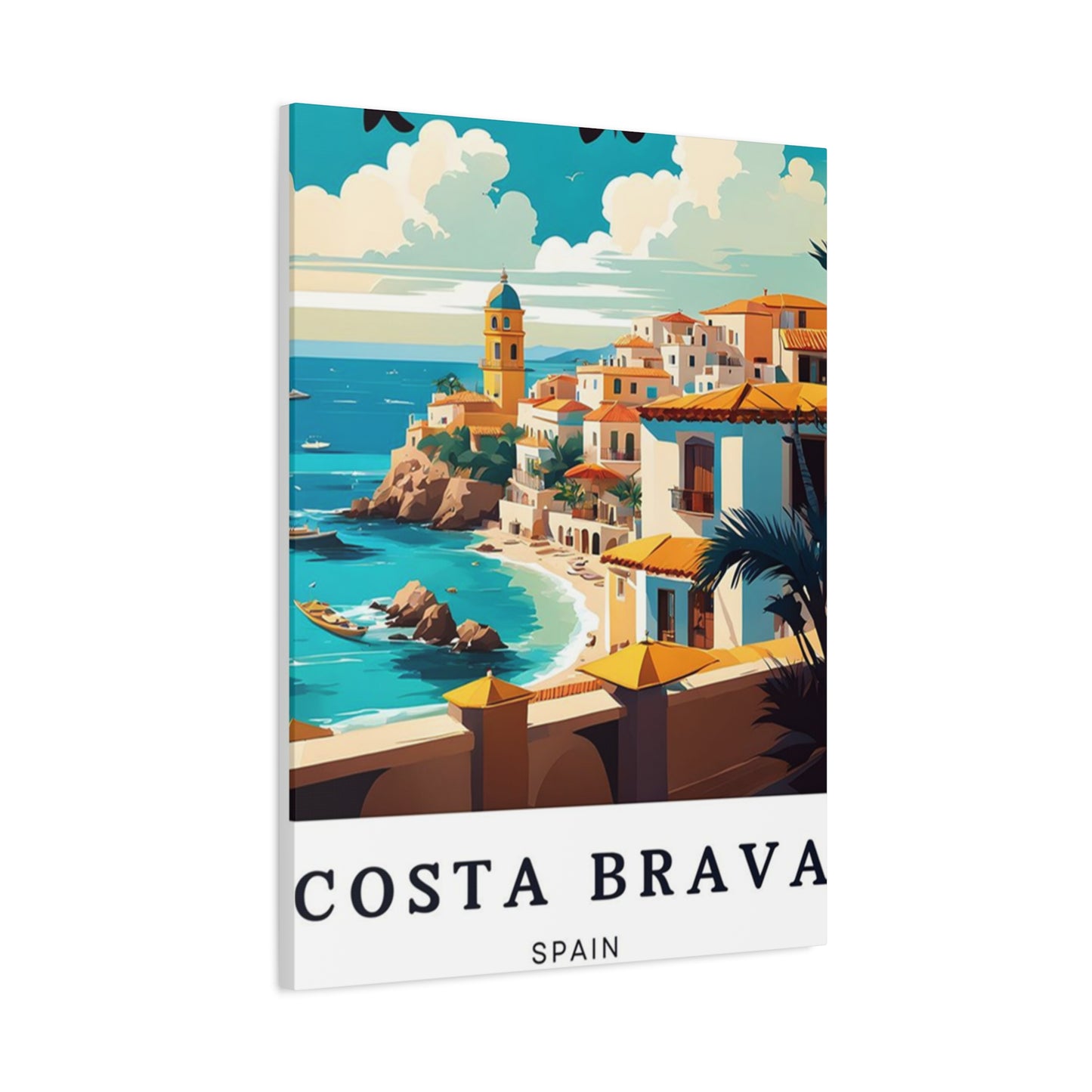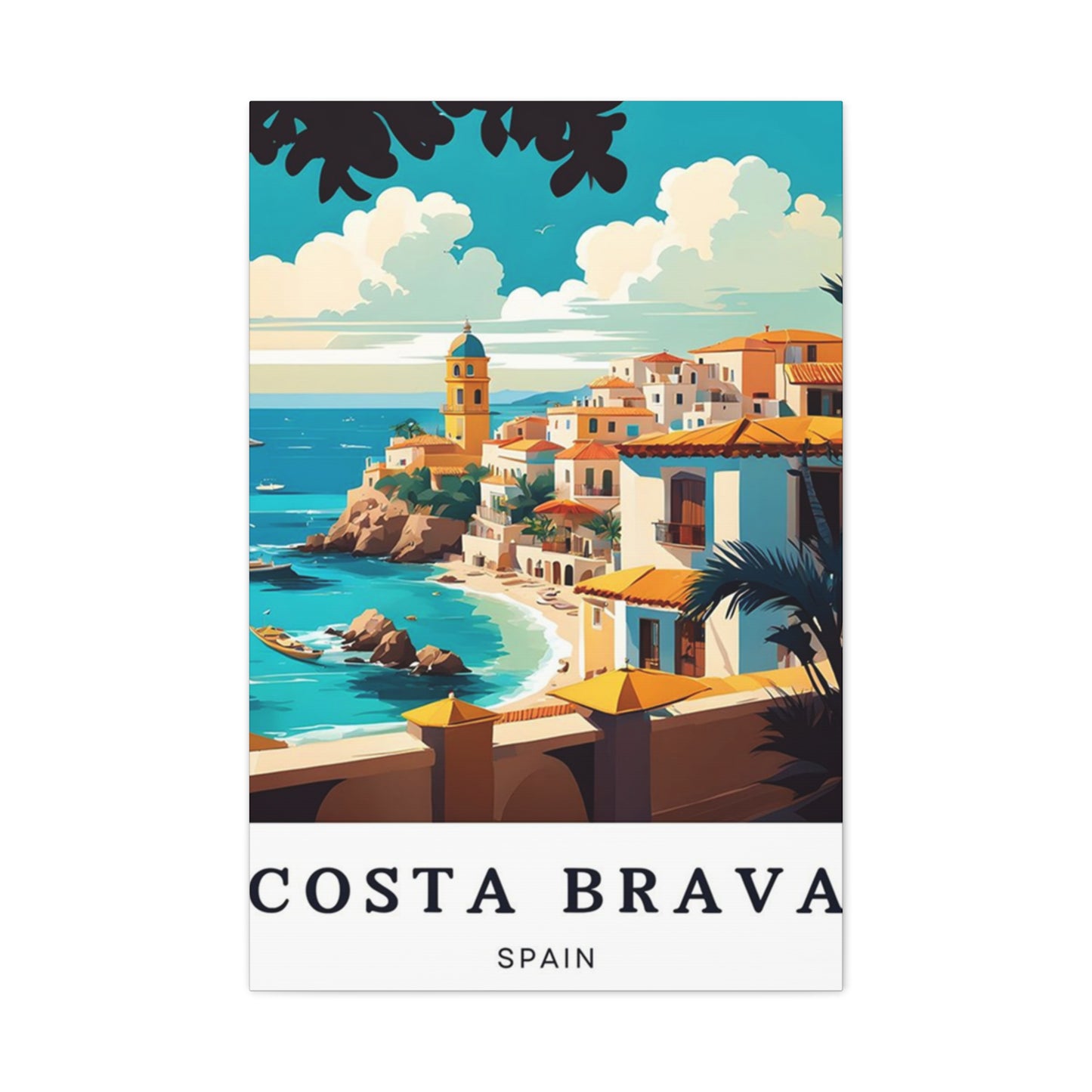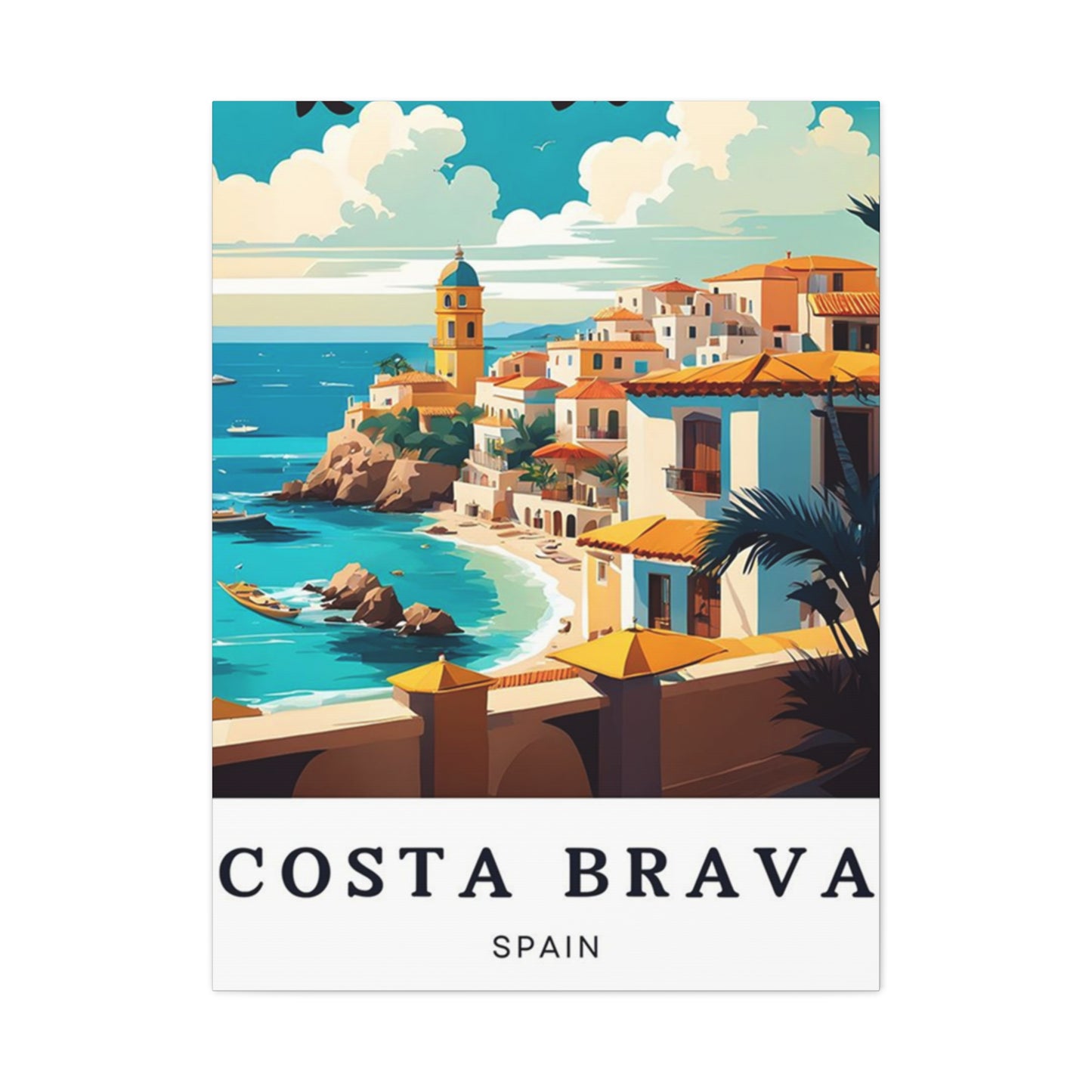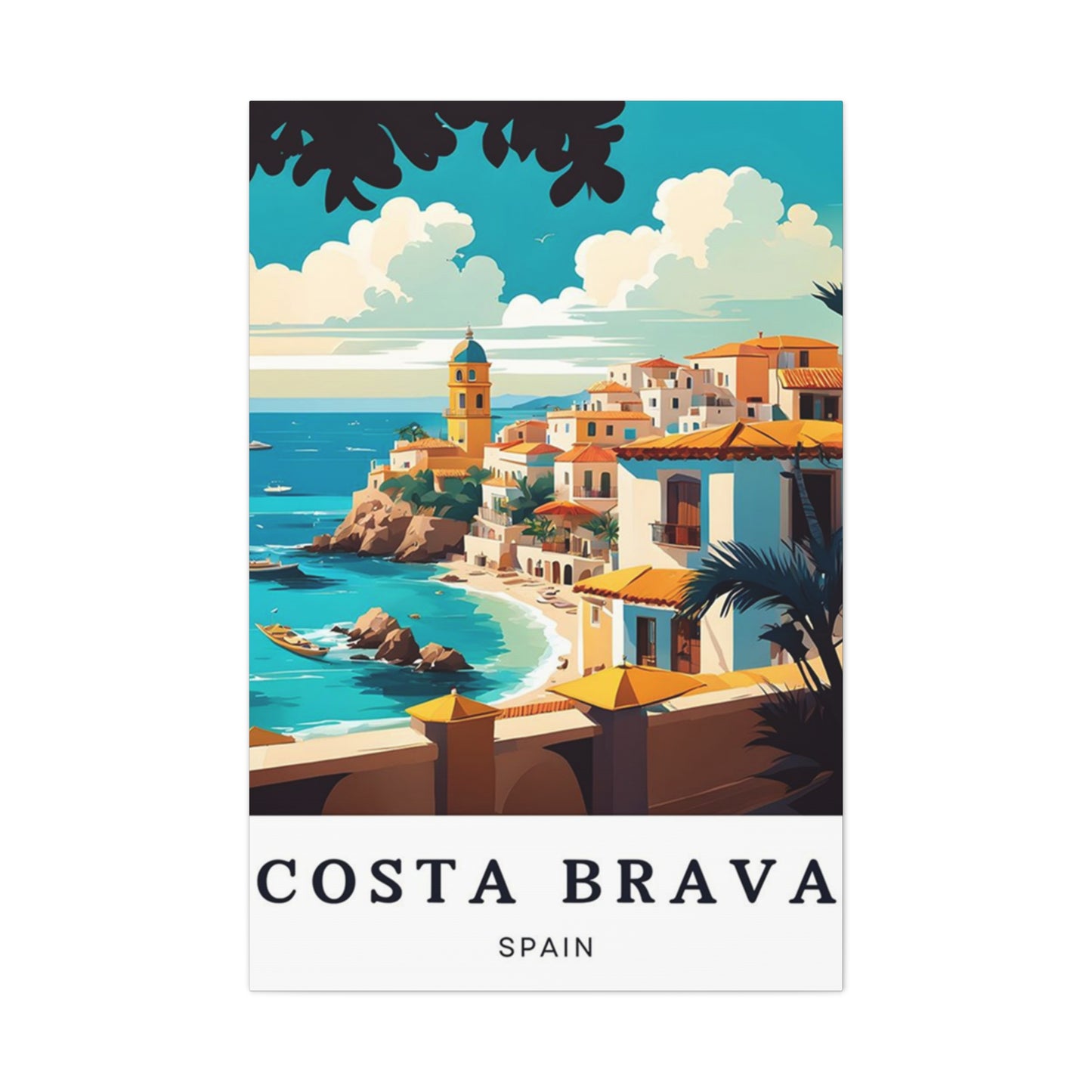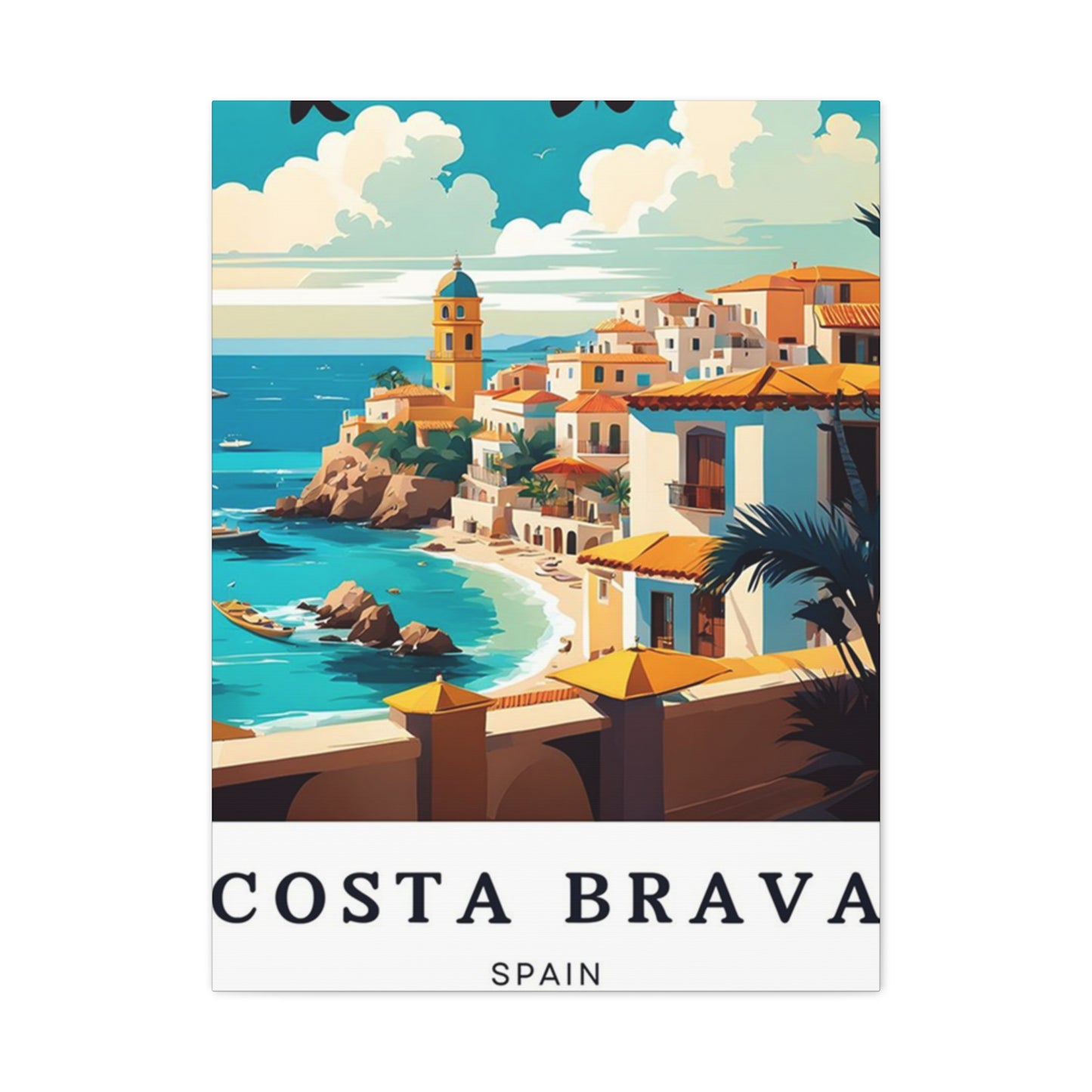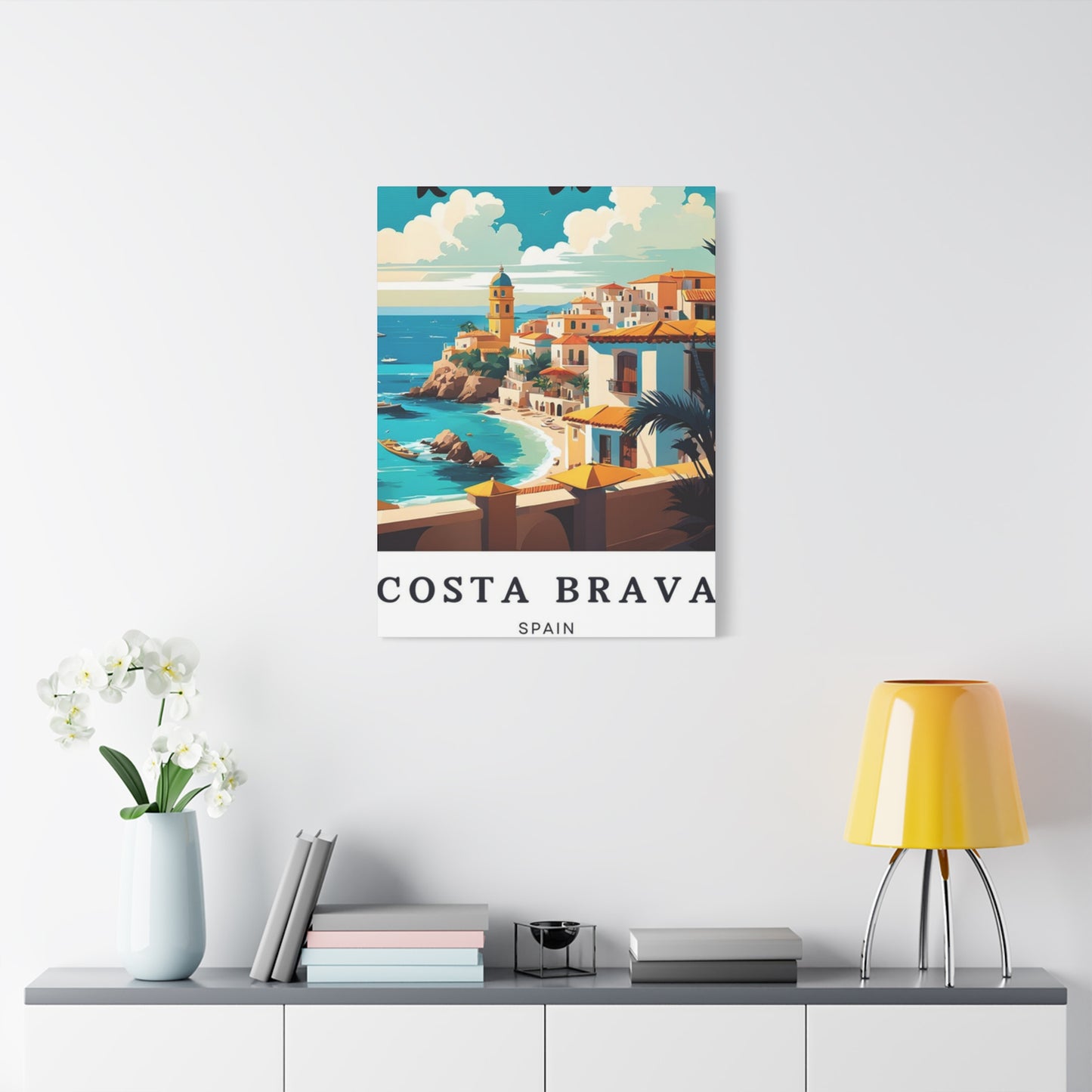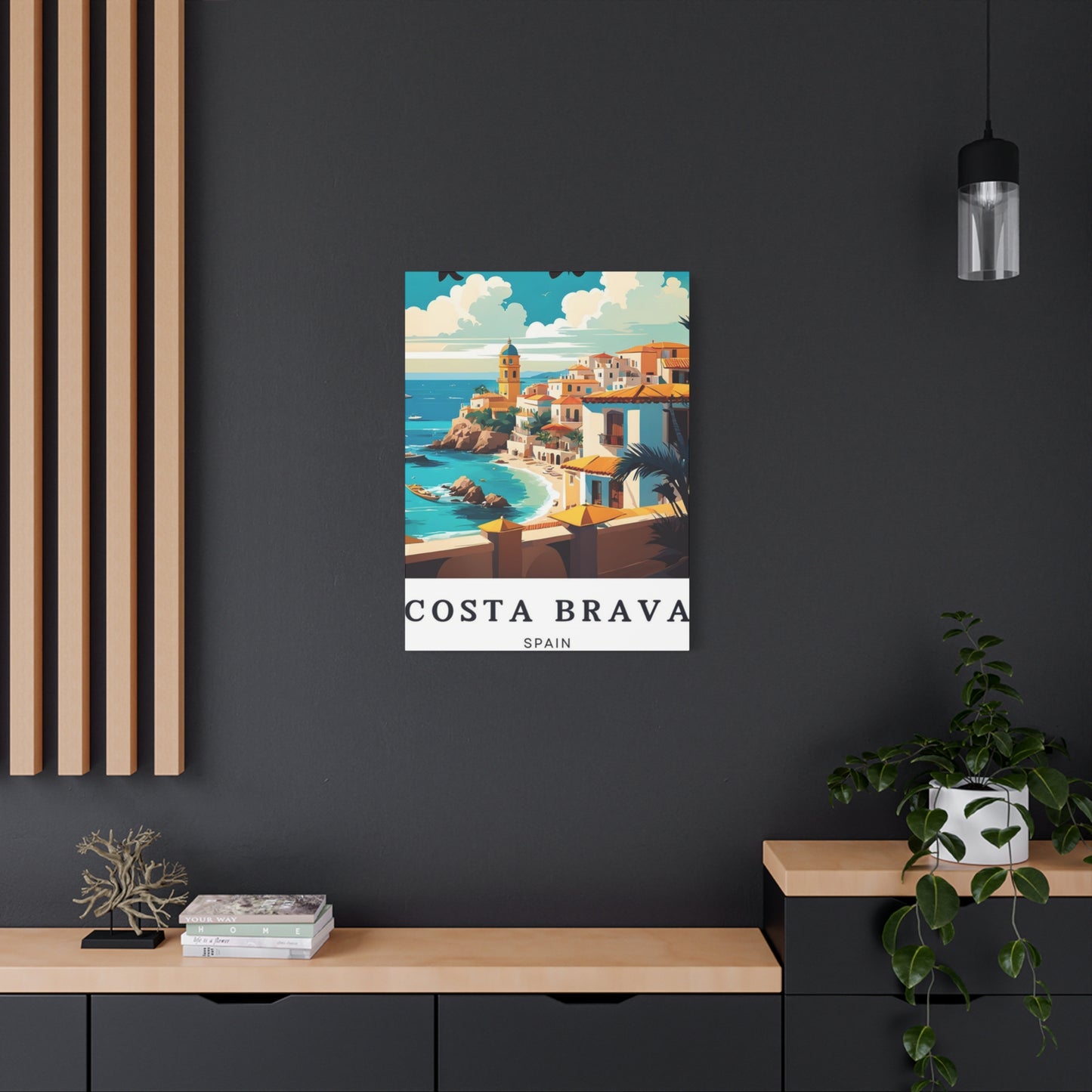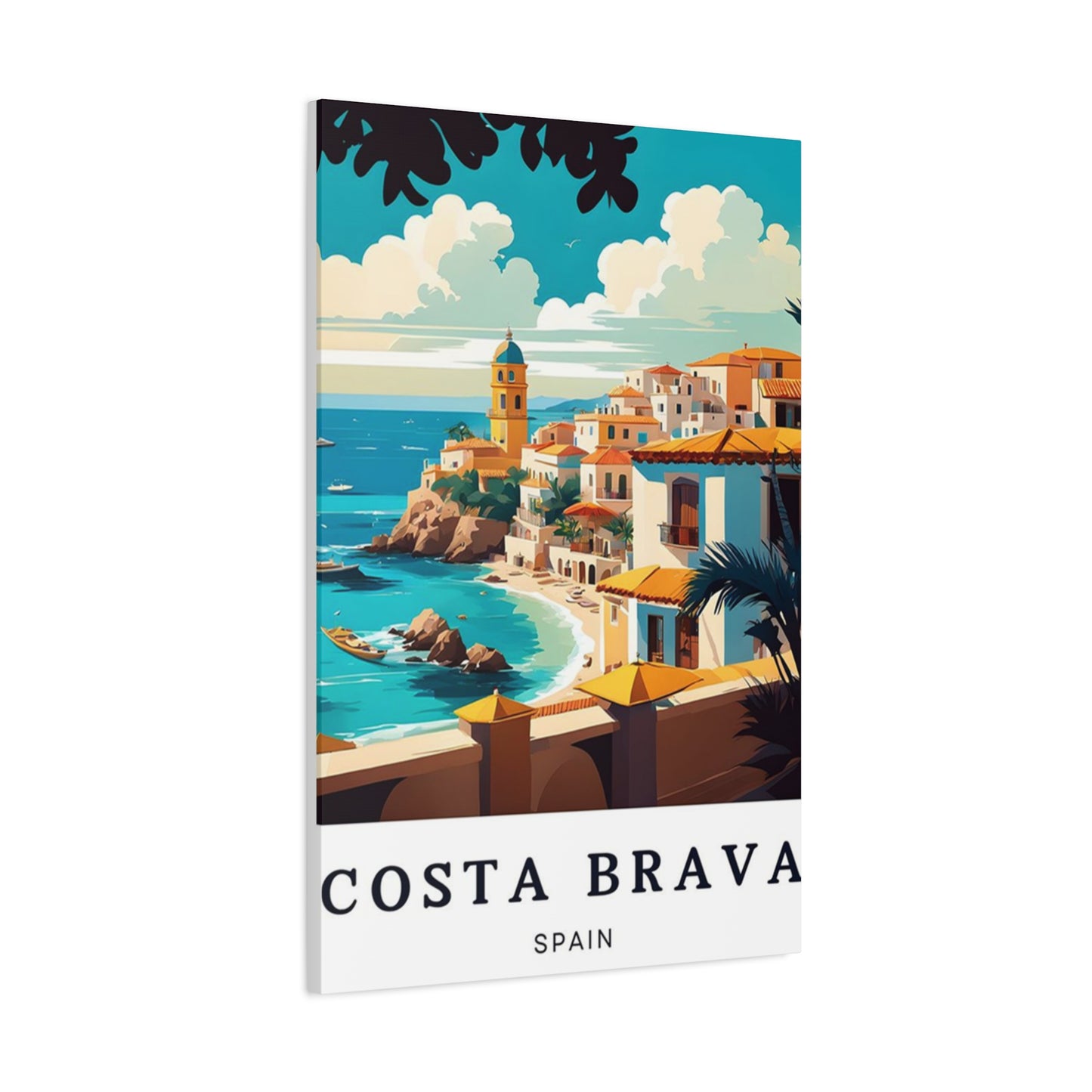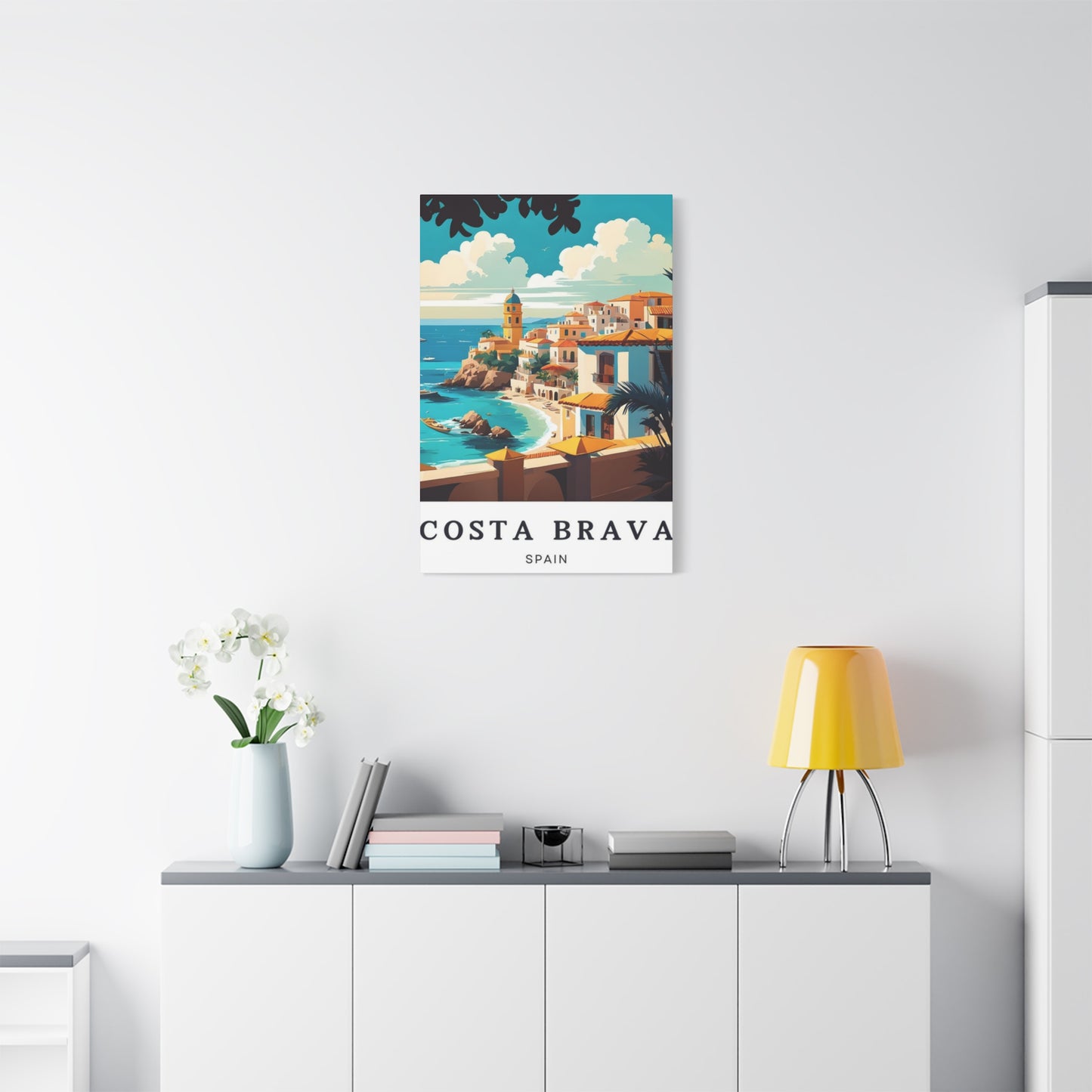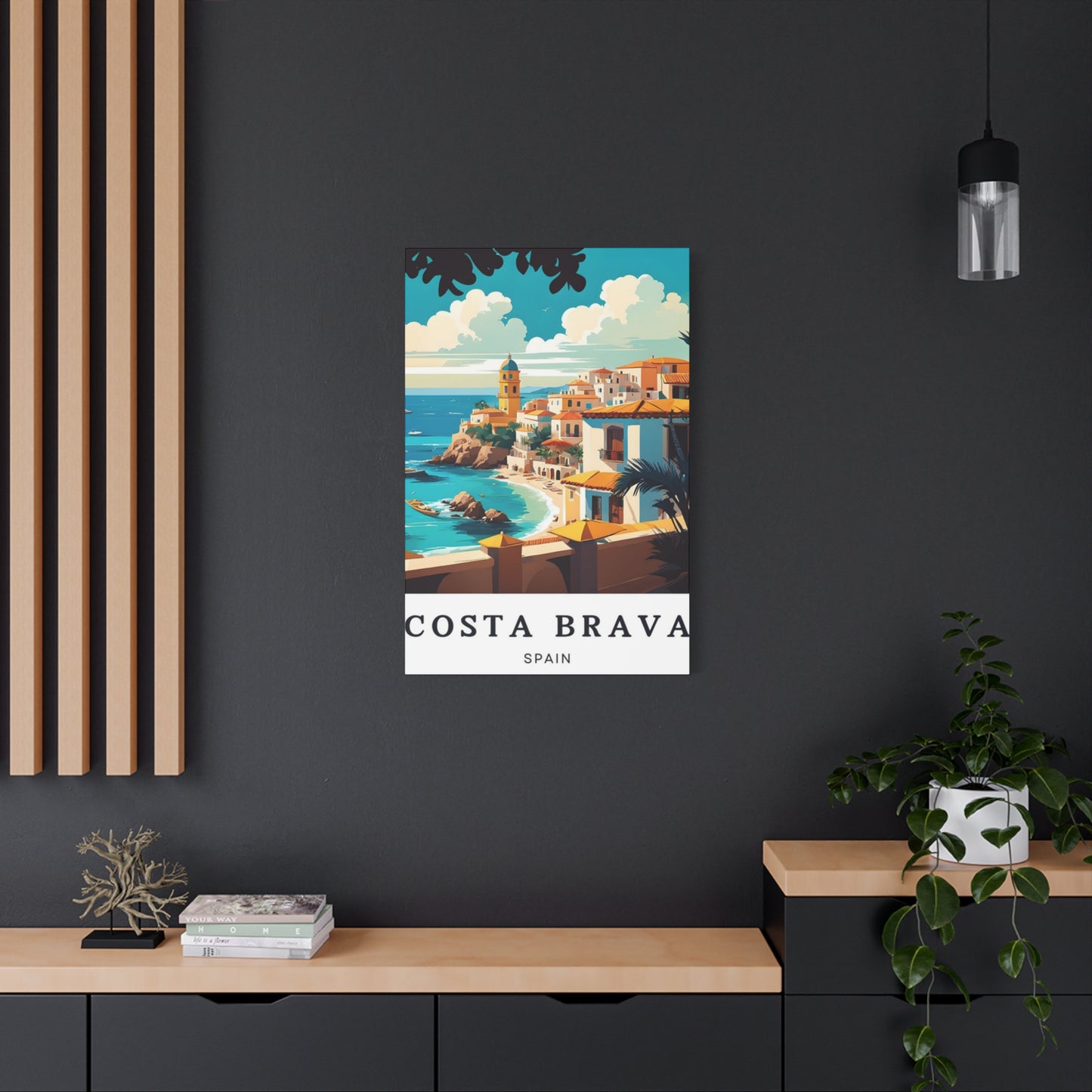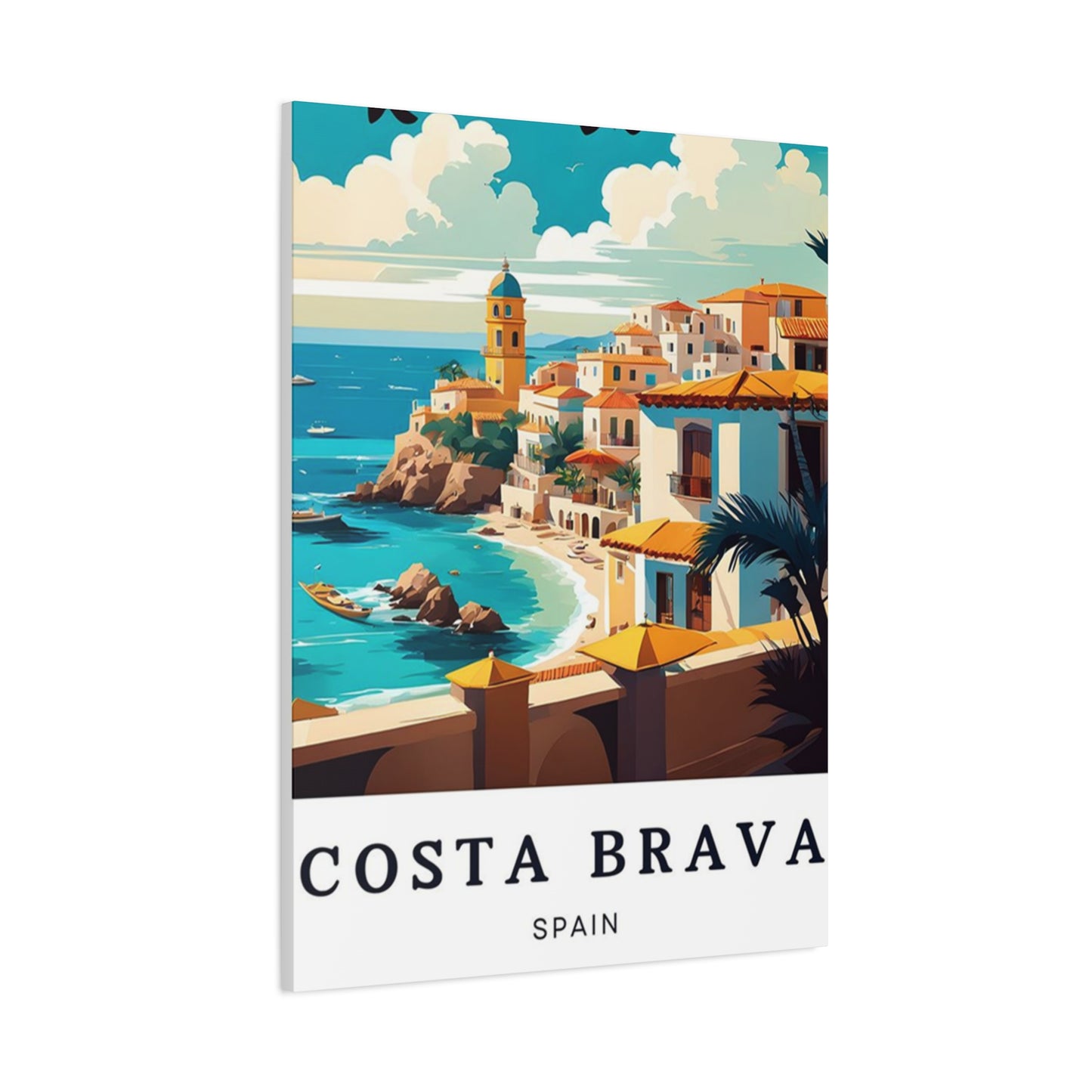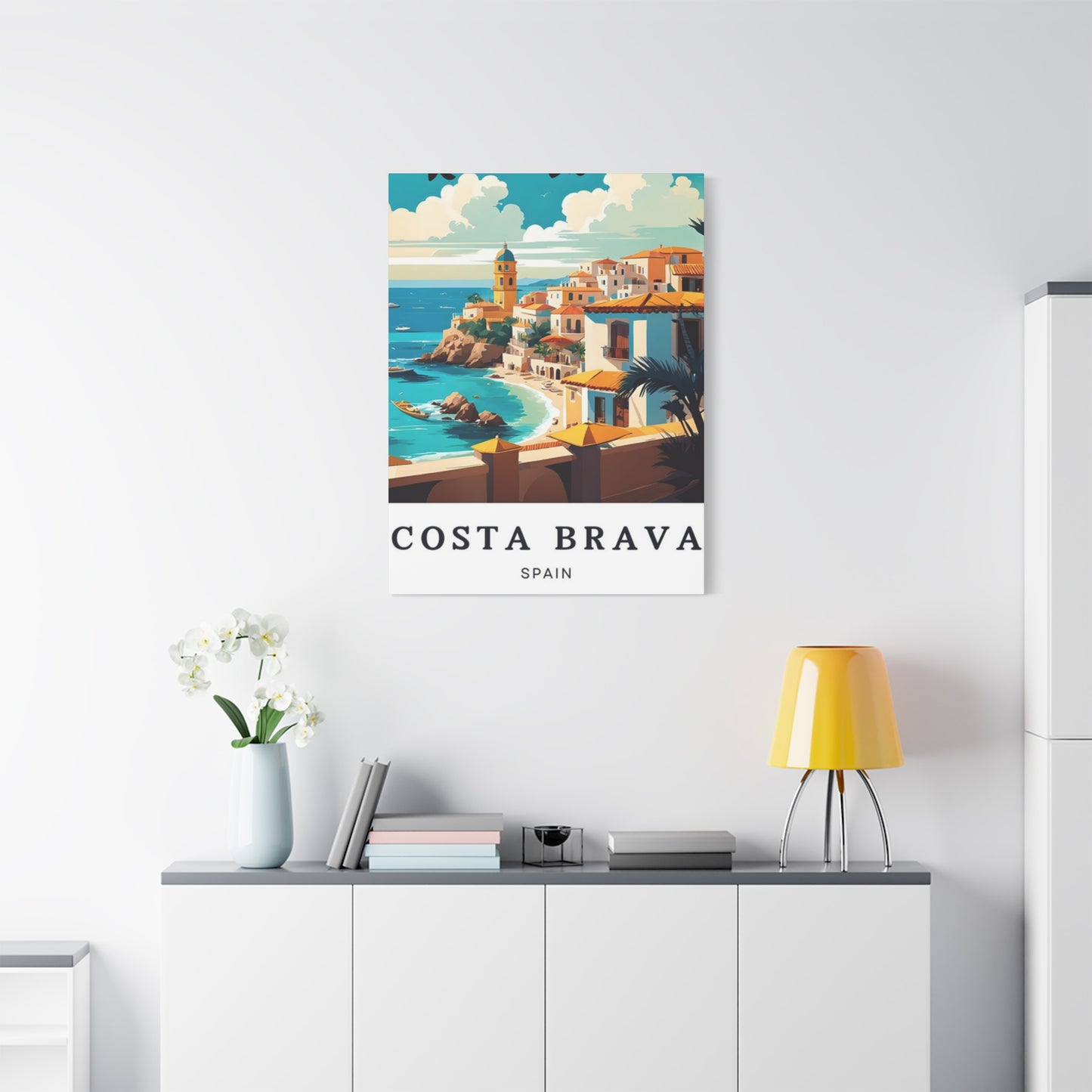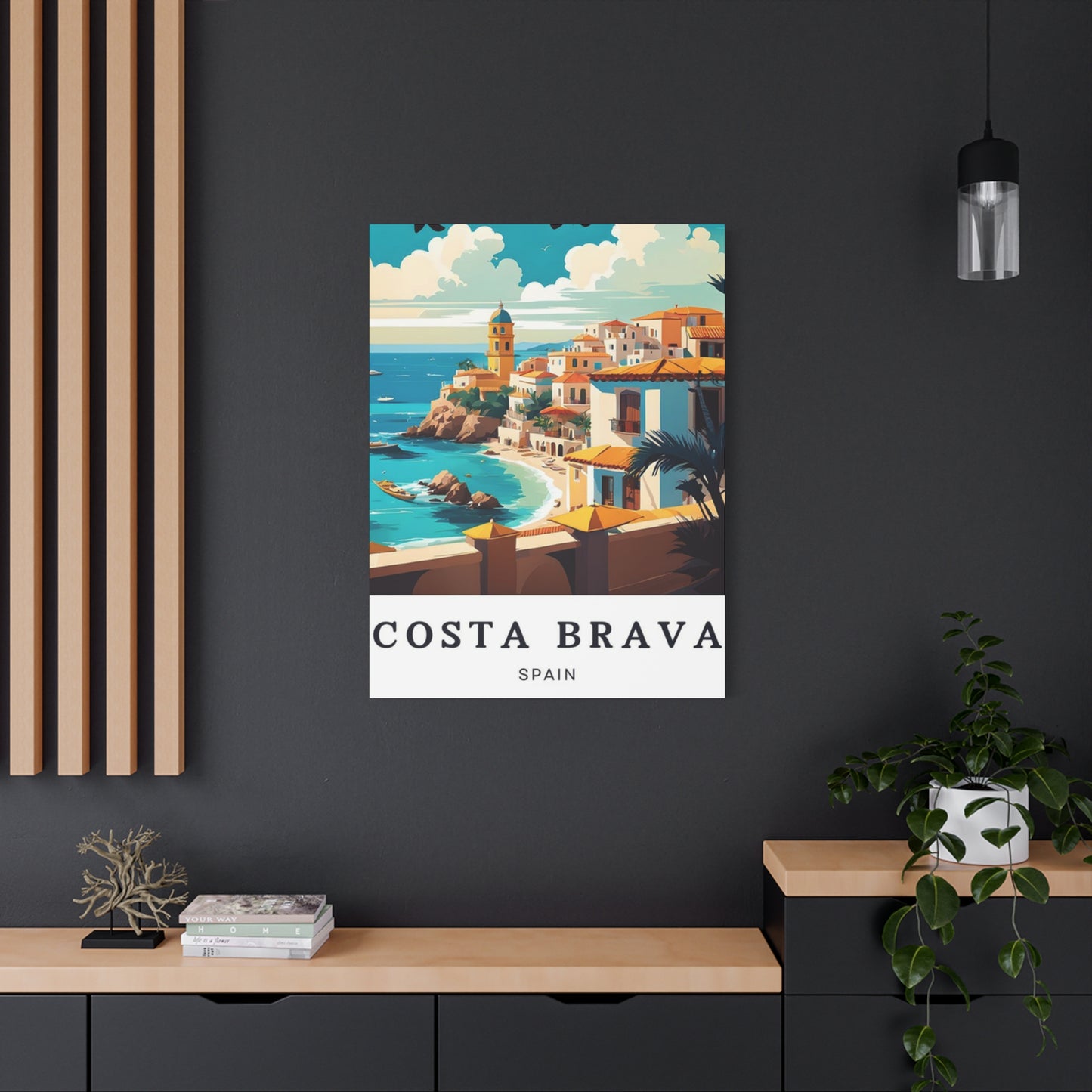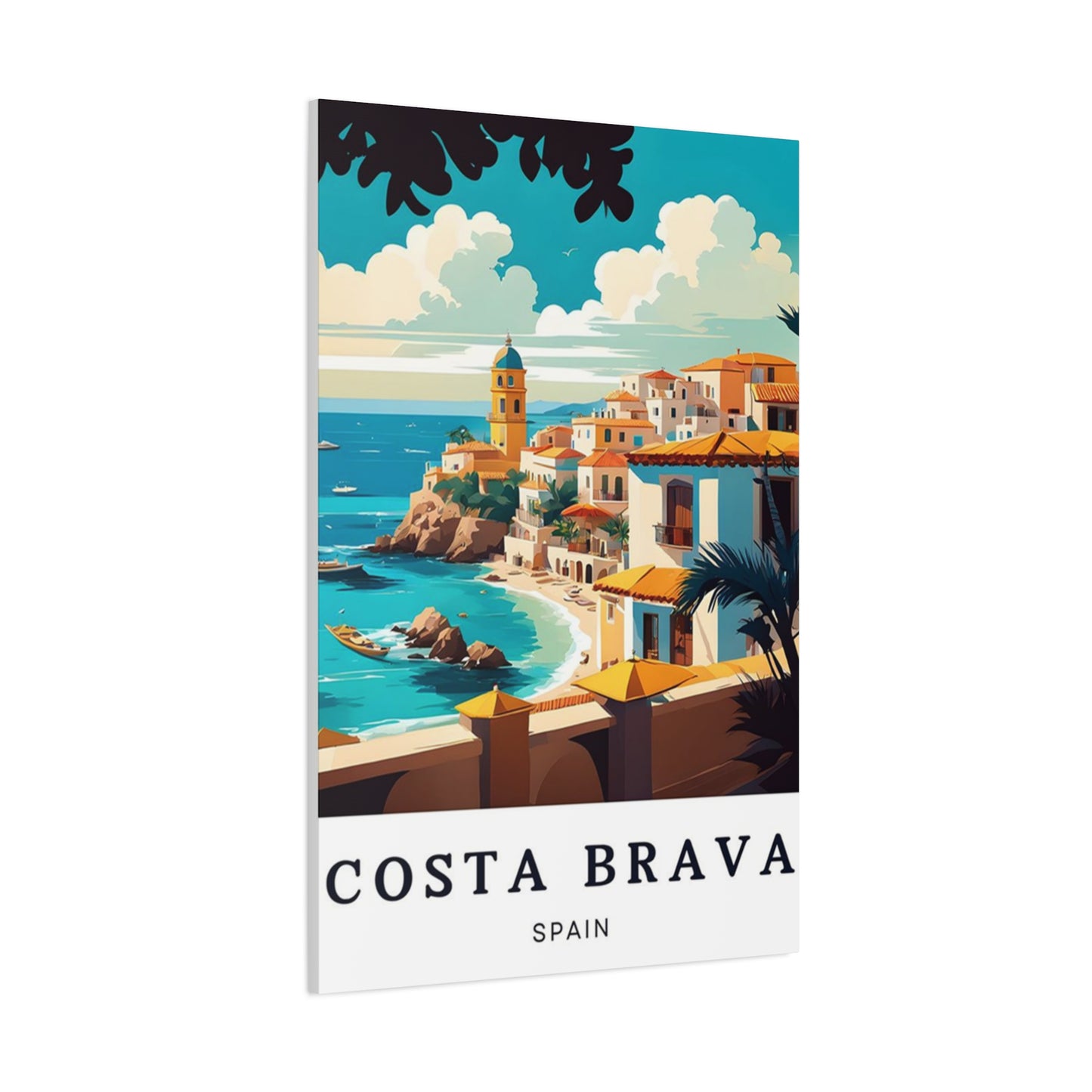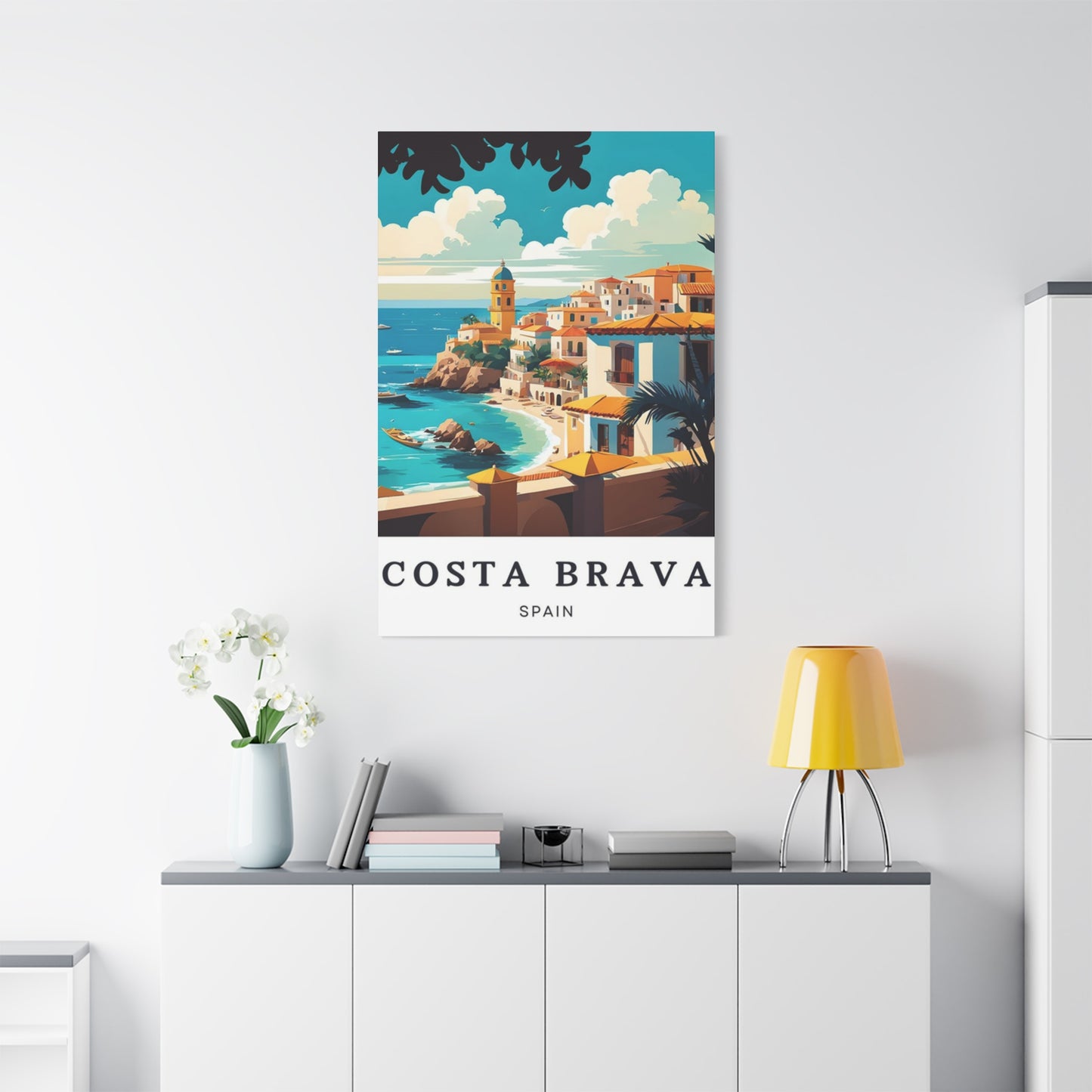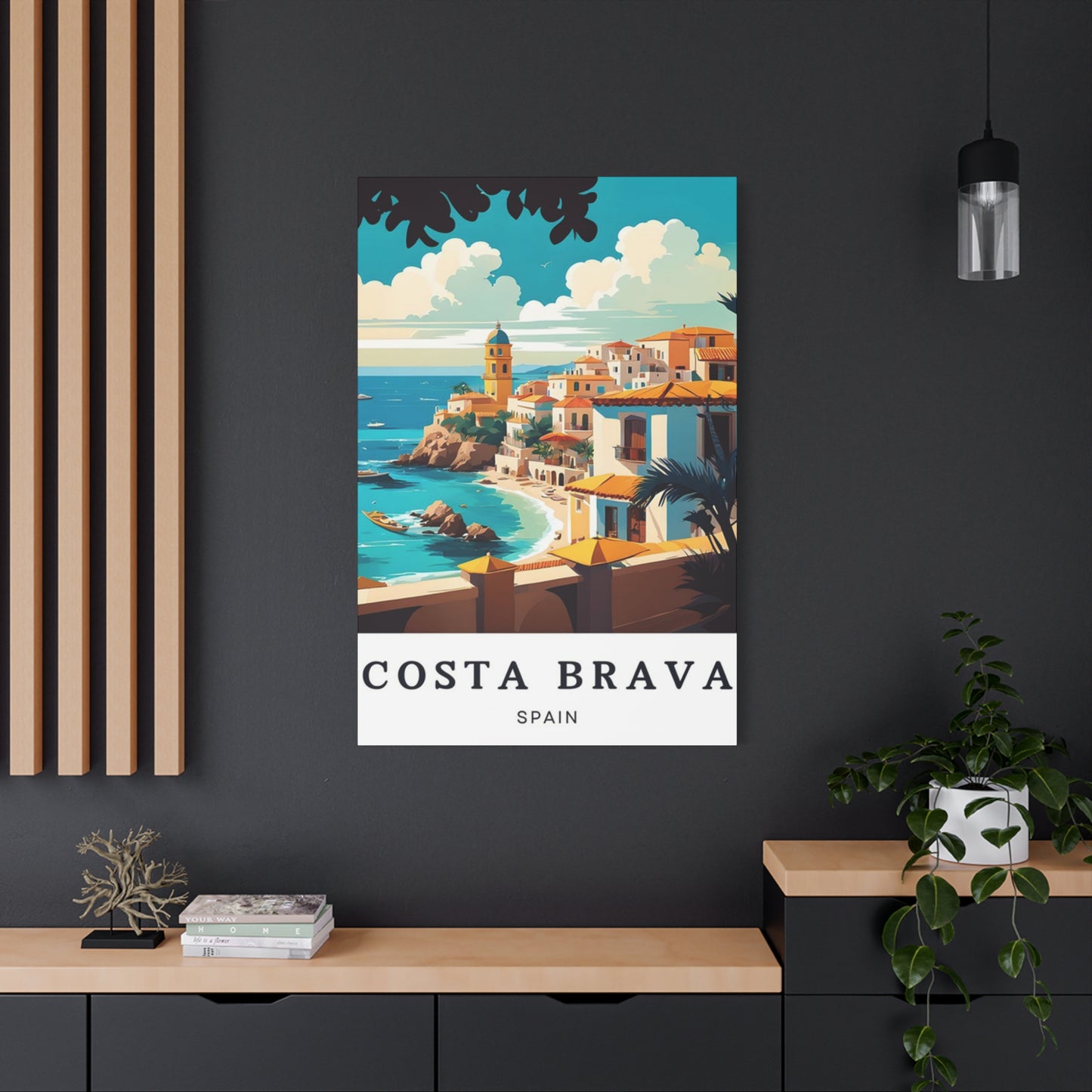


Costa Brava City Wall Art & Canvas Prints
Costa Brava City Wall Art & Canvas Prints
Couldn't load pickup availability
Costa Brava City Wall Art: Merging Timeless Artistic Heritage with Innovative Contemporary Expressions
The rugged coastline of northeastern Spain has long served as a muse for creative minds seeking to capture the essence of Mediterranean beauty through various artistic mediums. This magnificent stretch of land, where azure waters meet dramatic cliffs and charming villages nestle among pine-covered hills, has witnessed centuries of human expression manifested through visual narratives on both outdoor surfaces and gallery canvases. The region's distinctive character emerges from its unique combination of natural splendor, architectural heritage, and vibrant cultural traditions that have attracted painters, muralists, and decorative artists from across the globe.
The landscape itself presents an ever-changing palette of colors and textures that shift with the seasons and the quality of light. Summer months bathe the coastline in brilliant sunshine that intensifies the blues and greens of the sea, while autumn brings softer, golden tones that cast warm glows across ancient stone structures. Winter reveals the raw, untamed character of the region, with stormy skies creating dramatic contrasts against whitewashed buildings and weathered walls. Spring awakens the countryside with wildflowers and fresh vegetation that painters have long sought to capture in their compositions.
Throughout the centuries, this coastal territory has maintained its identity as a crossroads of cultures, where Roman foundations, medieval fortifications, and modernist movements have all left their indelible marks. The visual narratives that decorate both public spaces and private collections serve as testament to this rich layering of human experience. From prehistoric cave paintings discovered in nearby mountainous areas to contemporary street murals that transform urban landscapes, the region demonstrates an unbroken thread of artistic expression that continues to evolve while honoring its roots.
The architectural fabric of coastal settlements provides countless opportunities for creative expression on vertical surfaces. Ancient stone walls, constructed from locally quarried materials, offer textures and patinas that enhance rather than compete with painted imagery. Modern buildings incorporate design elements that reference historical precedents while providing fresh canvases for contemporary visual narratives. This harmonious blend of old and new creates an environment where Costa Brava city wall art flourishes as both preservation of heritage and celebration of innovation.
How Centuries of Maritime Culture Shaped Regional Artistic Expression
The profound influence of seafaring traditions permeates every aspect of regional creative output, from the subject matter chosen by artists to the very materials and techniques employed in their craft. Fishing communities that have sustained themselves through generations of harvesting the Mediterranean's bounty developed their own visual vocabulary, one that speaks to the dangers and rewards of life upon the waves. Boats with distinctive hull designs, nets draped across docks to dry in the sun, and weathered faces of mariners who have spent lifetimes navigating these waters all feature prominently in the region's artistic canon.
Maritime commerce brought wealth to coastal settlements, enabling the construction of grand residences and public buildings that became showcases for decorative artistry. Merchants who traded in textiles, spices, and other commodities commissioned works that reflected both their prosperity and their connection to distant lands. Motifs incorporating exotic elements from North Africa, the Middle East, and the broader Mediterranean basin appeared alongside traditional local imagery, creating a distinctive fusion that characterized the region's visual culture.
Shipbuilding expertise translated into an understanding of form, proportion, and structural integrity that influenced architectural design and, by extension, the surfaces available for artistic enhancement. The same craftsmen who could fashion seaworthy vessels from raw timber possessed skills readily applicable to constructing buildings and preparing surfaces for painted decoration. This practical knowledge informed aesthetic choices, as artists working in the region developed keen awareness of how different materials weather under the assault of salt air, intense sunlight, and occasional storms.
Religious practices intertwined with maritime life found expression in devotional imagery placed on exterior walls of homes and community buildings. Fishermen seeking divine protection before embarking on voyages commissioned paintings of patron saints, creating a tradition of exterior religious imagery that persists in many coastal villages. These works served dual purposes as expressions of faith and as navigational landmarks for sailors approaching shore, their bright colors visible from considerable distances across the water.
The rhythms of the sea influenced not only what artists depicted but how they approached their work. The seasonal nature of fishing created periods of intense activity followed by quieter times when creative pursuits could flourish. Winter months, when rough seas limited maritime ventures, became traditional periods for interior decorative work and the production of portable pieces. This cyclical pattern established deep connections between practical livelihood and artistic expression that continue to resonate in contemporary Costa Brava city wall art.
Tracing the Evolution from Ancient Frescoes to Modern Muralism
Archaeological evidence reveals that humans have decorated surfaces in this region for thousands of years, with some of the earliest examples dating to prehistoric periods when hunter-gatherers left pigmented handprints and animal figures in rock shelters. These primordial expressions of human creativity established a precedent for using available surfaces as platforms for visual communication that would persist through subsequent millennia. As settled communities developed, increasingly sophisticated methods emerged for preparing surfaces and creating durable, vibrant imagery.
Roman colonization introduced sophisticated fresco techniques that revolutionized decorative practices throughout the Mediterranean basin. Wealthy villa owners commissioned elaborate interior murals depicting mythological scenes, trompe-l'oeil architectural elements, and garden landscapes that brought the outdoors inside. While many interior examples have perished over centuries, the influence of Roman aesthetic principles and technical knowledge profoundly shaped subsequent artistic traditions. The understanding that carefully prepared plaster surfaces could support complex, long-lasting imagery became foundational knowledge passed through generations.
Medieval periods saw the rise of religious imagery dominating public art, with churches and monasteries becoming primary patrons of wall painting. Romanesque and Gothic artistic movements left their marks on the region through cycles of biblical narratives painted within sacred spaces. However, exterior decoration remained relatively limited during these centuries, with most public walls receiving simple whitewash treatments or, occasionally, heraldic displays announcing the authority of local lords. The focus on interior ecclesiastical decoration meant that expertise in working on vertical surfaces remained concentrated within specialized workshops serving religious institutions.
The Renaissance brought renewed interest in classical antiquity and a flourishing of secular patronage that expanded the scope of wall decoration beyond purely religious contexts. Aristocratic families commissioned decorative schemes for their palaces that incorporated humanistic themes alongside traditional Christian imagery. Techniques for creating weather-resistant exterior paintings improved, leading to increased decoration of building facades, particularly in urban centers where wealthy merchants competed to display their refinement and cultural sophistication through commissioned artworks.
Baroque and Rococo periods introduced theatrical drama and ornamental exuberance to painted decoration, with trompe-l'oeil techniques reaching new heights of illusionistic sophistication. However, the region maintained certain aesthetic restraints influenced by its geographic isolation and the practical concerns of coastal communities where resources needed to be carefully managed. This resulted in a distinctive regional variant that incorporated fashionable stylistic elements while maintaining connection to local traditions and preferences for certain color palettes and compositional arrangements.
The nineteenth century witnessed profound changes as industrialization, improved transportation, and tourism began reshaping coastal communities. Artists from other regions discovered the compelling beauty of the coastline, establishing colonies and workshops that attracted students and enthusiasts. This influx brought new ideas and techniques while simultaneously sparking renewed interest in preserving local traditions. The tension between innovation and preservation that emerged during this period continues to animate discussions about Costa Brava city wall art in contemporary contexts.
Modernist movements of the early twentieth century found fertile ground in Catalonia, with Barcelona serving as a creative epicenter whose influence radiated outward to coastal communities. Avant-garde artists rejected academic conventions and sought fresh approaches to representation that captured the dynamism and energy of modern life. Some turned to public walls as democratic spaces where art could engage broader audiences beyond elite gallery visitors. This democratizing impulse laid groundwork for later street art and muralism movements that would transform urban landscapes.
The mid-twentieth century brought political upheavals that suppressed certain forms of creative expression while inadvertently fostering underground artistic movements. Despite official constraints, artists found ways to continue working, sometimes disguising social commentary within seemingly innocuous imagery or working in remote locations away from scrutiny. The resilience of creative communities during difficult periods speaks to the deep-rooted importance of visual expression in regional culture, a legacy that informs contemporary attitudes toward public art.
Recent decades have seen explosive growth in public muralism, with both commissioned projects and unsanctioned works transforming urban environments. International street art movements have influenced local practitioners, while regional traditions continue to shape how artists approach their work. Contemporary muralists working in coastal cities often reference historical precedents, incorporating elements from Roman frescoes, medieval religious painting, and modernist abstraction into compositions that speak to current concerns and sensibilities. This conscious engagement with artistic heritage distinguishes much contemporary Costa Brava city wall art from purely derivative or trend-following work.
Examining the Distinctive Visual Language of Mediterranean Coastal Imagery
The artistic traditions that developed along this particular stretch of Mediterranean coastline exhibit characteristics that set them apart from other regional schools and movements. Climate, geography, available materials, and cultural influences combined to produce a distinctive visual vocabulary recognizable to informed observers. Understanding these defining characteristics provides insight into both historical works and contemporary pieces that continue these traditions or deliberately subvert them for expressive purposes.
Color palettes reflect the natural environment, with blues ranging from deep navy to pale aquamarine representing the omnipresent sea. Earthy ochres, siennas, and umbers reference the region's geological formations and traditional building materials. Bright whites evoke the whitewashed buildings that help reflect intense summer heat, while terracotta tones recall clay roof tiles that cap structures throughout the region. Artists working within this tradition demonstrate sophisticated understanding of how these colors interact and how they appear under the region's distinctive quality of light, which has been described as uniquely clear and luminous.
Compositional strategies often emphasize horizontal formats that echo the meeting of sea and sky along the horizon line. This fundamental division of picture plane into distinct zones appears in countless works, from simple seascapes to complex narrative compositions. Artists manipulate this basic structure through variations in proportional relationships, introducing vertical elements like masts, towers, or cypress trees to create dynamic tension within otherwise tranquil arrangements. The resulting compositions convey both stability and visual interest, inviting sustained contemplation.
Textural contrasts play crucial roles in the region's visual culture, with artists exploiting differences between smooth and rough surfaces, transparent and opaque passages, and delicate versus bold mark-making. The weathered surfaces of ancient stone walls provide inherent texture that many contemporary muralists choose to preserve and incorporate rather than completely covering with paint. This approach creates dialogue between old and new, allowing the passage of time to become visible element within the artwork itself rather than something to be concealed or denied.
Figurative representation ranges from highly naturalistic to simplified and abstracted, depending on context and purpose. Religious imagery typically maintains recognizable forms that communicate clearly to viewers, while decorative schemes might employ more stylized human and animal figures. Contemporary street artists frequently work with simplified silhouettes and bold outlines that remain legible from considerable distances and under various lighting conditions. This practical consideration of viewing circumstances has always influenced stylistic choices in public art, where works must compete for attention within visually complex environments.
Symbolic elements drawn from maritime culture appear repeatedly across different periods and styles. Anchors, ropes, seashells, fish, and vessels serve both as realistic details and as metaphorical devices carrying layers of meaning. Artists employ these motifs with varying degrees of literalism, sometimes rendering them with precise realism and other times abstracting them to essential forms. The continued presence of these symbols across centuries of artistic production demonstrates their enduring resonance within regional consciousness and their effectiveness as visual shorthand for complex concepts and emotions.
Architectural settings feature prominently in regional imagery, with artists depicting everything from humble fishermen's cottages to grand palatial structures. These representations serve multiple functions, documenting changing built environments, celebrating civic pride, and providing opportunities for displays of technical virtuosity in rendering perspective and architectural detail. Contemporary Costa Brava city wall art often includes architectural elements, either depicting actual buildings within the composition or interacting with the architectural features of the wall surface itself through trompe-l'oeil effects that blur boundaries between painted illusion and physical reality.
Understanding the Materials and Methods That Bring Walls to Life
The practical aspects of creating durable, visually compelling works on vertical exterior surfaces require substantial knowledge and skill accumulated through years of practice. Artists working in this demanding medium must understand material properties, environmental factors, surface preparation requirements, and application techniques that differ significantly from studio painting on canvas or paper. This specialized knowledge has been passed through generations of practitioners, evolving as new materials become available while retaining certain fundamental principles that ensure longevity and visual impact.
Surface preparation represents perhaps the most critical phase in creating lasting wall paintings, yet one that receives little attention from casual observers admiring finished works. The substrate must be carefully evaluated for structural soundness, with any cracks, loose materials, or moisture problems addressed before painting commences. Historical stone walls may require consolidation to stabilize deteriorating mortar joints, while modern concrete or stucco surfaces need assessment of their porosity and compatibility with planned painting materials. Neglecting proper preparation virtually guarantees premature failure of the painted layer, regardless of the skill employed in its execution.
Traditional lime-based plasters provide ideal surfaces for certain painting techniques, particularly true fresco where pigments suspended in water chemically bond with the plaster as it carbonates. This ancient method produces remarkably durable results when executed properly, with colors becoming integral to the wall surface rather than sitting atop it as a separate layer. However, true fresco demands rapid work and careful planning, as artists must complete sections while the plaster remains sufficiently wet to accept pigment, typically within a few hours of application. This time constraint requires confidence and decisiveness that come only from extensive practice.
Secco techniques, where paint is applied to dry surfaces, offer greater flexibility in pacing and allow for more detailed, refined work. Various binding media can secure pigments to walls, including casein, egg tempera, and synthetic acrylics that have gained popularity in recent decades. Each system presents particular advantages and limitations regarding workability, drying time, color intensity, and long-term durability. Contemporary muralists often employ acrylic paints for their versatility, quick drying, and availability in brilliant colors, though some practitioners prefer traditional materials for aesthetic or philosophical reasons.
Pigment selection demands consideration of lightfastness, chemical compatibility with binding media and substrates, and resistance to environmental degradation. Certain historically important pigments, like genuine ultramarine derived from lapis lazuli or vermilion from cinnabar, have largely been replaced by synthetic alternatives offering superior permanence at lower cost. However, some artists continue using traditional mineral and earth pigments for their distinctive optical qualities and connection to historical practices. Understanding which pigments perform reliably in exterior conditions separates accomplished muralists from less experienced practitioners whose works may fade or discolor within years.
Scaffolding and access equipment enable artists to reach upper portions of tall walls safely and comfortably, essential for executing works that may extend several stories above ground level. Historically, wooden structures supported by beams inserted into purpose-built holes in walls provided platforms at various heights. Modern aluminum scaffolding offers greater flexibility and safety, while aerial lifts allow rapid repositioning when working on expansive surfaces. The logistics of securing appropriate access equipment can significantly impact project timelines and budgets, sometimes determining whether ambitious proposals can be realized.
Protective coatings applied after completion of painted elements provide additional safeguards against environmental assault, though their use remains somewhat controversial among purists who argue that such treatments alter the appearance of unvarnished paint or may trap moisture leading to deterioration from within. When properly formulated and applied, breathable protective layers can extend the lifespan of exterior paintings significantly, particularly in coastal environments where salt-laden air accelerates degradation. The decision whether to employ such treatments requires weighing potential benefits against risks and aesthetic considerations.
Environmental conditions during painting significantly affect working processes and final results. High humidity may prevent proper drying and curing of paint films, while excessive heat can cause materials to dry too rapidly, potentially leading to poor adhesion or surface defects. Wind-blown dust and debris pose constant threats to wet paint surfaces in outdoor settings. Experienced muralists learn to read weather patterns and adjust their working schedules accordingly, sometimes laboring during early morning hours when conditions are most favorable and suspending work during midday heat or when storms threaten.
Documentation throughout the creative process serves multiple purposes, creating records of works that may deteriorate over time while providing valuable information for future conservation efforts. Photographs taken during surface preparation, preliminary sketching, paint application, and after completion establish baseline conditions against which later changes can be measured. Some artists maintain detailed notes about materials used, application techniques, and any problems encountered, creating archives that benefit both their own practice and the broader community of practitioners and conservators concerned with preserving Costa Brava city wall art.
Exploring the Rich Tapestry of Subjects and Narratives Depicted on Urban Surfaces
The range of subjects appearing on painted walls throughout the coastal region defies simple categorization, encompassing everything from abstract color field compositions to hyperrealistic portraits, from playful whimsical characters to politically charged social commentary. This diversity reflects both the varied interests and perspectives of individual artists and the multiple functions that public art serves within communities. Understanding the major thematic categories that recur across different periods and locations provides insight into what subjects resonate most powerfully with both creators and audiences.
Seascapes and coastal landscapes naturally dominate the region's artistic output, with countless variations on the fundamental theme of representing the visual character of place. Some artists pursue atmospheric effects, capturing the quality of light at specific times of day or seasonal moments. Others focus on dramatic weather conditions, depicting storms sweeping across the water or the crystalline clarity that follows rain. These works serve to heighten awareness of the natural beauty that surrounds inhabitants and visitors, encouraging deeper appreciation of environmental qualities that might otherwise be taken for granted amid the routines of daily life.
Marine life appears in forms ranging from scientifically accurate illustrations to fantastical creatures drawn from mythology and imagination. Fish, octopi, dolphins, and sea turtles populate murals throughout coastal towns, sometimes rendered with precise attention to anatomical detail and other times abstracted to decorative elements within larger compositional schemes. These representations acknowledge the sea as source of sustenance and livelihood while also celebrating the diversity and wonder of ocean ecosystems. Contemporary environmental awareness has given such imagery added resonance, with some artists explicitly addressing conservation concerns through their choice of subjects and accompanying messages.
Human figures engaged in various activities related to maritime life provide narrative content and opportunities for artists to explore universal themes through specific local contexts. Fishermen mending nets, children playing along the waterfront, elderly residents sharing stories while seated on benches facing the harbor—these scenes capture the rhythms and relationships that define community life. The best examples transcend mere genre painting to convey deeper truths about human experience, resilience, joy, and connection to place. Portraiture celebrating notable local figures or anonymous archetypes also falls within this category, immortalizing individuals on walls of buildings they may have inhabited or frequented.
Religious and devotional imagery maintains presence in many communities, continuing traditions that extend back centuries. Images of patron saints, particularly those associated with maritime protection, appear on exterior walls of private homes and public buildings. The Virgin Mary in various manifestations receives frequent representation, with compositions ranging from simple silhouettes to elaborate scenes incorporating angels, clouds, and divine light. While contemporary society exhibits less uniform religious adherence than previous generations, these images remain culturally significant markers of heritage and identity that many communities actively preserve and maintain.
Abstract and non-representational compositions challenge viewers to engage with color, form, and texture divorced from recognizable subject matter. Some muralists working in this mode seek to enhance architectural features through painted elements that complement or contrast with building forms. Others create self-contained visual experiences that transform blank walls into fields of pure aesthetic contemplation. Geometric patterns, organic shapes, gestural marks, and color gradients arranged according to principles of balance, rhythm, and harmony demonstrate that Costa Brava city wall art encompasses the full spectrum of artistic approaches rather than limiting itself to representational traditions.
Social and political commentary finds expression through murals addressing contemporary issues and concerns. Artists tackle subjects including environmental degradation, economic inequality, migration, and questions of identity and belonging. The public nature of wall painting makes it particularly suited to these purposes, placing messages directly in spaces where people live and work rather than confining them to galleries visited primarily by art enthusiasts. While controversial works occasionally spark disputes, most communities recognize the value of platforms for civic discourse and tolerate or even celebrate provocative pieces that stimulate conversation and reflection.
Commercial and promotional imagery occupies a somewhat ambiguous position within discussions of public art, as painted business signs and advertisements blur boundaries between fine art and commercial communication. Historical examples of beautifully executed shop signs and product advertisements possess considerable aesthetic merit and document evolving commercial life. Contemporary street artists sometimes incorporate corporate logos and consumer imagery into their work, either celebrating or critiquing consumer culture depending on context and treatment. This complex relationship between art and commerce reflects broader societal tensions that play out across the walls of cities worldwide.
Commemorative and memorial pieces honor events, individuals, or communities through permanent visual monuments. These works serve important social functions, creating focal points for collective remembrance and shared identity. Successful examples achieve balance between specific historical reference and universal themes that allow diverse audiences to find personal meaning. The placement of such pieces in public spaces rather than conventional memorial settings democratizes access to commemorative experience, integrating memory into the fabric of everyday urban life rather than segregating it in designated zones of solemn reflection.
Revealing the Vibrant Street Art Movement Transforming Contemporary Urban Landscapes
The explosive growth of unsanctioned graffiti and authorized street art over recent decades has fundamentally altered relationships between artists, communities, and public spaces. What began as marginal, often illegal activity associated with youth subcultures has evolved into a recognized and increasingly valued form of creative expression that attracts serious artistic talent and institutional support. The Mediterranean coastal region has not remained immune to these global trends, with local interpretations of street art cultures producing distinctive bodies of work that both participate in international conversations and maintain connections to regional artistic traditions.
Graffiti writing, focused primarily on stylized lettering and personal or crew tags, established footholds in coastal cities during the 1980s as global hip-hop culture disseminated through music, film, and personal connections. Early practitioners faced hostility from authorities and property owners who viewed their activities as vandalism pure and simple. Despite legal risks and social disapproval, these pioneers persisted, developing local scenes with their own hierarchies, territories, and aesthetic preferences. The letterforms and color combinations they developed, often adapted from models originating in American cities, gradually incorporated regional influences to create hybrid styles reflecting both global and local sensibilities.
Stencil work emerged as a prominent technique among politically motivated artists seeking to quickly reproduce images and messages while minimizing exposure to legal consequences. The method's efficiency and repeatability made it ideal for guerrilla art interventions, allowing practitioners to execute works in minutes and potentially reproduce them at multiple locations. Powerful images addressing social injustices, environmental crises, and political corruption appeared overnight on walls throughout urban areas, sparking conversations and occasionally catalyzing activism. The tension between authorities attempting to suppress these messages and artists determined to voice dissent created cat-and-mouse dynamics that added layers of meaning to the works themselves.
Paste-up wheat-pasting offered another rapid deployment technique, with artists creating images on paper that could be adhered to walls using simple wheat-based paste. This approach allowed for more detailed, complex imagery than spray painting typically permitted, as artists could work comfortably in studios before taking finished pieces to the streets. Wheat-pasted images became ubiquitous in some neighborhoods, creating densely layered surfaces as new pieces covered older ones in endless cycles of creation and obliteration. The ephemeral nature of these works—easily removed by rain, wind, or municipal workers—paradoxically contributed to their appeal, as fleeting existence heightened their preciousness and sense of urgency.
Large-scale murals executed with permission of property owners represent the most visible manifestation of street art's journey from marginal to mainstream acceptance. Many coastal municipalities now actively solicit proposals for public murals, recognizing their potential to enhance neighborhood character, attract tourists, and provide platforms for community expression. Dedicated festivals bring together international artists for intensive periods of wall painting that transform entire districts. These sanctioned projects allow for ambitious scale and complexity impossible in hurried illegal work, producing pieces that rival traditional public monuments in scope and impact.
The intersection of street art with contemporary urban planning reflects shifting attitudes toward public space and its role in fostering livable, engaging communities. Planners and developers increasingly recognize that vibrant street art contributes to placemaking, helping to establish distinctive neighborhood identities and create destinations that attract residents and visitors. This recognition has led to the incorporation of wall art into redevelopment schemes, with developers commissioning pieces as part of broader efforts to transform neglected areas. While some applaud this validation and the opportunities it creates, others lament the domestication of once-rebellious practices into tools of gentrification and commercial interests.
Technical skill levels within street art communities have risen dramatically as the practice has professionalized and gained legitimacy. Contemporary muralists command sophisticated understandings of color theory, composition, and surface treatment that equal or exceed those of artists working in conventional fine art contexts. They experiment with innovative materials and tools, pushing beyond traditional spray paint to incorporate acrylics, house paints, and specialized products designed for exterior conditions. Some integrate three-dimensional elements or combine painting with sculptural components, expanding the definition of what constitutes Costa Brava city wall art.
Social media platforms have transformed how street art circulates and gains recognition, allowing works to reach global audiences within hours of completion. Artists maintain feeds showcasing their latest pieces, attracting followers who may never physically visit the locations where murals exist. This digital dissemination has accelerated the spread of styles and techniques while enabling rapid response to current events through art that appears on walls almost as quickly as digital commentary appears online. However, it also raises questions about whether the experience of viewing art through screens differs fundamentally from encountering it in physical space, where scale, texture, and environmental context contribute to aesthetic impact.
Debates about authenticity, commercialization, and the soul of street art persist within practitioner communities. Some maintain that any deviation from illegal, rebellious roots represents betrayal of fundamental principles, while others embrace opportunities for legal work and financial compensation. Most practitioners occupy positions between these extremes, selectively accepting commissions while maintaining independence and willingness to create unauthorized works when circumstances warrant. These ongoing conversations about values and priorities demonstrate the vitality of street art as a living, evolving practice rather than a static tradition, ensuring that coastal urban walls continue to serve as dynamic sites of creative experimentation and cultural contestation.
Investigating How Decorated Walls Strengthen Community Bonds and Civic Identity
Public art transforms shared spaces in ways that extend far beyond purely aesthetic enhancement, influencing how people relate to their environments and to each other. The painted walls that characterize many coastal communities function as more than decorative elements; they serve as catalysts for conversation, sources of pride, markers of identity, and platforms for collective expression. Understanding these social dimensions reveals why communities invest resources in creating and maintaining public art despite competing demands on limited budgets and why residents often mobilize to protect beloved murals from destruction or neglect.
Neighborhood beautification efforts frequently center on commissioning or creating public murals as cost-effective means of improving visual environments. Neglected walls that previously attracted trash dumping or served as backdrops to urban decay become focal points of community renewal when transformed through art. The psychological impacts of such transformations should not be underestimated; numerous studies document correlations between attractive public spaces and positive outcomes including reduced crime, increased pedestrian traffic, and heightened civic engagement. Residents who take pride in their surroundings demonstrate greater investment in maintaining and improving them, creating virtuous cycles where initial improvements spark further enhancements.
Place-based identity formation relies partly on visual markers that distinguish one community from another and provide residents with tangible elements around which to coalesce group consciousness. The distinctive murals adorning walls in particular neighborhoods become recognized symbols of those areas, appearing in promotional materials and social media posts that circulate representations of place to broader audiences. Visitors seeking authentic local experiences specifically search for these visual landmarks, their presence confirming arrival in neighborhoods they came to explore. For residents, these same elements serve as backdrops to daily life, so familiar that they fade into subconscious awareness yet subtly shape perceptions of home and belonging.
Participatory projects involving community members in the creative process offer especially potent opportunities for strengthening social bonds while producing artworks that reflect collective values and aspirations. Workshops where residents contribute ideas, help prepare surfaces, or actually apply paint foster ownership over finished pieces and the spaces they inhabit. Children who participate in such projects develop positive associations with public art and creative expression that may influence attitudes and behaviors throughout their lives. These collaborative efforts also bridge divisions, bringing together people of different ages, backgrounds, and perspectives who might not otherwise interact meaningfully.
Contested murals sometimes become flashpoints for community conflict, revealing underlying tensions about values, priorities, and visions for the future. Disagreements may arise around content deemed offensive or inappropriate by some residents, stylistic preferences, allocation of prime wall space, or proper processes for commissioning and approving public art. While uncomfortable, these conflicts offer opportunities for communities to engage in civic discourse about important questions regarding whose voices get heard, how collective decisions are made, and what principles should guide the creation of shared environments. Successfully navigating such disputes can actually strengthen community cohesion by establishing clear processes and precedents for addressing future disagreements.
Memorial murals honoring deceased community members, particularly young people who died tragically, serve crucial functions in collective grieving and memory preservation. These spontaneous tributes appearing on walls near sites of death or in neighborhoods where victims lived create tangible focal points for mourning and remembrance. Visitors leave flowers, candles, and written messages, transforming walls into impromptu shrines that acknowledge loss while celebrating lives cut short. While some authorities view such memorials as problematic, most communities recognize their importance and allow them to remain, at least temporarily, as spaces for emotional processing and communal support during difficult times.
Tourism promotion increasingly features public art as attraction drawing visitors who might otherwise bypass smaller coastal communities in favor of major cities or resort areas. Municipalities develop walking tour routes highlighting notable murals, creating new tourism products that require minimal infrastructure investment yet generate economic activity supporting local businesses. Artists themselves become attractions, with residents proud to claim talented muralists as community members and visitors hoping to observe works in progress. This economic dimension of Costa Brava city wall art justifies public expenditures on commissioning and maintaining pieces while providing artists with income streams that enable them to continue practicing their craft.
Documentation projects that systematically photograph and catalog public murals serve important preservation functions while raising awareness of the scope and significance of community art assets. Online databases allow people to discover works they might not encounter through ordinary activities, while providing researchers and historians with valuable resources for studying contemporary visual culture. Some communities produce printed guides or multimedia presentations showcasing their public art, using these materials in educational settings and as tools for promoting civic pride. These documentation efforts recognize that many murals will eventually fade or be destroyed, making comprehensive records essential for preserving knowledge of ephemeral works.
Youth engagement with public art offers constructive alternatives to destructive or antisocial behaviors, channeling energy and creativity toward positive ends. Programs that teach young people mural painting, mosaic work, or other forms of public art production equip them with marketable skills while fostering confidence and sense of purpose. Participants often report that involvement in such programs changed their life trajectories, opening possibilities they had not previously imagined. Communities benefit from reduced vandalism and beautified public spaces, while young artists gain recognition and validation that encourage continued creative development and civic participation.
Discovering the Role of Private Collectors and Interior Design in Perpetuating Coastal Artistic Traditions
While public murals and street art capture attention through their visibility and accessibility, a parallel universe of privately owned artworks sustaining coastal artistic traditions exists within homes, offices, and commercial spaces throughout the region. Collectors who acquire paintings, prints, and decorative pieces depicting local scenes or executed by regional artists play crucial roles in supporting creative communities and preserving cultural heritage. Understanding this private sphere and its relationship to public expressions reveals the full complexity of how Costa Brava city wall art and related traditions persist across generations.
Interior decorators and designers frequently incorporate locally inspired artwork into their schemes, recognizing that pieces reflecting regional character help anchor spaces to their geographic contexts. A seaside residence might feature a collection of seascapes in varying styles, from impressionistic studies of light on water to bold contemporary interpretations of maritime subjects. Commercial establishments including restaurants, hotels, and offices commission or purchase works that reinforce brand identities tied to coastal themes, surrounding patrons with visual reminders of place. This steady demand for regionally inflected artwork sustains artists who might otherwise struggle to earn livings from their practice.
Collecting practices range from casual accumulation of affordable prints and reproductions to serious connoisseurship involving substantial financial investment in original works by established or emerging artists. Serious collectors develop expertise, learning to distinguish quality from mediocrity and identifying artists whose work merits attention and support. Some specialize in particular periods, styles, or subjects, assembling focused collections that offer coherent perspectives on specific aspects of regional visual culture. Others embrace eclecticism, acquiring diverse pieces united primarily by geographic origin or personal emotional response rather than adherence to predefined collecting parameters.
Gallery systems that emerged in the late nineteenth and twentieth centuries continue to serve as primary marketplaces where artists and collectors connect. Commercial galleries representing regional artists organize exhibitions, publish catalogs, and actively promote their stable of talent to potential buyers. Reputable dealers provide valuable services including authentication, conservation referrals, and market expertise that help collectors make informed acquisitions. The relationship between galleries, artists, and collectors forms an ecosystem that, while sometimes criticized for commercializing creativity, undeniably provides infrastructure supporting professional artistic practice.
Artist studios and open studio events allow collectors direct access to creators, fostering personal relationships that enhance collecting experiences and deepen appreciation for artistic processes. Visiting a studio where paintings lean against walls and works-in-progress cover easels offers insights unavailable in pristine gallery settings. Collectors who commission specific pieces collaborate with artists on subject matter, scale, and stylistic approaches, resulting in works tailored to particular spaces and tastes. These direct transactions benefit artists by eliminating gallery commissions while giving collectors the satisfaction of actively participating in creative processes rather than simply purchasing finished products.
Auction houses, both local and international, circulate secondary market works that may appreciate significantly in value if artists gain recognition or if particular pieces possess exceptional quality or historical importance. Savvy collectors monitor auction results, looking for undervalued works that might represent good investments or fill gaps in their collections. The auction process itself generates excitement and drama, with competitive bidding sometimes pushing prices far beyond estimates. Records of sales prices contribute to artists' market positions, influencing valuations of their entire bodies of work and affecting their ability to command higher prices for new pieces.
Art fairs provide concentrated opportunities to view works from multiple galleries and artists in single locations, accelerating the process of discovering new talent and comparing offerings. Regional fairs focusing on Mediterranean coastal art attract both local collectors and international visitors seeking work rooted in particular places. These events generate significant economic activity while raising the profile of regional artistic production. For artists, fair participation offers exposure to new audiences and potential collectors who might not visit their individual studios or representing galleries.
Private museums and foundations established by wealthy collectors or corporate entities preserve important collections while making them accessible to public audiences. These institutions bridge gaps between private ownership and public benefit, ensuring that significant works remain visible rather than disappearing into vaults or private residences. Some specialize in regional art, building comprehensive collections that document stylistic evolution and cultural context. Educational programs, publications, and loans to other institutions extend the influence of these collections beyond immediate geographic areas, contributing to broader appreciation of coastal artistic traditions.
Interior architectural elements designed to incorporate artwork demonstrate how collectors integrate pieces into domestic environments. Custom lighting, specialized wall treatments, security systems, and climate control measures protect investments while ensuring optimal viewing conditions. The arrangement of artworks within spaces follows principles of visual balance and narrative flow, with collectors curating their domestic environments as carefully as institutional curators organize exhibitions. This attention to presentation reflects the seriousness with which many collectors approach their pursuit and the centrality of art to their lifestyles and self-concepts.
Legacy planning concerns collectors who wish to preserve their collections beyond their lifetimes, whether by transferring works to family members, donating to institutions, or establishing foundations to maintain collections intact. These decisions involve complex considerations balancing personal wishes, tax implications, and desires to benefit communities or support causes. The dispersal of significant collections through estate sales can reshape regional art markets, making previously unavailable works accessible to new collectors while potentially affecting prices across entire categories of coastal-themed artwork.
Conclusion
Costa Brava city wall art beautifully captures the unique charm and artistic heritage of this iconic region, offering a captivating way to incorporate the essence of Spain’s Mediterranean coast into your living space. Known for its rugged cliffs, crystal-clear waters, picturesque villages, and vibrant local culture, Costa Brava has long been an inspiration for artists and creators. Whether through traditional depictions of its stunning landscapes or contemporary interpretations that infuse modern design elements, Costa Brava city wall art transports the viewer into the heart of this coastal paradise, blending history, culture, and natural beauty into a visual narrative that can transform any room.
One of the most significant aspects of Costa Brava art is its rich cultural heritage. The region has been home to many celebrated artists, most notably the surrealist Salvador Dalí, whose works reflect the surreal landscapes of the Catalan coast. For those interested in history, classic depictions of Costa Brava’s quaint towns, lush hills, and dramatic coastal scenes pay homage to the region’s traditional artistic legacy. These pieces offer a sense of nostalgia and timeless beauty, capturing the simplicity and rustic charm of village life, traditional Mediterranean architecture, and the ever-changing colors of the sea. These works connect with those who appreciate art that honors a place’s roots while capturing its essence in a way that feels both familiar and enduring.
However, Costa Brava city wall art is not confined to traditional depictions alone. Today, contemporary artists continue to explore new ways to interpret this beautiful region, merging modern design aesthetics with the unmistakable allure of the Mediterranean coast. Whether through abstract renditions of the coastline, geometric representations of its cliffs and sea, or bold, colorful expressions of the region’s culture, contemporary Costa Brava art adds a dynamic, fresh perspective to the space. These modern takes are ideal for those who appreciate cutting-edge design while still desiring a connection to the natural beauty of Costa Brava.
The interplay of tradition and modernity in Costa Brava city wall art makes it an incredibly versatile addition to any interior. For more traditional or Mediterranean-inspired spaces, classic renditions of the coastline or the region’s iconic coastal towns like Tossa de Mar or Cadaqués bring an element of timeless elegance. These works often use soft, earthy tones and natural textures that reflect the region’s connection to both land and sea. In contrast, contemporary pieces that play with bold colors and abstract forms can inject energy and modern flair into more minimalist or industrial interiors, offering a dynamic contrast to a more streamlined aesthetic.
Moreover, Costa Brava city wall art is perfect for those seeking to infuse their home with the spirit of travel, adventure, and discovery. Whether you’ve visited the area and want to preserve the memories, or simply long for the sun-kissed shores and vibrant Mediterranean lifestyle, these artworks allow you to bring the essence of the coast into your living space. The scenes of rugged coastlines, bustling fishing harbors, and quiet village life inspire feelings of wanderlust and tranquility, offering a virtual escape to the idyllic world of Costa Brava every time you gaze upon the art.
Another compelling feature of Costa Brava city wall art is its adaptability to various interior styles. The earthy tones and natural beauty of more traditional coastal art complement beachy or rustic décor, while the modern expressions of the region’s landscapes and architecture work perfectly in contemporary settings. Whether you’re enhancing a chic urban apartment or a cozy coastal retreat, Costa Brava art can be tailored to suit the specific mood and theme of the room. In a living room, it could serve as a bold statement piece, while in a bedroom, it might provide a calming, dreamlike atmosphere.
Additionally, Costa Brava city wall art makes an excellent conversation starter. It invites discussions not only about the beauty of the region but also about its cultural and artistic significance. For art lovers, these works represent a celebration of both Catalan identity and the universal appeal of Mediterranean landscapes. For those with a personal connection to Costa Brava, the artwork serves as a window into cherished memories and personal experiences, evoking a sense of nostalgia and longing for the coastal lifestyle.
In conclusion, Costa Brava city wall art offers a visually stunning and culturally rich way to enhance any living space. Whether you’re drawn to the traditional beauty of the region’s landscapes or the vibrant, contemporary expressions that push the boundaries of modern design, Costa Brava art provides a unique way to celebrate both the past and present of this breathtaking region. Through its powerful blend of natural beauty, historical significance, and artistic innovation, these artworks bring the spirit of Costa Brava into your home, creating an environment that is both inspiring and soothing. Whether for its emotional connection to the Mediterranean or its aesthetic appeal, Costa Brava city wall art is an exceptional addition that will elevate any interior with timeless elegance and modern flair.
Share