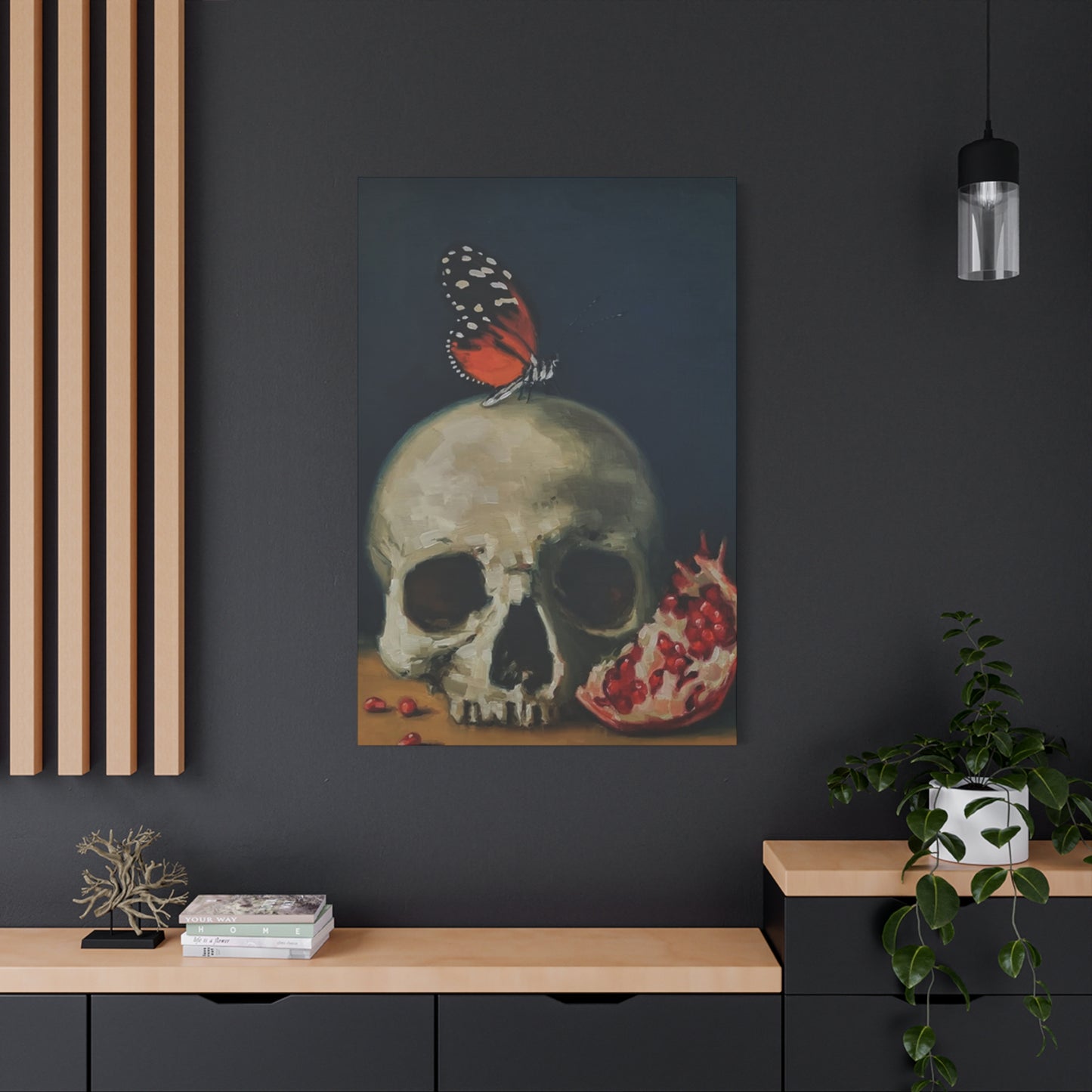
Butterfly On Skull Wall Art & Canvas Prints
Butterfly On Skull Wall Art & Canvas Prints
Couldn't load pickup availability
The Bold Beauty of Butterfly on Skull Wall Art: A Deep Dive into Aesthetic Expression and Design Innovation
The convergence of delicate lepidopteran imagery with the stark symbolism of cranial motifs has emerged as one of the most captivating phenomena in contemporary interior ornamentation. Butterfly On Skull Wall Art represents a fascinating intersection where mortality, transformation, and ethereal beauty coalesce into visually compelling arrangements that captivate the discerning eye. This distinctive artistic genre transcends conventional categorization, speaking to a universal human fascination with paradox, duality, and the intricate dance between opposing forces within our visual landscape.
The phenomenon of juxtaposing fragile winged creatures against skeletal imagery has captured the imagination of artists, designers, and homeowners worldwide. This particular fusion creates an emotionally resonant aesthetic that simultaneously evokes contemplation, wonder, and sophisticated artistic sensibility. The popularity of Butterfly On Skull Wall Art continues to ascend, reflecting a broader cultural shift toward embracing complexity, embracing contradictions, and celebrating artistic expressions that challenge conventional boundaries. The interplay between these seemingly incongruous elements produces a remarkable visual narrative that speaks to viewers on multiple psychological and emotional levels.
The Philosophical Underpinnings of Contrasting Visual Elements in Contemporary Wall Ornamentation
The juxtaposition of butterflies with skulls draws its considerable power from fundamental philosophical concepts that have permeated human thought across centuries. The butterfly symbolizes metamorphosis, renewal, fleeting beauty, and the transcendent nature of existence itself. Conversely, the skull represents memento mori, the inevitable passage of time, human mortality, and the equalizing force of death that unites all living beings. When these symbolisms intertwine within a single artistic composition, they create a profound meditation on existence itself.
Throughout history, philosophical traditions from various cultures have grappled with the relationship between life and death, permanence and impermanence. Eastern philosophies, particularly Buddhist thought, emphasize the impermanent nature of all phenomena and the cyclical patterns inherent in existence. The imagery of a delicate butterfly alighting upon bone speaks eloquently to these concepts, suggesting that beauty exists precisely because it is transient, that meaning emerges from mortality, and that transformation constitutes the fundamental nature of reality. This philosophical resonance explains why such imagery resonates so powerfully with contemporary audiences seeking deeper meaning in their living spaces.
The memento mori tradition, which flourished during the Renaissance and remains influential today, reminds viewers of their inevitable mortality. Rather than presenting this reality as morbid or depressing, contemporary interpretations through Butterfly On Skull Wall Art reframe mortality as an intrinsic aspect of the human experience worthy of aesthetic celebration. This reframing reflects a maturation in how society engages with existential themes, suggesting that acknowledging death need not lead to despair but rather to deeper appreciation of life's fleeting magnificence.
The Aesthetic Sophistication of Dual-Symbolism Imagery in Residential Environments
The aesthetic appeal of Butterfly On Skull Wall Art extends far beyond mere shock value or novelty. The compositions demonstrate considerable visual sophistication through the careful balance of opposing visual weights, color palettes, and compositional dynamics. Artists working within this genre employ various techniques to ensure that neither element overwhelms the other, instead creating harmonious tension that engages the viewer's perception continuously.
The color palettes employed in such pieces range from monochromatic schemes that emphasize linework and shadow to vibrant, multichromatic arrangements where iridescent butterfly hues contrast dramatically against darker skeletal tones. Skilled artists understand how to manipulate the viewer's gaze through strategic color placement, atmospheric perspective, and compositional framing. The surrounding space around the skull and butterfly becomes as significant as the subjects themselves, with negative space contributing substantially to the overall visual impact and perceived sophistication.
From a design perspective, Butterfly On Skull Wall Art possesses remarkable versatility. The imagery seamlessly integrates into various interior aesthetics, from gothic and bohemian spaces to minimalist, contemporary environments. This adaptability stems from the fundamental universality of the symbolism combined with the essential simplicity of the compositional concept. Whether rendered in intricate detail or bold, graphic simplicity, the core narrative remains compelling and emotionally resonant.
The interplay between micro and macro visual elements demonstrates the technical proficiency of accomplished artists. Viewers might initially perceive the composition as a whole before gradually recognizing the meticulous detailing within each element. The delicate segmentation of butterfly wings, the intricate patterning of scales, the precise anatomical rendering of cranial structure, and the subtle gradations of tone all contribute to layers of visual information that reward sustained contemplation. This multi-layered approach ensures that the artwork maintains interest even after repeated viewings.
Exploring the Diverse Range of Material Expressions and Compositional Variations
Contemporary Butterfly On Skull Wall Art manifests across an expansive range of materials, each imparting distinctive aesthetic and textural qualities to the finished composition. Canvas remains a traditional choice, offering excellent compatibility with acrylic, oil, and mixed-media applications. Artists frequently utilize canvas to explore detailed illustrative approaches, allowing for precise rendering of anatomical elements and atmospheric effects through layered applications of pigment and various painting mediums.
Metal serves as another popular substrate, particularly steel and aluminum, which possess inherent associations with durability and industrial aesthetic sensibilities. Metal renditions of Butterfly On Skull Wall Art often embrace graphic boldness, employing negative space effectively and sometimes incorporating dimensional elements that create shadows and visual complexity as lighting conditions change throughout the day. The reflective properties of certain metallic finishes introduce an interactive component, where the artwork engages differently with ambient illumination across various times and seasons.
Wooden compositions represent another significant category, with artists creating pieces through carving, burning, staining, and inlay techniques. The natural grain patterns of wood contribute organic variation to the imagery, creating unique characteristics impossible to replicate exactly. Wood-based pieces often evoke a more artisanal, handcrafted aesthetic, appealing to individuals who appreciate the visible evidence of human creation and the irregular perfection inherent in natural materials. The warmth and tactile appeal of wood contrasts intriguingly with the conceptual coldness of mortality symbolism.
Glass and resin compositions introduce transparency, luminosity, and contemporary sophistication to the genre. These materials enable artists to experiment with layering, three-dimensionality, and light refraction in ways impossible with traditional two-dimensional approaches. Some glass artists employ sandblasting and etching techniques to create complex surface textures, while resin artists might embed various materials, create dimensional relief, or incorporate color gradients throughout the piece's depth.
Mixed-media approaches combine multiple materials within singular compositions, leveraging the distinct properties of each to create complex visual narratives. Artists might incorporate found objects, vintage elements, natural materials, or unconventional substances alongside traditional artistic mediums. This eclecticism reflects contemporary artistic philosophies that celebrate experimentation, boundary-pushing, and the democratization of materials previously considered unsuitable for fine art.
The Influence of Cultural Perspectives on Symbolic Interpretation and Visual Expression
Cultural contexts significantly shape how Butterfly On Skull Wall Art is interpreted, valued, and integrated into domestic and commercial spaces. In Western contexts, the imagery often aligns with romanticism, gothic sensibilities, and countercultural movements that celebrate individualism and artistic nonconformity. The combination resonates particularly strongly with individuals who identify with alternative aesthetic philosophies and who seek to distinguish their living environments through distinctive, thought-provoking ornamentation.
Latin American artistic traditions have long embraced skull imagery within festive, celebratory contexts. Day of the Dead observances incorporate skeletal motifs as expressions of reverence, remembrance, and joyful acknowledgment of cyclical existence. When Butterfly On Skull Wall Art draws from these cultural wellsprings, it introduces celebratory, communal dimensions to the imagery that might otherwise emphasize morbidity. Butterflies, associated with transformation and soul migration in various indigenous traditions, integrate naturally with these cultural frameworks, creating compositions that honor ancestral perspectives while speaking to contemporary sensibilities.
Asian artistic traditions, particularly Japanese aesthetics, emphasize impermanence and the beauty inherent in transience through concepts like wabi-sabi. Butterfly On Skull Wall Art that incorporates Japanese visual languages, color palettes derived from traditional woodblock printing, or compositional principles rooted in Eastern aesthetic philosophy creates work that bridges cultural boundaries while maintaining deep respect for multiple traditions. The delicate line work, strategic negative space, and minimalist sensibilities characteristic of certain East Asian artistic approaches translate remarkably well to this genre.
African artistic traditions often celebrate duality, transformation, and the interconnection between visible and invisible realms. The integration of butterfly and skull imagery within contemporary African artistic expressions creates work that honors ancestral wisdom while engaging with global artistic discourse. Similarly, indigenous artistic perspectives from various cultures contribute unique visual languages and symbolic associations that enrich the overall artistic landscape surrounding Butterfly On Skull Wall Art.
Understanding the Psychological Dimensions of Mortality-Conscious Aesthetic Appreciation
Psychological research suggests that individuals drawn to imagery incorporating mortality symbolism often demonstrate particular personality characteristics and philosophical orientations. Such individuals frequently engage in existential contemplation, possess higher conscientiousness regarding mortality awareness, and maintain sophisticated approaches to existential questions. Rather than indicating morbidity or psychological disturbance, engagement with mortality-aware artistic expressions correlates with psychological maturity, acceptance of human limitation, and philosophical sophistication.
The phenomenon of deliberately surrounding oneself with Butterfly On Skull Wall Art represents a form of what researchers term "active confrontation" with mortality awareness. Rather than employing psychological defense mechanisms to avoid contemplating death, individuals who incorporate such imagery into their personal spaces demonstrate a more integrative approach, acknowledging mortality while maintaining engagement with life's beauty and meaning. This conscious acknowledgment can paradoxically enhance appreciation for existence, relationships, and experiences otherwise taken for granted.
Neuropsychological research indicates that viewing complex imagery requiring sustained attention activates multiple brain regions associated with meaning-making, emotional processing, and memory formation. The layered symbolism of Butterfly On Skull Wall Art engages these neural networks more comprehensively than simpler imagery, potentially contributing to heightened aesthetic satisfaction and longer-term memorability. The cognitive work required to navigate the apparent contradiction between the imagery's opposing elements creates intellectual engagement that proves satisfying for many viewers.
The appeal of such imagery also reflects contemporary shifts in how society discusses and processes mortality. Historical periods witnessed high mortality rates, constant exposure to death through disease and conflict, and religious frameworks providing clear mortality narratives. Contemporary Western societies have largely removed death from daily experience, sequestered it within medical institutions, and developed cultural aversion to acknowledging mortality explicitly. Within this context, the deliberate aesthetic engagement with mortality symbolism through Butterfly On Skull Wall Art represents a countercultural stance, a reclamation of existential honesty, and a philosophical stand against the denial mechanisms so prevalent in contemporary consumer societies.
The Spectrum of Visual Styles and Rendering Approaches Within Contemporary Artistic Practice
Butterfly On Skull Wall Art encompasses an impressive spectrum of visual styles, ranging from hyperrealistic rendering to abstracted minimalism, from surreal dreamscapes to geometric stylization. Hyperrealistic approaches pursue anatomical accuracy and photographic verisimilitude, depicting every scale on butterfly wings, every imperfection in bone structure, and every subtle gradation of light and shadow. These pieces demand extraordinary technical skill and patience, with artists sometimes requiring months to complete individual compositions. The hyperrealistic approach appeals to viewers who appreciate technical mastery and who derive satisfaction from recognizing the artist's consummate skill.
Conversely, minimalist interpretations strip imagery to essential forms, often utilizing negative space as actively as positive elements. A minimalist rendering might consist of a simple line drawing suggesting butterfly and skull forms, trusting viewers to complete the image mentally through recognition of iconic silhouettes. This approach appeals to contemporary sensibilities favoring clean aesthetics, digital minimalism, and the conceptual richness achievable through restraint. Minimalist Butterfly On Skull Wall Art often integrates seamlessly into modern interior environments while maintaining conceptual depth.
Surreal and fantastical approaches embrace impossible imagery, distorted proportions, dreamlike atmospherics, and imaginative elements bearing little relation to natural observation. Artists working within surrealism might render butterflies composed of fractured bone, skulls sprouting butterfly wings, or impossible three-dimensional geometries that challenge perception. These works appeal to individuals drawn to imaginative escape, subconscious exploration, and the liberatory possibilities inherent in unfettered artistic expression. Surreal approaches frequently employ vibrant color palettes and complex compositional arrangements that create visually overwhelming yet compelling experiences.
Geometric and mathematical approaches deconstruct both butterfly and skull forms into basic shapes, exploring symmetry, tessellation, and structural principles underlying natural forms. Artists might render skulls as geometric solids, butterflies as symmetrical pattern arrangements, or combine both within intricate mandalas and sacred geometry compositions. This approach appeals to individuals with scientific inclinations, those fascinated by mathematics manifesting in nature, and those drawn to the meditative qualities of precise geometric repetition.
Illustrative approaches maintaining stylized yet recognizable rendering represent perhaps the most frequently encountered category. These works demonstrate considerable technical proficiency while maintaining artistic subjectivity, allowing distinctive personal styles to emerge rather than pursuing mechanistic accuracy. Illustrative Butterfly On Skull Wall Art often possesses narrative qualities, telling stories through compositional arrangement, character expression, and atmospheric context.
Abstract expressionist approaches abandon representational accuracy entirely, utilizing butterfly and skull imagery as conceptual foundations while prioritizing gestural mark-making, color experimentation, and emotional expression. These pieces communicate through visual impact and emotional resonance rather than narrative clarity or technical precision. Abstract approaches offer maximal interpretive freedom, allowing viewers to project personal meaning onto non-specific imagery while maintaining thematic coherence through symbolic reference.
Examining the Market Dynamics and Democratization of Artistic Production
The proliferation of Butterfly On Skull Wall Art across contemporary markets reflects broader democratization of artistic production, distribution, and consumption. Digital tools have enabled individuals without formal artistic training to generate compelling compositions through various software applications, filters, and design platforms. Print-on-demand manufacturing permits artists to create limited or unlimited runs of designs without maintaining inventory or navigating complex production logistics. E-commerce platforms have eliminated traditional gatekeepers, allowing artists to reach global audiences directly without intermediary representation.
This democratization has generated both celebratory and concerning consequences. On one hand, individuals with limited resources can now create and share artistic expressions, building audiences and generating income through creative work previously inaccessible to them. Emerging artists need not pursue formal institutional training or secure gallery representation to establish themselves professionally. The barrier to entry has plummeted, enabling talent flourishing from unexpected circumstances and demographics previously underrepresented in artistic spheres.
Conversely, the flood of readily accessible imagery has diluted market differentiation, making it increasingly challenging for artists to establish distinctive voices and command premium pricing. The proliferation of derivative works, unauthorized reproductions, and algorithmically generated content has complicated questions of authenticity, originality, and artistic credit. Individuals purchasing Butterfly On Skull Wall Art must navigate an increasingly complex landscape to identify genuinely innovative compositions versus repetitive variations on established themes.
The market for Butterfly On Skull Wall Art subdivides into distinct categories based on production methods, quality levels, and pricing structures. Mass-produced pieces available through mainstream retailers prioritize affordability and accessibility, utilizing digital printing on various substrates to create inexpensive wall art satisfying casual aesthetic preferences. These pieces often employ standardized designs, limited color palettes, and generic rendering approaches. Mid-market pieces produced by independent artists through print-on-demand or small-batch manufacturing methods offer improved quality, design originality, and moderate pricing. Premium pieces created by established or renowned artists through traditional artistic methods command substantially higher prices, often ranging from hundreds to tens of thousands of currency units depending on medium, size, and artist reputation.
Collector markets have emerged, with certain pieces appreciating over time as artists gain prominence or as particular works acquire cultural significance. Collectors motivated by investment potential, artistic appreciation, or cultural identification seek increasingly rare, limited-edition, or historically significant pieces. Auction markets and specialized dealers facilitate transactions involving valuable work, with market dynamics influenced by artistic reputation, historical moment, and broader cultural trends affecting valuations.
Investigating the Selection Considerations and Integration Strategies for Residential Spaces
Selecting appropriate Butterfly On Skull Wall Art for residential environments requires consideration of multiple interconnected factors encompassing aesthetic preferences, spatial characteristics, existing décor, lighting conditions, and personal significance. The substantial diversity of available styles permits careful matching between individual preferences and environmental contexts, enabling compositional integration that enhances rather than disrupts existing spatial dynamics.
Size represents a crucial consideration substantially affecting visual impact and spatial perception. Large-scale pieces function as focal points, organizing viewing patterns and commanding attention upon entering spaces. These pieces work effectively in rooms featuring generous wall space, high ceilings, or minimal competing visual elements. Conversely, smaller pieces integrate into existing groupings, complement other ornamentation, or occupy modest wall space without imposing overwhelming visual dominance. Medium-scaled pieces offer versatility, functioning adequately within varied spatial configurations while maintaining respectable presence.
Compositional framing and installation methodology influence how pieces integrate into environments. Pieces mounted directly to walls differ substantially from those suspended by chains or cables, those floating within shadow boxes, those mounted on stands permitting repositioning, or those installed within illuminated display cabinets. Installation approach affects both visual presentation and practical considerations regarding permanence, wall condition, and installation complexity. Renters frequently prefer pieces permitting removal without wall damage, while homeowners might invest in more substantial permanent installations.
Color palette coordination represents another critical selection consideration. Monochromatic pieces featuring blacks, grays, and whites integrate readily into minimalist and contemporary spaces while complementing gothic and bohemian environments. Pieces incorporating vibrant colors require careful consideration of existing color schemes to avoid chromatic chaos or visual discord. Artists skilled in color theory can suggest palettes harmonizing with existing furnishings, wall colors, and architectural elements, facilitating seamless environmental integration.
Lighting conditions substantially affect how Butterfly On Skull Wall Art appears across different times and seasonal variations. Natural illumination introduces dynamic qualities, with sun position throughout the day altering perceived colors, shadows, and dimensional qualities. Artificial lighting permits consistent presentation but risks excessive harshness or inadequate illumination depending on fixture type, intensity, and positioning. Pieces featuring reflective surfaces respond differently to various lighting conditions, creating interactive qualities that evolve throughout daily cycles.
Personal significance and emotional resonance guide many selection decisions. Individuals drawn to particular artistic styles, cultural traditions, or symbolic associations frequently seek pieces resonating with personal history, philosophical orientation, or aesthetic sensibilities. Some individuals commission custom pieces incorporating personal elements, creating unique compositions bearing singular significance. Others gravitationally attract toward existing pieces somehow representing crucial aspects of identity or personal narrative.
Exploring the Techniques Employed by Contemporary Artists in Creating Distinctive Compositions
Artists producing Butterfly On Skull Wall Art employ diverse methodologies reflecting their training, aesthetic preferences, available resources, and conceptual intentions. Traditional approaches emphasize direct observation, anatomical study, and patient manual execution. Artists might sketch preliminary compositions, conduct extensive reference research, and execute pieces through prolonged physical engagement with chosen mediums. This traditional methodology produces work distinguished by individual artist voice, visible evidence of human creation, and techniques difficult to replicate mechanically.
Contemporary digital approaches enable artists to visualize compositions, experiment with variations, and execute designs through tablets, styluses, and specialized software. Digital creation permits nondestructive experimentation, unlimited revision possibilities, and the ability to generate variations on particular themes efficiently. Digital tools democratize artistic production while introducing novel aesthetic possibilities through filters, effects, and computational manipulation impossible through traditional means. However, digital creation also carries risks of aesthetic homogenization as software manufacturers' default settings subtly influence visual outcomes.
Hybrid approaches combine traditional and digital methodologies, leveraging advantages of both. An artist might sketch compositions manually, photograph preliminary work, manipulate digital versions, render final designs traditionally, or photograph and digitally enhance completed pieces for various exhibition and commercial contexts. This flexibility enables artists to optimize each compositional element through the most appropriate methodological approach.
Collaborative creation methodologies involve multiple artists contributing specialized skills to singular compositions. One artist might execute linework while another handles coloring, shading, or detail refinement. Collaborative approaches enable ambitious pieces exceeding individual capacity while introducing diverse aesthetic influences within unified works. Collaboration also facilitates skill-sharing, mentorship, and professional relationships enriching artistic communities.
Experimental and unconventional methodologies embrace chance operations, found materials, and boundary-pushing approaches generating unexpected results. Some artists might employ stencils, transfer techniques, or accident-prone methodologies incorporating unpredictability as creative collaborator. Others might incorporate photography, collage, assemblage, or mixed-media approaches creating compositions transcending traditional categorical boundaries. These experimental approaches often generate distinctive work distinguishing artists within crowded marketplaces while reflecting contemporary artistic philosophies embracing innovation, rule-breaking, and definitional fluidity.
Understanding the Broader Cultural and Social Movements Supporting Such Imagery
The ascendance of Butterfly On Skull Wall Art coincides with broader cultural movements reimagining death, mortality, and existential awareness within contemporary society. Counter-cultural movements, alternative spiritualities, and subcultural communities have long embraced imagery incorporating mortality symbolism as expressions of philosophical stance and cultural identity. The mainstream acceptance and commercialization of such imagery reflects how thoroughly counterculture aesthetics have infiltrated mainstream visual culture.
Goth and gothic subcultures have substantially influenced the aesthetic landscape surrounding Butterfly On Skull Wall Art. Gothic philosophy, literature, visual aesthetics, and fashion emphasize complexity, darkness, melancholia, and the coexistence of beauty within darkness. The gothic tradition celebrates emotional intensity, intellectual sophistication, and philosophical depth while rejecting superficiality and commercial banality. Contemporary gothic communities maintain this tradition through various expressive forms, including visual ornamentation choices that challenge mainstream aesthetic norms.
Bohemian movements emphasizing artistic freedom, unconventional lifestyle choices, and rejection of capitalist consumer values have also shaped contemporary engagement with such imagery. The bohemian tradition celebrates authenticity, individuality, and artistic expression uncompromised by commercial considerations. Butterfly On Skull Wall Art appeals to individuals identifying with bohemian values insofar as the imagery signals nonconformity and intellectual engagement with existential questions.
Contemporary wellness and spiritual movements incorporating meditation, mindfulness, and death acceptance have created additional cultural contexts supporting mortality-conscious imagery. Some individuals integrate Butterfly On Skull Wall Art within broader spiritual practices emphasizing acceptance of impermanence, integration of shadow aspects, and holistic engagement with existence's complete spectrum. These spiritual contexts reimagine mortality symbolism as catalysts for personal growth rather than expressions of darkness or nihilism.
Artistic and creative communities celebrating rule-breaking, boundary-pushing, and definitional fluidity within established art forms have provided crucial contexts for experimental Butterfly On Skull Wall Art. The contemporary art world's emphasis on concept, originality, and philosophical sophistication creates receptive audiences for work engaging existential themes and visual paradox. Academic art institutions, galleries, and museums increasingly exhibit work previously dismissed as commercially compromised or conceptually superficial, enabling Butterfly On Skull Wall Art to secure recognition within institutional contexts previously inaccessible.
Examining the Emotional and Psychological Responses Generated by Encounter with Such Imagery
Viewer responses to Butterfly On Skull Wall Art vary considerably depending on personal history, cultural context, personality characteristics, and existing philosophical orientation. Some viewers experience profound emotional resonance, finding in such imagery articulations of feelings and philosophical positions difficult to express verbally. The visual representation of conceptual paradox can feel validating, suggesting that complexity, contradiction, and ambiguity constitute normal aspects of human experience rather than representations of psychological dysfunction or moral deficiency.
Others report experiencing unsettling or discomfiting responses, finding skull imagery triggering anxiety, aversion, or uncomfortable mortality awareness. These responses, while initially negative, frequently catalyze productive introspection and philosophical reconsideration. Individuals forced to confront mortality symbolism directly sometimes experience existential realignment, reassessment of priorities, and deepened appreciation for life. Therapeutic contexts sometimes intentionally utilize mortality-conscious imagery to facilitate such realignments.
Many individuals report experiencing simultaneous attraction and aversion, finding themselves drawn toward such imagery despite initial discomfort. This ambivalent response reflects the work's fundamental symbolic structure, wherein opposing forces create productive tension. The ability to maintain simultaneous contradictory responses suggests psychological flexibility, philosophical sophistication, and emotional complexity. Individuals developing comfort with such ambivalence often report enhanced capacity for tolerating other existential and psychological complexities.
Aesthetic appreciation represents another common response, with individuals drawn primarily toward compositional sophistication, technical excellence, and visual beauty rather than symbolic content. For many viewers, Butterfly On Skull Wall Art functions primarily as visually compelling decoration rather than philosophical statement. This aesthetic-centered engagement remains valid, permitting enjoyment without requiring existential engagement, though such enjoyment likely encompasses unconscious symbolic resonance regardless of conscious awareness.
Transformative responses sometimes occur when individuals encounter Butterfly On Skull Wall Art at significant existential moments. Pieces encountered during grief processing, illness, or mortality confrontation can catalyze profound psychological and spiritual realignment. Some individuals report that particular pieces accompanied them through difficult passages, their imagery providing comfort, validation, and perspective during challenging life phases. This transformative potential demonstrates art's capacity to facilitate healing and growth when encountering imagery resonating deeply with personal experience.
The Role of Digital Platforms in Disseminating and Popularizing Butterfly On Skull Wall Art
Digital platforms have revolutionized how Butterfly On Skull Wall Art circulates, achieves recognition, and establishes market presence. Social media platforms enable artists to document and share creations instantly with global audiences, building followings independent of traditional institutional support. Hashtag-based discovery permits interested individuals to locate relevant work, connect with artist communities, and participate in ongoing conversations surrounding particular aesthetic movements and artistic expressions.
Pinterest functions as a crucial curation platform, permitting individuals to collect, organize, and share visual imagery. Butterfly On Skull Wall Art frequently appears on boards dedicated to gothic aesthetics, alternative fashion, interior design, and tattoo inspiration. This curation drives traffic toward source content, provides viral mechanisms for particularly compelling images, and influences broader aesthetic trends as repeatedly shared compositions achieve ubiquity.
Instagram's emphasis on visual content and follower-based dynamics has generated opportunities for artists developing strong visual identities and consistent aesthetic presentations. Artists producing regular content, engaging with followers, and participating in community dynamics often cultivate dedicated audiences translating to commercial opportunities. The platform's algorithm rewards consistent engagement, encouraging artists to maintain active presences and generate frequent content. Some artists have built substantial professional careers primarily through Instagram exposure.
YouTube enables artists to document creation processes, conducting time-lapse videos, process documentation, and narrative commentary on artistic practice. Viewers fascinated by creative processes often engage intensely with such content, developing parasocial relationships with artists and supporting their commercial endeavors. Process videos also serve educational functions, enabling aspiring artists to learn techniques, approaches, and conceptual frameworks from established practitioners.
E-commerce platforms integrate social media functionality with direct sales capabilities, enabling artists and retailers to sell Butterfly On Skull Wall Art directly through digital storefronts. Platforms like Etsy have democratized commercial art distribution, enabling individual artists to reach customers globally without establishing independent retail infrastructure. The integration of artisan production, direct artist-to-consumer relationships, and personal storytelling creates compelling commercial narratives attracting socially conscious consumers valuing direct support for creative individuals.
Streaming services occasionally feature artistic content, with documentaries and series exploring various art forms and artistic communities. Increased mainstream media representation normalizes engagement with previously marginalized aesthetic preferences, introducing Butterfly On Skull Wall Art to audiences who might never encounter it through specialized artistic channels. This media visibility contributes substantially to aesthetic mainstream acceptance and commercial viability.
Investigating the Intersection of Fine Art and Commercial Viability Within Contemporary Artistic Discourse
The existence of Butterfly On Skull Wall Art within both fine art contexts and commercial consumer markets illustrates ongoing tensions within contemporary artistic culture regarding authenticity, commodification, and artistic integrity. Traditional fine art hierarchies historically positioned commercial work beneath gallery art and institutional recognition, suggesting that commercially successful work possessed lesser artistic merit. Contemporary artistic culture increasingly rejects these hierarchical frameworks, acknowledging that commercial viability and conceptual sophistication need not represent opposing forces.
Artists working across commercial and fine art contexts navigate complex negotiations regarding artistic identity, market pressures, and creative integrity. Some artists deliberately cultivate dual practices, creating experimental work for gallery contexts while simultaneously producing commercially accessible pieces for mainstream markets. Others reject such divisions entirely, insisting that all creative work possesses equal validity regardless of commercial status or institutional recognition. This ideological diversification reflects changing perspectives regarding what constitutes legitimate artistic expression.
Commercial success for Butterfly On Skull Wall Art has democratized engagement with such imagery, enabling individuals without specialized art knowledge or significant financial resources to participate in artistic appreciation and collection. The availability of affordable prints, reproductions, and variations permits broader participation than elite gallery systems could historically facilitate. This democratization represents both liberation and loss, freeing artistic appreciation from class gatekeeping while potentially diluting meaning through mass reproduction and commodification.
The rise of artisanal and handcrafted alternatives to mass production reflects ongoing desire for authenticity, uniqueness, and personal artist connection within commercial contexts. Consumers frequently express willingness to pay premium prices for limited-edition work, custom commissions, or pieces demonstrating visible artist presence. This market segmentation permits artists to position themselves at various economic levels, from affordable mass-produced work to exclusive premium offerings. The availability of multiple tiers democratizes access while preserving opportunities for artists seeking elevated pricing and exclusivity.
Intellectual property concerns have emerged within contemporary artistic discourse, as proliferation of digital tools and image circulation enable unauthorized reproduction, appropriation, and derivative creation. Artists frequently confront situations where their designs appear reproduced without authorization or credit on commercial products globally. The speed and ease of digital copying versus enforcement mechanisms create ongoing tensions between creative protection and cultural sharing. Artists and advocates debate appropriate responses ranging from legal enforcement to philosophical embrace of cultural circulation and appropriation as inevitable aspects of contemporary culture.
Exploring the Symbolic Associations and Historical Precedents Informing Contemporary Interpretations
The symbolic vocabulary employed in Butterfly On Skull Wall Art draws from extensive historical and cultural precedent, wherein butterflies and skulls have separately accumulated rich associative meanings across various civilizations and time periods. Understanding these historical layers enables deeper appreciation of contemporary compositions and recognition of conceptual depth underlying apparent superficiality.
Butterflies have symbolized transformation and rebirth across numerous cultures for millennia. The complete metamorphosis from caterpillar to chrysalis to adult butterfly provides natural metaphor for fundamental life transformation, resurrection following apparent death, and the emergence of beauty from initially unremarkable origins. This transformational symbolism carries particular weight within contexts emphasizing personal growth, spiritual evolution, and psychological development. The apparent fragility of butterfly bodies combined with their remarkable migratory capacities generates additional symbolic richness, suggesting that delicate appearances mask extraordinary resilience and capacity.
Greek mythological traditions personified the soul as Psyche, frequently depicted with butterfly wings. This association between butterflies and divine essence, consciousness, and spiritual dimensions persists across various contemporary spiritual frameworks, particularly those emphasizing soul migration, astral projection, and transcendent consciousness. The butterfly thus represents not merely physical transformation but spiritual and metaphysical transcendence.
Medieval Christian iconography employed skulls within memento mori imagery, particularly within monastic contexts emphasizing contemplation of mortality as path toward spiritual redemption. Skulls decorated with elaborate imagery, adorned with flowers, or surrounded by vanitas symbolism appeared frequently within religious art, reminding viewers of life's brevity and the futility of material attachments. This religious tradition established cultural association between skull imagery and existential contemplation rather than mere morbidity.
Pirate imagery popularized skull symbolism within subversive contexts, appropriating religious memento mori for purposes of intimidation and cultural transgression. The skull and crossbones motif became associated with danger, rebellion, and rejection of established authority. This alternative cultural association enabled skull imagery to function simultaneously as memento mori and subcultural signifier, incorporating multiple meanings within singular symbol.
Surrealist artistic movements embraced skull imagery as expressions of unconscious preoccupation with mortality, decay, and the darker aspects of existence frequently repressed through social convention. Surrealist artists deliberately engaged imagery society generally avoided, believing that confrontation with such imagery facilitated psychological integration and authentic self-knowledge. This artistic tradition established contemporary association between skull imagery and psychologically sophisticated engagement with existential themes.
Analyzing the Diversity of Source Inspiration and Subject Matter Variations
While the fundamental concept of combining butterfly and skull imagery demonstrates remarkable conceptual consistency, artists employ vast variations in specific approaches, additional elements, and contextual frameworks. Some compositions focus narrowly on the butterfly-skull combination, creating compositions of relatively simple visual clarity. Others incorporate elaborate contextual elements, backgrounds, or narrative frameworks expanding the compositions' conceptual scope.
Environmental context variations substantially affect compositional meaning and visual impact. Butterflies might appear emerging from skulls, settling upon them, or circling around them. Compositional positioning influences narrative interpretation, with butterflies ascending suggesting transcendence and resurrection, while descending configurations might suggest mortality's inevitability. Horizontal positioning suggests contemplation and peaceful coexistence, while dynamic diagonal arrangements introduce tension and motion.
Floral elements frequently accompany butterfly-skull combinations, introducing associations with growth, renewal, beauty, and the cyclical nature of existence. Flowers emerging from eye sockets, adorning cranial surfaces, or intertwining with butterfly forms create lush, organic complexity contrasting with bone structure's geometric severity. Floral elements also reference the tradition of decorating skulls with flowers during Day of the Dead celebrations, connecting contemporary compositions to culturally rooted practices.
Background environments range from stark abstraction emphasizing the butterfly-skull relationship to elaborate scenes suggesting narrative context. Some artists depict scenes from nature, utilizing butterfly habitat environments, elaborate landscapes, or atmospheric effects establishing mood and meaning. Others employ symbolic backgrounds, magical forests, celestial imagery, or surreal dreamscapes. Background inclusion substantially expands compositions' conceptual capacity, permitting exploration of themes and meanings beyond what butterfly-skull combination alone could express.
Multiple butterfly variations create compositions emphasizing abundance, multiplication, or swarming effects. Rather than solitary butterflies, some artists depict multiple specimens surrounding, ornamenting, or replacing portions of skull structure. This variation introduces visual complexity and suggests concepts related to collective consciousness, overwhelming abundance, or the multiple manifestations of transformation and beauty.
Stylistic variations in butterfly rendering range from naturalistic representation of actual species to fantastical, impossible, or abstract interpretations. Some artists render familiar butterfly species with naturalistic accuracy, encouraging identification with specific species bearing particular symbolic or personal significance. Others create imaginary butterfly species, combining anatomical elements in impossible configurations or introducing entirely invented characteristics. Fantastical butterflies suggest imaginative freedom, spiritual transcendence, and liberation from mundane natural constraints.
Understanding the Role of Personal Narrative and Individual Artist Perspectives
Despite the defined conceptual parameters of Butterfly On Skull Wall Art, individual artists imbue their compositions with personal perspective, distinct visual languages, and unique conceptual frameworks. This individual variation prevents the category from devolving into repetitive formula, maintaining vitality and innovation within the artistic expression.
Personal life experiences substantially influence how artists approach particular themes. An artist who has experienced profound loss might create compositions infused with grief, longing, and emotional intensity. An artist exploring spiritual transformation might emphasize transcendent qualities, ethereal atmospherics, and mystical dimensions. An artist fascinated by anatomical precision might demonstrate meticulous skeletal rendering and naturalistic butterfly representation. These personal orientations emerge subtly yet pervasively throughout artistic output, creating distinctive recognizable artist voices.
Technical expertise and preferred methodologies profoundly influence compositional manifestation. An artist exceptional with particular mediums will gravitate toward approaches enabling maximal expression of technical strengths. A master draughtsman might create compositions showcasing extraordinary linework and anatomical precision. A colorist might emphasize vibrant palettes and sophisticated color relationships. An experimental mixed-media artist might incorporate unconventional materials and processes. These methodological preferences create artists whose work remains recognizable across diverse compositions through consistent stylistic signatures.
Conceptual interests and philosophical orientations guide thematic development and symbolic emphasis. An artist interested in quantum physics might incorporate scientific symbolism or references to dimensional plurality. An artist exploring feminist themes might deliberately reposition traditionally masculine skull imagery within matriarchal or gender-neutral contexts. An artist concerned with environmental conservation might incorporate ecological themes and endangered species.
Final Thoughts
Butterfly on skull wall art is a powerful, multifaceted genre that blends contrasting imagery into a singular, striking piece of aesthetic expression. This art form weaves together two seemingly unrelated symbols—the delicate, transformative butterfly and the stark, often somber skull—into a visual narrative that is both thought-provoking and captivating. The butterfly, symbolizing metamorphosis, life, and freedom, contrasts sharply with the skull, which represents mortality, mortality's inevitability, and the passage of time. The juxtaposition of these images creates a dynamic interplay between life and death, growth and decay, renewal and finality. It is this tension that makes butterfly on skull wall art a rich and complex addition to any space.
The visual juxtaposition of the butterfly's fragile, ethereal beauty against the skull's hard, unyielding structure draws the viewer’s attention immediately, inviting them to explore the deeper symbolic meanings at play. The butterfly, often depicted in vibrant hues, symbolizes life’s fleeting, beautiful moments, urging viewers to reflect on transformation, freedom, and the joy of change. The skull, on the other hand, serves as a reminder of mortality, the fragility of human existence, and the inevitability of death. Together, these two elements create an artwork that explores the cyclical nature of life—how each ending gives way to a new beginning. This balance of opposing forces creates a captivating narrative that resonates with a wide range of viewers, regardless of their cultural or philosophical background.
The aesthetic appeal of butterfly on skull wall art lies in its ability to merge detailed realism with stylized abstraction. Artists often take a hyper-realistic approach to the skull, with intricate shading and detailed textures that give it depth and weight. In contrast, the butterfly is often portrayed in an almost dreamlike manner, with bright, flowing colors that bring a sense of lightness, fragility, and movement to the composition. The skillful blending of these contrasting styles creates a sense of harmony despite the dissonant imagery, providing both visual intrigue and emotional impact.
In contemporary interior design, butterfly on skull wall art serves as a bold statement piece, adding a layer of complexity and sophistication to any room. It can seamlessly fit into a variety of design styles, from minimalist and industrial to gothic and bohemian. In a minimalist space, the artwork can serve as a striking focal point, drawing attention to the delicate balance between life and death. In more eclectic or bohemian spaces, the contrast between the skull’s starkness and the butterfly’s lightness can complement a room’s free-spirited, unconventional aesthetic. For those who embrace darker, gothic themes, the juxtaposition of the skull and butterfly enhances the room’s mysterious, introspective atmosphere, while still injecting a sense of beauty and wonder through the butterfly’s delicate presence.
The size and placement of butterfly on skull art can further enhance its impact. A large, central piece creates an immediate focal point, dominating the space with its bold imagery and thought-provoking symbolism. Alternatively, smaller pieces can be arranged in a more subtle manner, allowing for multiple interpretations and views from different angles. Whether displayed as a single statement artwork or as part of a larger series, butterfly on skull wall art offers flexibility in design and the ability to adapt to various spaces and moods.
Symbolically, butterfly on skull wall art resonates on a deeply emotional level. It challenges viewers to confront their own perceptions of life, death, and everything in between. The butterfly’s association with rebirth and transformation encourages contemplation on personal growth, while the skull’s reminder of mortality prompts reflections on the transient nature of existence. This type of art is particularly powerful for those interested in existential themes, the cycle of life, or the concept of duality—how opposite forces can coexist and even enhance one another. It can serve as a source of inspiration, offering a visual metaphor for the viewer’s own experiences of change, growth, and the inevitable passage of time.
For those with a passion for meaningful, deeply symbolic artwork, butterfly on skull wall art offers an ideal medium to communicate complex, multifaceted ideas. It represents the unity of opposites—life and death, fragility and strength, lightness and darkness—and invites viewers to find beauty in the contrasts that define our existence. Whether it’s a representation of personal transformation or an exploration of the human condition, this art form taps into universal themes that resonate with a broad audience.
In conclusion, butterfly on skull wall art is a stunning, evocative addition to contemporary interiors, offering both aesthetic beauty and deep symbolic meaning. Its combination of delicate, transformative imagery and the stark, unyielding presence of the skull invites the viewer to engage with concepts of mortality, change, and the cyclical nature of life. The bold, dramatic contrast between these two symbols creates a powerful, visual narrative that enhances any space while offering a reflective and thought-provoking experience. Whether you're drawn to its symbolism, its intricate design, or simply its striking visual appeal, butterfly on skull wall art is an innovative and dynamic piece that adds emotional depth and artistic sophistication to your living space.
Share