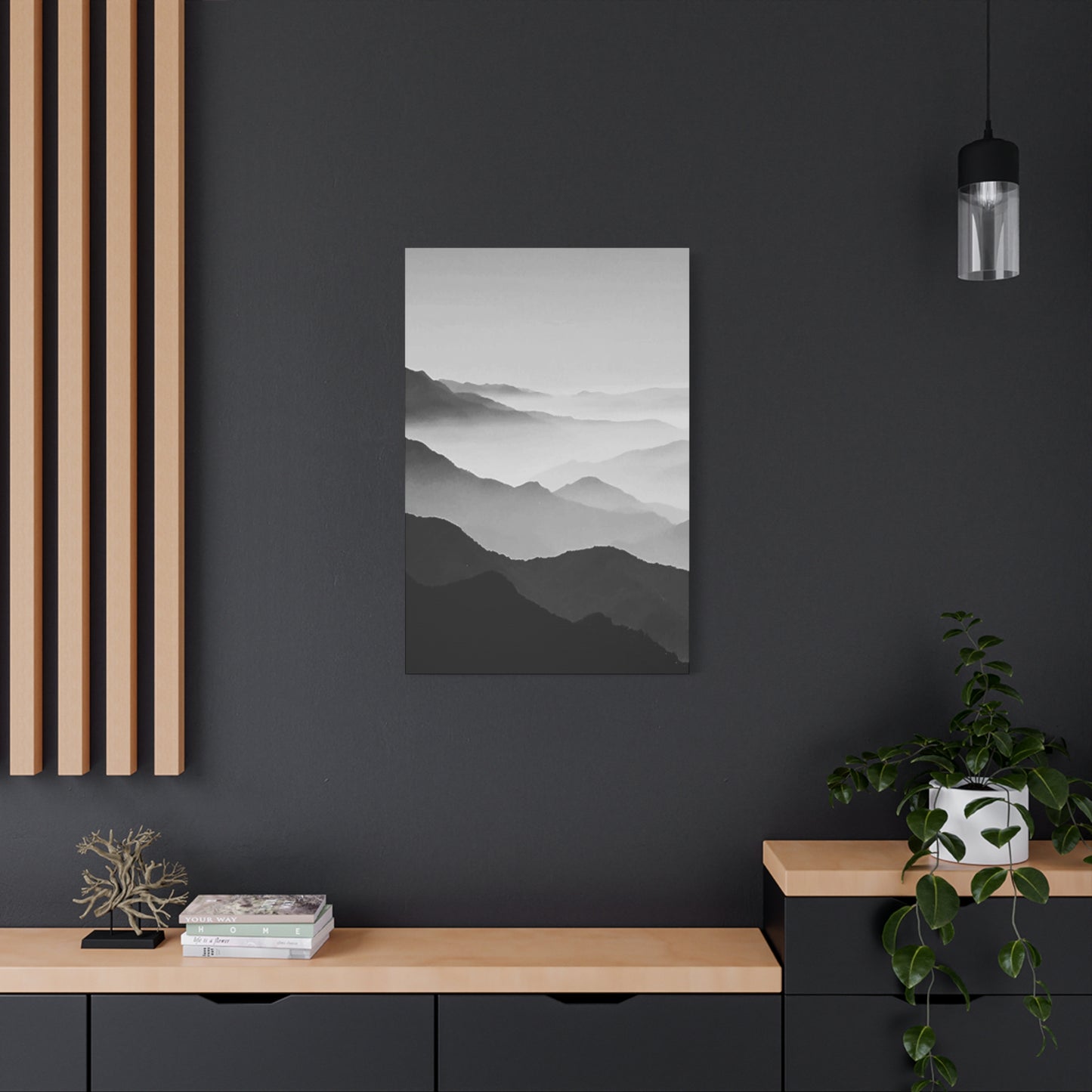


Black & White Mountains Wall Art & Canvas Prints
Black & White Mountains Wall Art & Canvas Prints
Couldn't load pickup availability
Transforming Spaces with the Beauty of Monochrome Mountains: The Essential Guide to Black & White Mountains Wall Art
The world of interior decoration has witnessed a remarkable resurgence in monochromatic mountain imagery, particularly within residential and commercial environments. Black & White Mountains Wall Art represents more than mere decorative elements; these pieces embody timeless elegance, natural grandeur, and artistic sophistication that transcends fleeting design trends. The stark contrast between shadowy valleys and illuminated peaks creates visual drama that captivates observers while maintaining a sense of tranquility within any room.
Mountain landscapes rendered in grayscale palettes possess an inherent ability to complement virtually any color scheme or decorating philosophy. Whether adorning the walls of a minimalist loft, a rustic cabin, or a contemporary office space, these monochrome masterpieces introduce depth, dimension, and a connection to the natural world. The absence of color paradoxically amplifies the emotional impact of these images, allowing viewers to focus on form, texture, composition, and the interplay of light and shadow that defines mountainous terrain.
Interior designers and homeowners alike have discovered that Black & White Mountains Wall Art serves as an anchor point around which entire rooms can be conceptualized and executed. These pieces function as conversation starters, meditation focal points, and artistic statements that reflect the owner's appreciation for both nature and refined aesthetic sensibilities. The versatility of monochrome mountain imagery extends across numerous decorating styles, from Scandinavian hygge to industrial chic, from traditional lodge aesthetics to ultra-modern minimalism.
Exploring the Artistic Merit and Visual Impact of Monochrome Mountain Imagery
The artistic value inherent in black and white mountain photography and illustrations stems from centuries of visual arts tradition. Long before color photography became accessible, artists and photographers captured mountain landscapes using various monochromatic mediums, from charcoal drawings to early photographic processes. This rich heritage has established grayscale mountain imagery as a legitimate and respected art form that continues to evolve with contemporary sensibilities.
Monochrome mountain depictions force both artist and viewer to engage with fundamental visual elements in their purest form. Without the distraction of color, attention shifts to tonal relationships, compositional balance, leading lines, and textural contrasts. The jagged silhouette of a mountain range against a gradient sky becomes a study in geometric abstraction. The play of light across snow-covered slopes transforms into a meditation on luminosity and shadow. These elements combine to create images that resonate on both intellectual and emotional levels.
The psychological impact of viewing mountain landscapes has been documented extensively by researchers studying environmental psychology and biophilic design principles. Mountains evoke feelings of permanence, strength, and natural majesty. When these powerful natural forms are distilled into high-contrast black and white compositions, their emotional resonance intensifies. Viewers often report experiencing sensations of peace, inspiration, and connection to something larger than themselves when contemplating these images.
From a compositional standpoint, successful Black & White Mountains Wall Art demonstrates mastery of several key principles. Effective use of negative space allows the eye to rest while emphasizing the dramatic forms of mountain peaks. The rule of thirds helps position dominant features in harmonious relationships. Leading lines draw the viewer's gaze through the composition, creating a visual journey from foreground elements through middle distances to distant summits. These compositional strategies, combined with careful attention to tonal range and contrast, separate exceptional mountain artwork from merely adequate examples.
Selecting the Perfect Black & White Mountains Wall Art for Your Living Environment
Choosing appropriate mountain artwork for a specific space requires consideration of multiple factors beyond simple aesthetic preference. The physical dimensions of the available wall space obviously constrain options, but equally important are ceiling height, viewing distance, existing furnishings, lighting conditions, and the intended mood or atmosphere of the room. A small print that works beautifully in an intimate bedroom might disappear entirely on the expansive wall of an open-concept living area.
Scale relationships prove crucial when selecting mountain imagery for interior spaces. Oversized prints and canvases create immediate visual impact and can serve as dominant focal points that organize the entire room around their presence. These statement pieces work particularly well in spaces with high ceilings or long sight lines, where smaller artwork would feel inadequate. Conversely, more modestly sized pieces suit intimate spaces, groupings, or gallery wall arrangements where multiple images collectively create visual interest.
The specific mountain range or landscape depicted carries significance beyond pure aesthetics. Some homeowners prefer imagery from locations they have personally visited or hold special meaning in their life narrative. Others gravitate toward iconic peaks recognized globally, such as the Matterhorn, Mount Everest, or the Grand Tetons. Still others prioritize compositional strength and visual impact over geographical specificity, selecting pieces based purely on how the image makes them feel and how it functions within their decorating scheme.
Framing choices dramatically affect both the appearance and longevity of Black & White Mountains Wall Art. Simple black frames provide classic sophistication while reinforcing the monochromatic nature of the imagery. White or natural wood frames offer softer, more organic presentations that can help mountain artwork integrate with lighter, airier decorating schemes. Metal frames in silver, bronze, or black finishes contribute contemporary edge particularly suitable for modern and industrial interiors. Float mounting, where the print appears suspended within a deeper frame, adds dimensional interest and emphasizes the artwork's physical presence.
The substrate or material upon which mountain images are reproduced significantly impacts both appearance and durability. Traditional photographic prints on archival paper offer exceptional detail and tonal gradation when produced using quality materials and processes. Canvas prints provide textured surfaces that lend paintings-like qualities while eliminating glare issues associated with glazed frames. Metal prints produce luminous, contemporary results with remarkable depth and color intensity even in monochromatic images. Acrylic face mounting creates stunning dimensional effects with jewel-like clarity and modern sophistication.
Understanding the Various Styles and Approaches to Mountain Landscape Representation
Black & White Mountains Wall Art encompasses remarkable stylistic diversity, ranging from photorealistic depictions to highly abstracted interpretations. Photographic approaches vary from documentary landscape photography that faithfully records specific locations to fine art photography where the artist manipulates tonality, contrast, and composition to create more interpretive results. Some photographers embrace the full tonal range from pure white to deepest black, while others employ high-key or low-key approaches that emphasize either lighter or darker portions of the spectrum.
Illustrative and drawn mountain representations offer different aesthetic qualities than photographic works. Pen and ink drawings can capture incredible detail through stippling, cross-hatching, and linework that creates tonal variations through mark density rather than continuous tone. Charcoal and graphite drawings produce softer, more atmospheric results where boundaries between forms blur and merge. Woodcut and linocut prints introduce bold, graphic qualities with strong contrasts between positive and negative spaces. Each medium brings its own visual vocabulary and emotional resonance to mountain imagery.
Minimalist interpretations of mountain landscapes reduce forms to essential geometric shapes and limited tonal values. These simplified representations often prove remarkably powerful, demonstrating how suggestion and reduction can sometimes communicate more effectively than exhaustive detail. A mountain range might be rendered as a single continuous line against blank space, or as a series of overlapping triangular forms in graduating shades of gray. Such minimalist works complement contemporary interiors where visual simplicity and clean lines dominate.
Dramatic, high-contrast approaches to mountain imagery emphasize extreme tonal relationships with minimal middle grays. These bold interpretations create striking visual impact through stark juxtapositions of black and white. Snow-covered peaks against storm-dark skies, or sunlit rock faces emerging from deep shadows exemplify this approach. Such images command attention and work particularly well as statement pieces in spaces that can accommodate their visual intensity without overwhelming other design elements.
Atmospheric and moody mountain representations embrace softer tonal transitions and often incorporate weather phenomena like clouds, fog, or mist. These pieces evoke contemplative, sometimes melancholic emotions that suit spaces intended for relaxation, reflection, or quiet conversation. The softened forms and reduced contrast create gentle visual experiences that soothe rather than stimulate, making them ideal for bedrooms, reading nooks, or meditation spaces.
Arranging and Displaying Mountain Artwork to Maximize Visual Effectiveness
The manner in which Black & White Mountains Wall Art is positioned and displayed significantly impacts its effectiveness within an interior environment. Hanging height follows general art display conventions, with the center of the artwork typically positioned at eye level, approximately 57 to 60 inches from the floor. This standard accommodates average viewer heights while ensuring comfortable viewing angles. Exceptions apply in specific situations, such as artwork positioned above furniture where the relationship between the piece and the furnishing below takes precedence.
Creating gallery walls with multiple mountain images allows for personal curation that tells a visual story or explores thematic variations. Successful gallery walls balance similarity and variety, maintaining visual cohesion through shared elements like consistent framing, similar tonal ranges, or thematic continuity, while introducing enough variation to sustain interest. Layouts might follow structured grid patterns for contemporary, organized aesthetics, or employ more organic, salon-style arrangements that feel collected and personal.
Single large-scale mountain images function as powerful focal points that organize and anchor entire rooms. These statement pieces deserve prominent placement on main walls where they remain visible from primary seating areas and entry points. The surrounding space should remain relatively uncluttered to allow the artwork its visual breathing room. Complementary furnishings and accessories can echo colors, textures, or themes from the artwork without directly competing for attention.
Lighting considerations prove critical for properly showcasing Black & White Mountains Wall Art. Natural daylight reveals subtle tonal gradations and provides the most accurate rendering of the artwork's full range. However, controlling natural light prevents fading and sun damage that can degrade prints over time. Artificial lighting options include picture lights mounted directly above frames, track lighting that can be aimed precisely at artwork, or recessed spotlights that provide focused illumination. LED sources offer energy efficiency and reduced heat output that protects artwork from thermal damage.
The relationship between mountain artwork and surrounding furnishings requires thoughtful consideration. Overstuffed, traditional furniture pairs surprisingly well with dramatic mountain imagery, creating interesting tensions between comfort and grandeur, domesticity and wilderness. Modern, minimalist furnishings allow mountain artwork to dominate visually while maintaining clean, uncluttered environments. Rustic or lodge-style pieces create natural affinities with mountain themes, though care must be taken to avoid overly literal or kitschy results.
Examining the Diverse Material Options and Production Methods for Mountain Prints
Canvas prints have become increasingly popular for reproducing Black & White Mountains Wall Art due to their painterly qualities and texture. Stretched canvas eliminates the need for glass or acrylic glazing, reducing glare while providing a more organic, tactile presence. The fabric texture adds visual interest particularly noticeable in larger formats. Gallery wrap techniques where the image continues around the stretcher frame edges create finished appearances that eliminate the need for additional framing, though float-mounted canvas in complementary frames offers another attractive presentation option.
Premium photographic papers designed for fine art reproduction deliver exceptional image quality with archival longevity when properly cared for. Factors to consider include surface finish, with options ranging from glossy for maximum sharpness and contrast, to matte or luster finishes that minimize reflections. Paper weight and thickness affect both the perceived quality and physical handling characteristics. Fiber-based papers offer traditional qualities prized by fine art photographers, while resin-coated papers provide practical advantages in terms of processing and durability.
Metal prints represent a relatively recent innovation that has gained considerable traction for mountain imagery. The sublimation process infuses inks directly into specially coated aluminum sheets, creating prints of remarkable depth, luminosity, and durability. Colors appear vibrant, blacks render deep and rich, and the overall effect possesses a contemporary, almost three-dimensional quality. The rigid, lightweight nature of metal prints simplifies hanging while their resistance to moisture, fading, and physical damage makes them practical for challenging environments.
Acrylic face mounting involves bonding prints to rigid substrates and then laminating clear acrylic sheets to the face of the image. This process creates stunning depth and clarity while protecting the print surface from environmental damage. The acrylic layer intensifies visual impact, making colors more saturated and contrasts more pronounced. These premium presentations command attention and communicate serious artistic intent, making them suitable for prominent display locations and commercial environments where impressive visual statements matter.
Wood mounting introduces organic warmth to mountain imagery by transferring images onto wood substrates or printing directly onto wooden panels. The visible wood grain adds textural interest that can complement the natural subject matter. Rustic presentations on reclaimed or distressed wood create authentic, lived-in aesthetics particularly suited to cabin or lodge environments. Smooth, finished wood offers more refined results that work in diverse decorating contexts.
Framing materials and styles significantly influence the final appearance of Black & White Mountains Wall Art. Wood frames range from simple, narrow profiles that provide minimal visual interference to substantial, ornate designs that make bold statements. Metal frames offer contemporary sophistication with clean lines and various finish options. Frame depth affects the dimensional presence of the artwork, with deeper frames creating shadow boxes that emphasize the piece's physical reality. Color choices should complement both the artwork and the surrounding environment without overwhelming the image itself.
Incorporating Mountain Imagery Across Different Room Types and Functional Spaces
Living rooms serve as primary gathering spaces where Black & White Mountains Wall Art can create impressive focal points while reflecting the homeowner's aesthetic sensibilities. Large-scale mountain images positioned above sofas or fireplaces anchor seating arrangements and provide visual interest that stimulates conversation. The neutral palette of monochrome mountain imagery allows for flexibility in coordinating with changeable accent colors introduced through pillows, throws, and seasonal decorations.
Bedrooms benefit from the calming, contemplative qualities of mountain landscapes. Positioning mountain artwork as the focal point above the headboard creates a last vision before sleep and first sight upon waking, bookending the day with reminders of natural majesty and tranquility. Softer, more atmospheric mountain images work particularly well in sleeping quarters, promoting relaxation rather than stimulation. The monochromatic nature of black and white imagery maintains visual simplicity that supports restful environments.
Home offices and work spaces gain sophistication and inspiration from carefully selected mountain imagery. The permanence and grandeur associated with mountains can subtly reinforce professional qualities like stability, strength, and long-term vision. Positioning mountain artwork within the field of view during video calls creates professional, interesting backgrounds that communicate taste and substance. The timeless nature of Black & White Mountains Wall Art ensures these pieces won't appear dated or trendy in professional contexts.
Dining spaces offer opportunities for creating atmosphere and ambiance through mountain imagery. Dramatic pieces above sideboards or on feature walls contribute to memorable dining experiences while maintaining enough visual restraint to avoid overwhelming the space or distracting from food presentations and table settings. Mountain landscapes can evoke mountain lodge dining experiences or alpine resort atmospheres that enhance the pleasure of shared meals.
Entrance halls and foyers make strong first impressions when adorned with striking mountain artwork. These transitional spaces typically accommodate viewing from various angles and distances as people pass through, making clear, bold compositions particularly effective. Mountain imagery in entry areas immediately communicates the homeowner's design sensibility while creating welcoming yet impressive atmospheres.
Bathrooms and powder rooms present unique opportunities for unexpected artistic touches. While moisture concerns require appropriate materials and framing choices, properly protected mountain imagery can transform utilitarian spaces into personal retreats. The combination of mountain views and water features like soaking tubs creates spa-like environments that encourage relaxation and self-care.
Stairways and hallways benefit from series or collections of related mountain images that create visual progression as viewers move through the space. Varying sizes or cropping of similar mountain scenes, or documenting different perspectives of the same peak provides continuity while maintaining interest throughout extended wall spaces. These transitional areas become galleries that reward movement through the home.
Coordinating Black & White Mountains Wall Art with Various Decorating Aesthetics
Modern and contemporary interior schemes embrace clean lines, minimal ornamentation, and carefully curated objects, making them natural contexts for monochrome mountain imagery. The stark simplicity of black and white perfectly complements modern aesthetics that prioritize form, space, and thoughtful restraint. Large-scale, minimalist mountain compositions work particularly well, as do pieces where the mountain forms themselves display geometric or abstract qualities.
Scandinavian and Nordic design philosophies emphasize connection to nature, functional beauty, and light-filled spaces. Mountain imagery aligns perfectly with these values, bringing the outdoors inside while maintaining the visual simplicity characteristic of Scandinavian interiors. Pairing Black & White Mountains Wall Art with blonde woods, white walls, and textured natural textiles creates cohesive environments that feel both serene and grounded.
Industrial decorating schemes with exposed brick, metal fixtures, and raw materials gain softness and natural balance through mountain artwork. The contrast between rugged industrial elements and majestic natural landscapes creates dynamic tension that prevents spaces from feeling too harsh or cold. Metal prints or industrial-style frames enhance the connection between artwork and surrounding aesthetic.
Rustic and lodge-inspired interiors obviously pair well with mountain imagery, though care prevents results from becoming overly literal or theme-park-like. Mixing photographic mountain art with reclaimed wood, stone elements, and traditional lodge furnishings creates authentic mountain retreat atmospheres. Balancing obvious rustic elements with more refined touches, including gallery-quality mountain artwork, elevates these spaces beyond simple cabin clichés.
Minimalist interiors depend on careful selection of very few elements, making the choice of Black & White Mountains Wall Art particularly critical. In spaces defined by what they lack rather than what they contain, each present element must justify its inclusion through exceptional quality and meaningful contribution. Mountain imagery provides visual interest and emotional resonance without introducing color complexity or decorative excess.
Traditional and transitional spaces can successfully incorporate mountain imagery by selecting pieces with classical compositions and appropriate framing. While mountain landscapes might seem incongruous with formal traditional decoration, well-chosen examples in substantial wood frames can complement antique furnishings and classical architectural details. The key lies in respecting the formality and refinement of traditional spaces through equally refined artistic choices.
Bohemian and eclectic interiors collect diverse influences and objects into personal, expressive environments. Mountain artwork contributes to these layered spaces by introducing natural elements and vertical visual interest among varied collections. The neutral palette of black and white mountain images provides visual rest areas that prevent maximalist spaces from becoming overwhelming or chaotic.
Examining Size Considerations and Proportional Relationships in Mountain Artwork Display
Determining appropriate sizes for Black & White Mountains Wall Art requires understanding the relationship between artwork dimensions, wall space, viewing distance, and surrounding elements. A common guideline suggests artwork should occupy roughly two-thirds to three-quarters of the wall space above furniture pieces, though this rule admits exceptions based on specific circumstances and aesthetic intentions. Oversized statement pieces might intentionally dominate walls, while smaller works might form parts of larger gallery arrangements.
Viewing distance influences optimal artwork size, with pieces intended for close examination benefiting from smaller formats that reveal fine details, while images viewed primarily from across rooms require larger formats to maintain visual impact. As a general principle, the minimum viewing distance for artwork should approximate 1.5 times the diagonal measurement of the piece. This allows viewers to take in the entire composition at once without constantly scanning back and forth.
Ceiling height significantly affects size selection, with tall walls accommodating and often requiring larger artworks to maintain visual balance. Standard eight-foot ceilings suit moderately sized pieces, while ten-foot or higher ceilings provide opportunities for dramatic, oversized mountain images. In rooms with soaring ceilings, multiple large pieces or expansive multi-panel installations prevent artwork from appearing lost or inadequate.
Horizontal versus vertical orientations serve different purposes and suit various spaces. Horizontal mountain panoramas emphasize breadth and expansiveness, working well above sofas, beds, and other horizontal furniture arrangements. They visually widen rooms and complement low, wide wall spaces. Vertical compositions emphasize height and grandeur, drawing the eye upward and making rooms feel taller. They suit narrow wall spaces and work well in entries, stairways, and between windows.
Multi-panel or triptych arrangements allow large-scale impact while introducing dynamic compositional elements. Three-panel presentations remain most common, though two, four, or five-panel variations offer alternatives. Successful multi-panel mountain installations maintain visual cohesion across panels while using the divisions to create rhythm and movement. Some compositions split single panoramic images across panels, while others present related but distinct views.
Proportion between multiple pieces in gallery walls requires balancing unity and variety. Some arrangements employ identical frame sizes for all pieces, creating orderly, predictable compositions. Others vary sizes more dramatically, with one or two larger focal pieces surrounded by smaller supporting works. The negative space between frames functions as an active design element, with consistent spacing creating formal, organized feels and irregular spacing suggesting more organic, collected arrangements.
Exploring the Emotional and Symbolic Significance of Mountain Imagery in Living Spaces
Mountains have functioned as powerful symbols throughout human history, representing challenges to overcome, spiritual heights to achieve, permanence amidst change, and the sublime majesty of nature. When people choose to surround themselves with Black & White Mountains Wall Art, they tap into these deep cultural and personal associations, whether consciously or unconsciously. The presence of mountain imagery in domestic spaces invites contemplation of these larger meanings while providing daily reminders of natural grandeur.
The concept of the sublime in aesthetic philosophy particularly applies to mountain landscapes. The sublime describes experiences that combine awe, wonder, and even fear when confronting something vast, powerful, and beyond human scale. Mountain vistas embody sublime qualities through their immense size, dangerous aspects, and indifference to human concerns. Monochrome representation intensifies these sublime qualities by stripping away comfortable familiarity and emphasizing stark, elemental forms.
For many individuals, mountain imagery connects to personal memories of travel, achievement, or transformative experiences. A photograph of the Alps might remind someone of a memorable hiking adventure, while an image of the Himalayas could represent spiritual aspirations or bucket-list ambitions. Even for those without direct mountain experiences, these landscapes can symbolize goals, challenges, or idealized natural beauty. Surrounding oneself with such imagery keeps these associations present in daily life.
The verticality of mountains naturally directs attention upward, a movement associated in many cultures with spiritual or aspirational thinking. Whether one interprets this in religious, philosophical, or simply motivational terms, the upward gaze mountains encourage can shift perspective from mundane immediate concerns to broader, more elevated viewpoints. Black & White Mountains Wall Art can function as daily prompts for this kind of perspective adjustment.
The permanence and stability suggested by mountain forms offers psychological comfort in rapidly changing times. While mountains do erode and change, they do so on timescales far exceeding human lifespans, making them effectively eternal from human perspectives. In homes and offices buffeted by constant change and uncertainty, mountain imagery provides visual anchors suggesting endurance and reliability.
The connection to nature that mountain imagery provides addresses increasingly recognized human needs for natural elements in built environments. Biophilic design principles suggest that human health and wellbeing benefit from maintaining connections to natural forms, patterns, and processes. For urban dwellers or those whose daily lives provide limited direct nature contact, Black & White Mountains Wall Art offers a way to maintain these beneficial connections.
Investigating Practical Care, Preservation, and Protection of Mountain Artwork
Protecting Black & White Mountains Wall Art from environmental damage ensures these pieces retain their visual impact and monetary value over decades. Light exposure represents perhaps the greatest threat, with ultraviolet radiation and even visible light causing cumulative damage that fades inks and degrades paper substrates. Positioning artwork away from direct sunlight provides basic protection, while UV-filtering glass or acrylic glazing offers additional defense for valuable pieces.
Temperature and humidity fluctuations stress artwork materials through expansion and contraction cycles that can eventually cause cracking, warping, or delamination. Maintaining relatively stable interior environments benefits both artwork and overall home comfort. Avoiding placement near heating vents, radiators, fireplaces, or exterior walls subject to seasonal temperature swings protects pieces from these stresses. Similarly, bathrooms and other high-humidity areas pose risks unless artwork uses moisture-resistant materials and construction.
Physical contact risks accidental damage through fingerprints, scratches, or impacts. Glazed frames protect print surfaces from direct contact, though the glazing itself requires care to prevent scratching. Acrylic glazing offers superior impact resistance compared to glass, making it preferable for high-traffic areas or homes with children. Canvas and metal prints without glazing should be positioned where accidental contact remains unlikely.
Dust accumulation dulls artwork appearance while potentially causing abrasion if carelessly wiped away. Regular gentle dusting using soft, clean brushes or microfiber cloths prevents buildup. For glazed pieces, glass cleaner can be used on the glazing surface but should never be sprayed directly onto frames or allowed to seep behind glazing where it could damage prints. Unglazed canvas prints benefit from occasional gentle vacuuming using soft brush attachments.
Professional cleaning and conservation services become appropriate for valuable artwork showing signs of damage or degradation. Attempting to clean or repair damaged prints without proper knowledge and materials often causes additional harm. Professional conservators possess specialized knowledge, materials, and equipment for safely treating various artwork types. Documentation through photography before and after treatment provides records of the work's condition and any interventions performed.
Climate-controlled storage protects artwork not currently displayed from environmental damage. Proper storage includes protecting pieces from light, maintaining moderate temperature and humidity levels, preventing physical pressure or bending, and protecting from pests. Archival materials including acid-free papers, boards, and boxes prevent chemical interactions that could damage artwork over time. Vertical storage with adequate support prevents warping and creasing better than horizontal stacking.
Insurance considerations for valuable Black & White Mountains Wall Art include documenting pieces through detailed photography, retaining purchase receipts and certificates of authenticity, and potentially obtaining formal appraisals for particularly valuable works. Standard homeowner's or renter's insurance policies include some coverage for personal property, though valuable artwork might require additional scheduled coverage or separate fine arts policies to ensure adequate protection.
Discovering Emerging Trends and Contemporary Directions in Mountain Wall Decor
Digital printing technologies continue advancing, enabling increasingly sophisticated reproductions that rival traditional darkroom prints in tonal range and archival stability. Giclée printing using archival pigment inks on museum-quality papers produces prints virtually indistinguishable from original photographs while offering longevity measured in centuries when properly cared for. These technical improvements democratize access to gallery-quality Black & White Mountains Wall Art while ensuring contemporary pieces will endure for future generations.
Large format printing capabilities allow for truly monumental mountain images that would have been technically difficult or prohibitively expensive only years ago. Prints measuring eight, ten, or even twelve feet across create immersive experiences where viewers feel enveloped by mountain grandeur. These oversized pieces serve as architectural elements that help define and organize interior spaces while making bold artistic statements.
Drone photography has revolutionized mountain landscape imagery by enabling perspectives previously accessible only through expensive helicopter charters or dangerous climbing. Aerial views looking down on mountain ridges and valleys, or floating at eye level with distant peaks present fresh perspectives on familiar subjects. These novel viewpoints appeal to audiences seeking unique imagery distinct from traditional ground-based mountain photography.
Photographic techniques like long exposure and multiple exposure blending create ethereal, dreamlike mountain images quite different from straightforward documentary approaches. Long exposures that render moving clouds as smooth, flowing forms or blur water into mist-like softness introduce temporal elements into static images. Multiple exposures that blend different moments or exposure values expand the medium's capabilities beyond what eyes can perceive in single instants.
Abstract and minimalist interpretations of mountain forms continue gaining appreciation, particularly among collectors seeking artwork that balances recognizable subject matter with formal artistic exploration. Extreme simplification reducing mountains to geometric essentials, tight cropping that emphasizes abstract forms within larger landscapes, and experimental techniques that distort or fragment recognizable forms push mountain imagery in conceptual directions.
Mixed media approaches combining photography with painting, drawing, or digital manipulation create hybrid works that transcend purely photographic categories. A mountain photograph might receive subtle watercolor washes, pencil embellishments, or digital overlays that introduce new dimensions while respecting the underlying image. These approaches appeal to collectors seeking unique, one-of-a-kind pieces rather than editioned prints.
Customization and personalization services allow customers to commission specific mountain images or modify existing works to suit particular requirements. This might involve printing images at custom sizes, adjusting crops or aspect ratios, modifying tonal ranges or contrast levels, or even creating composite images combining elements from multiple sources. Such services blur boundaries between mass-produced decor and custom fine art.
Analyzing Notable Mountain Ranges and Their Representation in Black & White Artwork
The Himalayas, Earth's highest mountain range, provide endlessly compelling subjects for Black & White Mountains Wall Art. The sheer scale of peaks like Everest, K2, and Annapurna challenges photographers and viewers alike, with their massive forms and extreme vertical relief creating dramatic compositions. The play of light on snow and ice at these altitudes produces extraordinary tonal ranges, from brilliant highlights on sunlit slopes to deep shadows in protected valleys.
The Alps, Europe's premier mountain range, have been photographed and painted for centuries, creating rich artistic traditions that contemporary work builds upon. Iconic peaks like the Matterhorn possess instantly recognizable profiles that carry cultural significance beyond their physical reality. Alpine landscapes often feature the interplay between dramatic mountain forms and human presence through villages, farms, and mountaineering infrastructure, creating layered compositions about humanity's relationship with mountain environments.
The Rocky Mountains spanning western North America offer remarkable diversity, from the relatively gentle peaks of Colorado to the dramatic spires of the Canadian Rockies. The Tetons, with their abrupt rise from Jackson Hole's valley floor, create particularly striking profiles that have become iconic in landscape photography. The extensive wilderness areas throughout the Rockies provide opportunities for capturing pristine mountain landscapes largely untouched by obvious human modification.
The Andes, the world's longest mountain range, stretch along South America's western edge, presenting varied landscapes from the volcanic peaks of Ecuador to the glaciated mountains of Patagonia. Patagonian landscapes, with their dramatic granite spires, sprawling glaciers, and notoriously harsh weather, produce particularly moody and atmospheric black and white imagery. The relative remoteness of many Andean regions means these landscapes retain a sense of discovery and exploration.
The mountains of New Zealand, particularly the Southern Alps, combine remarkable beauty with accessibility, making them popular subjects for mountain photography. Peaks like Aoraki Mount Cook rise dramatically above turquoise lakes and verdant valleys, creating compositions that balance harsh mountain grandeur with softer, more welcoming foreground elements. The reliable weather patterns and clear antipodean light produce excellent conditions for black and white mountain photography.
North American ranges like the Cascades, Sierra Nevada, and coastal mountains of Alaska offer distinctive characteristics that distinguish them from more famous ranges. The volcanic peaks of the Cascades, with their symmetrical forms and frequent isolation above surrounding terrain, create bold, simple compositions. The granite formations of the Sierra Nevada, particularly in Yosemite, have inspired generations of photographers since Ansel Adams established these landscapes as quintessential subjects for black and white photography.
Lesser-known ranges including the Caucasus, Karakoram, and various Central Asian mountains provide fresh perspectives for audiences saturated with images from more famous locations. These regions offer the double appeal of dramatic mountain forms and relative unfamiliarity, creating imagery that feels both magnificent and novel. As travel to remote regions becomes more accessible, photographers increasingly explore these underrepresented landscapes.
Understanding the Economic Aspects of Collecting and Acquiring Mountain Artwork
Pricing for Black & White Mountains Wall Art varies tremendously based on factors including artist reputation, edition size, print size, production method, materials quality, and whether pieces are signed or numbered. Limited edition prints by recognized photographers command premium prices reflecting their collectibility and investment potential. Open edition prints, reproduced indefinitely, offer accessibility at lower price points. Original photographs, existing as unique objects, represent the highest tier of the market.
Print edition numbering communicates scarcity and collectibility. A notation like 25/100 indicates the twenty-fifth print in an edition limited to one hundred copies, suggesting relative rarity that supports higher values. Artist proofs, marked AP, are additional prints outside the numbered edition, theoretically for the artist's personal use but often sold at premiums. Edition sizes impact both initial pricing and long-term value appreciation, with smaller editions generally commanding higher per-print prices.
Authentication and provenance documentation protect buyers from forgeries while establishing artwork legitimacy. Certificates of authenticity should include detailed information about the work, artist, edition details, printing methods, and materials. For works by deceased or highly collectible photographers, provenance tracing the ownership history from creation to present adds value and authenticity. Reputable galleries and dealers provide and maintain such documentation as standard practice.
Investment potential of mountain photography remains speculative, with only works by established masters like Ansel Adams, Galen Rowell, or Michael Kenna demonstrating consistent appreciation. For most buyers, Black & White Mountains Wall Art should be acquired primarily for aesthetic enjoyment rather than financial speculation. That said, purchasing quality work by emerging artists whose reputations may grow, limiting purchases to numbered editions rather than open editions, and maintaining artwork in excellent condition preserve maximum value.
Framing costs often equal or exceed print costs, particularly for larger pieces or premium framing materials and methods. Custom framing by professional framers ensures proper materials, techniques, and conservation standards, but commands premium pricing. Pre-framed options or purchasing prints and arranging framing separately offer cost management alternatives. For valuable prints, spending adequately on museum-quality, conservation framing protects the investment and ensures longevity.
Emerging online marketplaces and direct-to-consumer models have disrupted traditional gallery systems, offering artists higher percentages of sales while potentially reducing consumer costs. Platforms connecting buyers directly with photographers eliminate middlemen while providing broader audiences access to diverse work. However, the curation, expertise, and physical viewing opportunities traditional galleries provide retain value, particularly for significant purchases.
Rental and subscription services offer alternatives to purchasing for those wanting rotating artwork or testing pieces before committing to purchase. Some services allow rental payments to apply toward eventual purchase, providing try-before-you-buy options. For commercial spaces wanting regularly refreshed artwork or individuals who enjoy frequently changing their environments, rental models provide flexibility traditional ownership lacks.
Examining Photographic Printing Processes and Their Impact on Final Artwork Quality
Silver gelatin printing, the traditional darkroom process, produces distinctive qualities prized by purists and collectors. The physical process of exposing light-sensitive paper through a negative creates continuous tone with subtle gradations difficult to replicate digitally. Fiber-based silver gelatin prints possess particular qualities of depth and luminosity, with surface finishes ranging from glossy to matte affecting appearance and handling characteristics. Contemporary artists choosing this labor-intensive process signal commitment to craft and traditional values.
Platinum and palladium printing represent ultimate expressions of fine art black and white photography, producing prints of extraordinary tonal range and archival permanence. These contact printing processes, requiring negatives at final print size, yield subtle, long-scale tonality with remarkable delicacy. The precious metals used ensure prints maintain their qualities for centuries without fading. The difficulty, expense, and time-intensiveness of these processes means such prints command premium prices reflecting their rarity and quality.
Inkjet printing, specifically archival pigment inkjet, has evolved into a legitimate fine art printing method producing museum-quality results. High-end printers using multiple cartridges of pigment-based inks achieve extraordinary tonal range and smooth gradations. On properly matched papers, these prints meet or exceed archival standards of traditional processes while offering practical advantages in workflow and reproduction costs. The key distinction lies between consumer-grade inkjet printing and professional archival printing, with only the latter suitable for serious Black & White Mountains Wall Art.
Dye sublimation for metal prints involves specialized processes where heat converts solid dyes into gas that infuses into polymer-coated aluminum surfaces. This creates essentially permanent images that won't scratch, fade, or separate from the substrate. The unique optical qualities of light reflecting from the aluminum through the translucent dye layer create luminous effects with unusual depth, particularly effective for high-contrast mountain imagery.
Final Thoughts
Monochrome mountain landscape wall art is an extraordinary way to introduce a sense of grandeur and tranquility into your living spaces. The stark simplicity of black and white tones allows these majestic landscapes to resonate with timeless beauty, transforming your home into a sanctuary of calm and sophistication. Mountains, with their towering peaks, rugged terrains, and serene valleys, have long been symbols of strength, permanence, and the awe-inspiring power of nature. When rendered in monochrome, these landscapes take on a more dramatic and meditative quality, inviting you to pause, reflect, and connect with the natural world in a way that is both serene and powerful.
The use of black and white in mountain art allows for a deepened focus on the form, texture, and contrast within the landscape. The intricacies of jagged cliffs, soft rolling hills, and sprawling valleys become more pronounced, with light and shadow working together to create a striking visual narrative. The absence of color brings out the raw elements of the mountains, allowing the natural beauty of the scene to take center stage without distraction. Whether it’s the dramatic contrast between snow-capped peaks and dark valleys, or the soft, misty atmosphere of a foggy mountain range, black and white tones provide an emotional depth and subtle richness to the image that colors might obscure.
In addition to their visual impact, black and white mountain landscapes offer versatility in terms of design and decor. Their neutral color palette allows them to fit seamlessly into any space, no matter the style of the room. In modern or minimalist settings, a large-scale black and white mountain print can provide a stunning focal point that complements clean lines and uncluttered spaces. In more traditional or rustic interiors, these artworks can add a touch of refined elegance and nature-inspired beauty without overwhelming the space. Whether you're looking to add a single statement piece above a mantel or create a gallery wall of smaller prints, black and white mountain art can adapt to your space while bringing a sense of balance, serenity, and natural sophistication.
Beyond their aesthetic appeal, these artworks also hold symbolic power. Mountains are often associated with stability, endurance, and transcendence, representing the strength and resilience required to overcome life's challenges. In a time when many people feel overwhelmed by the fast pace of modern life, the stillness and permanence of mountain landscapes can serve as a reminder of the importance of patience, introspection, and persistence. Displaying such art in your home can encourage mindfulness, creating a space that fosters relaxation, reflection, and a sense of inner peace. The grandeur and stillness of mountains, captured through the simplicity of black and white, evoke a feeling of connection to something greater than ourselves—an invitation to slow down, breathe, and appreciate the natural world around us.
When it comes to displaying monochrome mountain landscapes, the possibilities are endless. For a dramatic effect, consider a single large-format print that fills a wall, becoming the focal point of the room. Alternatively, you could arrange several smaller pieces in a gallery-style display, creating a dynamic landscape that unfolds across the wall and invites exploration. Framing choices also play a crucial role in enhancing the overall aesthetic. Black or white frames offer a clean, minimal look, allowing the artwork to stand out, while natural wood frames can add warmth and texture to the design, balancing the starkness of the monochrome tones.
In conclusion, monochrome mountain landscape wall art is an elegant and versatile addition to any living space. The simplicity of black and white, combined with the majestic beauty of mountain scenery, creates a perfect harmony of strength, serenity, and sophistication. Whether you want to introduce a calming presence into a busy room, evoke a sense of grandeur in a minimalist space, or simply appreciate the raw beauty of nature, black and white mountain art provides an enduring, timeless way to transform your home. It serves as a constant reminder of nature's power, beauty, and stillness, creating a peaceful retreat in your own space, where you can reconnect with the quiet magnificence of the natural world.
Share