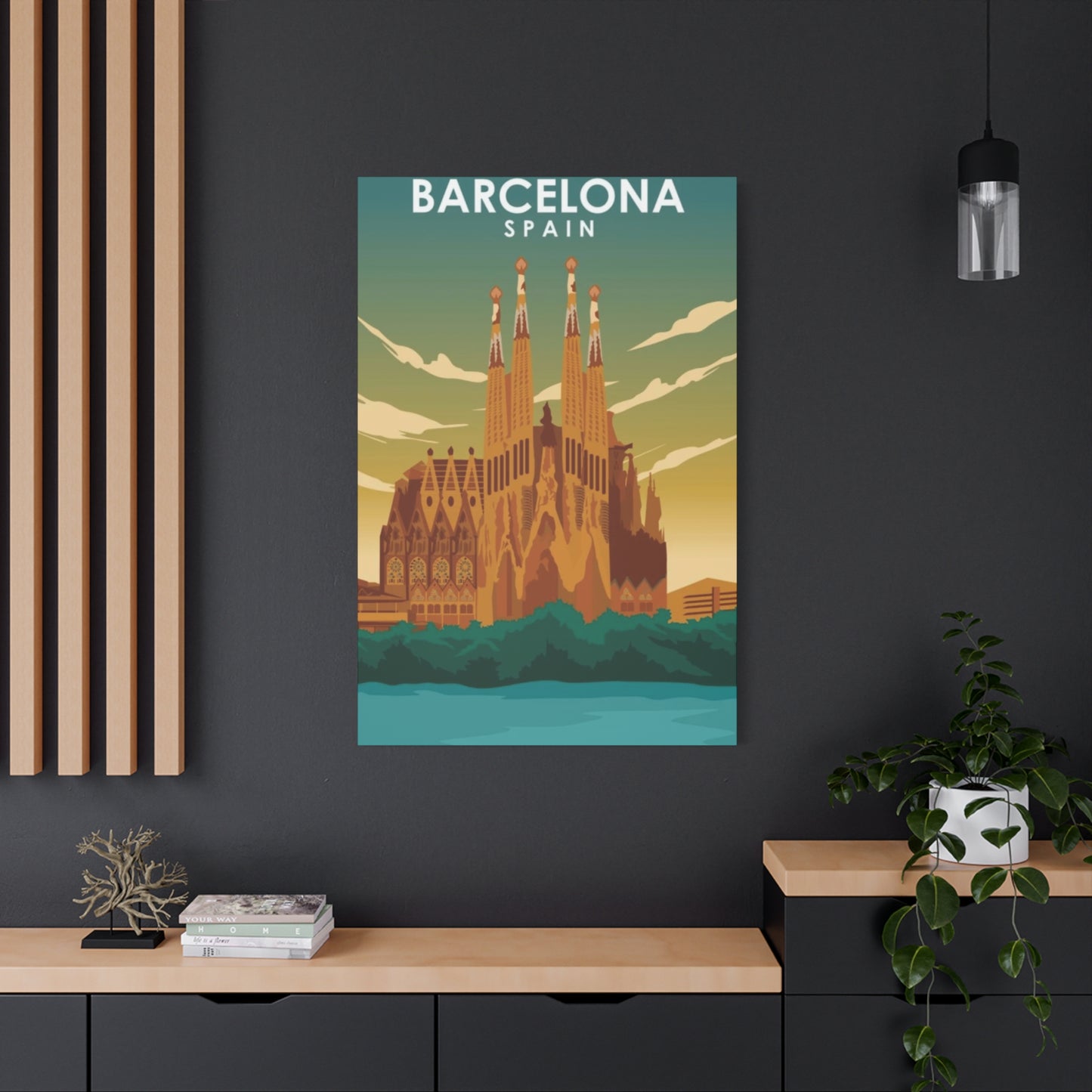


Barcelona Spain Wall Art & Canvas Prints
Barcelona Spain Wall Art & Canvas Prints
Couldn't load pickup availability
Capture the Artistic Soul of Catalonia with Stunning Barcelona Spain Wall Art for Your Home
Barcelona stands as one of Europe's most visually captivating cities, where architectural marvels meet Mediterranean charm in a symphony of colors, textures, and creative expression. The distinctive aesthetic that defines this Catalan metropolis has inspired countless artists, photographers, and designers to capture its essence through various forms of visual representation. From the undulating facades of Gaudí's masterpieces to the narrow Gothic Quarter alleyways bathed in golden sunlight, the city offers an inexhaustible wellspring of artistic inspiration that translates beautifully into decorative pieces for modern living spaces.
The phenomenon of capturing Barcelona's spirit through visual mediums has evolved into a sophisticated art form that resonates with design enthusiasts, travel aficionados, and those seeking to infuse their environments with Mediterranean warmth and European elegance. These decorative pieces serve multiple purposes beyond mere aesthetics, functioning as conversation starters, memory preservers, and windows into a culture celebrated for its innovation, passion, and unwavering commitment to beauty in everyday life.
The Magnificent Architectural Heritage Captured in Visual Masterpieces
The architectural landscape of this Catalan capital represents an unparalleled fusion of styles spanning centuries, from medieval structures to modernist innovations that redefined urban design. Antoni Gaudí's contributions alone provide endless subject matter for artistic interpretation, with structures like the Sagrada Família, Casa Batlló, and Park Güell offering organic forms, intricate mosaics, and surreal silhouettes that challenge conventional architectural thinking. When translated into Barcelona Spain wall art, these structures become more than mere buildings; they transform into symbols of human creativity pushing against the boundaries of possibility.
The Gothic Quarter presents another dimension of visual richness, where narrow cobblestone streets wind between buildings constructed when artisans measured success not in efficiency but in the perfection of every carved detail. The interplay of light and shadow in these ancient passageways creates dramatic contrasts that photographers and artists capture with reverence, producing pieces that transport viewers to a time when craftsmanship reigned supreme. Stone facades weathered by centuries of Mediterranean winds tell stories without words, their textures and patinas becoming focal points in carefully composed visual narratives.
Beyond the famous landmarks, countless lesser-known architectural gems populate Barcelona's diverse neighborhoods, each offering distinct character and visual appeal. The Eixample district's chamfered corners create unique urban geometries, while Poble Sec's working-class charm provides authentic glimpses into daily life untouched by tourist sensibilities. Art Nouveau flourishes, wrought iron balconies, and colorful ceramic tile work appear throughout the cityscape, providing endless variations for those seeking to represent Barcelona's multifaceted personality through decorative imagery.
Color Palettes Inspired by Mediterranean Sunlight and Coastal Breezes
The chromatic vocabulary of Barcelona extends far beyond simple color descriptions, encompassing the warm amber tones of late afternoon sunlight filtering through plane tree leaves, the deep azure of the Mediterranean stretching toward horizons where sky meets sea, and the earthy terracottas that dominate rooftop vistas. These colors don't merely exist independently; they interact in ways specific to this geographical location, influenced by atmospheric conditions, seasonal variations, and the quality of light that has attracted painters to the Catalan coast for generations.
Morning light in Barcelona possesses a particular clarity that sharpens architectural details and intensifies color saturation, creating conditions ideal for capturing the city's visual essence. As the sun climbs higher, colors shift toward warmer registers, with ochres, burnt siennas, and golden yellows dominating the palette. Sunset transforms the entire cityscape into a canvas of pinks, purples, and oranges that rival any painter's most ambitious color experiments, while twilight brings cooler tones that emphasize the city's romantic character.
The chromatic influence of the sea cannot be overstated when considering Barcelona's color identity. The Mediterranean's ever-changing moods manifest in shades ranging from pale aquamarine in shallow waters to deep indigo where depths increase, with foam-capped waves adding white accents that punctuate the blue expanse. These maritime hues infiltrate the city's visual character, appearing in architectural details, public art installations, and the general atmosphere that pervades coastal neighborhoods.
Selecting Barcelona Spain wall art based on color considerations allows homeowners and designers to achieve specific emotional and aesthetic effects within interior spaces. Pieces dominated by warm tones create inviting, energetic environments that evoke the city's passionate character, while cooler palette selections promote tranquility and contemplation. The strategic deployment of color through carefully chosen decorative pieces can transform ordinary rooms into spaces that resonate with Mediterranean vitality or Gothic mystique, depending on desired outcomes.
Photographic Representations Versus Artistic Interpretations and Illustrations
The distinction between photographic accuracy and artistic interpretation represents a fundamental choice when selecting visual representations of Barcelona. Photography captures literal reality with precision, documenting actual moments in specific locations with technical fidelity that satisfies those seeking authentic representations. The best photographic pieces transcend mere documentation, however, incorporating compositional mastery, perfect timing, and post-processing sensitivity that elevates them to genuine art despite their roots in mechanical reproduction.
Artistic interpretations liberate creators from literal accuracy, allowing them to emphasize emotional resonance, symbolic significance, or aesthetic preferences over documentary precision. Painters working with acrylics, oils, or watercolors can exaggerate colors, simplify forms, or introduce elements that serve compositional needs rather than factual accuracy. Illustrators might employ stylization techniques that transform Barcelona's architecture into graphic compositions with bold lines, flat colors, and deliberate distortions that create distinctive visual personalities.
Mixed media approaches combine photographic foundations with painted, drawn, or digitally manipulated overlays, producing hybrid works that occupy the territory between documentation and interpretation. These pieces might start with photographic captures that are subsequently processed through filters, combined with hand-drawn elements, or augmented with textures and patterns that add layers of meaning beyond the original image. The resulting compositions offer complexity and depth that engage viewers across multiple levels of perception.
Abstract representations push interpretation furthest from literal depiction, distilling Barcelona's essence into compositions of color, shape, and texture that evoke the city's spirit without depicting recognizable landmarks. These pieces appeal to viewers seeking subtler references that complement rather than dominate interior environments, allowing the city's influence to manifest through suggestion rather than explicit representation. Cubist fragmentation, expressionist color violence, or minimalist reductions all offer valid approaches to translating Barcelona's energy into abstract visual language.
Dimensional Considerations for Creating Harmonious Interior Compositions
Size selection profoundly impacts how Barcelona Spain wall art functions within residential or commercial spaces, influencing both aesthetic effect and practical considerations like viewing distance, room proportion, and furniture relationships. Oversized pieces command attention immediately, functioning as room focal points that establish dominant themes and set emotional tones for entire environments. These statement works require sufficient viewing distance to be appreciated properly, making them ideal for spacious living areas, hotel lobbies, or commercial establishments where walls extend uninterrupted by architectural features.
Medium-sized pieces offer versatility that appeals to diverse decorating scenarios, working effectively as standalone focal points in smaller rooms or as components within gallery wall arrangements in larger spaces. These dimensions accommodate most subject matter without requiring the compositional simplification that very large or very small formats might demand. The sweet spot between approximately sixty and one hundred twenty centimeters in width allows sufficient detail to engage viewers while maintaining manageable proportions that don't overwhelm typical residential room dimensions.
Small-format pieces excel in intimate settings, clustered arrangements, or situations where architectural features like columns, doorways, or built-in cabinetry create natural divisions that suit multiple smaller works better than single large compositions. Miniature representations of Barcelona's iconic elements can be collected over time, building personal galleries that reflect evolving tastes and expanding knowledge of the city's many facets. These smaller works also present economical entry points for those beginning to explore decorative possibilities.
Arranging multiple pieces requires consideration of visual weight distribution, thematic coherence, and spatial relationships that create unified compositions rather than random assemblages. Symmetrical arrangements project formal elegance and classical restraint, while asymmetrical groupings suggest dynamic energy and contemporary sensibilities. Maintaining consistent spacing between frames establishes professional presentation standards, while varying heights and orientations introduces visual interest that keeps gallery walls engaging across repeated viewings.
Material Substrates and Their Impact on Visual Character and Longevity
The choice of substrate fundamentally affects how images are perceived, influencing color rendition, surface texture, light reflection, and overall aesthetic character. Canvas remains perhaps the most traditional option, offering textured surfaces that lend artistic credibility and classic appeal to both photographic and painted works. The visible weave creates depth and visual interest while diffusing light reflections that might otherwise create distracting glare. Gallery-wrapped canvas stretched around wooden frames allows borderless presentation that emphasizes image content while eliminating the visual interruption of traditional frame moldings.
Metal prints represent contemporary alternatives that deliver stunning color vibrancy, remarkable detail resolution, and exceptional durability that withstands environmental challenges better than many traditional substrates. The process of dye sublimation infuses images directly into specially coated aluminum panels, creating luminous presentations with extraordinary depth and dimensional quality. The smooth, reflective surface produces almost holographic effects with certain subject matter, making architectural details and sunset scenes particularly striking when rendered on metal substrates.
Acrylic mounting creates floating presentations with remarkable clarity and three-dimensional depth that rivals framed glass but offers superior impact resistance and lighter weight. Images printed on photographic paper or directly onto acrylic surfaces gain protection from UV degradation while achieving color saturation that exceeds most other presentation methods. The glossy surface amplifies color intensity and contrast, making this option ideal for subjects where maximum visual impact serves compositional goals.
Wood panels provide rustic charm and organic warmth particularly suited to subjects emphasizing Barcelona's historic character, Mediterranean authenticity, or connection to natural materials. Images can be printed directly onto wood surfaces, preserving visible grain patterns that add textural interest, or mounted on wood backing for stable presentation that resists warping better than paper alone. The natural material complements certain decor styles beautifully while introducing variations in tone and texture that make each piece subtly unique.
Framing Selections That Enhance Rather Than Overpower Visual Content
Frame selection represents a critical decision point where good choices enhance presentation while poor selections detract from image impact or create stylistic discordance with surrounding decor. The fundamental choice between framed and frameless presentation establishes the piece's relationship with its environment, with frames creating formal boundaries that separate artwork from walls while frameless mounting integrates pieces more seamlessly into their settings.
Wood frames offer warmth, traditional appeal, and remarkable versatility across diverse decor styles from rustic farmhouse to refined transitional aesthetics. Natural wood tones complement Barcelona Spain wall art featuring earth tones and Mediterranean warmth, while painted wood frames in black, white, or custom colors can either blend discretely or create deliberate contrast depending on decorative intentions. Profile depth, corner joinery quality, and finish sophistication all contribute to overall presentation quality and should be evaluated carefully when making selections.
Metal frames project contemporary sophistication and clean-lined minimalism that suits modern, industrial, and Scandinavian-influenced interiors particularly well. Narrow profiles emphasize image content by minimizing visual interruption, while wider frames create more substantial borders that can help smaller pieces achieve greater presence. Finishes ranging from brushed aluminum to matte black to brass and copper allow coordination with existing hardware, light fixtures, and furniture details for cohesive design schemes.
Floating frames create shadow boxes that suspend images between front glazing and backing panels, producing three-dimensional presentations with architectural presence. This presentation style works exceptionally well with canvas prints, adding protective glazing without flattening the textured surface character that makes canvas appealing. The depth created between frame face and image surface catches light and creates subtle shadows that add visual interest from various viewing angles.
Strategic Placement Principles for Maximizing Visual Impact Throughout Spaces
Positioning Barcelona Spain wall art effectively requires understanding how viewing angles, lighting conditions, and surrounding elements influence perception and emotional response. The traditional guideline suggesting eye-level hanging provides a useful starting point, typically placing frame centers approximately one hundred fifty to one hundred sixty centimeters above floor level in spaces where viewers stand, slightly lower in rooms where seated viewing predominates. These measurements should be adjusted based on ceiling heights, furniture placement, and viewer demographics to achieve optimal results.
Living areas benefit from substantial pieces positioned above sofas or console tables, creating anchored focal points that draw attention and establish conversational areas. The visual weight of substantial Barcelona scenes helps ground furniture groupings while providing upward vertical emphasis that draws eyes and creates perceived height in rooms with standard ceiling dimensions. Maintaining proper scale relationships between furniture and artwork prevents situations where either element appears awkwardly oversized or disappointingly diminutive relative to its companion.
Bedroom placement requires sensitivity to the room's purpose as a restorative retreat where visual stimulation should promote relaxation rather than agitation. Positioning calming Barcelona coastal scenes opposite beds allows these images to greet occupants each morning, establishing positive emotional tones for beginning days. Alternatively, placing artwork behind beds creates sophisticated headboard alternatives that transform sleeping areas into carefully curated spaces with genuine design sophistication.
Dining areas present opportunities for deploying Barcelona Spain wall art that stimulates appetite and conversation through carefully selected subjects that suggest Mediterranean culinary culture, outdoor dining traditions, or the social vibrancy that characterizes Catalan meal times. Long horizontal pieces or multiple complementary works arranged in extended arrangements suit the elongated proportions of many dining spaces, creating visual rhythm that mirrors the linear table forms below.
Hallways and transitional spaces often receive less decorative attention than primary rooms despite representing significant opportunities for creating gallery-like progressions that guide movement through homes while displaying collections with museum-inspired presentation. Arranging multiple pieces along hallway lengths transforms utilitarian circulation spaces into engaging experiences that reward attention and create anticipation for rooms beyond.
Illumination Strategies That Reveal Detail While Preserving Artwork Integrity
Proper lighting dramatically affects how Barcelona Spain wall art appears, influencing color perception, detail visibility, and overall emotional impact while simultaneously posing preservation challenges that require careful management. Natural light represents the most flattering illumination source in many circumstances, revealing colors accurately and creating dynamic presentations that change throughout days as sun angles shift and weather conditions vary. However, direct sunlight exposure causes irreversible fading through UV radiation damage, necessitating protective measures or strategic positioning that balances illumination benefits against deterioration risks.
Picture lights mounted directly to frames or walls above artworks provide dedicated illumination that ensures visibility regardless of ambient conditions while adding decorative elements that enhance presentation formality. These fixtures typically employ LED sources that minimize heat generation and UV emission compared to traditional incandescent or halogen alternatives, reducing deterioration risks while delivering excellent color rendering. Adjustable arms allow precise aiming that eliminates glare while ensuring even illumination across entire image surfaces.
Track lighting systems offer flexibility for illuminating multiple pieces or adjusting to accommodate changing arrangements as collections evolve. Modern LED track fixtures provide excellent beam control, allowing narrow spotlights that highlight individual works or broader washes that illuminate wall sections uniformly. Dimming capabilities enable adjustment of lighting intensity to suit time of day, desired ambiance, or specific activities, transforming static displays into dynamic presentations that respond to varying needs.
Ambient lighting from ceiling fixtures, floor lamps, and table lamps contributes to overall artwork visibility while creating layered lighting schemes that add depth and interest to interior environments. Ensuring sufficient general illumination prevents individual artworks from appearing isolated in pools of light surrounded by darkness, promoting cohesive visual experiences where all room elements integrate harmoniously. Color temperature selections influence how Barcelona Spain wall art appears, with warmer tones emphasizing earth colors and cooler temperatures enhancing blues and greens.
Subject Matter Categories Reflecting Barcelona's Diverse Visual Character and Neighborhoods
Barcelona's architectural icons dominate the most recognizable category of subject matter, with Gaudí's creations leading the way as internationally recognized symbols of the city's creative spirit. The Sagrada Família's impossible spires, organic forms, and intricate facades provide endlessly fascinating subject matter that artists and photographers approach from countless angles, capturing different times of day, seasonal variations, and unique perspectives that reveal new dimensions of this unfinished masterpiece. Casa Batlló's undulating facade and Park Güell's mosaic-covered structures similarly inspire endless interpretations.
Cityscape panoramas capture Barcelona's unique topography, where urban density meets Mediterranean coastline against the backdrop of hills providing elevated vantage points for sweeping views. These comprehensive compositions showcase the city's horizontal expansion along the coast, the geometric precision of Cerdà's Eixample district, and the vertical punctuation of church spires, modern towers, and historic monuments. Sunset and twilight scenes prove particularly popular, when city lights begin illuminating buildings as natural light fades, creating magical transitions that photographers and artists capture with particular effectiveness.
Street scenes focusing on daily life, neighborhood character, and human-scale perspectives offer intimate alternatives to monumental architectural subjects. The Gothic Quarter's medieval lanes, Gràcia's bohemian squares, and Barceloneta's beachfront promenades each possess distinct personalities that translate into unique visual narratives. Outdoor cafe culture, market vendors, street performers, and everyday residents going about their business populate these scenes, adding human warmth and authentic cultural context that helps viewers connect emotionally with places they may never physically visit.
Coastal imagery emphasizing Barcelona's beach culture, Mediterranean waters, and maritime character appeals to those drawn to the city's relationship with the sea. Barceloneta beach with its distinctive golden sand, W Hotel's sail-like silhouette, and palm-lined boardwalks create instantly recognizable compositions that evoke vacation moods and coastal lifestyle aspirations. Sunset reflections on calm waters, sailboats dotting horizons, and aerial perspectives showing where urban fabric meets natural coastline all provide compelling Barcelona Spain wall art possibilities.
Abstract and detail-focused compositions zoom into specific architectural elements, emphasizing patterns, textures, colors, and forms divorced from complete structural context. Gaudí's mosaic work, wrought iron details, ceramic tile patterns, and organic architectural curves become subjects of intense focus that reveal the extraordinary craftsmanship and artistic vision underlying Barcelona's built environment. These pieces suit viewers seeking sophisticated, artistic presentations that suggest rather than explicitly depict their source inspiration.
Style Variations From Realistic Documentation to Contemporary Artistic Expression
Photorealistic representations prioritize accuracy, detail, and faithful documentation that allows viewers to examine Barcelona's visual characteristics with precision approaching physical presence. High-resolution photography with careful attention to sharpness, color balance, and compositional excellence produces pieces that function almost like windows onto actual scenes, satisfying viewers who value literal truth and documentary quality. Post-processing remains minimal, enhancing rather than transforming captured reality through subtle adjustments to exposure, contrast, and color that optimize presentation without introducing obvious manipulation.
Impressionistic interpretations sacrifice literal accuracy for emotional resonance and atmospheric quality, employing loose brushwork, visible paint application, and subjective color choices that prioritize feeling over fact. These works channel the spirit of painters who revolutionized European art by abandoning academic precision in favor of capturing fleeting moments, changing light, and subjective perception. Barcelona's architecture, street scenes, and coastal vistas adapt beautifully to impressionistic treatment, their inherent beauty shining through even when details blur and forms simplify.
Minimalist reductions distill Barcelona's visual essence to fundamental elements of line, shape, and color, eliminating superfluous detail to achieve elegant simplicity that suits contemporary interior aesthetics. Geometric architectural forms particularly adapt well to minimalist treatment, becoming almost abstract compositions that maintain recognizability while achieving sophisticated restraint. Limited color palettes, clean lines, and generous negative space characterize these approaches, creating calming presences that complement rather than dominate their surroundings.
Vintage-inspired treatments apply nostalgic filters, aged aesthetics, and retro color grading that transform contemporary Barcelona imagery into pieces that appear decades or even centuries old. Sepia tones, faded colors, vignetted corners, and deliberate grain or texture overlays create the appearance of aged photographs or historical documents that add temporal depth and romantic character. These approaches particularly suit historic subjects like Gothic Quarter scenes or vintage architectural documentation, enhancing their period appropriate character.
Street art and graffiti-inspired styles reflect Barcelona's vibrant contemporary creative scene, where building facades serve as canvases for talented muralists and where urban art festivals have elevated street culture to respected artistic status. Incorporating these bold graphic elements into Barcelona Spain wall art creates energetic pieces that appeal to younger demographics, urban culture enthusiasts, and those seeking edgier alternatives to traditional landscape and architectural photography.
Color Scheme Coordination for Achieving Cohesive Interior Design Results
Monochromatic approaches using single color families create sophisticated, unified presentations that avoid chromatic clashes while allowing subtle variation through different shades, tints, and tones within chosen hues. Barcelona Spain wall art rendered entirely in blues might progress from pale sky tones through Mediterranean sea colors to deep twilight indigos, creating color stories that guide eyes across compositions while maintaining overall harmony. These schemes project calm sophistication and work particularly well in spaces where visual rest takes priority over stimulation.
Analogous color combinations employ hues adjacent on color wheels, such as blues, greens, and aquamarines or yellows, oranges, and reds. These schemes achieve more variety than monochromatic approaches while maintaining inherent harmony through shared color components. Barcelona's Mediterranean setting provides natural subject matter for cool analogous schemes emphasizing coastal colors, while its sun-drenched architecture suits warm analogous combinations featuring earth tones and sun-kissed yellows.
Complementary pairings position opposite color wheel hues together, creating maximum contrast and visual excitement through their inherent tension and mutual enhancement. Orange sunset skies against blue twilight backgrounds exemplify naturally occurring complementary relationships frequently found in Barcelona scenes, their dynamic interaction creating vibrant energy that animates interior spaces. These bold approaches suit confident decorators seeking maximum impact over subtle restraint.
Neutral-dominated schemes featuring grays, beiges, taupes, and whites with limited accent color accents project timeless elegance and universal compatibility with diverse decor styles. Barcelona architectural photography emphasizing stone facades, concrete textures, or black-and-white compositions fits naturally into these palettes, providing visual interest through form, texture, and composition rather than chromatic variety. These approaches ensure longevity as color trend cycles progress, maintaining relevance across changing fashions.
Matching existing decor colors requires careful analysis of room palettes, identifying dominant hues, secondary colors, and accent shades that Barcelona Spain wall art should either harmonize with or deliberately contrast against depending on desired effects. Pulling specific colors from upholstery, rugs, or decorative accessories into artwork selections creates intentional connections that demonstrate design sophistication and thoughtful curation rather than random acquisition.
Print Reproduction Methods Affecting Quality, Appearance, and Value Propositions
Giclée printing represents the gold standard for fine art reproduction, employing archival pigment inks and high-resolution inkjet printers capable of extraordinary color accuracy, tonal gradation, and detail resolution. The term itself derives from French, essentially meaning "that which is sprayed," referring to the micro-fine droplets that build images with remarkable precision. Museums and galleries rely on giclée methods for producing limited edition prints that collectors value nearly as highly as original works, particularly when printed on premium substrates with proper documentation and authentication.
Dye sublimation transfers images through heat-activated processes that embed pigments directly into substrate surfaces rather than merely coating them, resulting in exceptional durability and resistance to fading, scratching, or moisture damage. This method proves particularly effective for metal and certain fabric substrates, producing vibrant colors with remarkable luminosity and depth. The permanent nature of sublimated images ensures they withstand environmental challenges that might degrade surface-applied inks, making this approach ideal for high-traffic commercial settings or challenging residential environments.
Traditional photographic printing using chemical processes and light-sensitive papers produces results with specific aesthetic qualities that digital methods struggle to replicate perfectly despite superior convenience and repeatability. Chromogenic prints exhibit particular color rendering characteristics and surface qualities that photographers and collectors often prefer for fine art presentations. While less common now due to digital dominance, true photographic prints maintain prestigious status in certain artistic circles.
Offset lithography enables cost-effective mass production for wider distribution, though quality levels vary considerably based on equipment sophistication, paper selection, and production standards. While generally unsuitable for fine art reproduction due to limited color gamut and resolution compared to giclée alternatives, high-quality offset printing can produce acceptable results for decorative purposes where artistic perfection takes lower priority than affordability. Understanding which reproduction method was employed helps buyers evaluate pricing appropriateness and longevity expectations.
Preservation Considerations Ensuring Lasting Beauty Across Years and Decades
UV protection represents perhaps the single most critical preservation concern, as ultraviolet radiation causes irreversible fading through photochemical degradation that breaks down pigments and substrate materials. Museum-quality glazing incorporating UV-filtering properties blocks harmful wavelengths while maintaining optical clarity that allows unimpeded viewing. When glass framing isn't employed, UV-protective sprays or coatings can provide some protection, though effectiveness varies considerably across products. Positioning Barcelona Spain wall art away from direct sunlight exposure provides the most reliable protection, though this must be balanced against visibility and design considerations.
Humidity control prevents warping, mold growth, adhesive failure, and various deterioration modes that moisture enables. Maintaining relative humidity between forty and sixty percent protects most artwork materials, though specific requirements vary with substrate composition. Canvas proves particularly vulnerable to humidity fluctuations, tightening when dry and sagging when moist in cycles that eventually cause permanent deformation or cracking. Climate-controlled interior environments generally provide adequate protection without requiring special measures, though basements, bathrooms, and other high-humidity locations deserve careful evaluation.
Temperature stability similarly contributes to preservation, as extreme heat accelerates chemical degradation processes while cold temperatures can make certain materials brittle. Avoiding placement near heat sources like fireplaces, radiators, or heat-producing light fixtures extends artwork lifespans considerably. The combined effects of heat and light prove particularly destructive, making illuminated pieces near windows doubly vulnerable to damage requiring careful mitigation strategies.
Regular cleaning using appropriate methods removes accumulated dust and atmospheric pollutants that dull appearance and promote gradual deterioration. Unframed canvas can be gently vacuumed using soft brush attachments held slightly away from surfaces to avoid abrasion, while glass-fronted pieces require only simple cleaning with non-ammonia glass cleaners and lint-free cloths. Avoiding common household cleaners containing harsh chemicals protects frames and prevents accidental substrate damage from spray drift or excessive moisture application.
Professional conservation assessment for valuable or sentimental pieces provides expert evaluation of condition, preservation needs, and appropriate intervention strategies for addressing existing damage or preventing future deterioration. Conservators possess specialized knowledge about material behaviors, degradation mechanisms, and restoration techniques that far exceed general knowledge, making their consultation worthwhile for significant Barcelona Spain wall art investments. Documentation through high-quality photography before any condition changes occur provides valuable records for insurance purposes and aids restoration efforts should future damage occur.
Sourcing Options From Original Artwork to Mass-Produced Decorative Pieces
Original paintings created by individual artists represent the apex of uniqueness and investment potential, offering one-of-a-kind works that no reproduction can perfectly duplicate. Barcelona's vibrant artist community includes countless painters working in diverse styles who accept commissions for custom works or sell completed pieces through galleries, studios, and online platforms. Acquiring original artwork supports working artists directly while obtaining pieces with genuine artistic merit and potential appreciation over time. Prices span enormous ranges depending on artist reputation, work complexity, and size considerations, from affordable pieces by emerging talents to investment-grade works commanding substantial sums.
Limited edition prints numbered and signed by photographers or artists offer compromise positions between original artwork exclusivity and reproduction affordability. Edition sizes typically range from fewer than ten to several hundred, with smaller editions commanding higher individual prices due to greater scarcity. Each print receives sequential numbering and artist signatures that authenticate legitimacy and document edition position. These pieces satisfy collectors seeking investment potential and artistic credibility while accepting that identical versions exist in limited quantities elsewhere.
Open edition prints lack the artificial scarcity that limited editions impose, allowing unlimited reproduction that prioritizes accessibility over exclusivity. Prices generally reflect this difference, making open editions attractive for decorators seeking specific imagery without investment concerns or collecting ambitions. Quality levels vary tremendously across open edition offerings, from museum-quality giclée prints barely distinguishable from limited editions to economy reproductions employing minimal quality standards. Educated purchasing requires understanding production specifications and comparing prices against quality appropriately.
Print-on-demand services enable custom ordering where pieces are produced individually upon purchase rather than being stocked as inventory. This model supports enormous selection diversity while eliminating storage costs that traditional retail models require, often resulting in better pricing for equivalent quality levels. Customization options frequently include size selection, substrate choice, and framing alternatives that buyers specify when ordering. Quality varies considerably across providers, making research into specific companies' reputations and reviewing customer feedback essential before purchasing.
Local Barcelona artists and galleries provide authentic sourcing directly from the city itself, offering opportunities to acquire pieces while visiting or through shipping arrangements for remote buyers. Supporting local creators ensures cultural authenticity while enabling direct artist relationships that enhance ownership satisfaction. Gallery districts in neighborhoods like Born, Gràcia, and the Gothic Quarter contain numerous establishments representing diverse artistic approaches and price points. Weekend art markets and annual festivals provide additional opportunities for discovering emerging talents and negotiating direct purchases.
Thematic Collections Creating Unified Narratives Across Multiple Pieces
Architectural focus collections concentrate exclusively on Barcelona's built environment, potentially narrowing further to specific architects, periods, or structural types. A Gaudí-centric collection might include representations of all his major Barcelona works, creating comprehensive homages to this singular genius. Alternatively, collections might explore Gothic architecture, Art Nouveau details, or contemporary structures, each theme providing sufficient variety for interesting multi-piece presentations while maintaining clear unifying concepts.
Neighborhood portrait collections capture distinct character variations across Barcelona's diverse districts, from beach culture in Barceloneta to bohemian creativity in Gràcia to Gothic atmosphere in the Barri Gòtic. Arranging neighborhood pieces geographically or contrasting different area characteristics creates engaging narratives that reveal the city's complexity beyond singular landmark focus. These collections particularly appeal to those with personal connections to specific neighborhoods or interest in urban geography and cultural variation.
Temporal progression collections document changing conditions across time scales from hours to seasons to decades. A day-in-the-life series might present the same location at dawn, midday, and dusk, revealing transformation through changing light and activity patterns. Seasonal collections capture spring blooms, summer beach scenes, autumn colors, and winter atmospheres, celebrating annual cycles and environmental variation. Historical comparisons juxtapose archival imagery against contemporary views, documenting urban evolution and architectural preservation or loss.
Color story collections organize around chromatic themes, potentially featuring exclusively blue-toned coastal scenes, warm earth-colored architectural studies, or deliberately varied rainbow progressions that incorporate Barcelona subject matter across the color spectrum. These approaches subordinate literal subject matter to color relationships, creating cohesive presentations through chromatic rather than thematic unity. Such collections demonstrate sophisticated design thinking and work particularly well in spaces where color coordination serves critical decorative functions.
Mood-based collections emphasize emotional resonance over literal categorization, grouping pieces that collectively evoke specific feelings regardless of depicted subjects. Energetic collections might combine vibrant street life, dynamic architectural angles, and sunset drama, while contemplative assemblages favor quiet corners, minimalist compositions, and subdued palettes. These subjective organizational schemes reflect personal aesthetic priorities and emotional responses to Barcelona's diverse characteristics.
Cultural Context Enriching Appreciation Beyond Surface Aesthetics
Understanding Catalan identity and its distinction from broader Spanish culture adds meaningful depth to Barcelona Spain wall art appreciation. Catalonia maintains linguistic, historical, and cultural characteristics that differentiate it from other Spanish regions, fostering fierce regional pride and ongoing autonomy debates that shape contemporary Barcelona character. The Catalan language appears throughout the city on signs, menus, and artwork, representing cultural assertion and historical continuity despite centuries of suppression attempts. This context transforms simple street scenes into documents of cultural preservation and identity expression.
Architectural movements that shaped Barcelona's built environment reflect broader European trends while incorporating distinctly Catalan interpretations. Modernisme, the Catalan variant of Art Nouveau, flourished during the late nineteenth and early twentieth centuries, producing the masterworks that now define Barcelona's global image. Understanding this movement's philosophical underpinnings about organic forms, artisan collaboration, and rejecting academic classicism enriches appreciation of Gaudí's work and his contemporaries' contributions. The movement represented not merely aesthetic preferences but cultural assertion during a period when Catalonia's identity faced external pressure.
Mediterranean cultural influences permeating Barcelona's character reflect centuries of maritime commerce, multicultural interaction, and climatic adaptation that produced distinctive lifestyle patterns. Outdoor living, social eating traditions, late evening activity, and architectural features like interior courtyards and extensive balcony use all respond to Mediterranean environmental conditions and social customs. Barcelona Spain wall art capturing these elements documents not arbitrary aesthetic choices but culturally embedded responses to geography, climate, and social organization developed across generations.
Specific historical events leaving visible marks on Barcelona's landscape provide context for understanding present conditions. The 1992 Olympics catalyzed massive urban renewal that transformed waterfront areas and infrastructure while raising international visibility. Earlier, the Spanish Civil War's devastation and Franco's subsequent dictatorship suppressed Catalan culture and delayed development, effects still evident in certain neighborhoods. Understanding these layers helps viewers appreciate contemporary Barcelona as a palimpsest where past and present continuously interact.
Customization Possibilities for Creating Truly Personal Artistic Statements
Commissioning custom photography enables acquiring images of specific locations, perspectives, or conditions that standard offerings don't provide. Photographers can be engaged to capture particular Barcelona addresses holding personal significance, shoot during specific seasons or weather conditions, or employ particular techniques that achieve desired aesthetic effects. Custom photography proves particularly valuable for those with personal Barcelona connections seeking to commemorate specific experiences, locations, or moments through professional-quality imagery unavailable through general commercial offerings.
Personal photograph printing transforms traveler's own Barcelona images into presentation-quality Barcelona Spain wall art suitable for prominent display. While smartphone and amateur photography rarely matches professional technical quality, personal images possess irreplaceable sentimental value and authentic documentation of individual experiences that generic imagery cannot provide. Professional printing services, careful editing, and appropriate presentation dramatically elevate personal snapshots into legitimately attractive decorative pieces. Combining personal images with professionally captured pieces in mixed gallery walls balances artistic quality against personal meaning effectively.
Digital manipulation and artistic processing transform standard photographs into unique artistic statements through filters, overlays, color adjustments, and composite techniques. Converting color images to dramatic black and white, applying painterly effects that simulate traditional media, or incorporating graphic elements that hybridize photography and illustration all create distinctive results. Many online services and local print shops offer these transformation options, though skilled designers can achieve superior results through custom processing that considers specific image characteristics and desired outcomes.
Text incorporation adds personal meaning through quotes, dates, coordinates, or original poetry superimposed over imagery. Location coordinates commemorating significant addresses, dates marking special occasions, or meaningful phrases in Catalan add contextual layers that transform generic Barcelona scenes into personal statements. Typography selection, placement strategy, and integration subtlety all affect results significantly, requiring careful design thinking to achieve professional appearances rather than amateur clip-art aesthetics.
Size and proportion customization accommodates specific spatial requirements that standard offerings don't address. Unusual wall dimensions, architectural features like sloped ceilings or awkward corners, or specific furniture relationships sometimes demand non-standard artwork proportions. Custom printing allows precise specification of dimensions that maximize available space utilization and achieve optimal visual effects. Panoramic extensions, vertical emphasis, or square formats can all be specified to achieve ideal results for particular situations.
Commercial Venue Applications Creating Memorable Brand Experiences
Hotels catering to travelers seeking authentic Barcelona experiences enhance their positioning through carefully selected Barcelona Spain wall art that reinforces location identity and creates strong sense-of-place. Lobby installations featuring monumental Barcelona imagery immediately establish setting and create memorable first impressions that shape guest experiences. Individual room artwork can be coordinated to celebrate different neighborhoods or architectural styles, creating unique character variations across room inventory while maintaining overall thematic unity. Boutique establishments particularly benefit from art programs that differentiate them from generic chain hotels lacking local character.
Restaurants serving Catalan cuisine or Mediterranean-inspired menus reinforce culinary positioning through Barcelona imagery that visually communicates regional connections. Dining environments featuring Barcelona street scenes, market photography, or architectural details transport diners psychologically while their palates experience Catalan flavors, creating multisensory experiences that enhance satisfaction and memorability. Large-scale installations create statement walls that become social media backdrops, generating organic marketing through guest photography and sharing.
Final Thoughts
Discovering the artistic soul of Catalonia through stunning Barcelona Spain wall art offers a unique opportunity to immerse yourself in the cultural richness and vibrant energy of one of Europe’s most dynamic cities. Barcelona, with its bold architecture, rich history, and deep artistic roots, serves as the perfect muse for artists looking to capture the essence of this captivating destination. By bringing Barcelona-inspired wall art into your home, you're not just adding a decorative piece; you're inviting the spirit of Catalonia's creativity into your living space.
From the surreal, organic shapes of Gaudí’s architectural masterpieces to the lively streets of La Rambla, Barcelona is a city that pulses with artistic energy. The wall art that reflects this diverse cultural landscape often draws from the colors, textures, and moods that define the city. Whether it’s a striking depiction of the Mediterranean coast, a piece capturing the vibrancy of the city's nightlife, or an abstract interpretation of its unique architecture, Barcelona wall art is a way to celebrate the city's soul while infusing your own space with passion and character.
The beauty of Barcelona Spain wall art is its versatility. It works in virtually any interior setting—whether you have a modern, minimalist space or a more eclectic, bohemian style. The key is selecting pieces that resonate with you personally, as Barcelona’s spirit is truly felt when you connect with the art in a meaningful way. Large-scale prints can serve as focal points, while smaller works can subtly enhance your space, allowing the richness of Barcelona’s art scene to live on your walls in whatever way feels right.
Incorporating this art into your home does more than just beautify a room—it connects you to the energy of one of the most artistic cities in the world. Barcelona Spain wall art carries the echoes of history, innovation, and creativity, and by displaying these works, you’re engaging with the legacy of a city that continues to inspire and influence the world of art and design. No matter where you live, you can bring a little piece of Catalonia’s artistic heart into your space, creating an atmosphere that celebrates creativity, culture, and the timeless allure of Barcelona.
Share