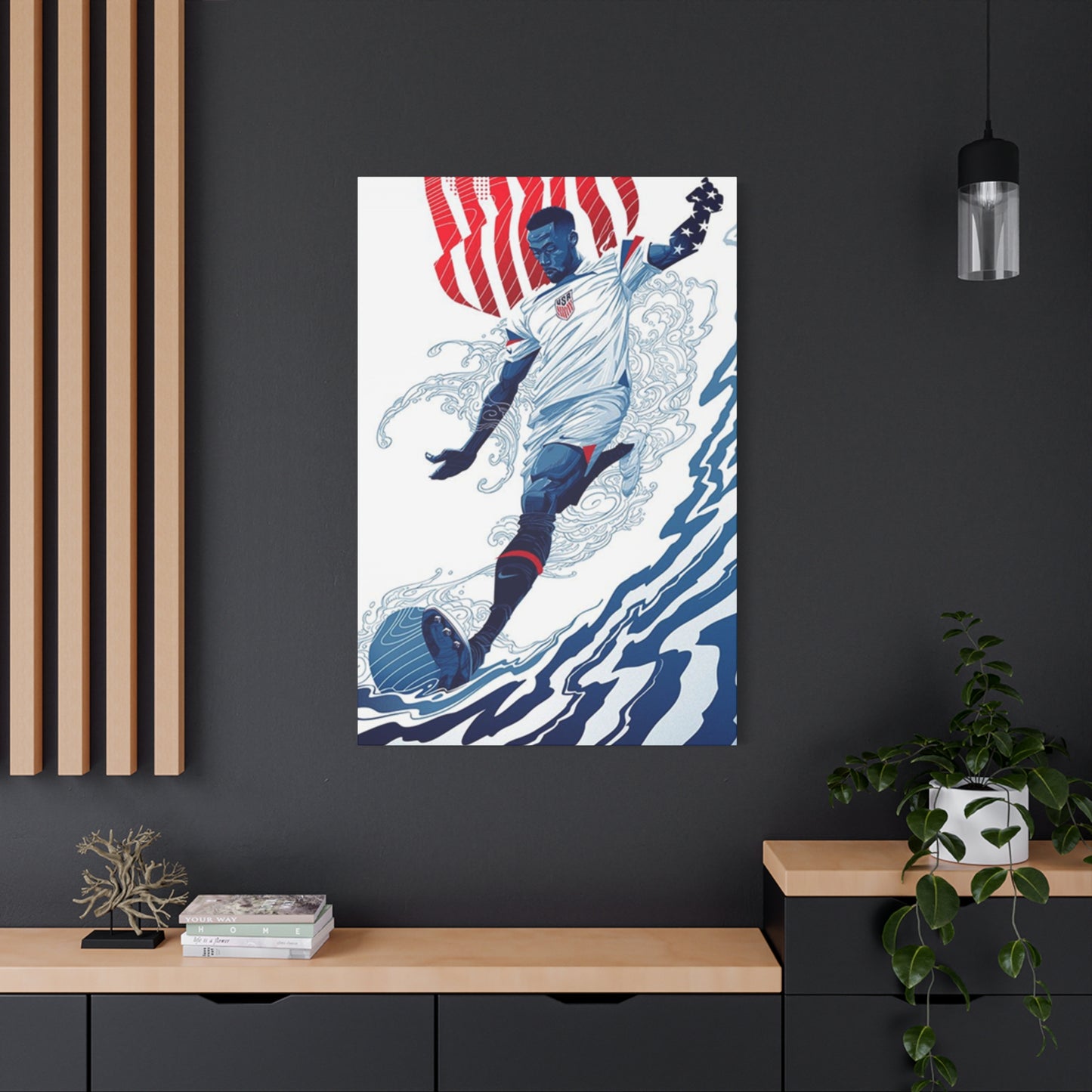
American Soccer Player Wall Art & Canvas Prints
American Soccer Player Wall Art & Canvas Prints
Couldn't load pickup availability
Celebrating Athletic Excellence: American Soccer Player Wall Art for Your Home and Office Spaces
The world of sports memorabilia has evolved dramatically over recent decades, transforming from simple posters and photographs into sophisticated artistic expressions that capture the essence of athletic achievement. Among these developments, decorative pieces featuring American soccer athletes have emerged as powerful statement items that resonate with fans, collectors, and interior design enthusiasts alike. These carefully crafted visual elements serve multiple purposes, functioning simultaneously as tributes to sporting greatness, conversation starters, and carefully considered design components that enhance living and working environments.
The appeal of these artistic representations extends far beyond simple fandom. They represent a cultural shift in how Americans perceive and celebrate soccer, a sport that has grown exponentially in popularity throughout the nation. From youth leagues to professional competitions, soccer has woven itself into the fabric of American sports culture, creating a market for high-quality decorative items that honor the players who have elevated the game to new heights. These pieces capture pivotal moments, iconic celebrations, and the raw emotion that defines competitive athletics at the highest level.
When considering additions to personal or professional spaces, many individuals seek items that reflect their passions while maintaining aesthetic appeal. Decorative pieces featuring soccer athletes accomplish this balance beautifully, offering visual interest through dynamic compositions, vibrant color schemes, and emotional resonance. Whether displayed in home offices, living rooms, game rooms, or commercial establishments, these artistic works create focal points that draw attention and spark dialogue among visitors and occupants alike.
The Evolution of Sports-Themed Decorative Elements in Contemporary Interior Design
The relationship between athletic imagery and interior spaces has undergone remarkable transformation throughout the years. What once consisted primarily of magazine cutouts and basic posters has blossomed into a sophisticated market offering diverse styles, materials, and presentation methods. This evolution reflects broader changes in how society values sports culture and the athletes who dedicate themselves to excellence in their chosen fields.
During earlier periods, sports-related decorative items were often relegated to specific spaces deemed appropriate for such displays—typically basements, garages, or designated recreation areas. The perception was that these items lacked the refinement necessary for main living spaces or professional environments. However, contemporary attitudes have shifted dramatically, recognizing that well-executed sports imagery possesses artistic merit worthy of prominent display throughout any environment.
This transformation has been driven by several factors, including improved printing techniques, better understanding of design principles, and the recognition that passion for athletics represents a legitimate aspect of personal identity deserving celebration. Modern offerings range from minimalist line drawings to photorealistic renderings, from vintage-inspired designs to contemporary abstract interpretations. This diversity ensures that enthusiasts can find pieces that align with their specific aesthetic preferences while honoring their appreciation for the sport.
The materials used in creating these decorative elements have also expanded considerably. Beyond traditional paper prints, today's market offers canvas wraps, metal prints, acrylic panels, wood-mounted displays, and even three-dimensional sculptural interpretations. Each material brings distinct characteristics to the finished piece, affecting everything from visual texture to longevity to the overall impression created within a space.
Quality craftsmanship has become increasingly important as consumers have grown more discerning. The difference between mass-produced, low-quality items and carefully crafted pieces is immediately apparent in person. Superior offerings feature excellent color reproduction, precise registration, archival-quality materials that resist fading, and professional finishing that ensures longevity and visual appeal. These characteristics justify investment in premium pieces that will maintain their beauty and impact for years to come.
Selecting the Perfect Decorative Soccer Pieces for Different Environmental Contexts
Choosing appropriate decorative elements requires careful consideration of multiple factors, including the specific space where the item will be displayed, the existing design scheme, the emotional tone desired, and the practical constraints of the environment. Different spaces call for different approaches, and understanding these nuances helps ensure that selections enhance rather than detract from the overall aesthetic.
Residential living rooms often serve as gathering spaces where families and friends congregate, making them ideal locations for pieces that spark conversation and reflect the occupants' interests. In these contexts, larger-scale works can serve as focal points above sofas or mantels, while smaller pieces might be grouped to create gallery walls that tell visual stories about favorite players, memorable matches, or the evolution of the sport itself.
Home offices present unique opportunities for displaying sports-themed decorative items. These spaces benefit from elements that inspire and motivate while maintaining professional appearance. A carefully selected piece featuring an athlete in a moment of triumph or concentration can serve as a powerful reminder of the dedication, discipline, and perseverance required to achieve excellence—qualities equally valuable in professional pursuits.
Bedrooms offer more personal spaces where individual preferences can be expressed more freely. For children and teenagers passionate about soccer, decorative elements featuring their heroes can inspire dreams and encourage participation in the sport. For adults, subtler, more sophisticated interpretations might better suit the desired atmosphere while still honoring their connection to the game.
Game rooms and entertainment spaces provide perhaps the most natural home for sports-related decorative items. These environments can accommodate bolder, more exuberant pieces that might overwhelm other spaces. Collections can be displayed together, creating immersive environments that celebrate soccer culture comprehensively. Themed arrangements might focus on specific teams, eras, tournaments, or playing styles.
Commercial establishments, including sports bars, restaurants, fitness facilities, and retail stores, can benefit tremendously from well-chosen sports imagery. These pieces help establish ambiance, reinforce brand identity, and create environments that resonate with target audiences. In such contexts, durability becomes particularly important, as pieces must withstand higher traffic and sometimes challenging environmental conditions.
When evaluating potential additions, size considerations prove critical. A piece too small for its intended location will appear insignificant and fail to create the desired impact, while oversized items can overwhelm spaces and create visual imbalance. Measuring the available wall space and considering surrounding furniture and architectural features helps ensure appropriate scale. Many experts suggest that artwork should occupy roughly two-thirds to three-quarters of the available wall space above furniture pieces.
Color harmony represents another essential consideration. While sports imagery often features bold, vibrant hues, the most successful installations demonstrate thoughtful integration with existing color schemes. This doesn't necessarily mean exact matching—in fact, some contrast can create visual interest—but rather ensuring that the overall palette works cohesively. Some individuals prefer pieces that complement existing colors, while others deliberately choose contrasting elements that create focal points.
The style and era represented in the artwork should also align with the overall design aesthetic of the space. Contemporary minimalist interiors might benefit from clean, simplified representations with ample negative space, while traditional environments might better accommodate more detailed, realistic renderings. Vintage-inspired designs featuring retro color schemes and typography work beautifully in spaces with mid-century or eclectic design sensibilities.
Exploring Diverse Artistic Styles and Presentation Methods
The market for soccer-themed decorative pieces encompasses an impressive range of artistic approaches, each offering distinct visual characteristics and emotional resonance. Understanding these various styles helps enthusiasts make informed selections that align with personal preferences and environmental requirements.
Photographic realism captures athletes with stunning clarity and detail, preserving specific moments with documentary precision. These pieces appeal to those who appreciate the authentic representation of players and the ability to revisit exact instances from matches. High-quality photographic prints can convey remarkable texture and depth, particularly when printed on premium materials that enhance dimensional qualities.
Illustrated interpretations offer artists the opportunity to emphasize specific aspects of subject matter, whether through exaggerated dynamism, stylized features, or creative color choices. These works can range from relatively realistic to highly abstract, depending on the artist's approach and intent. Illustrated pieces often convey energy and movement particularly effectively, capturing the kinetic nature of soccer in ways that static photography sometimes cannot.
Minimalist designs strip away extraneous elements, focusing on essential forms and gestures. These pieces often employ limited color palettes and clean lines, creating sophisticated works that communicate clearly without visual clutter. Minimalist soccer imagery works exceptionally well in contemporary spaces where simplicity and restraint guide design choices.
Pop art influences have produced vibrant, bold interpretations that embrace strong colors, graphic elements, and sometimes incorporate text or mixed media components. These energetic pieces draw from traditions established by artists in the mid-twentieth century, applying those sensibilities to contemporary sporting subjects. Pop art-inspired soccer pieces can inject energy and personality into spaces while maintaining artistic credibility.
Abstract representations move furthest from literal depiction, using color, form, and composition to evoke the essence of soccer and athletic performance without necessarily depicting recognizable figures. These pieces appeal to those seeking something more interpretive, works that suggest rather than explicitly show. Abstract approaches can be particularly effective when the goal is to complement rather than dominate a space.
Vintage and retro styles deliberately reference earlier aesthetic periods, incorporating design elements like distressed textures, sepia tones, vintage typography, and compositional approaches characteristic of mid-twentieth-century graphics. These pieces appeal to nostalgia while offering visual interest through their deliberate evocation of particular eras. They work beautifully in spaces with vintage or eclectic design themes.
The presentation method significantly impacts the final appearance and character of decorative pieces. Canvas wraps offer a gallery-like quality, with images extending around the edges of stretcher bars, creating finished pieces that don't require additional framing. This approach suits contemporary aesthetics and provides clean, professional presentation.
Framed prints offer versatility through the selection of frame styles, mat colors, and glazing options. Appropriate frame selection can dramatically affect the overall impression, with choices ranging from sleek modern metals to ornate traditional woods. Matting provides visual breathing room around images while offering opportunities for additional color coordination.
Metal prints represent relatively recent innovations, featuring images infused directly onto specially coated aluminum panels. These pieces exhibit exceptional clarity, vibrant colors, and contemporary aesthetic appeal. The medium particularly suits bold, graphic images and works well in modern environments.
Acrylic mounting produces stunning depth and luminosity, with images appearing to float within clear acrylic panels. Light interacts with these pieces in captivating ways, creating almost three-dimensional effects. These premium presentations make powerful statements in upscale residential and commercial environments.
Wood mounting offers organic warmth, with images transferred or mounted onto finished wood panels. The natural grain visible around or through images adds texture and character, creating pieces that feel more organic than prints on paper or canvas. This approach works beautifully in spaces emphasizing natural materials.
Understanding the Cultural Significance of Soccer in American Society
To fully appreciate decorative pieces featuring American soccer athletes, one must understand the sport's complex relationship with American culture. Soccer's position in the American sporting landscape has evolved considerably, growing from relative obscurity to significant cultural presence, though still existing somewhat in the shadow of more established American sports.
The sport arrived in America with immigrant communities who brought their passion for the game from Europe, South America, and other soccer-loving regions. For many decades, soccer remained primarily the province of these immigrant communities and their descendants, struggling to gain traction among broader American audiences accustomed to football, baseball, and basketball.
Youth participation began changing this dynamic significantly. The growth of youth soccer leagues, particularly from the 1970s onward, introduced millions of American children to the sport. Many of these participants became lifelong fans, creating expanding audiences for professional soccer at both domestic and international levels. This grassroots growth fundamentally altered soccer's position in American culture.
The establishment of Major League Soccer in the 1990s provided a stable professional structure that previous attempts at professional soccer leagues had lacked. While the league faced challenges in its early years, it has grown steadily, expanding to more cities, attracting better players, and building dedicated fan bases. This success has contributed to soccer's increased cultural visibility.
Success in international competitions has also elevated the sport's profile. Women's national team triumphs, in particular, have captured American attention, with players becoming household names and role models. Men's national team performances, while more modest, have also contributed to growing interest, particularly during World Cup tournaments when soccer briefly dominates American sports conversation.
Media coverage has expanded dramatically, with matches now readily accessible through various streaming services and cable networks. This increased visibility has helped cultivate understanding and appreciation among audiences previously unfamiliar with the sport. The ability to easily follow international leagues has also expanded the horizons of American soccer fans.
Cultural attitudes toward soccer have shifted noticeably, with the sport shedding some of the stigmas it previously carried in certain American circles. What was once sometimes dismissed as foreign or insufficiently American has gained recognition as a legitimate sporting passion worthy of the same enthusiasm Americans direct toward other athletic pursuits.
The sport's growing cultural presence has naturally led to increased demand for related merchandise and decorative items. As soccer has become more woven into American identity, fans have sought ways to express their passion through the items they choose to display in their personal and professional spaces. Decorative pieces featuring American soccer players serve this desire while celebrating athletes who have contributed to the sport's growth in the nation.
Prominent American Soccer Athletes Who Have Inspired Artistic Tributes
The pantheon of American soccer greats provides rich subject matter for artistic interpretation. These athletes have not only excelled in their sport but have also captured imaginations, broken barriers, and represented their nation on international stages. Their achievements and personas make them natural subjects for decorative artistic works.
Female athletes have been particularly prominent in American soccer history, dominating international competitions and achieving levels of success that their male counterparts have not matched. These pioneering women have become icons, their images recognized even by those who don't follow the sport closely. Their stories of perseverance, excellence, and advocacy have resonated far beyond soccer, making them compelling subjects for artistic representation.
Several women have become virtually synonymous with American soccer excellence, their names and faces immediately recognizable. They have won multiple championships, earned individual accolades, and consistently performed at the highest levels throughout extended careers. Their moments of triumph—celebrations after crucial goals, emotional reactions to victories, determined expressions during intense competition—have been captured in countless photographs that serve as source material for decorative artistic works.
Beyond their athletic achievements, many prominent female players have become powerful voices for gender equality, fair compensation, and social justice. This advocacy has added dimensions to their public personas, making them admirable figures beyond their sporting accomplishments. Decorative pieces featuring these athletes carry additional meaning for those who appreciate their broader contributions to society.
Male American soccer players have faced different challenges, competing in a more globally competitive environment where American teams have historically struggled to match the elite nations. Nevertheless, several male players have achieved remarkable careers, excelling in top international leagues and representing their nation admirably in World Cup competitions.
These male pioneers broke down barriers, proving that American players could compete at the highest levels of the global game. They opened doors for subsequent generations and helped change perceptions about American soccer quality. Their journeys from American youth systems to European elite clubs make for compelling narratives that add depth to artistic representations.
Younger emerging stars represent soccer's present and immediate prospects in America. These athletes are often subject to intense interest as fans project hopes and expectations onto their developing careers. As these players achieve memorable moments and establish themselves at higher levels, demand for decorative pieces featuring their likenesses grows accordingly.
The diversity of American soccer heroes reflects the nation's demographic variety. Players of different backgrounds, representing various immigrant communities and regional traditions, have contributed to national teams and achieved individual excellence. This diversity enriches the visual possibilities for decorative pieces, offering representation that resonates with different communities and individuals.
Goalkeepers, despite playing a specialized position that receives less attention than field players, have produced some of the most dramatic and visually striking moments in American soccer. Images of goalkeepers making acrobatic saves, commanding their penalty areas, or celebrating crucial victories offer tremendous artistic potential, capturing both athleticism and intensity.
Defenders and midfielders, while perhaps less celebrated than prolific goal scorers, have been essential to American soccer success. Some of these players have achieved cult status among dedicated fans who appreciate the subtler aspects of the game. Decorative pieces featuring these players appeal to connoisseurs who understand soccer's complexities beyond mere goal tallies.
Strategic Placement Approaches That Maximize Visual Impact
Once appropriate decorative pieces have been selected, proper placement becomes essential to achieving desired effects. Strategic positioning maximizes visual impact, ensures pieces integrate harmoniously with their surroundings, and creates viewing experiences that enhance rather than detract from environments.
Height considerations prove fundamental. Generally, artwork should be positioned with its center approximately at eye level, typically around fifty-seven to sixty inches from the floor. This guideline ensures comfortable viewing without requiring awkward neck positions. However, this rule requires adjustment based on specific contexts—pieces viewed primarily while seated might be positioned slightly lower, while those in spaces with high ceilings might be elevated somewhat to maintain visual balance.
The relationship between decorative pieces and surrounding furniture requires careful consideration. When hanging artwork above sofas or console tables, positioning should account for furniture dimensions. Generally, the bottom edge of frames should hang approximately six to twelve inches above furniture tops, creating visual connection without appearing to rest directly on the furniture. This spacing creates cohesion while maintaining distinct visual elements.
Lighting dramatically affects how decorative pieces appear. Natural light can illuminate works beautifully but also poses risks, as prolonged sun exposure can fade even archival-quality prints over time. Positioning pieces away from direct sunlight helps preserve them while still allowing natural illumination. Artificial lighting options include picture lights, track lighting, and recessed fixtures that can be directed toward specific pieces.
The quality and color temperature of artificial light significantly impact appearance. Warm light emphasizes yellows and reds while potentially muting blues, whereas cool light does the opposite. Many prefer neutral white light that doesn't distort colors. LED options now offer excellent color rendering while consuming minimal energy and generating little heat that might damage artwork.
Creating gallery walls requires additional planning to achieve cohesive arrangements. Successful gallery walls typically involve careful planning before installation, often involving arranging pieces on the floor or creating paper templates that can be positioned on walls. The goal is creating arrangements that feel intentional rather than haphazard, with consistent spacing between pieces and thoughtful relationships between different works.
Gallery wall arrangements can follow various organizing principles. Grid layouts create formal, organized appearances through consistent spacing and alignment. Salon-style arrangements embrace asymmetry and variety, mixing different sizes and orientations in more organic compositions. Linear arrangements position pieces in rows, creating more structured presentations. The choice depends on the space, the pieces involved, and desired aesthetic effects.
Corner placements can transform underutilized spaces into focal points. Large pieces can anchor corners, making them feel intentional rather than empty. Smaller works can be grouped to create interest in these transitional areas. Corner placement works particularly well in open floor plans where traditional wall space might be limited.
Above doorways and windows, horizontal spaces that might otherwise remain empty can accommodate artwork, particularly pieces with horizontal orientations. This placement draws eyes upward, making rooms feel taller while utilizing all available wall space. Care must be taken to ensure pieces are securely mounted in these locations where they might receive bumps from door movements.
Stairway walls present unique opportunities and challenges. The ascending or descending angle can be followed by arrangements that step up or down accordingly, creating dynamic presentations that complement the architectural feature. Alternatively, pieces can be hung level with each eye-level point along the stairs, creating a more traditional arrangement despite the angled context.
In commercial settings, placement must consider traffic flow, sightlines, and safety. Pieces should be positioned where they can be appreciated without impeding movement or creating hazards. Commercial contexts often benefit from more dramatic, larger-scale works that can compete with the typically larger spaces and higher ambient activity levels.
Material Durability and Long-Term Preservation Considerations
Investing in quality decorative pieces naturally leads to concerns about preservation and longevity. Understanding factors that affect durability helps owners make informed decisions about materials, placement, and handling that extend the lifespan of their collections.
Ultraviolet light represents one of the most significant threats to printed materials. UV radiation breaks down chemical bonds in inks and substrates, causing fading, discoloration, and material degradation. This damage occurs gradually but cumulatively and is essentially irreversible. Minimizing UV exposure constitutes perhaps the single most important preservation measure.
Several strategies help reduce UV damage. The most effective involves avoiding direct sunlight entirely, positioning pieces on walls that don't receive direct solar illumination. When this isn't possible, UV-filtering glazing for framed pieces provides substantial protection. Window films or treatments that block UV rays help protect entire rooms. Even with these measures, periodic rotation of pieces can help ensure no single work receives excessive exposure.
Temperature and humidity fluctuations also threaten artwork longevity. Materials expand and contract with temperature changes, while humidity variations can cause warping, mold growth, or adhesive failure. Maintaining relatively stable environmental conditions—typically moderate temperatures and humidity levels between thirty and fifty percent—helps preserve pieces. Avoiding placement near heat sources, air conditioning vents, or humid areas like bathrooms protects investments.
Physical damage from accidents, cleaning, or careless handling can occur despite best intentions. Secure mounting prevents pieces from falling, while appropriate hardware rated for the weight of artwork ensures safe display. When cleaning, gentle methods using appropriate materials for specific surfaces prevent scratching or chemical damage. Dusting with soft, clean cloths typically suffices for most surfaces, with more intensive cleaning reserved for when necessary and approached cautiously.
The inherent quality of materials significantly affects longevity. Archival-quality papers resist yellowing and degradation far better than standard papers. Pigment-based inks maintain color fidelity much longer than dye-based alternatives. Professional-grade canvas resists sagging and maintains structure over time. These quality differences justify premium pricing and should factor into purchasing decisions for pieces intended as long-term investments.
Canvas pieces require particular attention to prevent sagging or warping. Properly stretched canvas maintains tension over wooden stretcher bars, but this can loosen over time, especially in fluctuating conditions. Some canvas works benefit from periodic re-stretching to maintain taut surfaces. Excessive humidity poses particular risks to canvas, potentially causing mildew if conditions remain damp for extended periods.
Metal and acrylic prints generally demonstrate excellent durability, resisting many issues that affect paper and canvas. However, these materials require specific care approaches. Metal prints should be cleaned with appropriate solutions that don't damage specialized coatings. Acrylic can scratch if cleaned improperly, requiring soft cloths and gentle pressure. Both materials generally handle environmental variations better than paper-based alternatives.
Framing choices impact preservation significantly. Acid-free matting prevents chemical migration that can yellow artwork. UV-protective glazing shields pieces from light damage. Sealed backs protect against dust, insects, and pollutants. Proper spacing between glazing and artwork prevents contact that can cause sticking or damage. These elements justify working with professional framers who understand preservation principles.
Insurance considerations become relevant for valuable collections. Standard homeowner's or renter's policies typically provide limited coverage for artwork, often with low per-item limits. Serious collectors might consider scheduled personal property endorsements or specialized art insurance that provides broader coverage including appreciation in value, restoration costs, and various potential damage scenarios.
Documentation of collections serves multiple purposes, from insurance claims to estate planning. Photographs of pieces, along with purchase receipts, certificates of authenticity, and condition reports, create records that prove ownership and value. Digital documentation stored in cloud services provides backup should physical records be lost. This documentation proves invaluable if pieces are ever damaged, stolen, or disputed.
The Role of Color Psychology in Sports-Related Interior Decorative Choices
Colors profoundly affect human psychology and emotion, making color considerations essential when selecting and placing decorative pieces. Understanding these effects helps create environments that generate desired moods and responses while ensuring visual harmony.
Red, frequently appearing in sports imagery due to its use in team uniforms and its association with energy, stimulates excitement, passion, and intensity. Psychologically, red increases heart rate and creates feelings of urgency and vitality. In interior contexts, red accents can energize spaces, making them feel more dynamic and active. However, excessive red can overwhelm, so balanced application typically works best.
Blue conveys calmness, stability, and professionalism. Frequently appearing in soccer imagery through uniforms and backgrounds, blue pieces can help create serene, contemplative environments. Darker blues suggest sophistication and authority, while lighter blues feel more casual and approachable. Blue works particularly well in office environments where focus and productivity are valued.
Green naturally evokes the playing field itself, connecting to nature, growth, and renewal. The color promotes balance and harmony, creating neither the excitement of red nor the coolness of blue. Green pieces can help spaces feel more organic and grounded, connecting interior environments to natural worlds. The prevalence of green in soccer imagery makes it particularly authentic to the sport.
Yellow radiates optimism, energy, and cheerfulness. Bright yellows capture attention and create uplifting atmospheres. However, yellow can become overwhelming if overused, potentially creating anxiety rather than cheerfulness. Strategic use of yellow in sports imagery can inject energy without dominating spaces.
White and black, while technically not colors, play crucial roles in sports imagery. White suggests purity, simplicity, and cleanliness, while black conveys sophistication, power, and drama. The contrast between these extremes creates visual impact, with black-and-white photography offering timeless appeal that transcends color trend cycles.
Orange combines red's energy with yellow's cheerfulness, creating vibrant, attention-grabbing effects. Less common in soccer imagery than some other hues, orange pieces stand out and create memorable visual statements. The color works well in creative environments where stimulation and innovation are valued.
Purple historically suggests royalty, luxury, and creativity. Less frequently appearing in sports contexts than other colors, purple pieces can feel distinctive and unique. Lighter purples tend toward whimsy and softness, while deeper purples convey richness and sophistication.
Color harmony principles guide how different hues interact. Complementary colors, opposite on color wheels, create vibrant contrasts that energize spaces. Analogous colors, adjacent on color wheels, create harmonious, unified feelings. Monochromatic schemes using different shades of single colors feel sophisticated and cohesive. Understanding these relationships helps select pieces that work within existing color schemes or deliberately create desired contrasts.
Cultural associations with colors vary globally, adding complexity to color psychology. In Western contexts, white often symbolizes purity and peace, while some Eastern traditions associate white with mourning. Red means good fortune in Chinese culture while sometimes suggesting danger in Western contexts. These cultural dimensions might influence how different individuals respond to colored imagery.
Personal color preferences, shaped by individual experiences and associations, ultimately matter most. While general psychological principles provide useful frameworks, individual responses vary considerably. Some people find red invigorating while others find it aggressive. What feels calming to one person might feel boring to another. Personal reaction should guide final selection decisions.
Pricing Structures and Value Propositions Across Different Quality Levels
The market for decorative sports imagery spans enormous price ranges, from affordable mass-produced prints to high-end limited editions and original artworks. Understanding what drives these price variations helps consumers make informed decisions aligned with their budgets and expectations.
Entry-level offerings typically consist of poster-quality prints on standard paper, often produced in massive quantities. These pieces serve consumers seeking affordable ways to display their sports passion without significant financial commitment. While lacking the quality of premium alternatives, budget options fill legitimate needs for those furnishing spaces economically or testing whether particular images work in their environments before investing more substantially.
Mid-range products typically feature better materials, improved print quality, and sometimes more limited production runs. Canvas prints, framed pieces with quality matting, and superior paper stocks fall into this category. These offerings balance quality and affordability, providing noticeably better presentation than budget options while remaining accessible to typical consumers. Most serious enthusiasts find this quality tier satisfies their needs admirably.
Premium offerings incorporate archival materials, exceptional print quality, professional finishing, and sometimes hand-embellishment. Limited edition prints signed and numbered by artists carry additional value through their exclusivity. These pieces represent significant investments but offer corresponding quality that justifies higher prices for discerning collectors who prioritize excellence and longevity.
Original artwork stands apart from reproductions entirely. These unique pieces command premium prices reflecting the artist's skill, time investment, and the inherent value of owning singular creations. Originals appeal to serious collectors who value art objects beyond their subject matter, appreciating them as artistic expressions worthy of investment.
Licensed imagery costs more than unlicensed alternatives due to fees paid for rights to reproduce particular photographs or likenesses. Licensed products ensure legal compliance and often guarantee quality standards, as rights holders typically enforce standards protecting their brands. These considerations justify price premiums for consumers concerned about legitimacy and quality assurance.
Production methods significantly impact pricing. Digital prints produced on demand cost less than pieces requiring extensive manual labor. Hand-stretched canvas, custom framing, and applied embellishments increase costs but add value through superior presentation. Understanding production methods helps evaluate whether pricing seems reasonable for what's being offered.
Artist reputation influences pricing substantially in original and limited edition markets. Established artists with proven track records command higher prices than emerging talents, reflecting market dynamics where collectors pay premiums for recognized names. However, emerging artists sometimes offer better value propositions, with prices that may seem modest relative to quality and potential appreciation.
Size affects pricing in somewhat predictable ways—larger pieces generally cost more than smaller ones due to material costs and handling complexity. However, the relationship isn't always linear, as some sizes require disproportionately more careful handling or specialized equipment. Very large pieces might command premium prices reflecting logistical challenges beyond simple material costs.
Framing represents significant cost components for pieces sold framed. Quality framing involves substantial material costs for frames, matting, glazing, and labor. Custom framing for unusual sizes or specifications increases expenses further. Some consumers prefer purchasing unframed pieces and arranging framing separately, potentially saving money or allowing selection of frames that perfectly match their preferences.
Sales channels affect final consumer pricing. Direct-from-artist purchases eliminate intermediary margins, potentially offering better values. Gallery sales include markups covering space costs and commission structures. Online marketplaces might offer competitive pricing through reduced overhead. Understanding these dynamics helps consumers identify potentially advantageous purchasing channels.
Value assessment requires looking beyond pure price to consider cost per year of ownership. A premium piece lasting decades might represent better value than cheap alternatives requiring replacement every few years. Similarly, pieces bringing genuine joy and satisfaction offer intangible value beyond pure financial calculations. The most expensive option isn't always the best, nor is the cheapest necessarily a bargain if quality disappoints.
Creating Thematic Collections That Tell Cohesive Visual Stories
Rather than acquiring individual pieces in isolation, many enthusiasts develop curated collections that work together to tell stories or explore themes. This curatorial approach creates more meaningful displays that resonate more deeply than random assemblages.
Era-focused collections might concentrate on particular periods in American soccer history, perhaps documenting the early days of professional leagues, the emergence of women's soccer dominance, or the modern era of increased competitiveness. These chronological collections gain power from their focus, creating narratives about evolution and development over time.
Player-specific collections celebrate individual athletes, documenting careers through different stages and memorable moments. For particularly accomplished players, such collections might include early career images, pivotal moments, championship celebrations, and later career retrospectives. These focused collections appeal to dedicated fans of particular athletes.
Team-oriented collections follow specific national teams or professional clubs, creating displays that celebrate collective achievements and memorable campaigns. Such collections might document successful World Cup runs, championship seasons, or rivalries with opposing teams. Team collections create natural coherence through shared colors, uniforms, and recurring players.
Position-based collections focus on particular roles—goalkeepers, defenders, midfielders, or forwards. These specialized collections appeal to those with particular appreciation for specific positions' nuances and the athletes who excel in those roles. Position collections can educate viewers about different aspects of the game while celebrating specialized excellence.
Women's soccer collections might exclusively feature female athletes, celebrating their achievements and contributions. Given American women's exceptional success internationally, such collections have rich material from which to draw. These focused collections can make powerful statements about gender equality and athletic excellence.
Action-oriented collections emphasize dynamic moments—shots on goal, defensive stops, celebratory poses, emotional reactions. These collections prioritize movement and energy, creating displays that convey the kinetic excitement of competitive soccer. Such collections work particularly well in active spaces like game rooms or fitness areas.
Minimalist collections might apply aesthetic coherence rather than subject matter focus, bringing together simplified, clean designs regardless of specific players or moments depicted. These collections prioritize visual harmony and design consistency, appealing to those whose primary concern is aesthetic integration with interior design schemes.
Mixed-media collections incorporate diverse presentation styles—photographs, illustrations, abstract works—united by subject matter. These varied collections create visual interest through diversity while maintaining thematic coherence. Mixed approaches can prevent monotony that might arise from overly similar pieces displayed together.
Geographic collections might focus on players from particular regions or states, celebrating local connections to the national game. For example, collections might focus on players from specific soccer hotbeds or regions with particular soccer traditions. These geographic focuses appeal to regional pride and local connections.
Chronological progressions within collections create narrative flow, with pieces arranged to tell stories over time. This might document individual player careers from emergence to retirement, team evolution through seasons, or the sport's development in America across decades. Sequential arrangements guide viewers through stories visually.
Display cohesion requires attention to practical considerations beyond thematic content. Consistent framing or presentation styles help disparate images work together visually. Coordinated matting colors create unity across different pieces. Similar sizing or proportional relationships between different-sized pieces help collections feel intentional rather than random.
Conclusion
The marketplace for sports-related decorative items includes both legitimate licensed products and unauthorized reproductions. Understanding legal and ethical considerations helps consumers make responsible purchasing decisions while protecting athletes' rights and avoiding potential legal complications.
Copyright law protects creative works, including photographs and illustrations, giving creators exclusive rights to reproduce, distribute, and profit from their work. Unauthorized reproduction violates these rights, even when consumers purchasing such reproductions might be unaware of the illegal nature. While enforcement typically targets commercial sellers rather than individual buyers, purchasing legitimate products avoids supporting illegal operations.
Licensing agreements grant permission to reproduce protected works, typically involving payments to copyright holders. Licensed products cost more than unauthorized alternatives specifically because producers have paid for legal reproduction rights. These fees compensate photographers, artists, and sometimes the athletes depicted, ensuring that those who created value receive appropriate compensation.
Right of publicity protects individuals' ability to control commercial use of their names, images, and likenesses. Athletes possess these rights, which are frequently licensed to card companies, poster producers, and similar commercial entities. Unauthorized commercial use of athlete likenesses violates these rights, even when the underlying photograph might not be copyrighted.
Trademark considerations affect use of team names, logos, and distinctive visual elements. These marks receive legal protection preventing unauthorized commercial use. Legitimate products have arranged licensing with appropriate trademark holders, ensuring legal compliance. Unlicensed products using protected marks infringe trademark rights regardless of whether they violate other intellectual property protections.
Official product authentication helps consumers identify legitimate merchandise. Licensed products typically include authentication indicators—holographic stickers, official logos, copyright notices—that signal proper licensing. While these indicators can be counterfeited, their presence suggests legitimacy. Absence of such authentication should raise questions about products' legitimacy.
Purchasing from reputable sources provides reasonable assurance of legitimacy. Established retailers, official team stores, and recognized online marketplaces typically sell only properly licensed merchandise. Suspicious pricing—particularly dramatically lower prices than comparable legitimate products—should raise red flags about potential counterfeiting or unauthorized production.
Ethical considerations extend beyond pure legal compliance. Supporting artists and photographers through legitimate purchases enables them to continue creating work that enriches soccer culture. Conversely, purchasing unauthorized reproductions undermines these creators, potentially discouraging production of new work. Ethical consumers consider these impacts when making purchasing decisions.
Fair use exceptions to copyright law permit limited reproduction for purposes like criticism, commentary, news reporting, and education. However, fair use applies narrowly and typically doesn't cover decorative use of sports imagery in personal spaces. Consumers shouldn't assume that their intended use qualifies as fair use without understanding this doctrine's complexities and limitations.
International complications arise from differing intellectual property laws across jurisdictions. Products legal in some countries might violate laws in others. Online marketplaces operating internationally sometimes offer products that couldn't legally be sold domestically. Consumers should understand that purchasing from foreign sources doesn't necessarily insulate them from legal consequences if imported products violate domestic laws.
Personal use versus commercial use creates important distinctions. While unauthorized reproduction for purely personal enjoyment generally receives less scrutiny than commercial exploitation, this doesn't make it legal. Some copyright holders actively pursue individual infringers, particularly in cases involving blatant commercial-scale reproduction even if nominally for personal use.
Share