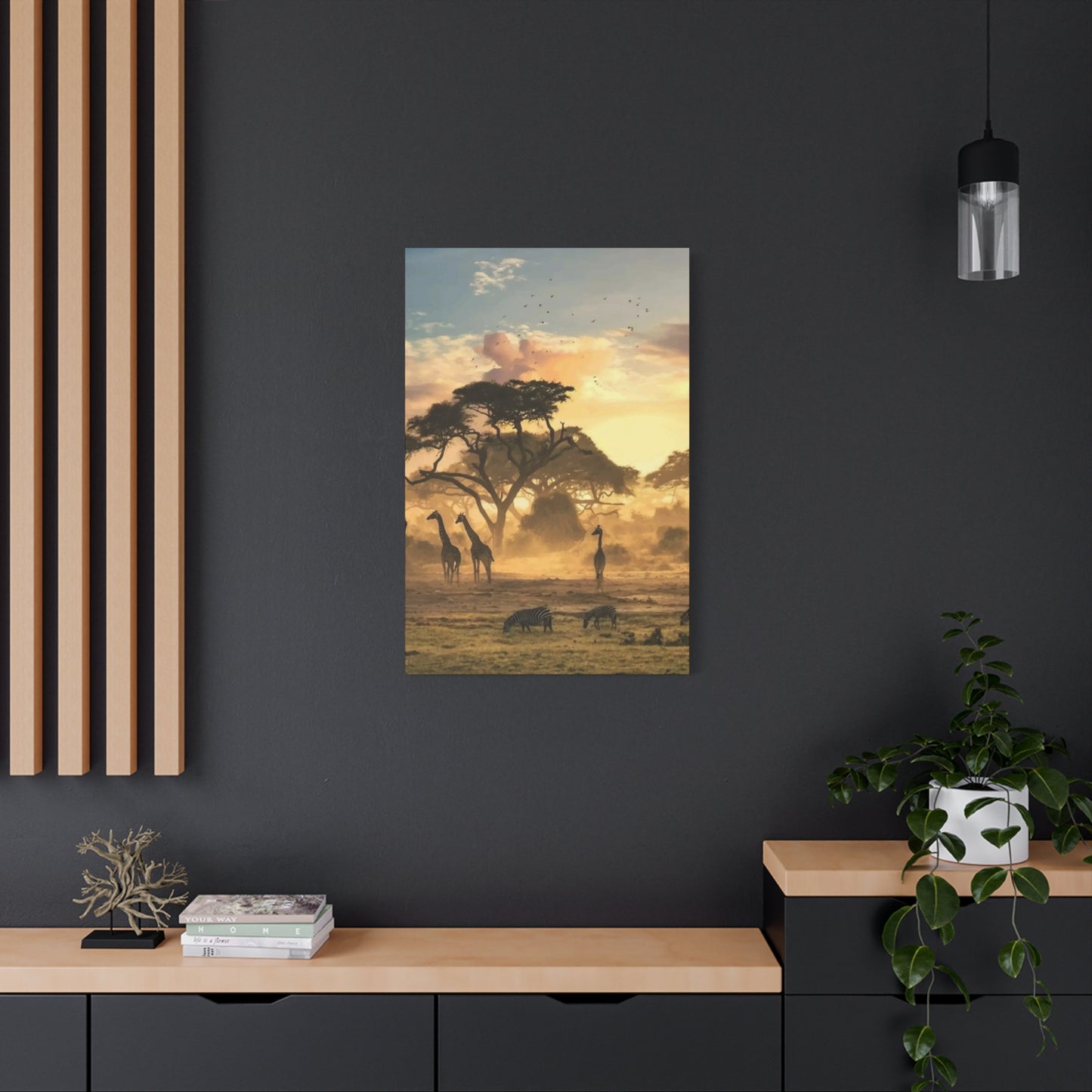


African Jungle Wall Art & Canvas Prints
African Jungle Wall Art & Canvas Prints
Couldn't load pickup availability
Transform Your Living Space with African Jungle Wall Art: A Complete Guide to Adding Natural Wilderness
The allure of untamed wilderness has captivated humanity for millennia, and nowhere is this fascination more evident than in the burgeoning world of African jungle wall art. These magnificent creations transport viewers to distant landscapes teeming with exotic fauna, verdant foliage, and the raw energy of nature in its most primal form. When you invite such pieces into your dwelling, you're not merely hanging a decorative object; you're establishing a portal to one of Earth's most enigmatic and biodiverse ecosystems. This comprehensive exploration delves into every facet of this remarkable artistic category, from its anthropological roots to contemporary design implementations that transform ordinary interior spaces into extraordinary sanctuaries.
The Rich Cultural Heritage Behind Jungle Imagery in African Aesthetics
The depiction of jungle environments within African artistic traditions extends far beyond contemporary decoration. For centuries, African artisans have incorporated forest imagery, wildlife symbolism, and botanical motifs into their creative expressions. The significance of these representations stems from profound spiritual beliefs, practical daily existence, and the intricate relationship between indigenous populations and their surrounding ecosystems. In many African cultures, the jungle represents a liminal space between the physical and metaphysical realms, serving as a gateway to ancestral wisdom and supernatural forces.
Traditional African societies developed sophisticated visual languages to communicate the importance of forest preservation and wildlife coexistence. Masks, sculptures, textiles, and ceremonial objects frequently featured creatures and plants indigenous to jungle habitats, each symbol carrying layered meanings comprehensible only to those versed in particular cultural codes. These artistic conventions weren't merely aesthetic choices but rather expressions of cosmological understanding and ecological stewardship that had been refined through countless generations.
The jungle motif in African artistic practice carries particular resonance within societies where forests remain integral to survival and cultural continuity. Hunting traditions, medicinal plant gathering, and spiritual ceremonies conducted within forest settings all contributed to the symbolic weight assigned to jungle imagery. When contemporary artisans create pieces featuring African jungle themes, they're participating in an extended continuum of cultural expression that honors ancestral perspectives while addressing modern sensibilities.
The Evolution of Jungle Art From Historical Contexts to Modern Interior Design
The trajectory of jungle-themed wall art reveals fascinating intersections between colonial history, artistic innovation, and evolving consumer preferences. During the nineteenth and early twentieth centuries, Western fascination with African landscapes intensified considerably, driven partly by exploratory expeditions and partly by romanticized Victorian aesthetics. This period witnessed an explosion of illustrated books, paintings, and lithographs depicting African wildlife and vegetation, though frequently filtered through distinctly European interpretative frameworks that obscured indigenous perspectives.
The mid-twentieth century brought significant shifts in how African jungle imagery appeared within Western artistic contexts. As decolonization movements gained momentum and civil rights activism reshaped cultural consciousness, artists began interrogating and reimagining representations of African landscapes. Rather than perpetuating colonial stereotypes, numerous creators sought to authentically portray the complexity, majesty, and ecological significance of jungle environments. This recalibration occurred across multiple mediums simultaneously, influencing everything from fine art exhibitions to mass-produced decorative materials.
Contemporary African jungle wall art now encompasses an astonishingly diverse range of stylistic approaches, from photorealistic renderings to highly abstracted interpretations. Modern creators employ traditional techniques alongside cutting-edge digital methods, producing pieces that speak to both aesthetic appreciation and environmental consciousness. The accessibility of these artworks has expanded dramatically through online marketplaces, independent artist networks, and mainstream retail establishments, democratizing what was once a relatively exclusive category of home decoration.
Comprehending the Aesthetic Components That Define Authentic African Jungle Composition
Creating compelling jungle wall art requires sophisticated understanding of how various aesthetic elements interact to produce cohesive visual impact. Color palettes drawn from actual jungle environments typically emphasize earthy tones, vibrant greens at varying saturation levels, warm browns, and strategic pops of brilliant accent hues reminiscent of bird plumage and flowering vegetation. The interplay between these chromatic choices establishes mood and atmospheric resonance that determines whether a piece feels inviting, adventurous, serene, or intensely dramatic.
Compositional structure in successful jungle artwork demonstrates meticulous attention to spatial relationships and visual hierarchy. Rather than haphazardly arranging elements, experienced artists orchestrate layered depth through foreground, middle ground, and background positioning. Wildlife subjects positioned at varying distances create dimensional illusion that draws viewers progressively deeper into imagined landscapes. Foliage density varies strategically, with some areas densely packed to suggest impenetrable wilderness while others remain relatively open to prevent visual overwhelm.
The representation of fauna within jungle contexts involves considerable nuance and observational acuity. Authentic depictions honor the actual appearance and behavioral characteristics of animals indigenous to African jungle regions, avoiding the fantastical or anthropomorphized interpretations that diminish credibility. Whether featuring big cats prowling through undergrowth, primates moving among canopy branches, or birds displaying remarkable plumage, each creature contributes to the overall narrative about what comprises authentic jungle existence.
Botanical elements require equally conscientious treatment, as vegetation serves as more than mere background filler. Recognizable tree species, distinctive flowering plants, vines, and ground-level flora collectively establish geographical and ecological specificity. Artists who demonstrate familiarity with actual jungle botany produce far more convincing compositions than those relying on generic plant silhouettes. This attention to authenticity elevates wall art from decorative commodity to something approaching documentary representation.
Diverse Stylistic Interpretations and Artistic Methodologies for Jungle Representations
The realm of African jungle wall art accommodates remarkably varied artistic approaches, each offering distinctive advantages depending on personal preference and interior design context. Photorealistic renderings employ meticulous attention to detail, employing layered glazing techniques or digital precision to achieve almost photographic verisimilitude. These pieces function as windows into actual jungle environments, compelling viewers to examine minute details like individual leaves, animal fur texture, and environmental complexity.
Impressionistic interpretations approach jungle subjects through suggestion and atmospheric effect rather than literal representation. Loose brushwork, emphasis on color relationships over precise form, and expressive mark-making characterize this category. Such pieces prioritize emotional evocation over documentary accuracy, inviting personal interpretation while maintaining recognizable jungle references. This approach frequently appeals to those seeking sophisticated contemporary aesthetics rather than straightforward naturalism.
Minimalist jungle art distills wilderness imagery to essential elements, employing sparse compositions and restricted color palettes to achieve refined elegance. Silhouettes of animals against sunset skies, simplified foliage patterns, or geometric interpretations of jungle forms exemplify this category. These pieces suit modern interior environments where busy patterns might prove visually exhausting, providing jungle ambiance without ornamental excess.
Abstract expressionist treatments of jungle themes prioritize gestural energy, surface texture, and non-representational form while maintaining loose thematic connections to forest environments. Color fields suggestive of jungle atmospheres, dynamic mark-making evoking animal movement, or compositional strategies inspired by natural profusion characterize such work. This approach attracts viewers appreciating conceptual depth and interpretive flexibility.
Collage and mixed media methodologies incorporate diverse materials alongside paint, drawing, or print processes. Layering photographs, fabric scraps, natural materials, and found objects creates tactile, visually complex surfaces that reward close examination. Such pieces often carry environmental messages about sustainability and material consciousness while delivering striking visual impact.
Distinguishing Between Authentic Creations and Mass-Produced Derivative Works
The proliferation of jungle-themed wall art has inevitably spawned considerable variation in quality, authenticity, and artistic integrity. Discerning collectors benefit from understanding distinguishing characteristics between genuine artistic creations and mass-produced commodities that merely appropriate jungle aesthetics without substantive engagement.
Authentic artisan-created pieces typically demonstrate individual artistic voice, recognizable stylistic signatures, and evidence of intentional decision-making throughout the creative process. Whether produced through painting, printmaking, or sculpture, handcrafted works carry subtle variations reflecting the human hand and individual consciousness directing the work. Artist statements frequently accompany such pieces, providing context regarding conceptual intentions, research processes, and cultural considerations informing the creation.
Mass-produced items manufactured in industrial settings often prioritize speed, cost efficiency, and broad appeal over artistic distinctiveness. While not inherently inferior aesthetically, such pieces typically demonstrate standardized approaches to composition, color selection, and thematic treatment. Repetitive production using stencils, templates, or digital reproduction processes creates consistency that stands in contrast to the variability present in handmade work.
Understanding provenance and creator information proves invaluable when selecting jungle wall art. Pieces created by African artisans carry particular significance, as they emerge from cultural contexts directly engaged with jungle ecosystems and indigenous artistic traditions. Supporting artists from Africa, diaspora communities, or those demonstrating genuine cultural engagement through substantial research and respectful representation contributes to more ethically grounded collecting practices.
Materiality and Physical Substrate Considerations for Jungle Wall Art
The medium through which jungle imagery is realized profoundly influences aesthetic impact, durability, and integration with interior environments. Oil paintings on canvas represent traditional approaches, offering rich color saturation, textural possibility, and potential longevity when properly maintained. Acrylic applications provide similar versatility with faster drying times and simplified cleanup, appealing to many contemporary practitioners.
Watercolor renderings deliver luminous transparency and fluid spontaneity particularly suited to capturing atmospheric jungle conditions. The inherent delicacy of watercolor requires careful application and protective framing or sealing, but rewards viewers with distinctive aesthetic qualities unachievable through other mediums. Gouache, combining watercolor immediacy with greater opacity, offers intermediate possibilities between transparent and opaque approaches.
Printmaking methodologies including lithography, screen printing, and digital printing create reproducible jungle imagery accessible at various price points. Each printing process imparts distinctive visual characteristics; woodblock and linocut printing, for instance, emphasize bold graphic qualities and dramatic contrast, while fine art digital printing enables photographic precision. Limited edition prints maintain some of the exclusivity and collectibility associated with original paintings while offering greater affordability.
Photographic prints, particularly fine art photography, present jungle subjects captured directly rather than reinterpreted through artistic mediums. Archival quality photographic papers and advanced printing techniques produce images exhibiting remarkable clarity and color fidelity. Such pieces appeal to those preferring documentary authenticity and photographic aesthetics.
Sculptural jungle art in various materials ranging from wood to metal to stone offers three-dimensional presence impossible with flat wall-mounted pieces. Relief sculptures, shadow boxes containing dimensional objects, and high-relief panels create dramatic interplay between light and shadow that evolves throughout the day as illumination conditions change.
Textile-based approaches including embroidery, weaving, appliqué, and fiber art create tactile surfaces that engage viewers through multiple sensory dimensions. Hand-loomed fabrics featuring jungle motifs or embroidered renderings of African wildlife bring warmth and textural richness to wall spaces, particularly in contexts prioritizing handcrafted authenticity.
Selecting Appropriately Scaled Pieces for Specific Interior Environments
Effective integration of jungle wall art into residential or commercial spaces demands careful consideration of scale relationships between artwork, architectural features, and surrounding furnishings. Oversized pieces functioning as dominant focal points command attention and reshape spatial perception, suitable for expansive walls or rooms where dramatic statements align with design intentions. Such works require sufficient viewing distance to comprehend compositional complexity without overwhelming sightlines.
Medium-scaled selections accommodate most standard residential walls, offering presence without monopolizing visual attention. These pieces comfortably coexist alongside other decorative elements and furnishings, contributing to cohesive environments rather than dominating spatial aesthetics. The versatility of medium-scale artwork makes this category particularly popular for diverse applications.
Smaller intimate pieces create subtle ambiance and invite close examination, ideal for bedroom environments, reading nooks, or gallery-style arrangements where multiple works combine to create comprehensive visual narratives. Aggregating several smaller pieces into intentional groupings produces sophisticated effects rivaling single large-scale statements.
Vertical versus horizontal orientations influence how compositions interact with room proportions. Tall vertical formats emphasize architectural verticality, particularly effective in spaces with high ceilings or where standing figures feature prominently. Horizontal landscapes create expansive sensations that visually extend walls and accommodate panoramic jungle perspectives.
Room function and spatial context significantly determine appropriate artwork selections. Living areas accommodating social interaction benefit from engaging pieces promoting conversation and admiration. Bedroom environments benefit from compositions fostering tranquility and restorative atmosphere. Home offices may feature pieces balancing visual interest with professional context appropriateness. Hospitality environments including hotels, restaurants, and wellness facilities employ jungle artwork to establish distinctive ambiance supporting specific experiential intentions.
Color Psychology and Atmospheric Influence on Emotional Responses to Jungle Imagery
The chromatic compositions within jungle wall art directly influence emotional responses, physiological state, and spatial perception among observers. Predominantly green palettes, drawing from jungle foliage dominance, evoke associations with nature, vitality, renewal, and emotional balance. Research within environmental psychology demonstrates that exposure to green environments or imagery triggers stress reduction and enhanced cognitive function. This explains why jungle-themed artwork frequently appears in wellness facilities, medical offices, and stress-reduction contexts.
Warm earth tones including browns, ochres, and burnt siennas ground compositions and create feelings of stability and connection to terrestrial environments. These colors, reminiscent of soil, bark, and rock formations, anchor viewers in tangible reality while remaining compatible with natural settings. The strategic deployment of warm tones prevents jungle art from becoming emotionally cold or alienating.
Vibrant accent colors derived from wildlife plumage, flowering vegetation, or sunset illumination provide visual excitement and prevent compositions from becoming monotonously uniform. Reds, oranges, yellows, and purples punctuating predominantly green backgrounds create dynamic tension and focal points that organize viewer attention. The judicious restraint of these accents maintains impact without introducing visual chaos.
Deep shadow areas and mysterious darkened recesses within jungle compositions create dramatic contrast and suggest hidden depths. Shadows simultaneously conceal and tantalize, inviting imagined exploration of unseen territories within depicted wilderness. This chiaroscuro technique generates psychological intrigue and visual sophistication.
High saturation colors produce energizing, stimulating effects suitable for creative spaces and environments celebrating vitality. Desaturated, muted versions of jungle colors convey sophistication and contemporary sensibility, particularly appealing in minimalist contexts or spaces requiring visual restraint. The distinction between vivid and subdued interpretations accommodates divergent aesthetic preferences and functional requirements.
Positioning Strategies and Spatial Integration for Maximum Visual and Emotional Impact
The precise location where jungle wall art resides within interior spaces fundamentally influences its perceptual and psychological effectiveness. Positioning artwork at natural eye level when standing or sitting establishes optimal viewing relationships and ensures accessibility without creating neck strain or awkward visual angles. Typical eye level falls approximately five to six feet from floor elevation, though specific positioning depends on furniture arrangements and habitual occupant positions.
Focal wall positioning, typically the surface drawing initial attention upon entering a space, maximizes artwork prominence and establishes thematic framework for the environment. Feature walls behind primary seating areas or bed configurations create natural viewing vantage points where observers naturally find themselves positioned relative to artwork. This positioning strategy ensures frequent engagement without requiring conscious effort from inhabitants.
Grouping multiple jungle pieces into intentional arrangements creates galleries enhancing individual works while establishing sophisticated visual narratives. Salon-style arrangements mixing varied sizes, frames, and subtle compositional variations generate visually captivating compositions. Such groupings benefit from preliminary planning using kraft paper templates enabling visualization prior to permanent installation.
Hallway positioning transforms utilitarian passage spaces into galleries promoting contemplation during transitions between areas. Long corridor walls particularly benefit from jungle imagery, as the extended viewing distance accommodates larger pieces or series arrangements. Hallway placement introduces journey-like sensations as individuals progress through spaces, discovering artwork details previously unnoticed.
Bedroom applications position jungle art within intimate personal sanctuaries where calming atmospheric properties support restorative functions. Headboard wall placement creates immersive environments where artwork comprises the last visual element encountered before sleep. Bedroom jungle imagery typically employs softer color palettes and compositions suggesting tranquility rather than wilderness intensity.
Commercial and hospitality applications strategically deploy jungle artwork to establish distinctive brand identity and customer environmental experience. Lobby placements create immediate atmospheric impressions, while dining establishment integrations complement cuisine and dining conceptualizations. Wellness and spa facilities particularly benefit from jungle imagery supporting relaxation and natural connection.
Lighting Considerations and Illumination Strategies Enhancing Artwork Presentation
The quality, direction, and intensity of light illuminating jungle wall art dramatically influences appearance and visual effectiveness. Natural daylight provides optimal color representation for most artwork, though fluctuating throughout the day and seasons necessitates consideration regarding sunset direction and seasonal angle variations. North-facing walls receive consistent indirect light minimally affected by time variations, ideal for protecting delicate or light-sensitive pieces.
Dedicated picture lighting using specialized fixtures designed specifically for artwork illumination enables sophisticated presentation impossible with general room lighting. Adjustable track lighting permits directional control, enabling artistic manipulation of light and shadow relationships. Low-voltage systems produce minimal heat, protecting sensitive materials from temperature fluctuations.
Ambient room lighting combinations with artwork-specific illumination create layered lighting effects supporting multiple functional and atmospheric purposes. Dimmers enable adjustable lighting intensities accommodating different times, moods, and activities within spaces. Programmable lighting systems offer unprecedented control possibilities for sophisticated interior environments.
Avoiding glare through proper fixture positioning and non-reflective glass selections prevents visual interference compromising artwork appreciation. Matte surface finishes on frames or mounting systems minimize reflective distractions compared to glossy alternatives. Positioning light sources at angles between 30 and 45 degrees relative to artwork surface typically produces illumination without problematic glare.
Colored lighting filters or adjustable color temperature controls enable atmospheric manipulation while showcasing artwork. Warmer color temperatures around 2700 Kelvin create intimate, relaxing ambiance particularly suited for residential contexts. Cooler temperatures approaching 5000 Kelvin promote alertness and accurate color representation beneficial for evaluation or professional settings.
Framing Options and Presentation Alternatives Influencing Visual Contexts
The frames encasing jungle wall art function as critical presentational elements shaping aesthetic integration and protective functionality. Traditional wooden frames in natural finishes maintain organic connections with jungle themes, available in diverse styles from simple contemporary designs to ornate historical reproductions. Frame wood species, stain colors, and surface finishes dramatically influence overall compositional effect.
Minimalist metal frames, frequently in brushed black or silver finishes, provide contemporary alternatives emphasizing artwork rather than competing for visual attention. Sleek metal frames particularly suit modern interior contexts and artwork emphasizing contemporary aesthetics. Frameless presentation using tempered glass held by minimal hardware creates clean, sophisticated appearances.
Matte board selections surrounding artwork influence color context and compositional framing. Neutral matte colors provide unobtrusive backgrounds, while colored matte boards introduce additional chromatic dimensions complementing artwork palettes. Double matting with contrasting colors creates layered frames establishing visual boundaries while introducing design sophistication.
Shadow boxes and deep frames accommodating three-dimensional elements create presentation possibilities expanding beyond flat artwork. Mounting objects at varied depths establishes visual complexity and dramatic light-shadow interactions. Such presentation styles prove particularly effective for textile, collage, or sculptural jungle pieces.
Frameless canvas wrapping presents contemporary alternatives to traditional framing, where artwork wraps around stretcher bars visible from gallery perspectives. Such presentation conveys contemporary artistic sensibility and minimizes material barriers between viewers and artwork surfaces. This approach particularly suits abstract or impressionistic jungle interpretations.
Curating Coordinated Environments Through Complementary Furnishings and Design Elements
Jungle wall art integrates most successfully within environments where supporting furnishings, color schemes, and decorative accessories establish cohesive thematic contexts. Natural materials including wood, stone, leather, and plant fibers create complementary textures reinforcing organic jungle associations. Incorporating living plants throughout spaces establishes authentic natural elements encouraging perceptual connections with represented environments.
Color palette extensions through furnishings and wall treatments create unified environments where artwork feels naturally integrated rather than isolated. Accent colors derived from jungle piece chromatics appearing in upholstery, throw pillows, or decorative objects create sophisticated visual continuity. Neutral wall backgrounds, typically in soft whites, warm beiges, or subtle grays, provide stable contexts where jungle imagery commands attention without competing with patterned walls.
Botanical elements complementing jungle themes extend beyond mere color coordination. Real or high-quality artificial plants positioned near artwork create spatial zones celebrating natural themes. Such arrangements prove particularly effective in creating immersive environments where transitions between indoor and outdoor aesthetic sensibilities become deliberately blurred.
Textural variety through woven elements, leather furnishings, stone accents, or metal accessories introduces tactile dimensions complementing visual jungle depictions. Organic material combinations honor natural aesthetics inherent in jungle themes. Mixing smooth and rough surfaces, natural patterns, and varied material sheens creates visually stimulating environments rewarding close examination.
Lighting fixtures referencing natural forms, from sculptural botanical bases to raw-edged wooden supports, contribute to cohesive theming without requiring explicit jungle depictions. Such supporting elements create environments where jungle artwork emerges as meaningful contributors to broader natural aesthetic frameworks rather than thematic outliers.
Financial Investments and Long-Term Value Appreciation of Quality Jungle Artwork
Approaching jungle wall art as investment rather than mere decoration provides financial incentives beyond aesthetic gratification. Original artworks created by established or emerging artists demonstrate variable appreciation potential depending on artist recognition trajectories and market demand for specific styles or themes. Works by renowned contemporary artists featuring jungle subjects frequently appreciate as artistic legacies develop and institutional recognition increases.
Limited edition prints, particularly those produced through manual printmaking processes with artist signatures and edition documentation, maintain collectible value through supply scarcity. Authenticated limited editions from respected artists typically appreciate more substantially than unlimited reproduction prints, though initial costs may be higher. Careful documentation and provenance records enhance future resale potential through demonstrable authenticity.
Photographic prints by established fine art photographers gain value through artist recognition and market positioning. Museum quality printing on archival materials using professional techniques supports longevity and preservation. Signed, numbered prints with accompanying artist documentation prove most valuable from investment perspectives.
Emerging artist acquisitions offer opportunities for substantial future value appreciation as artistic careers develop and market recognition expands. Acquiring works from talented but lesser-known artists requires research and curatorial discernment but potentially generates significant investment returns. Gallery relationships with emerging artists provide valuable guidance regarding artistic trajectories and investment potential.
Material and artistic quality directly influence long-term value retention. Poorly executed mass-produced items depreciate rapidly as consumer preferences shift, while well-crafted pieces maintain stable values. Archival materials, proper framing, and professional presentation practices ensure physical preservation supporting continued aesthetic and financial value.
Conservation Practices and Preservation Methodologies Extending Artwork Longevity
Protecting jungle wall art from environmental degradation requires understanding damage mechanisms and implementing preventative conservation strategies. Light exposure, particularly ultraviolet radiation, causes paint fading and paper discoloration over extended periods. Installing UV-filtering glass, maintaining artworks away from direct sunlight, and employing appropriate window treatments minimize photochemical deterioration. Rotating pieces periodically distributes light exposure more equitably across collections.
Humidity fluctuations cause material expansion and contraction, introducing stress that compromises structural integrity. Maintaining consistent interior relative humidity between 45 and 55 percent protects diverse materials from warping, cracking, and adhesive failure. Dehumidifiers and humidifiers enable environmental control in climates with seasonal variations.
Temperature stability prevents material degradation associated with freeze-thaw cycles and thermal stress. Avoiding positioning artwork near heating vents, air conditioning units, or windows experiencing temperature extremes preserves material integrity. Consistent cool temperatures, typically around 70 degrees Fahrenheit, prove optimal for most artwork materials.
Pest and biological contamination prevention requires vigilance regarding environmental conditions and material exposure. Proper ventilation, pest control measures, and occasional inspection deter insects and biological growth. Avoiding storage in damp basements or attics minimizes mold and mildew risks.
Handling protocols prevent physical damage during movement or cleaning. Wearing cotton gloves protects surfaces from skin oils. Supporting pieces adequately during transport avoids stress on frames or mounting systems. Professional conservation services address damage, restoration, or complex preservation challenges beyond casual owner capabilities.
Regular dusting using soft-bristled brushes or microfiber cloths maintains cleanliness without introducing harsh cleaning agents. Gentle care preserves surfaces and prevents accumulation of dust that increasingly obscures artwork visibility over extended periods.
Cultural Sensitivity and Ethical Considerations in Appreciating African Jungle Art
Engaging meaningfully with African jungle wall art requires acknowledgment of colonial histories, appropriation concerns, and ongoing power imbalances shaping representation and artistic recognition. Western fascination with African imagery carries complex historical baggage involving exploitation, cultural appropriation, and romanticized exoticization. Contemporary engagement with these artworks demands critical awareness and intentional efforts toward ethical appreciation.
Supporting African artisans and diaspora artists directly contributes to equitable economic relationships and ensures that financial benefits flow to communities whose cultural heritage informs artistic creation. Purchasing from artists, established galleries representing African creators, or cooperative organizations prioritizing fair compensation demonstrates commitment to ethical consumption practices.
Educating oneself regarding African cultural contexts, historical relationships between specific regions and depicted imagery, and contemporary African perspectives on wilderness and environmental stewardship deepens appreciation beyond superficial aesthetic engagement. Reading African authors, supporting African-led educational initiatives, and seeking out African curatorial perspectives provides counterbalances to historically Eurocentric framings.
Respecting sacred or spiritually significant imagery requires acknowledging dimensions extending beyond decorative utility. Certain symbols, spiritual motifs, or ceremonial elements carry meanings inappropriate for commercialized consumption or casual display without cultural grounding. Responsible engagement involves seeking artist or cultural expert guidance regarding appropriate usage contexts.
Avoiding orientalizing or essentializing interpretations requires active consciousness regarding personal assumptions about African peoples, landscapes, and cultures. Recognizing contemporary African societies as complex, diverse, and forward-looking rather than static or historically defined prevents perceptual frameworks treating African cultures as museum pieces rather than living, evolving communities.
The Psychological Benefits and Wellness Correlates of Nature-Inspired Interior Environments
Scientific research examining biophilic design principles demonstrates substantial psychological and physiological benefits associated with natural imagery in interior environments. Exposure to representations of natural environments, particularly wildlife and vegetation, triggers stress reduction responses measurable through cortisol reduction and normalized heart rate patterns. Individuals residing in environments featuring nature imagery report lower anxiety levels and improved mood states compared to those in austere or entirely artificial surroundings.
Attention restoration theory proposes that natural imagery enables cognitive recovery from directed attention fatigue associated with contemporary life demands. Viewing jungle imagery encourages involuntary attention, where elements spontaneously capture consciousness without effortful engagement. This attentional shift allows executive function systems to recover, restoring mental clarity and improving subsequent task performance.
Connection to wilderness through representational imagery satisfies biophilic instincts evolved through millenia of human existence within natural ecosystems. Despite contemporary urbanization removing most individuals from wilderness context, inherent psychological needs for environmental connection remain. Jungle imagery satisfies these needs while remaining accessible within urban apartment environments or office spaces where actual wilderness exposure remains impractical.
Improved cognitive function including enhanced creativity and problem-solving emerges from exposure to natural imagery and biophilically designed spaces. Workers and students exposed to views of nature or nature-inspired artwork demonstrate measurably improved focus, reduced distraction, and enhanced creative output. Such effects extend to physical healthcare contexts, where nature imagery accelerates patient recovery and reduces perceived pain intensity.
Sleep quality improvements correlate with bedroom environments incorporating natural imagery and organic design elements. Gentle, calming jungle compositions featuring soft lighting and soothing color palettes facilitate sleep initiation and deepen sleep stages. Conversely, high-stimulation imagery featuring predatory animals or aggressive compositions may produce contrary effects, suggesting careful compositional selection proves important.
Contemporary Trends and Emerging Directions Within African Jungle Artistic Expression
Contemporary jungle artwork increasingly reflects evolving environmental consciousness, climate change awareness, and reconsideration of human-nature relationships. Artists employ jungle imagery to communicate environmental urgency, extinct species remembrance, and habitat destruction realities. Such pieces transcend mere decoration, functioning as visual activism promoting ecological awareness and conservation consciousness.
Sustainability considerations increasingly influence artistic material selections and production methodologies. Artists employing recycled materials, minimizing waste streams, and utilizing environmentally responsible manufacturing processes align creative expression with environmental values. This evolution reflects broader cultural shifts prioritizing ecological consciousness within consumer and creative communities.
Digital artistic practices and technological integration introduce novel possibilities for jungle artwork creation and presentation. Virtual reality installations immersing viewers within simulated jungle environments, interactive digital displays responding to viewer proximity or gesture, and augmented reality applications overlaying digital jungle imagery onto physical spaces expand representational possibilities beyond traditional formats.
Hybrid approaches combining traditional African artistic techniques with contemporary materials and concepts create synergistic works honoring cultural heritage while engaging current aesthetic sensibilities. Such pieces demonstrate that tradition and innovation need not exist in opposition but rather can productively coexist, generating enriched artistic outcomes surpassing either approach alone.
Collaborative projects between African and international artists increasingly reshape jungle artistic representation, introducing diverse perspectives and challenging singular interpretations. Such collaborations distribute recognition and economic benefits more equitably while generating conceptually richer outcomes from multiple cultural viewpoints informing creative processes.
Regional Variations and Geographic Specificity Within African Jungle Contexts
While commonly discussed as singular entities, African jungles encompass remarkable diversity reflecting distinct geographical, climatic, and ecological contexts. The Congo Basin represents the world's second-largest rainforest, exhibiting unique species compositions and vegetation patterns distinguishing it from other African jungle regions. Artwork authentically depicting Congolese jungle environments features particular tree species, distinctive wildlife assemblages, and characteristic lighting conditions reflecting equatorial forest characteristics.
West African jungle regions including those of Ghana, Ivory Coast, and Cameroon demonstrate different ecological compositions and wildlife populations compared to Central African zones. Artistic representations authentically portraying West African jungle contexts feature regionally specific fauna, vegetation patterns, and environmental characteristics. Understanding these geographical distinctions prevents homogenizing diverse regions into undifferentiated jungle stereotypes.
East African savannas, while distinct from dense jungle environments, often feature in artistic representations conflating savanna and jungle ecosystems. Though recognizing these distinctions matters ecologically and culturally, many artistic interpretations intentionally blend these ecosystems, creating imaginative environments transcending strict geographical categories. Such hybrid representations remain legitimate artistic choices, though clarity regarding conceptual intentions prevents misrepresentation claims.
Madagascar presents a particularly distinctive context featuring endemic species and unique ecological conditions differing substantially from continental African jungle environments. Artwork authentically depicting Madagascan jungle contexts features lemurs, distinctive baobab trees, and characteristic vegetation unavailable on the African continent. Including such regional specificity enriches artistic authenticity and honors ecological uniqueness.
Understanding these regional distinctions enables more sophisticated art appreciation and curatorial decision-making when selecting pieces representing particular African zones. Conversely, recognizing that artistic interpretation often transcends strict geographical accuracy permits appreciating imaginative jungle compositions drawing inspiration from multiple regions or creating entirely conceptual environments.
The Role of Jungle Imagery in Corporate and Commercial Environments
African jungle artwork increasingly finds homes within corporate and commercial contexts where environmental aesthetics support brand identity, customer experience, and employee wellbeing. Hospitality establishments from boutique hotels to luxury resorts employ jungle imagery establishing distinctive ambiances inviting client immersion within carefully curated natural environments. Such applications extend beyond mere decoration, functioning as environmental narratives supporting broader brand storytelling.
Healthcare facilities, including hospitals, clinics, and wellness centers, incorporate jungle imagery supporting patient healing and psychological wellbeing. Research demonstrating stress reduction benefits associated with nature imagery informs healthcare design strategies prioritizing patient recovery and comfort. Calming jungle compositions positioned in waiting areas and recovery spaces contribute to psychologically supportive healthcare environments.
Corporate office environments increasingly employ biophilic design principles, recognizing connections between natural imagery and employee productivity, satisfaction, and creative output. Open office spaces featuring jungle artwork, living plant installations, and natural material elements report reduced employee stress, improved collaboration, and enhanced work satisfaction. Such environmental investments demonstrate empirical benefits justifying allocation of resources toward employee wellness through design.
Retail environments, particularly those selling nature-inspired products or luxury goods positioned within sophisticated contexts, employ jungle imagery establishing appropriate consumer atmospherics. Fashion retailers, jewelry stores, and lifestyle brands leverage jungle imagery creating aspirational narratives about natural elegance and refined aesthetics.
Spa and wellness facilities virtually universally employ jungle imagery supporting their core functions regarding relaxation, renewal, and natural connection. Imagery of cascading waters, exotic vegetation, and wildlife establishes immersive environments encouraging psychological transition from external stressors toward internal restoration and peace.
Integrating Jungle Art With Photography and Visual Documentation Practices
Photographic approaches to jungle wall art range from documentary wildlife photography capturing authentic animal behavior to artistic photography employing jungle contexts for conceptual or aesthetic purposes. Fine art photography in jungle contexts demonstrates sophisticated understanding of composition, lighting, and visual narrative construction rivaling painted interpretations. Photographers working within jungle environments navigate substantial technical challenges from weather, challenging terrain, and wildlife safety considerations.
Macro photography exploring minute jungle details including insect exoskeletons, plant structures, fungal formations, and water droplet formations reveals hidden complexity within jungle ecosystems. Such intimate perspectives encourage consideration of ecological interdependence and interconnection transcending macro-scale observations. Enlarging and presenting such close-up perspectives as wall art creates surprising beauty emerging from often-overlooked ecosystem components.
Landscape photography documenting broader jungle vistas, atmospheric conditions, and environmental grandeur captures visceral impressions of wilderness immensity. Large-scale landscape prints function as windows into distant environments, creating sensations of spatial expansion and connection to global ecosystems. Such photography particularly resonates with individuals lacking direct jungle experience but experiencing resonance with depicted environments.
Combination approaches merging photographic elements with painted, drawn, or digitally enhanced components create hybrid artworks demonstrating conceptual complexity and technical virtuosity. Photographic montages assembling multiple images into composite jungle narratives present environments existing nowhere in reality but carrying convincing authenticity through photographic foundations.
Documentary photography recording endangered species, threatened habitats, and environmental degradation processes functions as visual activism promoting conservation consciousness. Such photography carries urgency and emotional resonance absent from purely aesthetic considerations, compelling viewers toward environmental engagement and support.
Conclusion
Jungle imagery carries profound symbolic associations extending far beyond literal environmental depiction. Wilderness contexts represent psychological territories associated with untamed human instincts, unconstrained sexuality, and liberatory potential unburdened by civilization's restrictive conventions. This symbolic dimension explains persistent cultural fascination with jungle narratives and imagery across diverse artistic and literary traditions.
Predatory animals featured within jungle artwork symbolize primal power, danger, and authentic force operating outside human control. Lions, leopards, and crocodiles represent majesty and threat simultaneously, embodying qualities humans simultaneously admire and fear. Positioning such creatures within artistic compositions generates psychological tension and dynamism transcending literal zoological documentation.
Dense vegetation and intricate compositional complexity symbolize psychological complexity, emotional depth, and layered consciousness concealing surface simplicity. Jungle imagery invites contemplation of hidden dimensions, unconscious motivations, and depths existing beneath superficial appearances. This symbolic resonance explains appeal among psychologically or spiritually oriented individuals.
Regenerative cycles represented within jungle ecosystems symbolize renewal, resilience, and cyclical existence transcending linear time. Death and decomposition generating nutritious soil supporting renewed growth embodies transformative principles resonating across spiritual and philosophical traditions. Jungle imagery celebrating continuous growth and regeneration carries hopeful implications about human capacity for renewal and transformation.
Water features including rivers, waterfalls, and rainfall within jungle contexts symbolize flow, cleansing, and emotional release. Such imagery particularly resonates with individuals seeking psychological liberation or emotional processing, offering visual representations of transformative water associations across cultural traditions.
Share