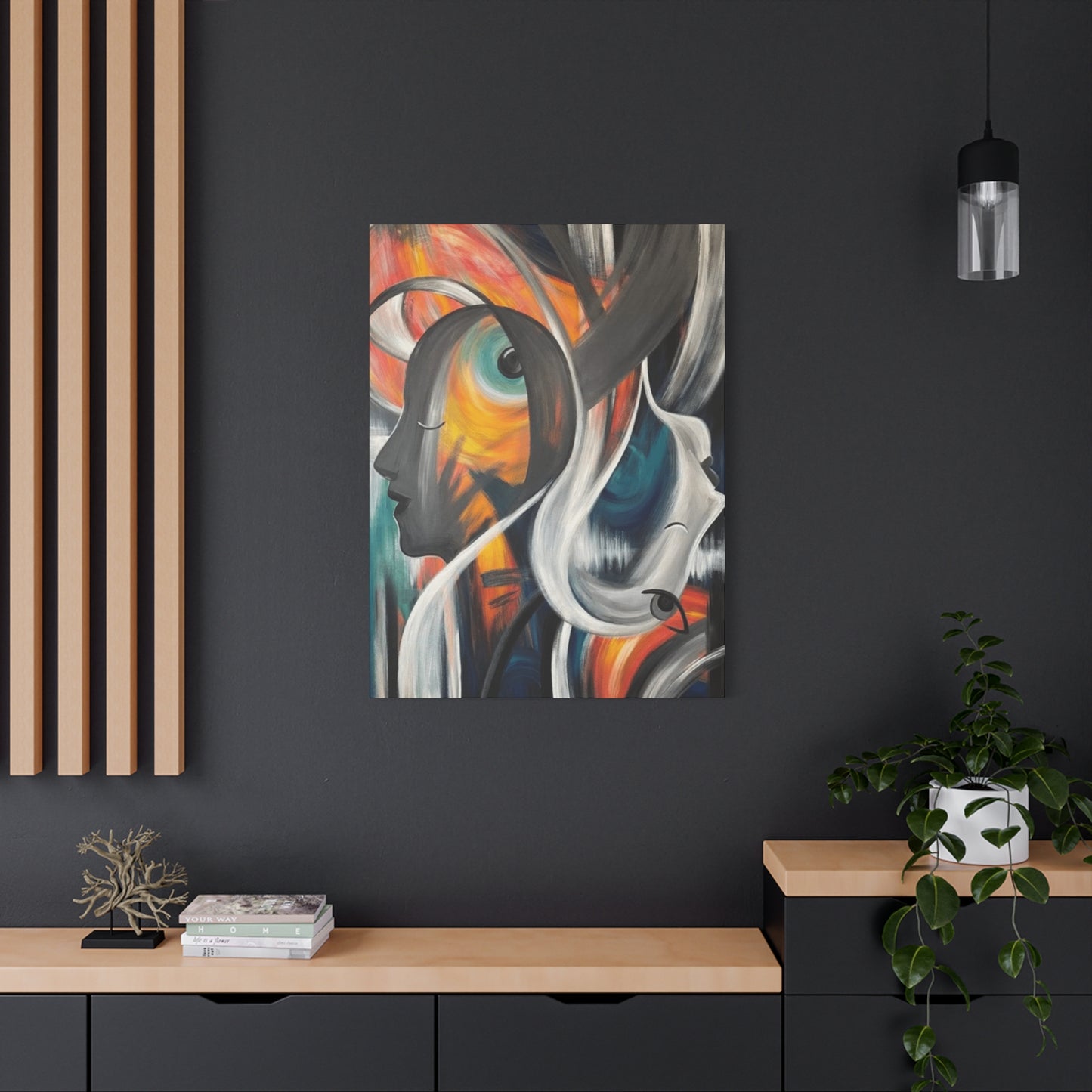


Abstract Faces Painting Wall Art & Canvas Prints
Abstract Faces Painting Wall Art & Canvas Prints
Couldn't load pickup availability
Finding the Captivating World of Abstract Faces Painting Wall Art
Abstract faces painting wall art represents a fascinating intersection where human emotion meets artistic interpretation through non-representational forms. This distinctive genre has transformed contemporary interior spaces, offering viewers an opportunity to engage with portraiture that transcends traditional boundaries. Unlike conventional portrait paintings that aim for photographic accuracy, abstract facial artworks invite multiple interpretations while maintaining recognizable human features within distorted, fragmented, or stylized compositions.
The allure of abstract faces painting wall art lies in its ability to communicate profound emotional narratives without relying on realistic depiction. Artists working within this genre manipulate shapes, colors, lines, and textures to suggest rather than explicitly portray human visages. This approach creates a dynamic viewing experience where each observer may perceive different moods, personalities, or stories within the same piece. The ambiguity inherent in these works becomes their greatest strength, encouraging viewers to project their own experiences and emotions onto the canvas.
Throughout decades of artistic evolution, abstract facial representations have emerged as powerful vehicles for exploring identity, consciousness, and the human condition. These paintings challenge our preconceptions about what constitutes a portrait while maintaining enough recognizable elements—an eye, a profile, the suggestion of a mouth—to anchor the composition in human experience. This delicate balance between representation and abstraction makes such artworks particularly compelling additions to residential and commercial spaces alike.
The Expressive Power Behind Distorted Visages
When examining abstract faces painting wall art, one encounters an extraordinary spectrum of emotional expression achieved through deliberate distortion and reimagination of human features. Artists employ various techniques to deconstruct and reconstruct facial elements, creating compositions that resonate on visceral levels. The intentional fragmentation of a face can evoke feelings of multiplicity, internal conflict, or the complexity of modern identity in ways that realistic portraiture cannot achieve.
The emotional impact of these works stems from their ability to bypass our logical mind and speak directly to our subconscious. A face rendered in unexpected colors—perhaps blue shadows meeting orange highlights—can communicate melancholy, contemplation, or otherworldliness without a single realistic detail. Similarly, overlapping profiles or multiple perspectives within a single composition suggest the many facets of personality we all contain, making viewers feel seen and understood in profound ways.
Artists deliberately manipulate proportion, perspective, and spatial relationships to enhance emotional resonance. An elongated face might convey isolation or aspiration, while a compressed composition could suggest pressure or intensity. The strategic placement of facial features—perhaps eyes positioned asymmetrically or a mouth rendered as a simple line—forces viewers to engage more actively with the work, filling in gaps and creating personal meaning from artistic suggestions rather than explicit statements.
Color psychology plays a paramount role in how abstract faces painting wall art communicates emotion. Warm palettes dominated by reds, oranges, and yellows typically evoke passion, energy, or warmth, while cooler blues, greens, and purples might suggest tranquility, sadness, or introspection. Artists frequently employ unexpected color combinations to create tension or harmony within the composition, guiding the viewer's emotional journey through strategic chromatic choices that complement the distorted facial elements.
The textural qualities of abstract facial paintings contribute significantly to their expressive power. Thick impasto applications create shadows and depth that change throughout the day as natural light shifts across the surface. Smooth, blended passages might represent calm or fluidity, while aggressive brushstrokes or palette knife marks can convey turbulence, passion, or psychological intensity. These textural variations invite viewers to experience the artwork not just visually but almost tactilely, imagining the feel of paint beneath their fingers.
Decoding Visual Language in Facial Abstractions
Abstract faces painting wall art employs a sophisticated visual vocabulary that communicates meaning through symbolic elements, compositional strategies, and artistic conventions. Understanding this language enriches the viewing experience and helps collectors select pieces that align with their personal aesthetic preferences and the emotional atmosphere they wish to create within their spaces. The intentional choices artists make regarding every aspect of composition contribute to the overall narrative and impact of the work.
Line quality serves as one of the fundamental building blocks in abstract facial compositions. Bold, confident lines might suggest strength or clarity of vision, while delicate, tentative marks could indicate fragility, uncertainty, or nuance. Curved lines typically create a sense of organic flow and natural movement, whereas angular, geometric lines introduce structure, tension, or modernity. Artists often combine different line qualities within a single composition to create visual interest and suggest psychological complexity.
The relationship between positive and negative space in abstract faces painting wall art dramatically affects how viewers perceive and interpret the work. Artists who leave significant portions of the canvas unpainted or minimally treated create breathing room that allows the facial elements to resonate more powerfully. Conversely, densely packed compositions with limited negative space can generate feelings of intensity, claustrophobia, or richness depending on how the artist manages color and form relationships throughout the piece.
Symbolism frequently appears in abstract facial artworks through the inclusion of particular motifs or elements beyond the face itself. Flowers might represent growth or femininity, geometric shapes could suggest order or modernity, while organic forms might indicate connection to nature or primitive impulses. These symbolic elements layer additional meaning onto the facial abstraction, creating richer, more complex narratives that reward careful observation and contemplation over time.
Artists working with abstract faces painting wall art often employ perspective manipulation to create psychological effects or suggest multiple viewpoints simultaneously. Cubist-inspired approaches present various angles of a face within a single composition, suggesting the impossibility of knowing someone completely or the multifaceted nature of identity. Flattened perspectives might evoke folk art traditions or intentionally subvert Western artistic conventions, while exaggerated perspectives can create dreamlike or surreal qualities that transport viewers beyond ordinary experience.
The interplay between representation and pure abstraction varies considerably across different works within this genre. Some pieces maintain clearly recognizable facial features surrounded by abstract elements, creating a comfortable entry point for viewers less familiar with non-representational art. Others push further toward complete abstraction, offering only subtle suggestions of a human presence through carefully positioned marks or shapes that our pattern-seeking minds assemble into facial impressions. This spectrum allows collectors to find works that match their personal comfort level with abstract art.
Chromatic Choices That Define Mood and Atmosphere
Color selection in abstract faces painting wall art functions as perhaps the most immediately impactful element, setting the emotional tone before viewers consciously register compositional details or subject matter. Artists carefully orchestrate palettes to evoke specific psychological responses, create visual harmony or tension, and establish connections between the artwork and the spaces it inhabits. The chromatic choices made during creation fundamentally shape how the piece will be experienced by viewers over time.
Monochromatic schemes employing variations of a single hue create unified, sophisticated compositions that emphasize form, texture, and tonal relationships rather than color contrast. Black and white abstract faces painting wall art carries particular power, stripping away color to focus attention on structure, emotion, and the interplay of light and shadow. These pieces often read as more serious or dramatic than colorful counterparts, making them excellent choices for minimalist interiors or spaces where the artwork should complement rather than dominate existing color schemes.
Analogous color schemes utilizing hues adjacent on the color wheel—such as blues flowing into greens or oranges melting into reds—create harmonious, pleasing compositions that feel cohesive and intentional. These palettes work particularly well in spaces designed for relaxation or contemplation, as the gentle color transitions support rather than challenge the viewer. Artists employing analogous schemes must rely on value contrast, texture, or line quality to create visual interest since the colors themselves exist in comfortable relationship with one another.
Complementary color combinations pairing opposites on the color wheel—purple with yellow, blue with orange, red with green—generate vibrant, energetic compositions that immediately capture attention. Abstract faces painting wall art employing complementary schemes creates natural focal points where these opposing colors meet, drawing the eye and creating dynamic visual movement throughout the composition. These pieces inject energy into spaces and work beautifully in areas meant for creativity, conversation, or activity rather than quiet reflection.
Unexpected or non-naturalistic color choices separate abstract facial paintings from traditional portraiture most dramatically. A face rendered in shades of purple and turquoise immediately signals departure from realistic representation, inviting viewers to engage with the emotional or conceptual content rather than focusing on accurate depiction. These bold chromatic decisions often reflect the artist's interpretation of the subject's inner state, personality, or energy rather than their physical appearance, creating portraits of essence rather than form.
The saturation level of colors significantly impacts the energy and accessibility of abstract faces painting wall art. Highly saturated, vivid colors create bold, confident statements that dominate their surroundings and demand attention. These pieces work beautifully as focal points in neutral spaces or in environments designed to energize and inspire. Desaturated or muted palettes, conversely, project sophistication, subtlety, and restraint. These works integrate more easily into varied interior schemes and often reward extended viewing as their nuances reveal themselves gradually rather than announcing themselves immediately.
Stylistic Movements Influencing Facial Abstraction
Abstract faces painting wall art draws inspiration from numerous artistic movements spanning more than a century of modern and contemporary art history. Understanding these influences provides context for appreciating different approaches to facial abstraction and helps collectors identify which stylistic directions resonate most strongly with their personal aesthetic preferences. Each movement contributed unique perspectives on how faces could be represented beyond traditional realistic portraiture.
Cubism's revolutionary fragmentation of form profoundly influenced how artists approach facial representation in abstract contexts. The movement's characteristic presentation of multiple viewpoints simultaneously and geometric decomposition of organic forms opened entirely new possibilities for portraiture. Artists creating abstract faces painting wall art often employ Cubist strategies of breaking faces into planes, showing profile and frontal views together, or reducing features to geometric essentials while maintaining recognizable human presence within the composition.
Expressionism's emphasis on emotional intensity over objective representation encouraged artists to distort, exaggerate, and reimagine facial features in service of psychological truth rather than physical accuracy. The movement's bold color choices, aggressive brushwork, and willingness to sacrifice beauty for emotional impact continue influencing contemporary abstract facial paintings. Works drawing from Expressionist traditions prioritize feeling, using visual elements as vehicles for transmitting inner states directly to viewers without the mediation of realistic depiction.
Surrealism's exploration of dreams, the unconscious mind, and unexpected juxtapositions expanded possibilities for facial representation beyond rational constraints. Abstract faces painting wall art influenced by Surrealism might feature impossible combinations of facial elements, dreamlike distortions, or symbolic objects integrated into the composition in ways that bypass logical understanding to communicate on deeper levels. These works often possess a mysterious, enigmatic quality that invites repeated viewing and continual reinterpretation.
The Fauvism movement's liberation of color from its descriptive function gave artists permission to employ any colors desired regardless of natural appearance, fundamentally changing possibilities for facial abstraction. Fauvist influence appears in abstract faces painting wall art through bold, unexpected chromatic choices that prioritize emotional or aesthetic impact over realistic representation. Green shadows, orange highlights, and purple skin tones become vehicles for expression rather than errors in observation, expanding the emotional range available to artists working with facial subjects.
Abstract Expressionism's emphasis on gestural mark-making, emotional directness, and the painting process itself influenced approaches to facial abstraction that prioritize spontaneity and authentic expression. Works drawing from this tradition might feature faces suggested through energetic brushstrokes, paint drips, or spontaneous marks rather than carefully planned compositions. This approach creates raw, immediate works that feel unfiltered and emotionally honest, appealing to collectors drawn to art that foregrounds the artist's authentic creative process.
Minimalism's reduction of visual elements to their essentials influenced abstract facial representations that achieve maximum impact through minimal means. Abstract faces painting wall art drawing from Minimalist principles might employ only a few carefully placed lines or shapes to suggest a face, relying on viewers' pattern recognition abilities to complete the image mentally. These sparse, refined works project sophistication and restraint while demonstrating profound understanding of what truly constitutes facial recognition in human perception.
Material Considerations for Lasting Impact
The physical materials and mediums employed in creating abstract faces painting wall art significantly affect both the visual characteristics and longevity of the work. Artists select materials based on desired effects, working methods, and intended permanence, while collectors should understand how different mediums behave over time and what environmental conditions best preserve their investments. The material choices made during creation continue influencing the artwork's appearance and condition for decades or centuries after completion.
Oil paint remains the traditional medium for fine art painting, offering unparalleled richness, depth, and archival stability when properly executed. Abstract faces painting wall art created in oils develops a luminous quality as light penetrates thin paint layers and reflects back from underlying layers and the canvas itself. Oil paint's slow drying time allows artists to blend colors seamlessly, create subtle transitions, and work back into passages over extended periods, enabling refinement and complexity difficult to achieve with faster-drying mediums.
Acrylic paint has gained prominence among contemporary artists creating abstract facial paintings due to its versatility, quick drying time, and ease of use. Acrylics can mimic watercolor's transparency when thinned or oil paint's opacity when used at full strength, giving artists tremendous flexibility in mark-making and layering. The medium's fast drying time enables rapid layering and prevents colors from muddying together, allowing for crisp edges and bold color juxtapositions that suit many abstract approaches to facial representation.
Mixed media approaches incorporating various materials—paint combined with collage elements, found objects, textiles, or other materials—add textural richness and conceptual complexity to abstract faces painting wall art. These works might incorporate magazine clippings, fabric scraps, metallic elements, or unconventional materials that add layers of meaning while creating visually engaging surfaces. Mixed media pieces often feel more contemporary and experimental than traditional paintings, appealing to collectors interested in pushing boundaries and embracing innovative artistic practices.
The support material onto which paint is applied affects both the appearance and stability of abstract faces painting wall art. Canvas remains the traditional choice, offering flexibility, portability, and a pleasant tooth that accepts paint readily. Wood panels provide rigid, stable supports that prevent warping and enable extremely smooth surfaces or heavy impasto applications without risk of sagging. Paper, while less permanent than canvas or panel, suits certain spontaneous or sketch-like approaches and offers particular advantages for water-based media.
Surface preparation through priming and underpainting establishes the foundation for successful abstract facial paintings. Traditional gesso priming creates a white, absorbent ground that enhances color brilliance, while toned grounds in grays, browns, or colors establish mood and help artists judge color relationships accurately during painting. Some contemporary artists work on unprimed surfaces, allowing natural material colors and textures to remain visible and contribute to the final composition, creating unique effects impossible on pure white grounds.
Protective varnishes applied after painting completion serve multiple functions, unifying surface sheen, protecting paint from environmental damage, and enhancing color depth. Glossy varnishes create reflective surfaces with maximum color saturation, while matte varnishes eliminate reflections and create subtle, sophisticated finishes. Satin varnishes split the difference, offering gentle sheen without excessive reflection. Collectors should understand that varnishing practices vary among artists, with some preferring the raw, unvarnished appearance of dried paint while others consider varnishing essential for protection and optimal visual presentation.
Spatial Relationships Between Art and Environment
Successful placement of abstract faces painting wall art requires thoughtful consideration of spatial relationships between the artwork, architectural features, furnishings, and human movement patterns within the space. The same piece can feel dramatically different depending on where and how it's displayed, making installation decisions nearly as important as the initial selection process. Understanding principles of scale, height, lighting, and contextual relationships enables collectors to maximize the impact of their artworks.
Scale relationships between artwork and wall space dramatically affect visual impact and spatial harmony. Oversized abstract faces painting wall art creates bold, confident statements that can anchor entire rooms, making them ideal focal points in spacious areas with generous wall expanses. Conversely, large pieces crammed onto small walls feel claustrophobic and overwhelming, failing to achieve their intended impact. Smaller works require careful consideration of surrounding elements and often benefit from grouping or strategic positioning to prevent them from disappearing against expansive wall areas.
Hanging height significantly influences viewer engagement with abstract facial paintings. The traditional guideline suggesting artwork centers should align with average eye level—approximately fifty-seven to sixty inches from the floor—works well for most residential situations. However, contextual factors including furniture placement, ceiling height, and viewing circumstances might suggest adjustments. Pieces intended for viewing while seated should hang lower, while artworks in areas where people predominantly stand might benefit from slightly elevated positioning.
Lighting conditions fundamentally transform how abstract faces painting wall art appears and should guide both placement decisions and artificial lighting installation. Natural light flooding onto artwork throughout the day creates ever-changing appearances as sun angle and intensity shift, bringing out different colors and details at different times. However, direct sunlight accelerates fading and should be avoided through strategic placement or window treatments. Artificial lighting offers control, with picture lights, track lighting, or directional fixtures enabling precise illumination that enhances specific qualities while protecting the work from damaging light exposure.
The relationship between abstract facial paintings and surrounding furniture, architectural features, and decor elements affects overall spatial coherence. Artworks positioned above furniture should relate proportionally, typically spanning roughly two-thirds to three-quarters of the furniture width to create visual balance. Colors, styles, and moods should complement rather than clash with surroundings, though strategic contrast can create effective visual interest. Consider sightlines from different positions within and approaching the space, ensuring the artwork reads clearly from primary viewing locations.
Grouping multiple pieces of abstract faces painting wall art creates gallery walls that build visual impact through cumulative effect while telling more complex stories than single works alone. Successful groupings balance consistency with variety, perhaps maintaining coherent color palettes or stylistic approaches while varying sizes, orientations, or specific subjects. Grid arrangements project order and formality, while salon-style asymmetrical groupings feel more casual and collected over time. Proper spacing between works—typically two to three inches—prevents compositions from feeling cluttered while maintaining visual unity.
Negative space surrounding abstract facial paintings functions as importantly as the artworks themselves, providing visual breathing room and preventing walls from feeling overcrowded. Resist the impulse to fill every available wall space, instead allowing significant empty areas that give the eye places to rest and enable featured artworks to resonate without competition. This restraint typically results in more sophisticated, intentional spaces than those where every available surface bears decoration.
Curatorial Approaches for Personal Collections
Building a cohesive collection of abstract faces painting wall art requires thoughtful curatorial strategies that balance personal passion with aesthetic coherence, investment considerations, and spatial realities. Whether assembling works from emerging artists or established masters, collectors benefit from developing clear criteria and approaches that guide acquisition decisions while remaining open to unexpected discoveries that might enrich and expand initial collection concepts.
Thematic collecting focusing on specific aspects of abstract facial representation creates coherent collections with clear identity and focus. Some collectors concentrate on particular emotional expressions—perhaps works exploring melancholy, joy, or contemplation—creating collections that delve deeply into specific psychological territories. Others might focus on particular stylistic approaches, color palettes, or formal strategies, building collections that explore variations within defined parameters rather than scattered accumulations of unrelated works.
Supporting emerging and mid-career artists offers collectors opportunities to acquire significant works while prices remain accessible and to participate meaningfully in artists' career development. Abstract faces painting wall art from less established creators often brings fresh perspectives and experimental approaches that established artists might have moved beyond. Building relationships directly with artists through studio visits, gallery openings, and correspondence enriches the collecting experience beyond simple acquisition, creating personal connections that deepen appreciation for owned works.
Balancing established and emerging artists within collections creates portfolios with both stability and growth potential. Works by recognized masters anchor collections with proven value and art-historical significance, while pieces from younger artists inject energy, contemporary relevance, and potential appreciation. This balanced approach spreads risk while ensuring collections feel current rather than entirely retrospective, maintaining connections to living artistic conversations rather than serving solely as historical documents.
Documentation practices preserve provenance, condition history, and contextual information that increases both personal enjoyment and potential resale value of abstract faces painting wall art. Maintain files for each work including purchase receipts, artist biographies, exhibition histories, condition reports, and any relevant correspondence or certificates of authenticity. Photograph works periodically to document condition and consult these images when assessing whether changes have occurred over time requiring professional attention.
Storage considerations for works not currently displayed protect investments and preserve condition for future enjoyment or resale. Abstract facial paintings should be stored in climate-controlled environments with stable temperature and humidity, away from direct sunlight, water sources, and potential pest activity. Canvas paintings should never be stored rolled for extended periods, as this can crack paint layers and distort the support. Proper storage solutions including archival materials and appropriate spacing prevent physical damage while maintaining accessibility for rotation or viewing.
Collection rotation keeps displayed works fresh and allows collectors to enjoy more pieces than simultaneously displayable space permits. Rotating abstract faces painting wall art seasonally or according to mood refreshes spaces without requiring new acquisitions and extends the life of works by reducing continuous light exposure. This practice also allows collectors to rediscover works after periods of storage, seeing them with fresh eyes and renewed appreciation after absence has reset familiarity.
Color Harmony Within Interior Schemes
Integrating abstract faces painting wall art successfully into existing or planned interior color schemes requires understanding how artworks interact with surrounding hues and how these relationships affect both the art and the space it inhabits. Strategic color coordination enhances both the artwork and the environment, creating cohesive visual experiences that feel intentional and sophisticated rather than haphazard or discordant.
Monochromatic room schemes employing variations of a single color provide elegant backdrops that allow colorful abstract facial paintings to truly shine as focal points. The relative neutrality of the surroundings prevents competition, letting the artwork's colors and content command attention without chromatic interference. This approach works particularly well when the artwork contains diverse colors that might clash with more assertive wall or furnishing colors, creating gallery-like environments where the art takes undisputed precedence.
Complementary relationships between artwork and interior colors create vibrant, energetic spaces with built-in visual excitement. If abstract faces painting wall art features predominantly cool tones, warm-toned walls or furnishings create pleasing contrast that makes both elements read more vibrantly. This approach suits spaces intended for activity, creativity, or social interaction, as the inherent energy of complementary relationships stimulates rather than soothes. Care must be taken to balance intensities, as fully saturated complementary colors can overwhelm if not tempered with neutral elements.
Analogous color schemes extending from artwork into interior palette create harmonious, flowing spaces where art and environment blend seamlessly. If a painting features blues and greens, incorporating these hues into textiles, furnishings, or accent walls creates color continuity that feels sophisticated and intentional. This approach works beautifully in spaces designed for relaxation and restoration, as the gentle color relationships support calm rather than stimulation. The challenge lies in creating enough contrast to maintain visual interest while preserving overall harmony.
Neutral backgrounds provide versatile foundations that accommodate diverse abstract faces painting wall art regardless of specific color content. White, off-white, gray, and beige walls create clean slates that allow artworks to define color direction without predetermined chromatic commitments. This flexibility proves particularly valuable for collectors who rotate displayed works or who have yet to settle on permanent collection directions. Neutral schemes also project sophistication and allow attention to focus on form, texture, and artistic content rather than color relationships.
Accent color strategies draw specific hues from abstract facial paintings into broader interior schemes through accessories, textiles, or smaller furnishing elements. This approach creates visual connections between art and environment without requiring complete color coordination throughout the space. Selecting one or two colors from a multicolored painting and echoing them in throw pillows, rugs, or decorative objects creates subtle unity while allowing the artwork to maintain its distinctiveness. This strategy proves particularly effective with complex, colorful pieces that contain numerous hues from which to draw accent inspiration.
Color temperature considerations affect how abstract faces painting wall art feels within spaces and whether chromatic relationships succeed or fail. Warm-toned paintings featuring reds, oranges, and yellows feel most at home in spaces with warm lighting and complementary warm undertones in furnishings and finishes. Cool-toned works in blues, greens, and purples sing in spaces with cooler lighting and finishes. Mixing warm and cool without intentional strategy often creates uncomfortable visual discord, while thoughtful temperature relationships support cohesion and comfort.
Sizing Strategies for Visual Impact
Selecting appropriately sized abstract faces painting wall art for specific spaces requires balancing multiple factors including wall dimensions, ceiling height, furniture scale, viewing distance, and desired visual impact. Neither a formulaic approach nor pure intuition alone ensures success; instead, thoughtful consideration of contextual factors and intended effects guides optimal sizing decisions that maximize both the artwork's presence and spatial harmony.
Proportional relationships between wall dimensions and artwork size provide starting points for appropriate scale determination. Interior designers traditionally suggest artwork should span roughly two-thirds to three-quarters of available wall width when positioned above furniture, creating balanced relationships that neither overwhelm the furniture nor disappear against the wall. For walls without furniture, artwork spanning one-third to half the wall width typically creates pleasing proportions, though these guidelines flex based on ceiling height, architectural features, and stylistic preferences.
Ceiling height significantly influences optimal artwork size and orientation. Standard eight-foot ceilings accommodate moderately sized pieces, while taller ceilings enable oversized abstract faces painting wall art that would overwhelm in lower-ceilinged spaces. Vertical compositions emphasize ceiling height and create upward movement that makes spaces feel taller, while horizontal orientations can make walls feel wider and spaces more expansive. Very tall ceilings might benefit from vertically stacked groupings or exceptionally large-scale individual works that properly engage the generous vertical dimension.
Viewing distance affects how artwork reads and what sizes function effectively in specific situations. Pieces intended for viewing from across large rooms can embrace bold, simplified compositions at larger scales, as details visible up close become unnecessary when primary viewing occurs from distance. Conversely, artworks positioned in intimate spaces where viewers approach closely benefit from moderate sizing and visual complexity that rewards close inspection without overwhelming when encountered at near range.
Statement-making oversized abstract faces painting wall art transforms into architectural elements that define and anchor spaces rather than merely decorating them. These commanding pieces require substantial wall space, strong installation methods, and often professional handling for safe delivery and mounting. The impact of properly scaled large artworks cannot be replicated through groupings of smaller pieces; the uninterrupted expanse of a single large composition creates different psychological effects than accumulated smaller elements, commanding attention through sheer presence and ambition.
Multiple smaller works grouped thoughtfully can create impact rivaling large individual pieces while offering flexibility in arrangement and lower per-piece investment. Collections of abstract faces painting wall art varying in size but related through color, style, or theme create dynamic compositions with visual rhythm and accumulated presence. This approach suits collectors building collections over time, as groupings can expand with new acquisitions without requiring removal of existing works or commitment to fixed compositions.
Intimate smaller works reward close viewing and suit personal spaces, hallways, or areas where monumental scale would overwhelm. These pieces often contain details and subtleties that larger works sacrifice for bold impact, creating rewards for viewers who approach and study them carefully. Small-scale abstract facial paintings work beautifully in bedroom settings, home offices, reading nooks, and other spaces designed for individual use rather than group gatherings, creating personal connections that oversized pieces cannot always achieve.
Investment Value and Market Considerations
Abstract faces painting wall art serves aesthetic and emotional functions primarily, but also represents potential financial investment requiring informed decision-making and realistic expectations. Understanding market factors affecting value helps collectors make prudent acquisition choices while maintaining focus on personal connection rather than purely financial considerations. The art market presents opportunities but also risks that merit careful attention.
Artist reputation and career trajectory significantly influence current pricing and future appreciation potential for abstract facial paintings. Works by established artists with exhibition histories at respected venues, museum collections, critical attention, and gallery representation command higher prices but offer greater market stability and liquidity. Emerging artists present affordability but uncertain value trajectories; some achieve breakthrough success while others remain obscure despite talent. Research exhibition histories, critical reception, and market performance indicators before significant investments.
Condition directly affects both present value and appreciation potential of abstract faces painting wall art. Works in excellent condition with stable paint layers, clean surfaces, and original stretchers maintain maximum value, while damaged, overcleaned, or poorly restored pieces sell at substantial discounts. Professional conservation when needed preserves both aesthetic quality and financial value, though restoration costs must be weighed against artwork value. Condition documentation through professional appraisals protects investments and facilitates insurance coverage.
Provenance documenting ownership history, exhibition records, and publication references enhances value and market desirability. Abstract facial paintings with exhibition histories at significant venues, previous ownership by notable collectors, or inclusion in published catalogues or art-historical studies command premiums over comparable works without distinguished provenance. Maintain documentation including bills of sale, exhibition records, and any published references to preserve and enhance this value-adding information.
Authentication concerns affect certain segments of the abstract facial painting market, particularly for works by deceased masters. Purchasing from reputable galleries or directly from living artists minimizes authentication risk. For secondary market acquisitions of significant works, professional authentication through recognized experts, artist foundations, or catalogue raisonné committees protects against purchasing forgeries or misattributed pieces. Authentication costs represent worthwhile investments for substantial purchases.
Market timing and cyclical nature of art markets mean purchase and sale timing significantly impact financial outcomes. Art markets generally trend upward long-term but experience periods of correction, stagnation, or decline. Collectors focused on personal enjoyment rather than short-term profit fare better psychologically and often financially, as holding periods measured in decades rather than years typically produce better outcomes. Attempting to time art market peaks and valleys rarely succeeds consistently.
Diversification within collections reduces risk from individual artwork depreciation or artist career stagnation. Rather than concentrating resources on few expensive pieces or single artists, building diverse collections across multiple artists, price points, and stylistic approaches spreads risk while increasing likelihood that some works appreciate significantly. This strategy also creates more interesting, dynamic collections than those focused narrowly on single artists or approaches.
Preservation Methods for Longevity
Proper care and preservation of abstract faces painting wall art protects aesthetic quality and financial value while ensuring works remain enjoyable for generations. Different materials require specific preservation approaches, but general principles regarding environmental conditions, handling practices, and periodic maintenance apply broadly across most painted artworks. Vigilance and informed stewardship prevent deterioration and preserve works in excellent condition.
Environmental stability regarding temperature and humidity prevents the most common deterioration issues affecting abstract facial paintings. Maintain spaces displaying artwork between sixty-five and seventy-five degrees Fahrenheit with relative humidity between forty and fifty-five percent. Wide fluctuations stress materials, causing expansion and contraction that cracks paint layers and warps supports. Canvas expands and contracts with humidity changes, creating stress on inflexible paint layers. Excessive humidity encourages mold growth, while extreme dryness desiccates materials, making them brittle and prone to damage.
Light exposure represents perhaps the greatest threat to long-term preservation of abstract faces painting wall art. Ultraviolet radiation causes fading, discoloration, and material degradation that cannot be reversed once occurred. Prevent direct sunlight from striking artwork through strategic placement away from windows or with UV-filtering glazing on windows. Artificial lighting should employ low-UV sources with moderate intensity, avoiding prolonged exposure to bright lights. Consider motion-activated lighting in less-frequently-used spaces to minimize cumulative exposure while maintaining visibility when spaces are occupied.
Physical protection from accidental damage prevents catastrophic losses that no restoration can fully remedy. Position abstract facial paintings away from high-traffic areas where contact with furniture, people, or objects might occur. In homes with children or pets, consider positioning vulnerable works higher on walls or in areas with restricted access. Acrylic glazing provides physical protection for works on paper or particularly valuable pieces, though glazing introduces reflections that may diminish viewing experience. Balance protection needs against aesthetic considerations based on individual circumstances and risk tolerance.
Cleaning practices require extreme caution to avoid causing damage exceeding any benefits. Dust accumulation should be addressed through gentle brushing with soft, natural-bristle brushes or careful vacuuming with brush attachments held slightly away from surfaces. Never apply water, cleaning solutions, or pressure directly to painted surfaces without professional guidance. Stubborn soiling, discoloration, or concerns about condition warrant professional conservation assessment rather than amateur intervention that might cause irreversible harm.
Periodic condition monitoring enables early detection of deteriorating conditions before major damage occurs. Examine abstract faces painting wall art regularly for signs of paint flaking, cracking, canvas sagging, discoloration, mold growth, or insect activity. Photograph works periodically under consistent lighting to document condition and provide comparison points for assessing whether changes occur over time. Early intervention prevents minor issues from escalating into major conservation challenges requiring extensive professional treatment.
Professional conservation services preserve artworks experiencing deterioration or damage beyond basic maintenance. Conservators possess specialized knowledge, materials, and techniques for stabilizing, cleaning, and repairing paintings while maintaining artistic integrity and authenticity. Relationships with qualified conservators specializing in painted artworks provide resources when issues arise. Conservation costs vary widely based on treatment complexity but represent worthwhile investments for valuable works or pieces with strong personal significance warranting professional care.
Aesthetic Philosophies Informing Creation
Understanding philosophical approaches informing abstract faces painting wall art creation enriches appreciation and guides interpretation of specific works. Artists working in this genre draw from diverse aesthetic theories regarding art's purpose, meaning-making processes, and relationships between form and content. These underlying philosophies shape creative decisions and establish frameworks through which viewers can engage more deeply with completed works.
Expressionist philosophies privilege emotional authenticity and subjective experience over objective representation or formal beauty. Artists embracing expressionist approaches use abstract facial forms as vehicles for transmitting internal states directly to viewers, prioritizing psychological truth over physical accuracy. Distortions, exaggerations, and unconventional color choices serve emotional communication rather than descriptive functions. This philosophy values raw honesty and unmediated feeling, viewing art as fundamentally about human-to-human connection through shared emotional experience.
Formalist perspectives focus on visual elements—color, line, shape, composition—as valuable in themselves rather than primarily as vehicles for external meaning. Artists working from formalist positions create abstract faces painting wall art where compositional relationships and aesthetic qualities matter more than symbolic content or emotional expression. The arrangement of forms, color harmonies, and surface qualities become the primary content rather than serving representational or communicative functions. This philosophy asserts art's value lies in aesthetic experience itself rather than in messages or meanings conveyed.
Symbolist approaches embed meanings through symbolic elements, colors, or compositional strategies that communicate beyond surface appearances. Abstract facial paintings created from symbolist perspectives include coded references, archetypal imagery, or culturally specific symbols that reward informed interpretation. Colors might carry symbolic weight beyond pure aesthetic function, while specific elements within compositions reference myths, psychological concepts, or spiritual traditions. This philosophy creates layered works that reveal additional dimensions to viewers possessing relevant cultural or personal knowledge.
Final Thoughts
The world of abstract face painting wall art is a captivating and evolving space, offering an array of emotions, interpretations, and perspectives that resonate with every viewer differently. As art continues to transform and expand, abstract faces emerge as a unique and powerful representation of human expression—simplified, exaggerated, and, at times, enigmatic. These pieces break the barriers of traditional portraiture, challenging the viewer to reconsider how they perceive the human form and emotion.
At the core of abstract face art is the notion that a face is more than just an arrangement of eyes, nose, and mouth. It is a window into identity, mood, and even the subconscious. Artists who delve into the abstraction of faces use their medium as a way to strip down the complexities of human appearance to essential elements—curves, angles, and colors that suggest a human presence without necessarily adhering to realistic proportions. This approach leaves ample room for interpretation, inviting viewers to infuse their personal narratives into the work.
The beauty of abstract faces lies in their ability to evoke emotion without offering a clear-cut message. Unlike more literal forms of art, which often come with a specific storyline or symbolism, abstract faces let each individual viewer navigate their emotional responses. For some, the jagged lines and vibrant hues may evoke feelings of tension or conflict, while for others, softer strokes and pastel tones might bring about a sense of calm and serenity. This wide spectrum of emotional resonance makes abstract face art universally accessible, whether it’s displayed in a home, gallery, or office space.
One of the most alluring aspects of abstract faces in wall art is their versatility. The style easily adapts to a variety of interiors, from contemporary minimalist designs to more eclectic and bohemian settings. The ability of abstract face paintings to stand out or blend seamlessly with other pieces or decor is a key factor in their popularity. Their abstract nature often invites conversation and intrigue, making them the focal point of any room. The play between abstraction and figuration creates a sense of mystery, inviting viewers to spend more time contemplating the meaning behind each brushstroke and shape.
Moreover, the rise of digital platforms has made abstract face art more accessible than ever before. Online marketplaces, social media, and virtual galleries have allowed both established and emerging artists to reach a global audience. As a result, there is a greater diversity of styles and interpretations, from geometric and angular representations to more fluid and organic designs. This variety enables art lovers to find something that speaks to their unique sensibilities and aesthetic preferences.
However, the appeal of abstract face art goes beyond its visual impact. It has a deep-rooted connection to cultural and psychological themes. Many abstract face paintings subtly engage with the concept of identity, highlighting the fragmentation and fluidity of how we perceive ourselves and others. In a world where identity is often subject to external influence and internal conflict, these paintings serve as a mirror, reflecting the complexity of the human condition in ways that traditional portraits simply cannot.
In conclusion, abstract face paintings hold a timeless allure for those who seek a deeper, more personal connection with art. Their multifaceted nature provides endless opportunities for interpretation, conversation, and introspection. Whether you’re drawn to the raw energy of bold brushstrokes or the delicate grace of minimalistic designs, abstract face art has a unique power to both captivate and provoke. It continues to evolve, reshaping our understanding of how human faces can be represented, appreciated, and explored in the realm of contemporary art. In this captivating world, every face tells a different story—one that is waiting to be discovered.
Share