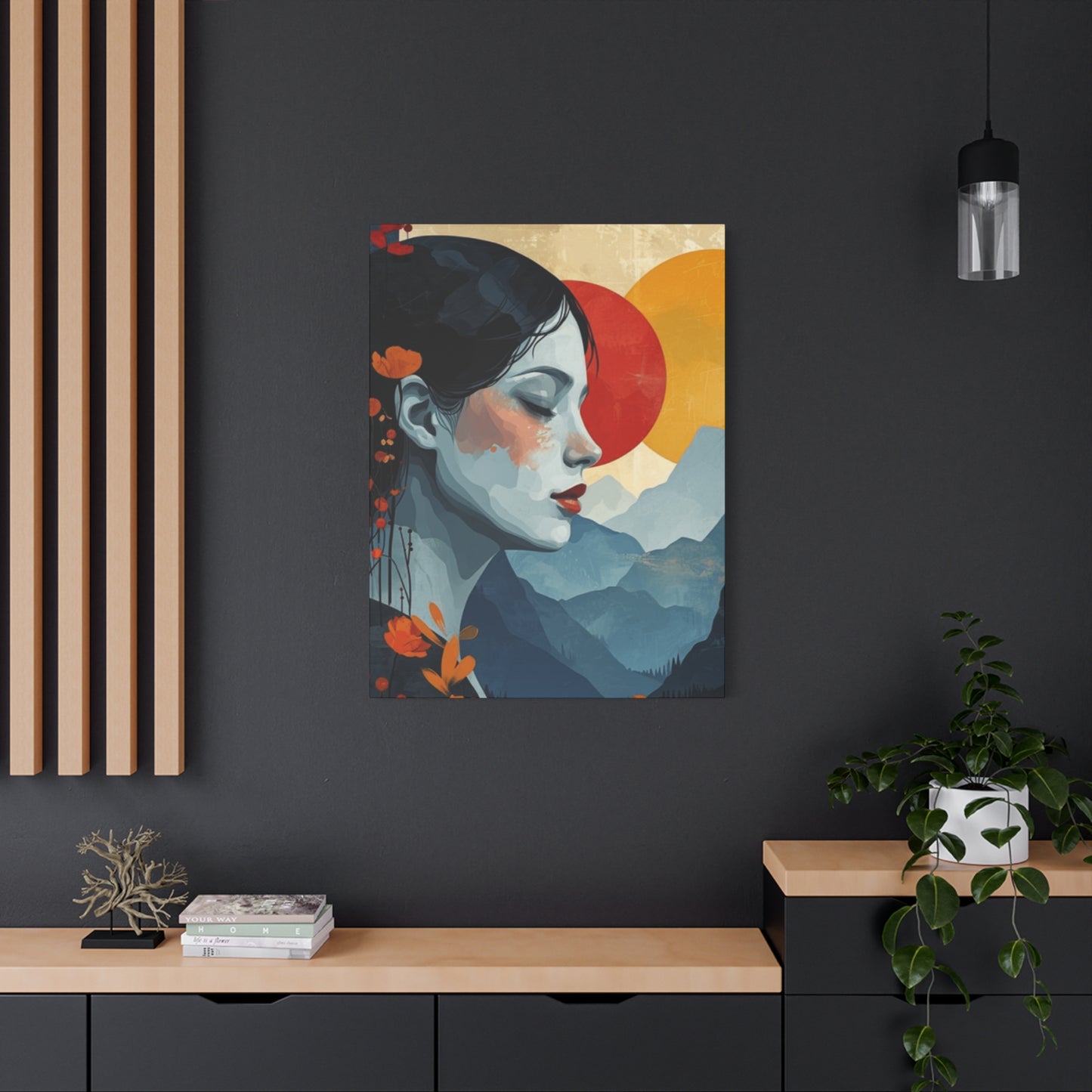
A Women With Flowers Wall Art & Canvas Prints
A Women With Flowers Wall Art & Canvas Prints
Couldn't load pickup availability
Experience the Timeless Beauty of A Woman With Flowers Wall Art: Feminine Elegance for Contemporary Spaces
The intersection of feminine grace and botanical splendor has created one of the most sought-after decorative elements in contemporary interior design. A woman with flowers wall art represents more than mere decoration; it embodies a profound connection between human emotion and natural beauty that resonates across cultures and generations. This artistic expression has evolved from classical portraiture to modern interpretations, offering homeowners an opportunity to infuse their spaces with elegance, sophistication, and meaningful visual narratives.
The Enduring Appeal of Feminine Botanical Portraiture in Contemporary Homes
Throughout centuries, artists have been captivated by the delicate interplay between woman and floral elements, creating compositions that speak to the soul. A woman with flowers wall art captures this timeless fascination, presenting viewers with imagery that simultaneously celebrates femininity, natural beauty, and artistic expression. The popularity of such artwork stems from its ability to evoke multiple emotional responses while maintaining aesthetic versatility that complements various interior design schemes.
The human brain processes facial features and natural elements through different neural pathways, creating a unique cognitive experience when both are presented together. When observing a woman with flowers wall art, viewers engage both their social recognition systems and their appreciation for natural beauty, resulting in a deeply satisfying visual experience. This dual engagement explains why such artwork creates lasting impressions and why people rarely tire of viewing these compositions in their daily environments.
Contemporary interpretations of feminine botanical portraiture have expanded beyond traditional representations to include abstract expressions, mixed media compositions, and culturally diverse representations. Modern artists explore themes of empowerment, environmental consciousness, and identity through the symbolic language of flowers combined with feminine imagery. This evolution has made a woman with flowers wall art relevant to diverse audiences seeking meaningful decorative elements that reflect their values and aesthetic preferences.
Exploring Various Artistic Styles and Interpretations of Floral Feminine Imagery
The realm of feminine botanical artwork encompasses an extraordinary range of artistic approaches, each offering distinct visual characteristics and emotional resonances. Realistic representations showcase meticulous attention to botanical accuracy and human anatomy, creating lifelike compositions that demonstrate technical mastery. These pieces often feature detailed renderings of specific flower varieties, allowing viewers to appreciate both the subject's humanity and the intricate beauty of individual petals, stamens, and leaves.
Impressionistic interpretations of a woman with flowers wall art prioritize mood and atmosphere over precise detail, using loose brushwork and vibrant color palettes to convey emotional essence rather than photographic accuracy. These compositions invite viewers to engage their imagination, filling in details and creating personal interpretations of the imagery. The softness inherent in impressionistic techniques particularly suits subjects combining feminine features with delicate floral elements, creating dreamlike qualities that transform ordinary spaces into contemplative sanctuaries.
Abstract expressions push boundaries further, deconstructing recognizable forms into shapes, colors, and textures that suggest rather than depict their subjects. Contemporary artists working in this vein might fragment facial features and scatter them among stylized botanical forms, or use floral patterns to construct feminine silhouettes. These innovative approaches to a woman with flowers wall art appeal to collectors seeking thought-provoking pieces that challenge conventional representation while maintaining thematic connections to beauty and nature.
Minimalist interpretations strip away extraneous elements, focusing on essential lines and forms to convey their subjects with economy and elegance. A simple profile outlined in black ink with a single flower accent can prove as compelling as elaborate compositions, demonstrating that artistic impact doesn't necessarily correlate with complexity. Such restrained approaches suit contemporary interiors where simplicity and intentionality guide design choices, allowing the artwork to make statements without overwhelming surrounding elements.
Color Palettes That Transform Rooms and Influence Emotional Atmospheres
Color selection in a woman with flowers wall art profoundly affects both the aesthetic impact of the piece and the emotional atmosphere it creates within a space. Warm palettes featuring reds, oranges, and yellows generate energy and vitality, making them excellent choices for social spaces where conversation and activity predominate. These hues stimulate appetite and engagement, explaining their popularity in dining rooms and entertainment areas where warmth and hospitality matter most.
Cool color schemes incorporating blues, greens, and purples promote tranquility and contemplation, ideal for bedrooms, bathrooms, and personal retreats where relaxation takes priority. When selecting a woman with flowers wall art for restful spaces, pieces featuring lavender fields, blue hydrangeas, or eucalyptus create soothing environments that facilitate decompression after demanding days. The psychological effects of cool colors include reduced heart rate and blood pressure, making them particularly valuable in spaces dedicated to wellness and restoration.
Monochromatic compositions using variations of a single hue offer sophisticated elegance while simplifying coordination with existing decor. Black and white renditions of a woman with flowers wall art provide dramatic contrast and timeless appeal, working seamlessly with both minimalist and maximalist interior approaches. The absence of color directs attention to composition, texture, and form, allowing viewers to appreciate artistic structure without chromatic distraction.
Pastel palettes featuring soft pinks, mint greens, pale yellows, and powder blues create gentle, approachable atmospheres particularly suited to nurseries, craft rooms, and spaces designed for creative pursuits. These subdued tones neither demand attention nor recede entirely, striking a balance that supports focus without causing visual fatigue. A woman with flowers wall art rendered in pastels brings subtle beauty that enhances rather than dominates its environment.
Selecting the Perfect Size and Placement for Maximum Visual Impact
Determining appropriate dimensions for a woman with flowers wall art requires careful consideration of wall dimensions, ceiling height, furniture placement, and viewing distances. The relationship between artwork size and wall space follows principles that guide the eye and create harmonious proportions. As a general guideline, artwork should occupy roughly two-thirds to three-quarters of the available wall space above furniture pieces, creating visual connection without appearing cramped or lost.
Large-scale pieces measuring five feet or more in width create dramatic focal points that anchor entire rooms, making bold statements about style preferences and design priorities. Such substantial works function best on walls with minimal competition from windows, doors, or architectural features that might fragment visual attention. When incorporating oversized a woman with flowers wall art, ensure sufficient viewing distance exists—typically one and a half to two times the artwork's width—allowing viewers to appreciate the composition without strain.
Medium-sized pieces ranging from two to four feet offer versatility, working effectively above sofas, beds, consoles, and in hallways where smaller works might appear insignificant. These proportions provide presence without overwhelming, making them accessible choices for those new to collecting or decorating with statement pieces. A woman with flowers wall art in medium dimensions can stand alone or anchor gallery wall arrangements incorporating complementary pieces.
Small-scale works measuring under two feet suit intimate spaces, create visual interest in unexpected locations, and work beautifully in curated collections. Consider placing smaller a woman with flowers wall art in powder rooms, on narrow wall sections between doorways, or as part of salon-style groupings where multiple pieces create collective impact. The key to successfully displaying smaller works lies in thoughtful placement at appropriate heights—typically with centers at eye level, approximately sixty to sixty-five inches from the floor.
Creating Gallery Walls That Tell Cohesive Visual Stories
Gallery wall arrangements offer opportunities to showcase multiple pieces of a woman with flowers wall art alongside complementary imagery, creating personalized exhibitions that reflect individual taste and interests. Successful gallery walls balance variety with cohesion, incorporating different sizes, frames, and subjects while maintaining unifying elements that prevent visual chaos. Begin planning by laying out potential arrangements on the floor, experimenting with configurations before committing to wall mounting.
Symmetrical grid arrangements provide structured elegance, aligning pieces in precise rows and columns with equal spacing throughout. This approach works particularly well with uniform frames and similarly sized pieces, creating gallery-like formality appropriate for traditional or transitional interiors. When building symmetrical displays featuring a woman with flowers wall art, consistency in matting and frame style strengthens cohesion while allowing subject matter to vary.
Asymmetrical salon-style arrangements embrace organic growth patterns, clustering pieces of varying sizes around a central anchor work. This approach allows greater flexibility, accommodating existing collections while leaving room for additions over time. Start with the largest piece—perhaps a substantial a woman with flowers wall art—positioned slightly off-center, then build outward, maintaining relatively consistent spacing of two to three inches between frames.
Horizontal linear arrangements work beautifully in hallways, above lengthy furniture pieces, and in spaces with strong horizontal emphasis. Align pieces along their centers or bases rather than tops, creating visual flow that guides the eye along the arrangement. This configuration suits collections of similarly sized works, perhaps multiple interpretations of a woman with flowers wall art in different styles or color palettes, creating thematic continuity within structured presentation.
Framing Choices That Enhance Artwork While Complementing Interiors
Frame selection significantly influences how a woman with flowers wall art integrates with surrounding decor, either highlighting the artwork's inherent qualities or detracting through mismatched aesthetics. The frame serves as transition between artwork and environment, mediating between the two while protecting the piece and facilitating mounting. Understanding frame components—molding, mat, glazing, and backing—enables informed decisions that serve both preservation and presentation goals.
Wood frames offer warmth and natural texture, available in countless finishes from raw oak to ebonized walnut. Light woods like maple, ash, and birch suit Scandinavian and contemporary aesthetics, while rich mahogany and cherry complement traditional settings. When framing a woman with flowers wall art with prominent warm tones, consider frames with similar undertones to create harmonious relationships between piece and presentation.
Metal frames provide sleek modernity, with options including brushed aluminum, polished brass, matte black steel, and antiqued bronze. These materials suit contemporary and industrial interiors while offering durability and clean lines that don't compete with artwork for attention. Thin metal frames work particularly well with minimalist interpretations of a woman with flowers wall art, maintaining the pieces' restrained aesthetic through understated presentation.
Ornate frames featuring carved details, gilded finishes, and substantial moldings bring baroque elegance appropriate for traditional and maximalist interiors. These elaborate presentations elevate artwork through luxurious surroundings, signaling importance and preciousness. When selecting ornate frames for a woman with flowers wall art, ensure the frame's elaboration doesn't overwhelm the piece itself—balance remains crucial even within opulent presentations.
Matting creates breathing room between artwork and frame, preventing visual crowding while offering opportunities for color coordination. Standard white and cream mats maintain neutral elegance, while colored mats can echo hues within the artwork or complement wall colors. For a woman with flowers wall art, consider pulling mat colors from less dominant floral hues rather than obvious choices, creating subtle sophistication that rewards closer examination.
Lighting Strategies That Bring Artwork to Life While Protecting Investment
Proper illumination transforms a woman with flowers wall art from static decoration into dynamic focal point, revealing colors, textures, and details that insufficient lighting leaves hidden. Natural light provides ideal viewing conditions during daylight hours but carries risks including fading, discoloration, and deterioration. Direct sunlight proves particularly damaging, with ultraviolet radiation breaking down pigments and substrates over time. Position valuable pieces away from windows receiving direct sun exposure, or use UV-filtering window treatments to mitigate damage while maintaining natural illumination.
Picture lights mounted directly above or below artwork provide focused illumination specifically designed for highlighting wall-hung pieces. These fixtures typically extend from the wall or frame, directing light across the artwork's surface at angles minimizing glare while maximizing visibility. When installing picture lights for a woman with flowers wall art, adjustable fixtures offer flexibility to fine-tune lighting angles, accommodating different viewing positions and times of day.
Track lighting systems deliver versatility, allowing multiple fixtures to illuminate various artworks from a single power source while offering adjustability as collections evolve. Position track heads to direct light at thirty-degree angles relative to wall surfaces, reducing glare and shadows while providing even illumination. This approach works particularly well in rooms displaying multiple pieces of a woman with flowers wall art, enabling independent adjustment of each fixture to suit specific works.
Recessed ceiling fixtures with adjustable trims provide subtle illumination without visible hardware, maintaining clean sightlines in contemporary spaces where exposed fixtures might disrupt minimalist aesthetics. These installations require planning during construction or renovation, as proper positioning relative to artwork locations matters significantly. Calculate placement so light falls on artwork centers without creating hot spots or leaving edges in shadow.
Ambient lighting from table lamps, floor lamps, and overhead fixtures contributes to overall visibility while creating layered lighting schemes with depth and dimension. While not specifically targeting artwork, ambient sources influence how colors appear and how comfortably viewers can appreciate a woman with flowers wall art within the broader room context. Avoid positioning lamps where they cast shadows across artwork or create bright reflections on glazing.
Caring for Artwork to Preserve Beauty Across Decades
Responsible stewardship ensures a woman with flowers wall art remains as captivating decades after acquisition as during initial installation. Different media require specific care approaches, though universal principles apply across categories. Avoid exposing artwork to extreme temperature fluctuations, excessive humidity, tobacco smoke, cooking fumes, and other environmental contaminants that accumulate on surfaces and penetrate substrates over time.
Canvas pieces benefit from gentle dusting using soft, clean brushes that lift accumulated particles without abrading paint surfaces. Work from top to bottom with light strokes, allowing gravity to assist in removing debris. Avoid feather dusters, which can leave oils and snag on textured surfaces. For valuable or antique a woman with flowers wall art, consider professional cleaning every few years to address accumulation that household dusting cannot remove.
Works behind glass require cleaning of both glazing and, periodically, the space between glass and artwork where dust penetrates despite sealed backs. Use microfiber cloths dampened with water or glass cleaner applied to the cloth rather than directly to glass, preventing liquid from seeping into frame channels. Clean with circular motions followed by vertical and horizontal passes, eliminating streaks and ensuring uniform clarity when viewing a woman with flowers wall art.
Paper-based pieces including prints and watercolors prove particularly vulnerable to environmental damage, requiring careful attention to humidity levels, light exposure, and handling practices. Store unframed works flat in acid-free folders within archival boxes, separating pieces with glassine or acid-free tissue. Never stack framed paper works directly atop one another, as weight can cause glazing to press against artwork, potentially creating permanent contact marks or fostering mold growth in humid conditions.
Monitor artwork regularly for signs of deterioration including color fading, paper discoloration, mold growth, insect damage, and frame degradation. Address issues promptly, consulting professional conservators for valuable or sentimental pieces of a woman with flowers wall art. Prevention proves far more effective and economical than remediation, making vigilant monitoring and environmental control worthwhile investments in collection longevity.
Incorporating Artwork Into Various Interior Design Schemes and Aesthetics
The versatility of a woman with flowers wall art allows successful incorporation across diverse design vocabularies, from traditional elegance to cutting-edge contemporary styling. Understanding how different aesthetics approach color, form, and ornamentation enables selections that enhance rather than clash with established schemes. The key lies in identifying connecting elements—whether color relationships, stylistic affinities, or thematic resonances—that bridge artwork and environment.
Traditional interiors characterized by rich woods, classic furniture silhouettes, and formal arrangements welcome realistic or impressionistic interpretations of a woman with flowers wall art featuring recognizable flowers and refined compositions. Ornate gilt frames, silk matting, and careful attention to symmetry in placement reinforce the formality such spaces embody. Select pieces with color palettes incorporating burgundies, deep greens, golds, and creams that harmonize with traditional textile and wallcovering choices.
Contemporary spaces defined by clean lines, neutral palettes, and uncluttered surfaces benefit from abstract or minimalist renditions of a woman with flowers wall art that echo the restraint evident in furnishings and architecture. Simple frames in metal or streamlined wood maintain visual consistency while allowing artwork to provide the color and organic forms that prevent sterility. Scale matters significantly in contemporary settings—don't shy from substantial pieces that hold their own against spare backdrops.
Bohemian aesthetics embracing eclecticism, global influences, and layered textures welcome vibrant, diverse collections of a woman with flowers wall art in various styles, sizes, and frames. This approach encourages mixing vintage and contemporary pieces, combining different artistic media, and creating salon-style arrangements that reflect personal journeys and diverse influences. Rich colors, mixed metallics in frames, and asymmetrical placements align with bohemian principles celebrating individuality over convention.
Scandinavian design prioritizing functionality, natural materials, and subdued palettes finds ideal companionship in a woman with flowers wall art featuring clean compositions, limited color schemes, and emphasis on negative space. Light woods, white or cream matting, and streamlined frames maintain the aesthetic coherence such spaces require. Select pieces depicting minimalist interpretations of botanical femininity that provide gentle visual interest without disrupting the tranquility central to Nordic design philosophy.
Sourcing Original Artwork Versus Reproductions and Understanding Value Propositions
Collectors and decorators face fundamental choices between original artworks created as unique pieces and reproductions manufactured in quantities ranging from limited editions to mass-market prints. Each option presents distinct advantages, limitations, and value propositions worthy of consideration when selecting a woman with flowers wall art. Original pieces carry intrinsic uniqueness—no identical version exists elsewhere—while reproductions offer accessibility to imagery that might otherwise remain beyond reach.
Original paintings, drawings, and mixed media works command premium prices reflecting the artist's time, skill, materials, and the work's singularity. Acquiring original a woman with flowers wall art represents both aesthetic and financial investment, with potential for appreciation depending on the artist's trajectory and market forces. The tactile qualities of original works—visible brushstrokes, paper texture, layered media—provide sensory dimensions that reproductions cannot replicate, creating more intimate viewer experiences.
Limited edition prints numbered and signed by artists occupy middle ground, offering affordability while maintaining collectible status through controlled quantities. When purchasing limited edition a woman with flowers wall art, verify edition size, numbering, artist signature, and certificate of authenticity. Smaller editions typically command higher prices and offer greater potential for value retention, though artistic merit matters more than scarcity in determining long-term satisfaction.
Open edition prints manufactured without quantity limits provide the most accessible entry point for acquiring a woman with flowers wall art, allowing broad audiences to enjoy imagery at modest costs. While these pieces lack collectible value, they serve decorative purposes effectively and can be replaced easily if tastes evolve. Modern printing approaches including giclée produce reproductions with remarkable color accuracy and longevity, narrowing quality gaps between originals and copies.
Digital artwork and NFTs represent emerging categories that challenge traditional definitions of originality and ownership. Digital artists create a woman with flowers wall art existing primarily in electronic form, displayed via screens or projectors rather than physical substrates. NFT ownership conveys rights to unique digital files despite potentially unlimited viewing copies existing online. This evolving landscape offers new opportunities for artists and collectors while raising questions about value, authenticity, and permanence.
Commissioning Custom Pieces That Reflect Personal Vision and Spaces
Commissioning custom a woman with flowers wall art provides opportunities to realize specific visions perfectly suited to particular spaces and aesthetic preferences. This collaborative process between patron and artist yields unique pieces that off-the-shelf options cannot match, though it requires greater time investment, clear communication, and often higher financial outlay. The result—artwork created specifically for your home and preferences—offers satisfaction that pre-existing works rarely provide.
Begin by identifying artists whose existing work demonstrates stylistic affinities with your vision. Review portfolios seeking technical competence, compositional strength, and aesthetic approaches that resonate with your sensibilities. Many artists welcome custom commissions while others prefer complete creative freedom, so verify receptiveness before investing time in detailed discussions about potential a woman with flowers wall art projects.
Prepare reference materials illustrating desired elements including color palettes, compositional arrangements, specific flowers, and overall mood. Collect magazine clippings, photographs, and examples of existing artworks that capture aspects of your vision, even if no single reference encompasses your complete concept. Clear visual references minimize miscommunication and provide starting points for discussions about how to achieve your goals for a woman with flowers wall art within the artist's creative vocabulary.
Discuss practical considerations including dimensions, medium, substrate, framing preferences, and timeline. Be forthcoming about budget constraints early in conversations, allowing artists to propose approaches achievable within financial parameters. Commission costs typically reflect the artist's experience, the work's size and complexity, and material expenses. Expect to provide deposits before work commences, with final payment upon satisfactory completion.
Establish clear communication protocols and milestone check-ins throughout the creation process. Many artists provide progress photographs or sketches for approval before proceeding to subsequent stages, allowing course corrections before significant work is completed. This collaborative approach ensures the finished a woman with flowers wall art meets expectations while respecting the artist's creative process and expertise.
Seasonal Rotation Strategies for Keeping Interiors Fresh and Dynamic
Rotating artwork provides opportunities to refresh spaces without major redecorating efforts, keeping homes feeling current and responsive to seasonal shifts. This practice allows collectors to enjoy larger collections than wall space might suggest, bringing different pieces of a woman with flowers wall art to prominence as seasons change and moods evolve. Strategic rotation also protects artwork by limiting light exposure and allowing pieces time in dark storage where deterioration essentially ceases.
Spring rotations might emphasize a woman with flowers wall art featuring cherry blossoms, tulips, daffodils, and other early bloomers that echo outdoor transformations. Light, fresh color palettes with yellows, pale pinks, and spring greens align with lengthening days and renewed energy after winter's dormancy. This seasonal connection creates harmony between interior and exterior environments, acknowledging natural cycles through deliberate aesthetic choices.
Summer selections often feature bolder colors, more exuberant compositions, and flowers associated with peak growing seasons. A woman with flowers wall art depicting sunflowers, peonies, roses, and lavender brings outdoor abundance inside, creating visual continuity with gardens and landscapes at their most prolific. Vibrant, saturated hues suit summer's intensity, matching the season's energy and extended daylight hours.
Autumn rotations transition toward warmer palettes featuring oranges, deep reds, golden yellows, and rich browns that mirror falling leaves and harvest abundance. A woman with flowers wall art incorporating chrysanthemums, marigolds, or autumn foliage creates cozy atmospheres appropriate for the turning season. Richer, more saturated tones provide visual warmth as temperatures drop and daylight diminishes.
Winter displays often embrace elegance and restraint, featuring a woman with flowers wall art with cooler palettes, more formal compositions, and perhaps metallic accents that echo holiday decorating. Whites, silvers, deep greens, and burgundies suit winter's introspective mood while connecting to seasonal celebrations. Alternatively, use winter months to display summer florals, providing visual warmth and reminders of warmer seasons during the year's darkest months.
Pairing Artwork With Complementary Decorative Elements for Cohesive Rooms
Successfully integrating a woman with flowers wall art requires considering relationships with surrounding decorative elements including furniture, textiles, accessories, and architectural features. These relationships can either reinforce the artwork's impact through thoughtful coordination or diminish it through competing visual demands. Strategic pairing creates cohesive environments where each element contributes to unified aesthetic statements.
Textile selections offer primary opportunities for coordinating with a woman with flowers wall art, whether through throw pillows, window treatments, upholstery, or area rugs. Pull accent colors from less dominant hues within the artwork rather than obvious primary colors, creating sophisticated connections that reward attention. A single shared accent color between artwork and textiles establishes visual relationships without literal matching that can appear contrived.
Furniture placement relative to artwork significantly affects viewing experience and room flow. Position seating to allow comfortable viewing of a woman with flowers wall art without neck strain, ideally with the artwork's center falling within natural sight lines from primary seating locations. Avoid blocking sight lines with tall furniture or creating competition between architectural focal points and artwork placement.
Accessory groupings on nearby surfaces can echo themes, colors, or forms from a woman with flowers wall art without literal representation. If the artwork features roses, fresh or preserved roses in adjacent vases create connections while bringing three-dimensional elements into conversation with two-dimensional representation. Similarly, sculptural objects, books with related themes, or personal collections can establish dialogues with wall-hung artwork.
Architectural elements including moldings, built-in shelving, and fireplace mantels provide context for a woman with flowers wall art placement. Consider these permanent features when selecting artwork locations, using them to frame or anchor installations. Centered placement above mantels creates formal symmetry, while asymmetrical positioning relative to architectural elements can generate dynamic tension in contemporary settings.
Color Psychology and How Floral Feminine Imagery Influences Room Moods
Beyond aesthetic considerations, the colors and imagery in a woman with flowers wall art significantly influence room atmospheres through psychological mechanisms both conscious and subconscious. Understanding these effects enables intentional selections that support desired emotional qualities in different spaces, transforming rooms into environments that actively contribute to wellbeing and daily experiences.
Red flowers and warm tones in a woman with flowers wall art stimulate energy, passion, and excitement, making them suited to social spaces where interaction and engagement matter most. These hues increase heart rate and perceived temperature, creating invigorating environments. However, excessive red can induce anxiety or agitation, suggesting balance and thoughtful application rather than overwhelming presence.
Blue flowers and cool palettes promote calmness, trust, and contemplation, explaining their popularity in bedrooms and bathrooms where relaxation takes priority. Blue reduces blood pressure and slows respiration, physiologically preparing the body for rest. A woman with flowers wall art dominated by blue hydrangeas or delphiniums creates serene atmospheres conducive to unwinding after demanding days.
Yellow flowers and warm, bright palettes generate optimism, creativity, and mental clarity, making them excellent choices for home offices, craft rooms, and kitchens where productivity and positive mood support daily activities. Yellow stimulates mental processes and communication, though excessive yellow can cause eye fatigue and irritation, suggesting moderation in application.
Green foliage and botanical elements in a woman with flowers wall art promote balance, growth, and connection to nature, with universally positive psychological effects. Green reduces stress, aids concentration, and creates restful environments without the sedative qualities of blue. This versatility explains green's suitability across virtually any room requiring calm focus.
Purple flowers convey luxury, creativity, and spirituality, with effects varying by shade and saturation. Deep purples suggest richness and sophistication, while lavenders offer gentle tranquility. A woman with flowers wall art featuring purple irises, lilacs, or wisteria brings elements of both stimulation and calm, creating complex emotional atmospheres that resist simple categorization.
Cultural Symbolism in Floral Selection and Feminine Representation
The flowers featured in a woman with flowers wall art carry cultural meanings accumulated over centuries, adding layers of significance beyond visual beauty. Understanding these symbolic associations enriches appreciation and enables selections that communicate desired messages or resonate with personal values and heritage. Different cultures ascribe varying meanings to identical flowers, creating rich, sometimes contradictory symbolic vocabularies.
Roses represent love, beauty, and passion across Western traditions, with color variations conveying specific sentiments. Red roses signify romantic love, white roses suggest purity and reverence, yellow roses indicate friendship, and pink roses express gratitude. A woman with flowers wall art featuring roses immediately communicates these associations, making such imagery particularly appropriate for bedrooms and romantic spaces.
Lotus flowers hold profound significance in Eastern philosophies, symbolizing spiritual awakening, purity emerging from murky waters, and enlightenment. Despite growing in muddy conditions, lotus blooms remain pristine, representing the soul's ability to transcend material limitations. A woman with flowers wall art incorporating lotus imagery brings spiritual dimensions suitable for meditation spaces and personal sanctuaries.
Cherry blossoms embody the Japanese concept of mono no aware—the bittersweet beauty of transience. Their brief blooming period reminds viewers of life's fleeting nature and the importance of appreciating present moments. A woman with flowers wall art featuring cherry blossoms carries these philosophical associations, adding contemplative depth to spaces designed for reflection.
Peonies symbolize prosperity, honor, and feminine beauty in Chinese tradition, making them popular subjects in both classical and contemporary a woman with flowers wall art. Their lush, layered petals suggest abundance and good fortune, while their brief blooming season parallels cherry blossom themes of transience and the preciousness of beauty.
Sunflowers represent adoration, loyalty, and longevity, with their sun-tracking behavior symbolizing devotion and constancy. A woman with flowers wall art featuring sunflowers brings uplifting energy and positive associations appropriate for cheerful, welcoming spaces. Their bold forms and saturated yellows make strong visual statements that suit contemporary and rustic aesthetics alike.
The Role of Scale and Proportion in Creating Visual Harmony
Successfully incorporating a woman with flowers wall art requires understanding how scale and proportion affect spatial perception and aesthetic balance. These fundamental design principles govern relationships between objects, spaces, and architectural elements, determining whether arrangements feel harmonious or discordant. Mastering these concepts enables confident selections that enhance rather than undermine interior cohesion.
The Golden Ratio—approximately 1:1.618—appears throughout nature and has guided artistic composition for millennia. This proportion creates inherently pleasing relationships recognized subconsciously by viewers. When selecting a woman with flowers wall art, pieces whose dimensions approximate golden ratio relationships often feel more balanced than those with arbitrary proportions. Similarly, positioning artwork so its center divides wall height according to this ratio typically yields more pleasing results than simple mathematical centering.
Furniture scale directly influences appropriate artwork dimensions, with larger furnishings requiring correspondingly substantial pieces above them. A substantial sectional sofa demands a woman with flowers wall art significantly larger than a loveseat would require to maintain visual balance. The artwork should appear grounded by the furniture beneath it rather than floating arbitrarily on the wall or appearing dwarfed by oversized furnishings.
Ceiling height affects both appropriate artwork dimensions and hanging heights. Standard eight-foot ceilings necessitate restraint in vertical artwork dimensions, while soaring ceilings accommodate—even demand—larger pieces or stacked arrangements that extend upward. When hanging a woman with flowers wall art in rooms with varying ceiling heights, maintain consistent hanging heights relative to furniture rather than attempting to center pieces between floor and ceiling.
Multiple pieces arranged together function as single compositional units whose combined dimensions should relate appropriately to wall space and nearby furnishings. Calculate the total width and height of gallery wall arrangements including spacing between pieces, then evaluate these dimensions against available wall space. A collection of smaller a woman with flowers wall art pieces might collectively occupy wall space equivalent to a single large work, providing similar visual weight through accumulated mass.
Investment Considerations and Building Collections Over Time
Approaching a woman with flowers wall art acquisition as collection-building rather than isolated purchasing creates opportunities for coherent assemblages reflecting developing tastes and appreciating values. Whether focused on specific artists, particular styles, or thematic continuity, intentional collecting yields greater satisfaction than random accumulation while potentially providing financial returns alongside aesthetic rewards.
Establish collecting parameters that guide acquisitions without excessive rigidity. Perhaps focus on a particular style of a woman with flowers wall art, specific color palettes, certain flowers, or works by regional artists. These guidelines prevent aimless purchasing while allowing flexibility as knowledge and preferences evolve. Periodically reassess parameters, tightening or adjusting them based on emerging patterns within the existing collection.
Research artists whose work appeals to you, understanding their training, exhibition history, critical reception, and market performance. Emerging artists offer acquisition opportunities at accessible price points with potential for significant appreciation as their careers develop. Established artists command higher prices but offer proven track records and typically more stable values. Balance risk and reward by diversifying across career stages when building a woman with flowers wall art collections.
Document acquisitions thoroughly, maintaining records including purchase dates, prices, provenance, artist information, and condition reports. Photograph pieces both in detail and within their installed contexts, creating archives that support insurance claims, future sales, or estate planning. For valuable a woman with flowers wall art, obtain professional appraisals and update them periodically as values fluctuate with market conditions and artist recognition.
Storage for unframed or rotated pieces requires appropriate conditions preventing deterioration during periods outside display. Climate-controlled spaces maintaining consistent temperature and humidity levels protect investments from warping, mold, and other environmental damage. Store a woman with flowers wall art flat rather than leaning against walls, separated by acid-free materials, and protected from light exposure that continues fading even in storage.
Insurance coverage specifically addressing art collections provides essential protection for significant investments. Standard homeowners policies typically impose strict limits on art coverage, requiring separate riders or specialized art insurance policies. Document collections thoroughly for insurers, including appraisals, acquisition receipts, and photographs. Update coverage as collections grow and values appreciate to ensure adequate protection for a woman with flowers wall art holdings.
Creating Themed Rooms Centered Around Feminine Botanical Artwork
Designing entire rooms around a woman with flowers wall art transforms these pieces from accessories into foundational elements guiding all subsequent decisions. This approach creates powerfully cohesive spaces where every element contributes to unified aesthetic narratives. Success requires discipline in selection and restraint in execution, ensuring thematic consistency without heavy-handedness that tips into cliché.
Begin with a statement piece of a woman with flowers wall art that genuinely captivates you, as this artwork will influence countless subsequent decisions about colors, textures, furniture styles, and accessories. Study the piece carefully, identifying its dominant and accent colors, overall mood, artistic style, and subject details that might inspire broader room design. Create inspiration boards collecting images, fabric swatches, and material samples that echo elements from the artwork.
Translate the artwork's color palette into room schemes respecting the principle of 60-30-10: sixty percent dominant color, thirty percent secondary color, ten percent accent color. If your a woman with flowers wall art features a cream-gowned woman surrounded by pink peonies against sage green foliage, consider cream walls (60%), sage green upholstered furniture (30%), and pink accent pillows and accessories (10%). This formula creates cohesion without monotony.
Select furniture styles compatible with the artwork's aesthetic vocabulary. Ornate baroque a woman with flowers wall art pairs beautifully with carved wood furniture and tufted upholstery, while minimalist contemporary pieces require streamlined furnishings with clean silhouettes. Mixed approaches work if thoughtfully executed, perhaps pairing vintage artwork with modern furniture united through compatible color palettes, but require confident eyes to avoid visual confusion.
Textile patterns should complement rather than compete with a woman with flowers wall art. If the artwork features detailed botanical illustrations, upholstery might employ solid colors or subtle textures rather than bold patterns. Conversely, abstract florals in artwork might welcome more representational botanical prints in textiles, creating dialogues between abstract and literal interpretation.
Mixing Botanical Artwork With Other Artistic Subjects for Eclectic Displays
While cohesive themes provide comfortable guidelines, mixing a woman with flowers wall art with diverse subjects creates dynamic, personalized environments reflecting multifaceted interests and experiences. Successful eclecticism requires underlying connective tissue—whether stylistic, chromatic, or conceptual—that unifies apparently disparate elements into coherent visual conversations.
Stylistic consistency provides the most straightforward approach to mixing subjects, combining a woman with flowers wall art with landscapes, still lifes, and abstracts executed in similar artistic vocabularies. A collection of impressionist works across various subjects maintains cohesion through shared techniques despite depicting different content. Similarly, minimalist line drawings of various subjects work together through stylistic kinship rather than thematic similarity.
Color palette coordination allows subject diversity while maintaining visual unity. Combine a woman with flowers wall art featuring dusty rose tones with landscapes, cityscapes, and portraits sharing similar color temperatures and saturation levels. This approach enables highly personal collections reflecting varied interests united through chromatic harmony.
Conceptual relationships create sophisticated connections between apparently unrelated subjects. Pair a woman with flowers wall art with imagery exploring themes of growth, beauty, transformation, or femininity across different contexts—perhaps abstract compositions suggesting organic forms, photographs of natural landscapes, or portraits examining identity. These intellectual connections reward contemplation while allowing maximum diversity in visual representation.
Frame consistency provides practical unity when artwork styles and subjects vary significantly. Uniform framing across diverse pieces creates gallery-like cohesion, suggesting curatorial intentionality rather than random accumulation. This approach works particularly well for collectors who value individual works for their unique merits while seeking presentational consistency.
Final Thoughts
Captivating feminine elegance, captured in the form of "woman with Flowers" wall art, offers a powerful and timeless way to infuse your modern living spaces with grace, beauty, and a sense of serenity. This genre of art marries the delicate form of the female figure with the organic beauty of flowers, creating a visual narrative that speaks to femininity, nature, and emotional depth. The combination of soft floral motifs and the strength of the female form evokes themes of nurturing, beauty, and personal empowerment—making it an ideal addition to any contemporary home seeking to celebrate these qualities.
The imagery of woman adorned with flowers has deep symbolic meaning across various cultures. Flowers often represent life, growth, beauty, and transformation, while woman embody the nurturing forces of nature and the strength of resilience. Together, these elements create a harmonious balance, capturing the essence of both vulnerability and strength. "woman with Flowers" wall art celebrates this duality, offering a sense of elegance and empowerment that transcends traditional portraiture. Whether portrayed as a serene figure amidst a lush garden or a woman with flowers cascading from her hair, these artworks carry an inherent sense of grace and timeless beauty.
Incorporating "woman with Flowers" wall art into modern living spaces brings a sense of organic, feminine energy to a room. These pieces can soften the edges of more contemporary, minimalist interiors, introducing color, texture, and emotional warmth. Whether you're drawn to bold, vibrant florals or prefer subtle, muted tones, these artworks can fit seamlessly into a variety of design styles. In a living room, the piece can serve as a focal point, drawing attention and evoking conversation. In a bedroom or private space, it creates a soothing atmosphere that promotes relaxation and introspection. The combination of floral elements and the human form adds a layer of sophistication, creating an inviting and peaceful ambiance.
One of the most alluring aspects of "woman with Flowers" wall art is its ability to capture the complexity of femininity in a visually engaging way. These works often embody both strength and softness, beauty and resilience, making them a perfect symbol for woman who appreciate and embrace the fullness of their identities. The floral motifs, often symbolic of growth, fertility, and natural beauty, complement the female form by celebrating the interconnection between womanhood and nature. It speaks to the power of self-expression, individuality, and the beauty of the natural world.
Moreover, this style of wall art can add depth to your space by encouraging reflection on themes of femininity, self-love, and the nurturing power of nature. Whether you see the flowers as symbols of beauty, healing, or renewal, these pieces invite you to reflect on your own life journey and the roles that woman play in the world. It's a visual reminder of the elegance, strength, and potential that reside within each person, making it a meaningful and empowering choice for your home.
In conclusion, "woman with Flowers" wall art brings timeless beauty to modern living spaces by celebrating femininity, nature, and the inherent strength of woman. Its emotional depth and visual appeal make it a versatile and impactful addition to any room, providing a connection to both personal and universal themes. Whether you're looking to add sophistication, emotional resonance, or a touch of softness to your home, these artworks offer a compelling way to enhance your space with grace, elegance, and the power of nature's beauty.
Share