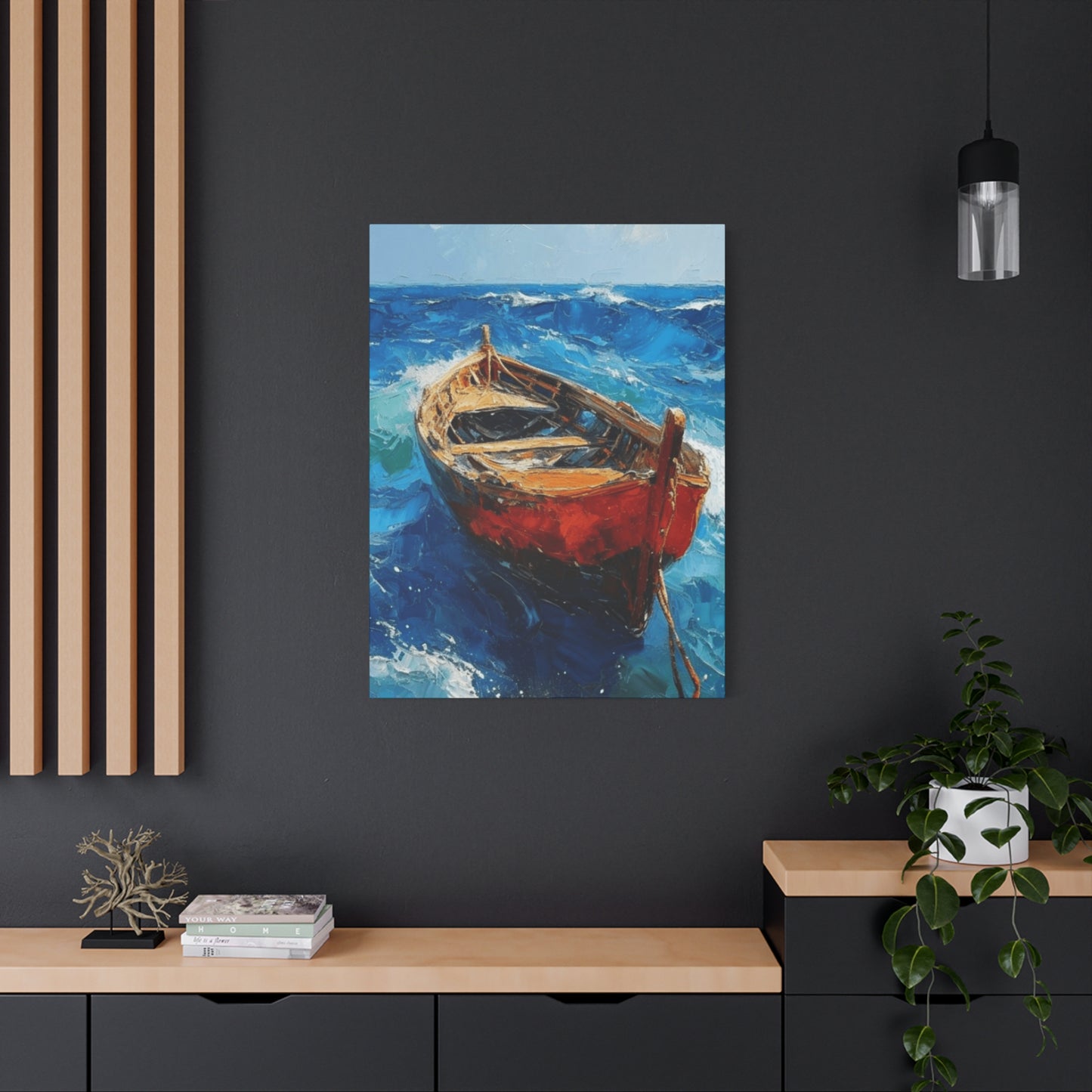


A Red Boat In The Ocean Wall Art & Canvas Prints
A Red Boat In The Ocean Wall Art & Canvas Prints
Couldn't load pickup availability
The Allure of Maritime Art A Red Boat in the Ocean Wall Art to Enhance Your Living Spaces
The mesmerizing sight of a crimson vessel floating peacefully across azure waters has captivated hearts and minds for centuries. When transformed into stunning wall decor, a red boat in the ocean wall art becomes more than mere decoration—it evolves into a powerful statement piece that breathes life, energy, and tranquility into any interior environment. This comprehensive exploration delves deep into every facet of this beloved artistic motif, examining its profound impact on residential and commercial spaces while uncovering the myriad ways it enhances our daily experiences.
Maritime imagery has maintained an unwavering position within the realm of decorative arts throughout human civilization. The enduring fascination with seascapes, vessels, and oceanic vistas stems from humanity's intrinsic connection to water bodies and our collective memories of exploration, adventure, and discovery. A red boat in the ocean wall art encapsulates these primordial associations while simultaneously offering a fresh, contemporary aesthetic that resonates with modern sensibilities.
The visual language of nautical themes speaks to something fundamental within our consciousness. Whether we've spent our lives landlocked or grown up beside coastal waters, the imagery of boats traversing endless expanses triggers deep emotional responses. This particular artistic motif—featuring a vibrant crimson vessel against the vast backdrop of marine environments—creates a striking contrast that immediately captures attention while maintaining a serene, contemplative quality.
Contemporary interior designers and homeowners increasingly recognize the transformative power of carefully selected wall art. Among the vast array of available options, maritime scenes featuring bold-colored vessels have emerged as particularly versatile choices. These pieces bridge the gap between traditional nautical decor and modern minimalist aesthetics, making them suitable for diverse architectural styles and personal tastes.
The psychological impact of incorporating oceanic imagery into living spaces cannot be overstated. Studies in environmental psychology reveal that exposure to water-related visuals can reduce stress levels, lower blood pressure, and promote feelings of calmness and well-being. When combined with the energizing presence of vibrant red hues, these artworks create a balanced atmosphere that simultaneously soothes and invigorates.
The Timeless Appeal Of Maritime Artwork Within Contemporary Interior Spaces
The chromatic relationship between red and blue represents one of nature's most compelling visual contrasts. This complementary color pairing creates maximum visual impact while maintaining harmonious balance—a principle that has guided artists for millennia. When observing a red boat in the ocean wall art, viewers experience an immediate visceral reaction rooted in both biological responses and cultural conditioning.
Red, as a color, carries immense psychological weight across virtually all human cultures. It signifies passion, vitality, courage, and determination. In the context of maritime imagery, a red vessel becomes a symbol of human resilience and adventurous spirit—a bold statement against the overwhelming vastness of natural forces. This small but vividly colored craft represents humanity's eternal quest to explore, discover, and push beyond known boundaries.
Conversely, the oceanic blues and aquamarines that typically form the background of such compositions evoke entirely different emotional registers. These cooler tones suggest tranquility, depth, mystery, and infinite possibility. The ocean itself becomes a metaphor for the unconscious mind, for unexplored potential, and for the journey of life with all its uncertainties and promises.
When these contrasting color families unite within a single composition, they create what color theorists call "visual tension"—a dynamic relationship that keeps the eye engaged and the mind stimulated. This tension prevents the artwork from becoming static or boring, ensuring that it remains visually interesting even after years of daily viewing.
The specific shade of red employed in the vessel can dramatically alter the piece's overall mood and message. A bright, fire-engine red suggests urgency, excitement, and bold action. A deeper crimson or burgundy tone introduces notes of sophistication, maturity, and contemplative strength. Meanwhile, variations in the ocean's coloration—from pale turquoise shallows to midnight-blue depths—further modulate the emotional tenor of the composition.
Beyond pure color theory, the interplay of light and shadow within these artworks adds another dimension of complexity. The way sunlight glints off water surfaces, creates reflections beneath the boat's hull, or illuminates the vessel against stormy skies all contribute to the overall atmospheric quality. These subtle gradations and tonal variations transform what might be a simple image into a richly layered visual experience.
Artistic Styles And Interpretations: From Photorealistic Renderings To Abstract Expressions
The remarkable versatility of the maritime motif manifests in the countless artistic approaches available to creators and collectors. A red boat in the ocean wall art can be executed in virtually any style, from meticulous photorealism to loose, gestural abstraction, with each approach offering distinct advantages and aesthetic experiences.
Photorealistic or hyperrealistic interpretations aim to capture every detail with camera-like precision. These works often showcase the texture of weathered wood, the play of light across rippling water, the subtle variations in cloud formations, and the minute imperfections that characterize real vessels and seascapes. Such pieces appeal to viewers who appreciate technical mastery and the illusion of gazing through a window onto an actual scene.
Impressionistic approaches, by contrast, prioritize the emotional essence of the subject over literal representation. Artists working in this manner might use visible brushstrokes, broken color, and loose compositional structures to convey the feeling of a moment rather than its exact appearance. These pieces often possess a dreamlike quality that invites viewers to complete the image through their own imagination and emotional projection.
Abstract and expressionistic interpretations push even further from representational accuracy. Here, the red boat might be reduced to geometric shapes or bold color blocks, while the ocean becomes a field of gestural marks or color gradations. These works challenge viewers to engage more actively, finding personal meaning within forms that only suggest rather than depict their subjects. Such pieces often work exceptionally well in contemporary or minimalist interiors where they function as bold graphic statements.
Mixed-media approaches combine various materials and techniques within a single artwork. Artists might incorporate actual nautical elements—rope, canvas, weathered wood, or metal fixtures—alongside painted or printed imagery. These dimensional pieces create visual interest through textural variation and physical depth, offering a more tactile and sculptural presence on the wall.
Digital art and photography have expanded the possibilities even further. High-resolution maritime photographs can be enhanced, manipulated, or combined with digital painting techniques to create images that blur the boundaries between captured reality and artistic interpretation. These works often achieve a cinematic quality that can be particularly dramatic at large scales.
The choice of artistic style should align with both the specific space being decorated and the emotional atmosphere one wishes to create. A rustic coastal cottage might pair beautifully with an impressionistic rendering that echoes the relaxed, unpretentious nature of beachside living. A sleek urban loft might demand a more graphic, abstracted interpretation that complements clean lines and contemporary furnishings. A traditional home with classic architectural details might welcome a realistic maritime scene that honors timeless aesthetic values.
Compositional Elements That Elevate Maritime Artwork From Ordinary To Extraordinary
Beyond style and color choices, the compositional structure of a maritime artwork fundamentally determines its impact and effectiveness. Skilled artists and photographers understand how to arrange elements within the frame to guide the viewer's eye, create visual hierarchy, and generate emotional responses. When evaluating a red boat in the ocean wall art, several compositional factors deserve careful consideration.
The placement of the vessel within the frame carries significant meaning. A boat positioned in the lower third of the composition, with vast expanses of sky and water above, emphasizes the smallness of human endeavors against nature's grandeur. This arrangement often evokes feelings of humility, wonder, and philosophical contemplation. Conversely, a larger vessel occupying more of the frame projects confidence, human achievement, and a more assertive relationship with the maritime environment.
The rule of thirds—a foundational principle in visual composition—suggests dividing the frame into a three-by-three grid and placing key elements along these lines or at their intersections. Many compelling maritime artworks position the boat at one of these power points rather than dead center, creating a more dynamic and visually satisfying arrangement. This off-center positioning also implies movement and direction, suggesting the vessel's journey rather than static presence.
The horizon line's placement dramatically affects a composition's mood and emphasis. A low horizon that dedicates most of the frame to expansive skies creates an airy, ethereal quality while emphasizing weather conditions and atmospheric effects. A high horizon that prioritizes the water's surface draws attention to wave patterns, reflections, and the ocean's textural qualities. Centering the horizon creates a more balanced, stable feeling but risks appearing static if not enlivened by other compositional elements.
Leading lines—visual paths that guide the viewer's eye through the composition—play crucial roles in maritime artwork. These might include the boat's wake trailing behind it, the curve of a distant shoreline, the diagonal thrust of a sail or mast, or even the directional movement of clouds overhead. Effective use of leading lines creates visual flow that keeps the eye engaged and moving through the piece.
The presence or absence of other elements within the composition significantly impacts its character. A solitary vessel in otherwise empty waters emphasizes isolation, independence, or solitary contemplation. The inclusion of distant boats, shorelines, birds, or marine life adds narrative complexity and contextual richness. Some of the most powerful maritime artworks achieve their impact through strategic minimalism—reducing the scene to its essential elements and allowing negative space to become as important as the forms themselves.
Atmospheric perspective—the natural phenomenon where distant objects appear lighter, less distinct, and bluer than foreground elements—adds crucial depth to maritime scenes. Artists who master this technique create convincing illusions of three-dimensional space on two-dimensional surfaces. The gradual fading of colors and details as elements recede toward the horizon helps establish scale and distance, making viewers feel they could step into the scene.
The time of day depicted profoundly influences the artwork's mood. Golden-hour scenes bathed in warm, honeyed light evoke nostalgia, peace, and contentment. Midday compositions with bright, direct sunlight project clarity, vitality, and optimism. Twilight scenes featuring dramatic skies and silhouetted vessels carry romantic, mysterious, or melancholic undertones. Stormy or overcast conditions introduce tension, drama, and a sense of nature's overwhelming power.
Material Considerations: Selecting The Perfect Medium For Your Maritime Wall Decor
The physical materials and production methods employed in creating a red boat in the ocean wall art significantly impact both its aesthetic qualities and practical performance. Understanding the characteristics, advantages, and limitations of various options enables informed decisions that balance visual preferences with practical requirements.
Canvas prints have emerged as one of the most popular choices for reproducing artistic and photographic maritime imagery. Stretched across wooden frames and often treated with protective coatings, canvas offers several compelling advantages. The material's slight texture adds visual interest and can help minimize glare under various lighting conditions. Canvas wraps—where the image extends around the edges of the stretcher bars—eliminate the need for traditional framing, creating a contemporary gallery-style presentation. The lightweight nature of canvas makes hanging relatively simple, and the material proves more forgiving if accidentally bumped or jostled compared to glass-covered alternatives.
Acrylic prints represent a more contemporary option that has gained considerable traction in recent years. These pieces feature images printed directly onto or mounted behind clear acrylic panels, creating remarkable depth and luminosity. The transparent material allows light to pass through the image, producing vibrant colors and striking contrast. Acrylic's glossy surface enhances the reflective, luminous qualities of water in maritime scenes, making it particularly well-suited for oceanic imagery. The material's durability and moisture resistance make it appropriate for challenging environments, including bathrooms and covered outdoor spaces. However, acrylic can be prone to glare under direct lighting and shows fingerprints easily, requiring more frequent cleaning.
Metal prints—typically created through a dye-sublimation process that infuses inks directly into specially coated aluminum panels—offer extraordinary durability and unique aesthetic qualities. These pieces possess a luminous, almost three-dimensional quality, with colors appearing exceptionally vibrant and contrast particularly pronounced. The reflective properties of metal can create fascinating interactions with changing light throughout the day. Metal prints resist fading, moisture, and physical damage far better than most alternatives, making them ideal for high-traffic areas or challenging environmental conditions. Their contemporary appearance suits modern and industrial-style interiors particularly well.
Framed paper or photographic prints represent the most traditional approach to wall art presentation. High-quality archival papers, when properly printed and protected behind UV-filtering glass or acrylic, can reproduce maritime imagery with exceptional detail and tonal subtlety. Mat borders add visual breathing room around the image while creating a finished, polished appearance. The framing process allows for extensive customization through choice of mat colors, frame profiles, and protective glazing. However, this option typically proves more expensive than canvas or direct-to-substrate prints and creates additional weight that requires more substantial hanging hardware.
Wood-mounted prints combine rustic charm with contemporary convenience. Images transferred or directly printed onto wooden panels retain visible wood grain and natural texture, creating a casual, approachable aesthetic particularly suitable for coastal-themed interiors. The material's inherent warmth complements maritime subjects while adding organic character. Wood substrates prove reasonably durable and lightweight, though they may be susceptible to warping in extremely humid environments.
Textile wall hangings, including tapestries and fabric banners, offer a softer, more tactile alternative to rigid substrates. These pieces can introduce welcome textural variety into spaces dominated by hard surfaces. The dimensional quality of fabric creates subtle shadows and depth that flat prints cannot match. Textile wall hangings work particularly well in casual or bohemian-style interiors where they contribute to relaxed, eclectic atmospheres.
Size Selection Strategies: Matching Artwork Dimensions To Spatial Requirements
Choosing appropriate dimensions for a red boat in the ocean wall art requires careful consideration of multiple factors, including room size, ceiling height, furniture arrangement, viewing distance, and the piece's intended role within the overall design scheme. Misjudging scale represents one of the most common mistakes in home decoration, resulting in artworks that disappear ineffectively or overwhelm their surroundings.
As a general principle, larger spaces demand correspondingly substantial artworks to avoid the piece appearing lost or insignificant. In expansive living rooms, dining areas, or open-concept spaces, maritime art measuring 40 inches or larger often proves necessary to achieve appropriate visual impact. These statement pieces command attention and can anchor entire wall compositions or serve as focal points around which other design elements organize themselves.
The relationship between artwork size and the furniture beneath it provides another crucial guideline. When hanging art above sofas, consoles, beds, or other significant furnishings, the piece should typically span approximately two-thirds to three-quarters of the furniture's width. This proportion creates visual harmony and suggests intentional design rather than haphazard placement. A red boat in the ocean wall art hung above a 90-inch sofa, for instance, should ideally measure between 60 and 68 inches wide, whether as a single large piece or a multi-panel arrangement.
Ceiling height significantly influences optimal artwork dimensions and placement. Standard eight-foot ceilings typically accommodate artworks best when their vertical centers align approximately 57 to 60 inches from the floor—roughly eye level for most adults. Taller ceilings provide opportunities for vertically oriented pieces or allow horizontal works to be hung higher, creating different visual dynamics. In rooms with soaring ceilings, oversized artworks become not just possible but often necessary to prevent walls from appearing bare and uninviting.
Viewing distance plays an underappreciated role in size selection. Intimate spaces where viewers will be positioned relatively close to the wall—such as hallways, breakfast nooks, or cozy reading corners—benefit from smaller to medium-sized pieces that can be comfortably viewed from short distances without requiring excessive head movement. Conversely, large rooms where viewers will typically be seated or standing 10 to 15 feet away demand bigger artworks whose details and impact remain visible across greater distances.
Multi-panel arrangements, often called triptychs (three panels) or polyptychs (multiple panels), offer flexible solutions for filling large wall spaces while maintaining visual interest through segmented composition. A red boat in the ocean wall art might be divided across several panels, with the vessel appearing on one section and surrounding waters and skies extending across adjacent pieces. These arrangements allow for creative spatial rhythms through varied spacing between panels and can accommodate awkward wall proportions more easily than single large pieces.
Gallery wall configurations provide another approach to achieving substantial visual impact through multiple smaller pieces. While this article focuses primarily on single maritime artworks, incorporating a red boat in the ocean wall art into a curated collection of complementary pieces—perhaps including other maritime subjects, abstract oceanic textures, or nautical artifacts—creates rich, layered visual narratives. Successful gallery walls require careful planning regarding sizes, frames, spacing, and arrangement to achieve cohesive results rather than cluttered confusion.
Proportion and scale extend beyond the artwork itself to encompass its relationship with architectural features. Pieces hung near doorways, windows, or built-in elements should respect these features' dimensions and alignments. Centering artwork between two windows, for instance, or aligning its edges with door trim creates visual order that feels intentional and harmonious.
Placement Principles: Positioning Maritime Artwork For Maximum Visual Impact
Even the most stunning red boat in the ocean wall art will fail to achieve its potential if poorly positioned within a space. Strategic placement requires understanding how humans naturally move through and visually scan environments, how lighting affects perception, and how spatial relationships between artworks and other design elements create overall impressions.
The concept of focal points proves fundamental to successful interior design. Most rooms benefit from a clear visual hierarchy with one or two dominant features that immediately capture attention upon entering. A thoughtfully chosen maritime artwork can serve this focal role, particularly in living rooms, dining areas, or master bedrooms. Typical focal point locations include walls directly opposite entry points, spaces above fireplaces or primary seating arrangements, and areas where natural or architectural features draw the eye.
The previously mentioned "eye level" guideline—positioning artwork centers approximately 57 to 60 inches from the floor—represents museum and gallery standard practice that translates well to residential settings. This height accommodates comfortable viewing for most adults without requiring upward or downward gaze adjustment. However, this rule admits exceptions based on specific circumstances. Artwork in dining rooms, where viewers are typically seated, might be hung slightly lower. Pieces in hallways or spaces where people primarily stand might benefit from marginally higher placement.
Relationship to furniture arrangement demands careful attention. Beyond the width proportion discussed earlier, maintaining appropriate vertical spacing between furniture tops and artwork bottoms prevents visual confusion. Generally, six to eight inches of clearance between a sofa back or console top and the artwork's lower edge creates pleasing separation while maintaining visual connection. Insufficient space makes the piece appear to rest awkwardly on the furniture, while excessive distance severs the relationship entirely.
Corner placement offers unique opportunities and challenges. Maritime artwork positioned in room corners can help define spatial boundaries and make otherwise dead zones feel intentional and finished. However, corners receive less natural light and may require supplementary illumination to prevent the artwork from fading into obscurity. The three-dimensional quality of corner spaces also opens possibilities for interesting angular presentations that break from purely frontal orientations.
Symmetrical versus asymmetrical placement creates distinctly different aesthetic effects. Symmetrically centered artworks convey formality, order, and traditional sensibilities. This approach works beautifully in classically proportioned rooms with balanced architectural features. Asymmetrical placements—intentionally off-center positions or clustered arrangements—feel more casual, contemporary, and dynamic. These approaches suit modern interiors and can make irregular or challenging wall spaces appear intentional rather than problematic.
Negative space—the empty wall area surrounding artwork—deserves as much consideration as the piece itself. Sufficient breathing room prevents compositions from feeling cramped or crowded. As a general guideline, maintain at least six inches between multiple artworks and avoid pushing pieces too close to room corners, ceiling lines, or floor levels unless creating intentional edge-to-edge installations.
Consideration of traffic flow patterns influences placement decisions, particularly in hallways, entryways, and circulation spaces. Artwork positioned where people naturally pause—at corridor endpoints, landing areas, or beside seating—receives more attention and appreciation than pieces placed in transitional zones where viewers are moving quickly. Understanding how people actually use and move through spaces enables strategic positioning that maximizes engagement.
The interaction between natural and artificial lighting dramatically affects how artwork appears throughout the day. Pieces receiving direct sunlight may require UV-protective glazing or strategic positioning to prevent fading while taking advantage of natural illumination's revealing qualities. Artificial lighting—whether ambient room fixtures, dedicated picture lights, or track lighting—should enhance rather than overwhelm artworks. Avoiding glare, hot spots, and color distortion from incompatible light sources preserves the artist's intended color relationships and tonal values.
Lighting Strategies That Enhance Maritime Artwork's Visual Presence
Proper illumination transforms ordinary wall art into commanding visual statements. A red boat in the ocean wall art particularly benefits from thoughtful lighting that emphasizes the dramatic color contrasts, reveals textural details, and creates appropriate atmospheric qualities. Understanding lighting principles and options enables choices that significantly enhance viewing experiences.
Natural daylight represents the ideal illumination for most artworks, as it provides full-spectrum light that renders colors accurately without introducing artificial color casts. Positioning maritime pieces where they receive indirect natural light—near but not directly opposite windows—often produces beautiful results. The changing quality of daylight throughout the day creates dynamic viewing experiences as morning, midday, and evening light alter the artwork's appearance. However, direct sunlight should be avoided, as ultraviolet radiation causes irreversible fading and degradation of pigments, papers, and canvas materials over time.
When natural light proves insufficient or absent, artificial illumination becomes necessary. Several approaches offer distinct advantages depending on circumstances, aesthetic preferences, and budget considerations. Picture lights—small fixtures mounted directly to frames or walls above artworks—provide focused illumination that creates dramatic emphasis while remaining relatively inconspicuous. These fixtures work particularly well for traditionally framed pieces and can add a gallery-like quality to residential spaces. Modern LED picture lights generate minimal heat, reducing risk to sensitive materials while offering excellent color rendering.
Track lighting systems provide flexible solutions for illuminating multiple artworks or adjusting emphasis as collections change. Adjustable fixtures can be precisely aimed to highlight specific pieces while minimizing spill onto surrounding walls. When lighting maritime artwork with track systems, positioning fixtures at approximately 30-degree angles from the wall prevents glare while providing even, flattering illumination. Avoid positioning tracks too close to walls, which creates harsh shadows and uneven lighting patterns.
Recessed ceiling fixtures, while common in modern homes, present challenges for artwork illumination. Their fixed positions and broad light spread make targeted highlighting difficult. However, adjustable recessed fixtures with directional trim can be aimed to emphasize specific wall areas. When relying on general ceiling illumination for artwork, ensure sufficient output to overcome the ambient lighting's tendency to flatten depth and diminish color saturation.
Wall-washing techniques—where light fixtures create even illumination across entire wall surfaces—suit minimalist interiors and gallery-style presentations. This approach eliminates dramatic shadows and creates clean, contemporary aesthetics. Wall-washing works particularly well for collections of similarly sized pieces or when the overall wall composition matters more than individual artwork emphasis.
Accent lighting strategies combine ambient illumination with targeted highlighting to create layered lighting schemes. This approach provides general visibility while directing attention to featured artworks through brighter, more focused illumination. The contrast between ambient and accent lighting levels guides visual hierarchy and creates spatial depth.
Color temperature—measured in Kelvin and describing light's warmth or coolness—significantly impacts how maritime artwork appears. Warmer light (2700K-3000K) creates cozy, intimate atmospheres and can enhance the reds in a crimson vessel while potentially shifting blues toward greenish tones. Cooler light (3500K-4100K) renders blues and aquamarines more accurately while potentially making reds appear slightly muted. Neutral to slightly warm color temperatures (3000K-3500K) typically provide the best compromise for maritime subjects, maintaining color accuracy across both warm and cool hues.
Color rendering index (CRI) measures how accurately artificial light sources reproduce colors compared to natural daylight. High-CRI sources (90 or above) render colors faithfully and should be prioritized for artwork illumination. Low-CRI sources may make certain colors appear dull, shift hues unexpectedly, or diminish the subtle color relationships that give sophisticated artworks their visual richness.
Dimming capability adds valuable flexibility to lighting schemes. The ability to adjust illumination levels accommodates different activities, times of day, and moods. Viewing artwork at various intensity levels often reveals details and qualities invisible under single static conditions. Modern LED dimming systems provide smooth transitions without the color shifting problems that plagued earlier dimming technologies.
Stylistic Coordination: Harmonizing Maritime Art With Diverse Interior Design Schemes
Successfully incorporating a red boat in the ocean wall art requires understanding how the piece interacts with existing design elements—including color palettes, furniture styles, architectural features, and overall aesthetic philosophies. Thoughtful coordination creates cohesive environments where artworks feel intentional and integrated rather than arbitrary or out of place.
Coastal and nautical design schemes represent the most obvious aesthetic partners for maritime artwork. These styles explicitly embrace oceanic themes through color palettes dominated by blues, whites, sandy neutrals, and occasional coral or red accents. Natural materials including weathered wood, rope, canvas, and woven textiles reinforce connections to maritime environments. Within these contexts, a red boat in the ocean wall art serves as a natural centerpiece that reinforces the overall thematic direction while providing a vibrant color accent that prevents the scheme from becoming monotonously blue and white.
Scandinavian or Nordic design philosophies, characterized by minimalism, natural materials, light color palettes, and emphasis on functionality, accommodate maritime artwork surprisingly well. The clean simplicity of these interiors provides uncluttered backdrops that allow artworks to shine without competing with excessive decorative elements. The red vessel's vibrant presence adds welcome warmth to otherwise cool, restrained color schemes while maintaining the aesthetic's emphasis on natural forms and imagery.
Modern and contemporary interiors—defined by clean lines, neutral foundations, and selective use of bold accents—can embrace maritime artwork as strategic color and visual interest sources. In these contexts, pieces might be chosen for their graphic qualities or abstract interpretations rather than literal representational content. A stylized or minimalist rendering of a red boat might align perfectly with modern sensibilities while avoiding the traditional associations of more realistic maritime scenes.
Transitional design, which bridges traditional and contemporary aesthetics, proves particularly accommodating to diverse artwork types. These spaces often feature neutral backgrounds, classic architectural details softened by contemporary furnishings, and eclectic accessory collections. Maritime artwork fits naturally into transitional schemes, particularly when framing choices and presentation styles match the room's balance of traditional and modern elements.
Industrial-style interiors, characterized by exposed architectural elements, raw materials, and utilitarian aesthetics, might seem incompatible with oceanic imagery. However, maritime subjects carry inherent associations with working vessels, commercial shipping, and human labor that resonate with industrial design's celebration of functionality and honest materials. Metal or wood-mounted prints work particularly well in these contexts, as do large-scale pieces with graphic compositions and bold color contrasts.
Traditional and classical interiors, featuring formal furniture arrangements, rich fabrics, ornate details, and established color palettes, benefit from maritime artwork that leans toward realistic or romantic interpretations. Elaborate frames with gilded or carved details can elevate maritime subjects to match the surrounding formality. In these contexts, the artwork might reference historical maritime painting traditions while providing refreshing windows onto natural world elements that balance interior richness with outdoor vitality.
Eclectic and bohemian styles, which celebrate diverse influences, personal collections, and layered visual complexity, embrace maritime artwork as one element among many rather than a dominating focal point. In these environments, a red boat in the ocean wall art might be grouped with other artworks, textiles, plants, and artifacts to create richly curated walls that reflect personal histories and aesthetic adventures.
Minimalist interiors present specific challenges and opportunities. These spaces demand restraint and intentionality, with every element serving clear purposes and possessing visual impact sufficient to justify its presence. In minimalist contexts, a single stunning maritime artwork might provide the primary color and visual interest, functioning as the room's defining feature. The piece must be exceptional in quality and presence to fulfill this demanding role successfully.
Color coordination extends beyond matching hues to understanding relationships between the artwork's palette and the room's existing colors. Complementary schemes—using colors opposite on the color wheel—create vibrant, energetic atmospheres. The red-blue contrast inherent in maritime artwork naturally provides complementary energy. Analogous schemes—using colors adjacent on the wheel—create harmonious, flowing color transitions. Triadic schemes—using three equally spaced colors—offer balance and visual interest. Understanding these principles enables informed choices about how maritime artwork's colors interact with wall colors, upholstery, accessories, and other decorative elements.
Subject Matter Variations: Exploring Different Vessel Types And Maritime Contexts
While the phrase "red boat in the ocean" suggests a specific image, the subject admits considerable variation in vessel type, size, condition, and contextual setting. Understanding these variations helps buyers select pieces that resonate with personal preferences and convey desired meanings.
Small fishing boats or dinghies represent perhaps the most common and universally appealing maritime subject. These humble craft suggest simplicity, honest work, connection to traditional ways of life, and individual human scale against vast natural forces. A single red fishing boat bobbing on gentle swells evokes peaceful contemplation and unhurried lifestyles. These vessels often appear weathered and well-used, their worn surfaces telling stories of years spent battling elements and providing livelihoods.
Sailboats introduce different symbolic and aesthetic dimensions. The presence of sails adds vertical elements and complex geometric forms that create visual interest and compositional possibilities beyond simple hull shapes. Sailboats suggest adventure, sport, leisure, and humanity's creative adaptation to natural forces. A red-hulled sailboat heeling dramatically under full sail conveys excitement, skill, and dynamic movement. Conversely, a sailboat at anchor or with furled sails projects peace, completion, and moments of rest between adventures.
Rowboats and kayaks emphasize intimate, human-powered connection with maritime environments. These smallest vessels require no engines or sails—only human strength and determination. A red rowboat suggests simple pleasures, meditative solitude, and direct physical engagement with nature. These pieces often work particularly well in smaller spaces or more personal environments like bedrooms and studies.
Traditional wooden boats—including dories, skiffs, and various regional craft types—carry associations with maritime heritage, craftsmanship, and disappearing ways of life. These vessels represent connections to past generations and cultural traditions. A beautifully maintained traditional red boat can symbolize preservation, respect for heritage, and continuity across time. Alternatively, a deteriorating traditional craft might speak to impermanence, abandonment, and the passage of time's inevitable effects.
Modern vessels—from recreational powerboats to commercial fishing trawlers—bring contemporary relevance to maritime subjects. While potentially less romantic than traditional craft, these boats represent current realities of human relationship with oceanic environments. A bright red modern boat might emphasize vitality, contemporary lifestyle, and present-moment experience rather than nostalgic historical connections.
The vessel's condition—pristine and well-maintained versus weathered and aging—communicates distinctly different messages. Immaculate boats suggest care, pride, optimism, and beginnings. Weathered vessels speak to experience, resilience, the passage of time, and beauty found in imperfection. Many viewers find greater emotional resonance in boats showing signs of use and age, as these imperfections suggest authenticity and lived experience.
Contextual settings profoundly influence maritime artwork's character and meaning. Boats on calm, mirror-like waters evoke tranquility, introspection, and inner peace. Vessels navigating choppy but manageable seas suggest challenge, skill, and successful navigation of life's difficulties. Boats in stormy conditions introduce drama, danger, and nature's overwhelming power. Each contextual choice creates different emotional landscapes and speaks to different aspects of human experience.
The presence or absence of human figures affects interpretation significantly. An empty vessel might suggest solitude, independence, or the boat-as-object aesthetic focus. Visible occupants introduce narrative elements, human scale references, and suggestions of relationship, purpose, and activity. Even small, partially visible figures dramatically alter how viewers engage with maritime scenes.
Geographic and environmental specificity creates additional variation. Is the vessel in tropical waters with brilliant turquoise shallows and palm-lined shores? In northern waters with steely grays and evergreen coastlines? On open ocean with no land visible? Near rocky coastlines with dramatic geological formations? Each setting carries distinct atmospheric qualities and cultural associations that influence the artwork's overall character.
The Role Of Maritime Imagery Within Wellness-Focused Interior Design
Contemporary design increasingly recognizes the profound connections between physical environments and human well-being. Biophilic design principles—which emphasize incorporating natural elements, patterns, and connections into built environments—provide frameworks for understanding why maritime artwork, including a red boat in the ocean wall art, contributes positively to human flourishing.
Water represents one of nature's most psychologically restorative elements. Evolutionary psychologists suggest that human attraction to water stems from our species' dependence on water sources for survival. Safe, accessible water meant life, while its absence meant hardship or death. This deep biological programming manifests in contemporary humans' persistent attraction to water views, sounds, and imagery, even when we no longer depend on direct water access for survival.
Research in environmental psychology consistently demonstrates that viewing water-related imagery reduces physiological stress markers. Studies measuring heart rate variability, blood pressure, cortisol levels, and self-reported stress show significant improvements when participants view oceanic scenes compared to urban environments or even terrestrial nature. These effects occur even with photographs or artwork rather than direct exposure to actual water bodies—suggesting that a red boat in the ocean wall art provides genuine wellness benefits beyond mere aesthetic pleasure.
The specific qualities of oceanic imagery that promote wellness include vast horizons that allow visual rest without demand for focal accommodation, gentle color palettes dominated by blues and greens that calm the nervous system, rhythmic patterns of waves that entrain attention in meditative ways, and the implied presence of fresh air and open space that counteracts feelings of confinement common in modern built environments.
The addition of a red vessel to oceanic scenes introduces psychological complexity that enhances rather than diminishes these wellness benefits. While the soothing blues promote relaxation, the vibrant red provides activation and engagement that prevents the descent into lethargy or depression. This balance between calming and energizing elements creates optimal conditions for what psychologists call "restoration"—the recovery of depleted cognitive and emotional resources.
Attention restoration theory, developed by environmental psychologists Rachel and Stephen Kaplan, explains why natural imagery proves so restorative. The theory distinguishes between directed attention—the effortful, voluntary focus required for most contemporary tasks—and involuntary attention, which occurs automatically in response to inherently fascinating stimuli. Natural scenes, including maritime imagery, capture involuntary attention through what the Kaplins call "soft fascination." This gentle engagement allows directed attention resources to recover, reducing mental fatigue and improving subsequent cognitive performance.
Maritime artwork contributes to restoration through several mechanisms. The expansiveness of ocean views provides "extent"—a sense of scope that allows the mind to range freely rather than feeling confined. The layered elements of sea, boat, sky, and shore create "richness" that rewards exploration without overwhelming complexity. The coherent composition and naturalistic elements provide "compatibility" with innate human preferences for certain visual patterns. Together, these qualities make oceanic imagery particularly effective at promoting restoration and well-being.
The presence of the boat itself adds meaningful human element that makes scenes relatable without introducing the stress-inducing qualities of densely populated urban imagery. The vessel represents human agency, journey, and purposeful action while remaining subordinate to the overwhelming natural context. This balance allows viewers to project themselves into the scene—imagining the experience of being aboard that boat—without the anxiety-provoking demands of actual social situations or complex human environments.
Final Thoughts
Captivating Maritime Imagery: A Red Boat in the Ocean Wall Art is a stunning way to bring the beauty and tranquility of the sea into your home. The striking visual contrast of a bright red boat set against the vast expanse of the ocean captures the essence of adventure, freedom, and serenity. Whether you’re a lover of the sea, an enthusiast of nautical themes, or simply someone who appreciates the interplay of vibrant colors and natural landscapes, this type of wall art creates a dynamic focal point that adds both energy and calm to your living space.
The image of a red boat in the ocean offers a unique juxtaposition of boldness and calm. The vivid red color of the boat stands out against the tranquil, expansive ocean, evoking a sense of vitality, courage, and the spirit of exploration. The boat itself often represents a journey, a passage, or the pursuit of freedom—symbolizing the idea of navigating through life’s challenges with determination and grace. Meanwhile, the ocean surrounding it reflects the vastness of possibility and the unknown, encouraging a sense of peaceful contemplation. Together, these elements create a balanced, compelling image that feels both invigorating and soothing, making it a perfect addition to any space looking to invoke inspiration, serenity, and a touch of adventure.
Red boat wall art is versatile enough to complement a range of décor styles. The dynamic contrast between the warm red tones of the boat and the cool blues and greens of the ocean provides a visually striking balance that works in both modern and traditional interiors. For coastal-themed homes, the red boat in the ocean piece seamlessly fits into spaces that celebrate the beauty of the sea, whether in a beach house, a lakeside cabin, or an urban apartment with nautical accents. But its versatility also extends to more contemporary or minimalist environments, where the bold imagery of the boat stands out against neutral-colored walls and simple furnishings, adding a pop of color and life to the space.
In addition to its aesthetic appeal, maritime imagery brings with it a sense of peace and freedom. The red boat cutting through the open water can evoke feelings of liberation, symbolizing the thrill of setting sail and the endless horizons awaiting discovery. The ocean, often viewed as a vast and calming force, provides a reminder to slow down, reflect, and reconnect with nature. It’s a visual invitation to escape the hustle of daily life and embrace the calmness that comes with being near the sea. As a result, this type of wall art is particularly well-suited for spaces where relaxation and reflection are key, such as living rooms, bedrooms, or even home offices where you want to create a calming, inspiring atmosphere.
The use of vivid red in this maritime imagery is significant in its ability to evoke strong emotions and draw the viewer’s attention. Red is a color that represents energy, passion, and action, and when combined with the expansive calm of the ocean, it strikes a perfect balance between the need for boldness and the desire for tranquility. It can serve as a reminder of the power of nature and the beauty found in taking risks, venturing out into the unknown, and embracing the journey, whatever it may bring.
Red boat wall art also offers a sense of timelessness. Boats have long been symbols of exploration and connection, and the idea of venturing across the water speaks to both historical and contemporary human experiences. Whether as a literal mode of transportation or a metaphor for life's journey, the boat has a deep cultural and emotional resonance that speaks to a universal longing for adventure, discovery, and personal growth. This piece of wall art can evoke nostalgia for those who love the sea, the freedom it represents, and the adventures it promises.
Moreover, captivating maritime imagery can serve as a conversation starter in your home. Visitors are often intrigued by the symbolism behind the boat’s journey, the striking visual contrast, and the emotion the piece evokes. It sparks discussions about travel, the sea, and the broader themes of exploration and freedom. This wall art becomes more than just a decorative item; it becomes a piece that invites reflection and storytelling.
In conclusion, Captivating Maritime Imagery: A Red Boat in the Ocean Wall Art is more than just a decorative element—it’s an invitation to experience the beauty, power, and freedom of the sea. With its vibrant colors and profound symbolism, it adds energy, tranquility, and inspiration to any room. Whether you seek to add a burst of color to your home, create a calming space for relaxation, or bring the vast, open ocean into your living environment, this piece offers a perfect balance of boldness and serenity. The red boat cutting through the ocean captures the essence of both adventure and peace, making it an enduring piece of art that will captivate and inspire for years to come.
Share