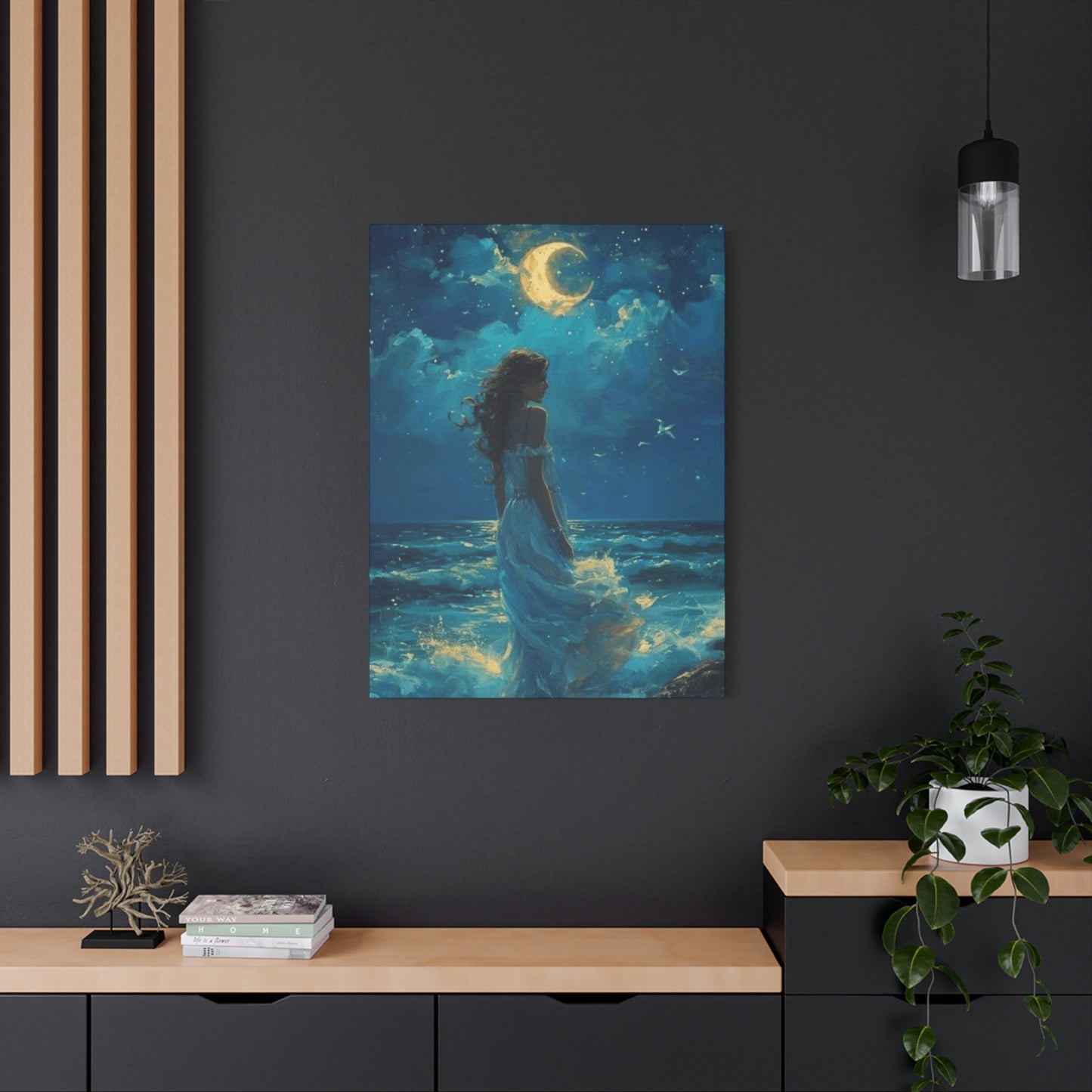


A Mermaid At Night In The Moonlight Wall Art & Canvas Prints
A Mermaid At Night In The Moonlight Wall Art & Canvas Prints
Couldn't load pickup availability
Luminous Ocean Enchantress: How A Mermaid At Night In The Moonlight Wall Art Creates Captivating Spaces Through Ethereal Marine Imagery
The allure of mythical sea creatures has captivated human imagination for millennia, with their enigmatic presence evoking wonder and mystery. When darkness falls and celestial bodies illuminate the vast oceans, these legendary beings emerge in artistic representations that transform ordinary living spaces into extraordinary sanctuaries. The phenomenon of nocturnal marine fantasy artwork has evolved into a sophisticated decorating paradigm that merges classical mythology with contemporary aesthetic sensibilities.
A Mermaid At Night In The Moonlight Wall Art represents more than mere decorative pieces; these creations embody the intersection of folklore, natural beauty, and artistic expression. The silvery luminescence reflecting off tranquil waters creates an atmosphere of serenity and contemplation, inviting viewers to explore realms beyond everyday existence. Such artwork serves as portals to imaginative landscapes where reality blends seamlessly with fantasy.
The contemporary fascination with oceanic mythology stems from humanity's enduring relationship with the sea. These mysterious depths have always represented both danger and possibility, containing secrets that remain largely undiscovered. Artistic interpretations featuring these legendary aquatic beings capture this duality, presenting subjects that appear simultaneously ethereal and tangible, distant yet intimately familiar.
The Mesmerizing Visual Elements That Define Nocturnal Aquatic Fantasy Artwork
Creating compelling visual narratives featuring mythological ocean dwellers requires understanding the delicate balance between illumination and shadow. The interplay of moonbeams penetrating water surfaces generates distinctive patterns that artists carefully study and replicate. These luminous effects create depth and dimension, transforming flat surfaces into windows overlooking enchanted seascapes.
The chromatic palette employed in such artwork typically emphasizes cool tones—deep indigos, midnight blues, silvery grays, and occasional hints of phosphorescent greens. These colors mirror the natural spectrum found in nocturnal maritime environments, where sunlight's absence allows bioluminescent phenomena and lunar reflection to dominate the visual landscape. Strategic placement of warmer accent tones—perhaps golden highlights on scales or amber glows from distant shores—provides necessary contrast that prevents compositions from becoming monotonous.
Texture plays an equally crucial role in establishing authenticity within these fantastical scenes. The apparent fluidity of cascading hair, the shimmer of scales catching available light, and the rippling movement of surrounding waters all contribute to creating believable yet magical imagery. Artists employ various techniques to suggest these tactile qualities, from impasto brushwork that creates physical dimension to glazing methods that produce translucent luminosity reminiscent of actual water.
The positioning of the central figure within the composition significantly impacts viewer engagement. Subjects placed according to classical proportional principles—such as the golden ratio—naturally draw the eye while maintaining visual harmony. However, contemporary interpretations sometimes deliberately subvert these conventions, positioning figures asymmetrically to create tension and dynamism that reflect the unpredictable nature of ocean environments.
Atmospheric perspective becomes particularly important when depicting nighttime aquatic scenes. The gradual softening of details and subtle shifts in value that occur as elements recede into darkness help establish convincing spatial relationships. This technique allows artists to suggest vast underwater realms extending beyond the visible frame, encouraging viewers to imagine continuation of the scene beyond physical boundaries.
Discovering the Perfect Location Within Your Living Environment for Maximum Visual Impact
Selecting the optimal placement for oceanic fantasy artwork requires careful consideration of multiple factors, including ambient lighting conditions, surrounding color schemes, and the psychological atmosphere you wish to cultivate. The location you choose fundamentally affects how effectively the piece communicates its intended mood and message.
Spaces with controlled lighting offer particular advantages for displaying nocturnal marine imagery. Dining areas where ambient illumination can be adjusted create ideal settings, as dimmer lighting enhances the mysterious qualities inherent in moonlit scenes. The gentle glow from candles or low-wattage fixtures mimics the natural illumination depicted within the artwork itself, creating harmonious continuity between the art and its environment.
Bedrooms serve as particularly appropriate venues for such contemplative imagery. The tranquil, dream-like qualities of these pieces complement the restorative purpose of sleeping quarters. Positioned opposite the bed or on a wall visible upon waking, the artwork can establish a calming morning ritual, offering a moment of peaceful reflection before engaging with daily demands.
Living rooms with neutral color palettes provide versatile backdrops that allow the artwork's inherent beauty to command attention without competing with surrounding elements. Positioning the piece above seating areas creates natural focal points that guide conversation and contemplation. The vertical or horizontal orientation should complement existing architectural features—tall pieces emphasize ceiling height, while wider formats echo the horizontal lines of furniture arrangements.
Bathrooms, particularly those with spa-like ambiance, present unexpected yet remarkably suitable locations. The actual presence of water within these spaces creates thematic resonance with the artwork's subject matter. Steam from hot baths softening the viewing experience adds an additional layer of atmospheric quality, though proper framing and protection from moisture remain essential considerations.
Home offices benefit from the calming influence of serene aquatic scenes, which can counterbalance work-related stress. Positioned within the peripheral vision rather than directly in the line of sight, such artwork provides opportunities for brief mental respites without becoming distracting. These momentary visual excursions into fantastical realms can refresh cognitive resources and enhance creative problem-solving.
Exploring Diverse Artistic Styles and Mediums That Bring Mythical Ocean Narratives to Life
The artistic rendering of legendary sea beings encompasses an impressive spectrum of styles, each offering distinct aesthetic experiences and emotional resonances. Understanding these various approaches helps collectors identify pieces that authentically reflect their personal tastes and complement existing decorative schemes.
Photorealistic interpretations aim to depict fantastical subjects with meticulous accuracy, rendering every scale, hair strand, and water droplet with painstaking precision. These works often blur the boundaries between photography and painting, creating images so convincing that viewers momentarily suspend disbelief. The paradox of realistic depiction applied to mythological subjects generates fascinating cognitive tension that engages viewers on multiple levels.
Impressionistic approaches prioritize capturing the emotional essence and atmospheric qualities rather than precise details. Loose, expressive brushwork suggests form and movement while allowing viewers' imaginations to complete the image. This style particularly suits the ethereal, dream-like nature of nocturnal oceanic scenes, where clarity gives way to mood and suggestion.
Contemporary digital artistry has revolutionized how artists create these fantastical visions. Software capabilities enable seamless blending of photographic elements with hand-painted components, creating hybrid works that leverage strengths from multiple mediums. Digital tools also facilitate experimental lighting effects and color manipulations that would prove challenging through traditional means alone.
Watercolor renditions possess inherent qualities that naturally complement aquatic subjects. The medium's fluid, translucent nature mirrors water itself, creating organic harmonies between subject matter and execution method. The unpredictable bleeding and granulation characteristic of watercolors introduces serendipitous effects that enhance the mystical atmosphere.
Mixed media compositions incorporating unconventional materials—metallic leaf, crushed shells, sand, or reflective elements—add dimensional qualities that standard paintings cannot achieve. These tactile additions create changing visual experiences as viewers move past the artwork or as lighting conditions shift throughout the day. The physicality of such pieces acknowledges that art need not remain purely visual but can engage multiple senses.
Psychological and Emotional Resonances That Aquatic Fantasy Imagery Evokes in Living Spaces
The presence of mythological marine subjects within domestic environments produces measurable effects on occupants' psychological states and emotional wellbeing. Understanding these influences helps explain the enduring popularity of such imagery across diverse cultural contexts and demographic groups.
Water imagery consistently demonstrates calming properties that reduce stress responses. Studies examining physiological reactions to various visual stimuli reveal that oceanic scenes lower blood pressure, slow heart rates, and decrease cortisol levels. The specific addition of moonlight enhances these effects, as soft, diffused illumination proves more soothing than harsh or bright lighting conditions.
The mythological component introduces elements of wonder and possibility that counteract the mundane aspects of everyday existence. In increasingly rationalized, technology-dominated environments, imagery depicting mysterious beings from folklore provides necessary counterbalance. These reminders of humanity's imaginative heritage encourage viewers to maintain connection with creative, non-linear thinking modes.
The feminine archetypal energy typically associated with these legendary ocean beings resonates deeply with viewers across gender identities. This energy embodies qualities such as intuition, emotional depth, creativity, and connection to natural cycles. Presence of such imagery can help balance environments dominated by masculine archetypal qualities—logic, structure, achievement—creating more holistic living spaces.
The nocturnal setting carries its own symbolic weight, representing the unconscious mind, hidden potentials, and mysteries yet to be unveiled. Moonlight specifically symbolizes reflection, cycles, and the illumination of what darkness conceals. Together, these elements create rich symbolic tapestries that operate on subconscious levels, subtly influencing mood and perspective.
For individuals with strong connections to coastal environments or oceanic experiences, such artwork serves as meaningful anchors to cherished memories and significant places. This personal resonance transforms decorative objects into vessels of emotional significance, carrying meanings far exceeding their aesthetic qualities alone.
Selecting Appropriate Dimensions and Scale Relationships for Balanced Visual Presentation
Achieving harmonious proportional relationships between artwork and surrounding architectural elements requires understanding fundamental design principles. Improperly scaled pieces can appear lost within expansive walls or overwhelm modest spaces, diminishing both the artwork's impact and the room's overall aesthetic coherence.
The general guideline suggests artwork should occupy approximately two-thirds to three-quarters of available wall space above furniture pieces. This proportion creates visual connection between the artwork and furnishings beneath it while preventing either element from dominating. For instance, artwork placed above a standard sofa measuring seventy-two inches wide should ideally span forty-eight to fifty-four inches to maintain pleasing relationships.
Ceiling height significantly influences appropriate artwork dimensions. Standard eight-foot ceilings benefit from moderately sized pieces that don't emphasize the room's vertical limitations. Conversely, spaces with ten-foot or higher ceilings can accommodate—and actually require—larger-scale works to properly fill vertical space. Disproportionately small artwork in tall rooms creates awkward voids that make ceilings appear even more distant.
Room size and viewing distance work in tandem to determine optimal artwork dimensions. Intimate spaces where viewers typically sit relatively close to walls suit smaller, detail-rich pieces that reward careful examination. Larger rooms where viewing typically occurs from greater distances necessitate bolder, more substantial works that maintain visual presence across extended sight lines.
The internal composition of the artwork itself influences how size is perceived. Pieces featuring single, centralized subjects appear more substantial than equivalent-sized works with dispersed compositional elements. Dense, detail-heavy imagery reads as weightier than minimal compositions, even when physical dimensions remain identical.
Multiple smaller pieces arranged in thoughtful groupings can effectively substitute for single large artworks while offering additional flexibility. However, such arrangements require careful planning regarding spacing, alignment, and thematic cohesion. The individual components should relate to one another through shared color palettes, stylistic approaches, or narrative connections.
Material Considerations and Substrate Choices That Enhance Longevity and Visual Quality
The physical foundation upon which artwork is produced or reproduced significantly impacts both its aesthetic presentation and practical durability. Various substrate options offer distinct advantages and limitations that merit consideration when selecting pieces for long-term display.
Canvas remains the most traditional and popular substrate for painted and printed artwork. Its textile texture provides pleasing visual depth and tactile interest while allowing slight flexibility that accommodates environmental fluctuations. Gallery-wrapped canvas—stretched around wooden frames so the image continues around edges—eliminates the need for additional framing while presenting clean, modern profiles.
Metal prints have gained considerable popularity for contemporary oceanic imagery due to their exceptional luminosity and depth. The ink infusion process creates images that appear to glow from within, particularly effective for pieces featuring moonlight and water reflections. The rigid, weather-resistant surface suits humid environments like bathrooms, though care must be taken to avoid visible denting.
Acrylic glass mounting produces stunning depth and color saturation that rivals metal prints while offering transparency and dimensional qualities. The artwork appears to float within the acrylic layers, creating intriguing shadow effects when properly lit. However, significant weight and potential for surface scratching require careful handling and placement.
Wood panels provide warm, organic substrates that complement certain artistic styles while offering rigid stability. The visible grain can enhance rustic or natural aesthetic approaches, though it may interfere with photorealistic imagery requiring smooth, neutral backgrounds. Proper sealing prevents warping and moisture damage.
Traditional paper substrates remain ideal for watercolors, drawings, and fine art prints where texture and archival quality take precedence. However, paper's vulnerability to moisture, sunlight, and physical damage necessitates protective framing with UV-filtering glazing and acid-free matting materials.
Framing Strategies That Complement Without Overshadowing the Central Artistic Vision
The boundary treatment surrounding artwork fundamentally affects how viewers perceive and engage with the piece. Well-considered framing enhances and protects while maintaining appropriate visual hierarchy that keeps attention focused on the artwork itself.
Floating frames create narrow gaps between the artwork's edges and the frame, generating subtle shadow lines that add dimensional interest. This approach works particularly well with gallery-wrapped canvas or panel-mounted pieces, emphasizing the artwork as a distinct object rather than merely a flat image. The visual breathing room prevents the frame from appearing to constrain or compress the composition.
Deep shadow box frames accommodate artwork with significant dimensional elements or pieces requiring substantial separation from glazing. The added depth creates dramatic presentation while providing necessary clearance for textured surfaces, loose mounting, or conservation spacing requirements. These frames command significant wall space and visual presence, making them best suited for substantial pieces in prominent locations.
Minimalist metal frames offer clean, contemporary boundaries that disappear into the background, allowing artwork to dominate visual attention. Available in various finishes—matte black, brushed silver, bronze, or brass—these frames provide just enough definition to separate the artwork from surrounding walls without introducing competing aesthetic elements. Their thin profiles particularly suit modern and transitional interior styles.
Ornate traditional frames featuring carved details and decorative finishes can either enhance or overwhelm artwork depending on execution and context. When carefully matched to the piece's inherent style, such frames create cohesive presentations that honor classical artistic traditions. However, excessive ornamentation risks diverting attention from the artwork to the frame itself, particularly problematic when the piece features delicate or subtle imagery.
Natural wood frames bring organic warmth and textural interest that complements oceanic subjects' natural themes. The wood species, finish, and profile width should harmonize with both the artwork and surrounding interior elements. Driftwood or reclaimed wood frames particularly suit beach-inspired aesthetics, creating thematic consistency across decorative elements.
Illumination Strategies That Reveal Depth and Enhance Atmospheric Qualities
Proper lighting transforms artwork from static wall decoration into dynamic visual experiences that change throughout the day and respond to intentional adjustments. The specific challenges and opportunities presented by nocturnal marine imagery require thoughtful lighting approaches.
Picture lights mounted directly above or below the frame provide focused illumination that highlights the artwork while creating dramatic wall-washing effects. LED versions offer energy efficiency and minimal heat production, important considerations for long-term artwork preservation. Adjustable arms allow precise positioning to eliminate glare on glazed surfaces.
Track lighting systems offer flexibility to illuminate multiple pieces while accommodating future rearrangements. The directional heads can be angled to provide optimal lighting for each specific piece, with adjustable beam widths controlling how tightly focused or broadly dispersed the light appears. Dimmer controls enable mood adjustments appropriate to different times of day or activities.
Recessed ceiling fixtures provide clean, architectural lighting solutions that maintain uncluttered ceiling planes. Strategically positioned cans with narrow beam spreads can effectively highlight artwork when properly aimed. However, installation requires more extensive modifications and offers less flexibility for subsequent adjustments compared to surface-mounted alternatives.
Ambient room lighting significantly affects how artwork appears, sometimes more than dedicated picture lighting. Warm-toned general illumination shifts color perception toward yellow-orange ranges, while cool-toned sources enhance blues and greens. For nocturnal aquatic scenes typically dominated by cool color palettes, neutral to slightly cool ambient lighting preserves the artist's intended chromatic relationships.
Natural daylight presents both opportunities and challenges. Northern exposure provides consistent, indirect illumination ideal for viewing artwork, while direct sunlight from southern, eastern, or western orientations risks fading and necessitates UV-protective glazing or filtering window treatments. Observing how natural light moves across walls throughout the day helps identify positions where direct sun exposure won't damage pieces.
Complementary Decorative Elements That Create Cohesive Thematic Environments
Building holistic interior schemes around central artwork pieces requires thoughtful selection of supporting decorative elements that enhance rather than compete with the primary visual focus. The goal involves creating harmonious environments where individual components collectively tell cohesive aesthetic stories.
Textile selections significantly influence how artwork integrates within broader room designs. Throw pillows, area rugs, and window treatments sharing color relationships with the artwork create subtle visual echoes that unify spaces. For oceanic fantasy pieces, fabrics in complementary blues, silvers, and teals establish chromatic continuity. Texture choices might include velvet's light-catching sheen reminiscent of water surfaces, or linen's organic quality suggesting natural elements.
Sculptural objects can extend the artwork's thematic elements into three-dimensional space. Carefully chosen pieces—perhaps abstract forms suggesting waves, organic shapes recalling shells or coral, or metallic objects with patinated finishes—add layers of visual interest without literal repetition. The key involves maintaining thematic resonance while avoiding heavy-handed matching that appears contrived.
Furniture selections contribute to overall atmospheric coherence through form, finish, and material choices. Pieces with curved, flowing lines echo the organic quality of aquatic imagery, while glass or acrylic elements create literal and metaphorical transparency. Weathered wood finishes or sea-glass inspired colors strengthen thematic connections without demanding exact coordination.
Additional wall art pieces can effectively surround the primary focal point when carefully selected. Companion pieces might include abstract interpretations of water, coastal landscape photography, or complementary mythological subjects. Maintaining visual hierarchy ensures the primary piece retains prominence while supporting artworks enrich rather than overwhelm.
Living plant selections introduce natural elements that balance fantasy imagery with organic reality. Trailing varieties with cascading foliage might echo flowing hair depicted in the artwork, while blue-green succulents create color harmonies. The living presence of botanical elements grounds fantastical themes in tangible nature.
Color Psychology and Chromatic Relationships Within Nocturnal Marine Compositions
The specific colors dominating oceanic fantasy artwork produce measurable psychological effects that influence how spaces feel and how occupants respond emotionally. Understanding these chromatic influences enables intentional creation of desired atmospheric qualities.
Deep blues pervading most nocturnal water scenes trigger associations with calm, stability, and contemplation. This color has been shown to reduce heart rate and breathing, creating physiological relaxation responses. However, excessive blue without warming counterpoints can feel cold or depressive, necessitating careful balance with complementary warm accents.
Silver and gray tones representing moonlight introduce sophistication and tranquility while providing neutral elements that balance more saturated colors. These achromatic values create visual rest areas that prevent chromatic overwhelm. Metallically reflective silvers add luxurious qualities while referencing the actual reflective properties of water and scales.
Teal and turquoise hues bridge blue and green families, introducing slightly more energetic qualities while maintaining aquatic associations. These colors suggest tropical waters and carry connotations of refreshment and rejuvenation. Their relative rarity in natural environments gives them special status that captures attention without aggression.
Purple and violet tones sometimes appearing in atmospheric gradients or shadow areas introduce mysterious, spiritual dimensions. These colors historically associated with royalty and magic enhance the fantastical aspects while complementing blues through adjacent color relationships. Subtle purple notes add complexity without dominating.
Strategic warm accents—golden highlights suggesting scales catching moonlight, amber tones from distant shorelines, or coral touches in compositional details—provide essential balance that prevents cool-dominated palettes from becoming monotonous. These temperature contrasts create visual vitality and guide viewer attention to significant compositional elements.
Mythological Origins and Cultural Significance of Ocean-Dwelling Legendary Beings
Understanding the rich folklore traditions surrounding these aquatic entities enhances appreciation for contemporary artistic interpretations. These mythological figures appear across diverse cultures worldwide, suggesting universal human fascination with what lies beneath ocean surfaces.
Ancient Mesopotamian civilizations depicted the god Oannes, a being with human upper body and fish-like lower form who emerged from the sea to bring wisdom and civilization to humanity. This earliest recorded version established patterns recurring throughout subsequent mythologies—aquatic beings possessing special knowledge and serving as mediators between human and natural realms.
Greek mythology contributed extensively to these traditions through figures like the Nereids, sea nymphs daughters of Nereus who aided sailors and represented the sea's friendlier aspects. Simultaneously, dangerous beings like sirens used enchanting songs to lure sailors to destruction, embodying the ocean's dual nature as both life-giver and taker.
Northern European folklore developed complex traditions around these beings, often presenting them as omens or shape-shifters. Scottish and Irish legends spoke of selkies—seal folk who could shed their skins to assume human form—creating poignant stories of love, loss, and identity spanning both terrestrial and aquatic worlds.
Asian traditions, particularly within Japanese and Chinese cultures, featured similar aquatic beings with distinct characteristics. Japanese ningyo were sometimes depicted as fish-like humanoids whose capture portended disasters, while Chinese legends described various dragon-related water spirits governing rivers, seas, and weather phenomena.
Caribbean and African diaspora traditions maintained their own rich aquatic mythologies, including Mami Wata, a water spirit associated with healing, fertility, and wisdom. These traditions continued evolving through cultural exchanges, creating syncretic mythologies blending African, Indigenous, and European elements.
Contemporary interpretations appearing in artwork draw from this rich, cross-cultural heritage while adding modern sensibilities. Artists selectively reference traditional attributes—scales, flowing hair, association with moonlight and song—while reimagining these figures through current aesthetic lenses that emphasize beauty, mystery, and connection to natural environments.
Seasonal Considerations and Adaptive Decorating Approaches Throughout the Year
While some decorative elements remain static regardless of season, thoughtful adjustments can keep interiors feeling fresh and responsive to changing environmental conditions and cultural moments throughout the annual cycle.
Summer months when many experience increased connection to water through beach visits and aquatic activities create natural affinity for oceanic imagery. The cooling psychological associations of blue-dominated artwork provide welcome relief from heat. Pairing the piece with lightweight, breezy textiles and minimalist accessory arrangements creates spaces feeling open and refreshing.
Autumn transitions might involve introducing warmer accent colors through easily changed elements like throw pillows or small decorative objects. Adding metallic copper or bronze accessories creates temperature balance while maintaining thematic coherence. The artwork's mystical qualities resonate with autumn's association with veils thinning between visible and invisible realms.
Winter's longer nights and desire for cozy interiors make nocturnal imagery particularly appropriate. The moonlit scenes reflect actual environmental conditions while the artwork's serene qualities provide respite from season's potential dreariness. Layering plush textiles and incorporating soft lighting enhances the contemplative, inward-focused energy appropriate to this season.
Spring renewal themes can be echoed through fresh greenery, lighter textile choices, and perhaps rotating companion artwork depicting more vibrant aquatic scenes. The central piece remains while supporting elements shift, maintaining continuity while acknowledging seasonal change.
A Mermaid At Night In The Moonlight Wall Art actually possesses trans-seasonal appeal that transcends temporary decorating trends. The timeless mythological subject matter and sophisticated color palettes work harmoniously with various seasonal adaptations, serving as stable anchors around which more variable elements can rotate.
Size-Specific Placement Guidelines for Various Room Dimensions and Architectural Features
Different spatial contexts require adapted approaches to artwork placement that account for room volumes, ceiling heights, and architectural particularities. Cookie-cutter recommendations rarely optimize visual impact across diverse environments.
Compact spaces including small bedrooms, powder rooms, or apartment living areas benefit from artwork that creates the illusion of expanded space rather than emphasizing limitations. Pieces suggesting depth—underwater scenes receding into mysterious distances—perceptually push walls outward. Positioning artwork on the wall directly opposite the entrance draws the eye immediately forward, creating linear sight lines that elongate perceived room length.
Medium-sized rooms representing most typical residential spaces accommodate greatest variety in artwork dimensions and placement options. These spaces allow statement pieces of substantial size while maintaining appropriate viewing distances. Multiple wall options permit experimentation with placement before permanent mounting, an opportunity worth exploiting to identify optimal positions.
Large, open-concept spaces present unique challenges requiring artwork substantial enough to maintain presence across extended viewing distances. Gallery walls combining multiple related pieces can effectively fill expansive walls while maintaining visual interest. Alternatively, truly large-scale single pieces create dramatic focal points, though such works require considerable investment and commitment.
Rooms with distinctive architectural features—exposed beams, coffered ceilings, wainscoting, or elaborate moldings—require artwork placement that respects rather than fights these elements. Positioning pieces within framed sections created by architectural divisions often produces harmonious results. Alternatively, intentionally bridging architectural boundaries with oversized pieces creates dramatic tension.
Spaces with challenging wall conditions—numerous windows, doorways, or built-in features—demand creative problem-solving. Rather than viewing interruptions as limitations, consider them opportunities for unexpected placements. Narrow wall sections flanking windows or filling spaces between doorways and corners can showcase appropriately sized pieces that might be overlooked in conventional layouts.
Preservation Practices That Maintain Visual Quality Across Extended Timeframes
Artwork represents significant aesthetic and often financial investments deserving protection through proper care and environmental management. Understanding deterioration factors enables preventive measures that maintain condition and value.
Ultraviolet radiation from sunlight constitutes the single greatest threat to artwork longevity, causing irreversible fading and material degradation. UV-filtering window films, protective glazing, or simply avoiding placement in direct sunlight substantially extends artwork lifespan. Even indirect natural light contains UV components requiring consideration for particularly vulnerable pieces.
Temperature fluctuations and excessive humidity promote various deterioration mechanisms including canvas expansion and contraction, adhesive failure, mold growth, and material warping. Maintaining stable environmental conditions—ideally 65-70 degrees Fahrenheit and 40-50% relative humidity—preserves artwork integrity. Avoid placement near heating vents, radiators, fireplaces, or exterior walls subject to temperature extremes.
Physical contact represents another significant risk factor. Hanging artwork at appropriate heights prevents casual bumping and accidental damage. In high-traffic areas, providing adequate clearance between the artwork and circulation paths prevents contact with passing people, furniture, or carried objects.
Atmospheric pollutants including cooking fumes, cigarette smoke, and general household dust accumulate on surfaces, dulling appearance and potentially causing chemical degradation. Regular, gentle cleaning using appropriate methods for specific materials removes harmful deposits. For valuable pieces, professional conservation cleaning every few years maintains optimal condition.
Proper mounting and support systems prevent physical stress that could damage artwork over time. Adequate hanging hardware appropriate to the piece's weight distributes forces evenly. For heavier works, mounting directly into wall studs rather than relying solely on drywall anchors prevents catastrophic failures.
Monitoring artwork condition through periodic inspection allows early detection of emerging issues before they become severe. Checking for changes in color, appearance of spots or discoloration, loose mounting hardware, or frame damage enables timely intervention. Documenting condition through photographs creates reference points for tracking changes.
Investment Value and Market Considerations for Collectible Fantasy Marine Artwork
Beyond aesthetic and decorative functions, artwork can represent significant financial value warranting consideration of market factors, authenticity verification, and long-term value trajectories.
Original paintings command premium prices reflecting the artist's direct involvement, uniqueness of the single existing example, and inherent scarcity. Established artists with documented exhibition histories and critical recognition typically command highest prices, though emerging artists may offer better value propositions for collectors willing to accept greater uncertainty regarding future appreciation.
Limited edition prints occupy a middle ground between original works and mass-produced reproductions. The size of the edition—typically ranging from a few dozen to several hundred—inversely correlates with per-piece value. Lower-numbered prints sometimes carry slight premiums, though actual variation in market value typically remains modest. Signed and numbered editions by recognized artists maintain stronger secondary market values.
Artist reputation and career trajectory significantly influence investment potential. Researching an artist's exhibition record, critical reception, and sales history provides insight into market positioning. Artists represented by established galleries generally offer more stable value propositions, as gallery representation implies professional vetting and market-making support.
Subject matter popularity fluctuates with broader cultural trends, affecting demand and values. While oceanic fantasy subjects maintain relatively stable appeal, specific stylistic approaches experience varying popularity cycles. Diversifying collection across multiple artists and styles mitigates risk from shifting preferences.
Condition profoundly impacts value, with pristine examples commanding significant premiums over comparable damaged pieces. This reality underscores the importance of proper preservation practices discussed previously. Documentation including certificates of authenticity, provenance records, and condition reports supports value establishment and facilitates future resale.
The purely decorative function of artwork should never be subordinated entirely to investment considerations. Collections built primarily on aesthetic appeal and personal resonance typically provide more enduring satisfaction than those assembled strictly for financial speculation. The most successful collecting approaches balance both aesthetic fulfillment and financial prudence.
Digital Reproduction Technologies and Their Impact on Artwork Accessibility
Contemporary printing technologies have democratized access to high-quality artistic imagery, allowing broader audiences to enjoy sophisticated artwork at accessible price points. Understanding various reproduction methods helps consumers make informed purchasing decisions.
Giclée printing, derived from French meaning "to spray," employs inkjet technology to produce archival-quality reproductions virtually indistinguishable from originals. These printers use pigment-based inks resistant to fading and capable of rendering subtle color gradations that earlier technologies couldn't achieve. Giclée prints on canvas or fine art papers offer excellent quality at substantially lower costs than original paintings.
Dye-sublimation printing infuses inks into substrate surfaces rather than depositing them on top, creating exceptionally durable results resistant to scratching and environmental damage. This process works particularly well for metal prints, where the inks actually become part of the coated metal surface. The resulting luminosity and depth suit imagery featuring light effects and water reflections.
Traditional offset lithography, while less common for individual artwork reproduction, remains relevant for larger commercial productions. This process can achieve high quality when properly executed, though setup costs make it economically viable only for substantial print runs. Most art prints marketed to consumers now employ digital methods offering superior flexibility and quality.
Print-on-demand services have emerged as convenient options for consumers seeking specific imagery without minimum order quantities or inventory investments. These services maintain extensive catalogs of licensed artwork available for production as orders are received. Quality varies significantly between providers, necessitating research and possibly test purchases before committing to larger or more expensive orders.
Understanding color management proves crucial when evaluating reproduction quality. Monitors display color differently than printed materials, potentially creating disappointing discrepancies between screen preview and delivered product. Reputable reproduction services employ calibrated color management workflows ensuring prints accurately reflect artistic intent.
Psychological Spaces: Creating Personal Sanctuaries Through Intentional Visual Curation
Beyond surface decoration, thoughtfully selected artwork contributes to creating personal sanctuaries that support mental wellbeing and emotional restoration. These spaces become refuges from external demands and stressors.
The concept of visual sanctuary involves curating environments that consistently communicate desired emotional tones and psychological states. For individuals drawn to oceanic fantasy imagery, these pieces might represent qualities like tranquility, mystery, creativity, or connection to nature. Surrounding oneself with these visual reminders reinforces desired inner experiences.
Personal identification with imagery significantly enhances its psychological impact. When viewers perceive meaningful connections between themselves and depicted subjects—perhaps shared qualities, aspirational characteristics, or symbolic resonances—the artwork becomes more than decoration, functioning as visual affirmation of identity and values.
The contemplative practice of simply spending time with artwork, allowing extended observation and emotional engagement, provides meditation-like benefits. Unlike brief glances, sustained viewing reveals subtle details and permits deeper aesthetic experiences. Creating intentional moments for this practice—perhaps morning coffee enjoyed while gazing at favorite pieces—establishes rituals supporting mental clarity.
Artwork can serve as tangible anchors during life transitions or challenging periods. The stability of unchanging visual presences provides comfort when other life aspects feel uncertain. Simultaneously, the imaginative, fantastical elements suggest possibilities beyond present difficulties, maintaining hope and perspective.
For individuals living far from natural water sources, oceanic imagery provides vicarious connection to environments they value but cannot regularly access. This becomes particularly significant for those with strong biographical connections to coastal regions who find themselves in landlocked circumstances. The artwork maintains living links to cherished places and formative experiences.
Conclusion
Compelling artwork transcends mere visual appeal by suggesting narratives that engage viewers' imaginative capacities. The most effective pieces imply stories extending beyond the visible moment captured within the frame.
The frozen narrative moment depicted in any artwork represents a single point within implied longer sequences. Viewers naturally wonder what preceded and what follows the captured instant. Is the subject emerging from depths or preparing to descend? Has she been observing something beyond the frame, and if so, what? These unanswered questions invite imaginative engagement that purely decorative imagery cannot achieve.
Facial expressions and body language communicate character interiority and emotional states without words. Subjects gazing directly at viewers create different engagement than those looking away or with closed eyes. Direct gazes can feel confrontational or inviting depending on other facial cues, while averted gazes create mysterious distance suggesting private experiences viewers can observe but not fully access.
Environmental details surrounding central subjects contribute contextual information enriching narrative possibilities. Distant lights suggesting civilization, shipwreck remnants, unusual flora or fauna, or celestial phenomena all add layers of storytelling potential. These elements need not be explicitly narratively connected, as ambiguity itself invites interpretation.
Symbolic elements introduced within compositions add conceptual dimensions beyond literal depiction. Objects held by subjects, unusual color choices, impossible physical arrangements, or incongruous elements signal metaphorical intentions. These symbolic components reward repeated viewing as observers gradually recognize and interpret their meanings.
The artwork's title, when thoughtfully crafted, guides interpretive possibilities without rigidly prescribing singular meanings. Evocative titles suggesting mood or concept rather than merely describing visible content invite collaborative meaning-making between artist and viewer.
Series or sequenced works depicting the same or related subjects across multiple pieces enable expanded narrative possibilities impossible within single images. While individual pieces function independently, their relationships create overarching stories or thematic explorations that unfold across the collection.
While conventional wall mounting serves most purposes adequately, alternative display approaches can create distinctive presentations that enhance viewer engagement and accommodate challenging spaces.
Easel presentation offers flexible, moveable display particularly suited to smaller pieces that might rotate through different locations. Decorative easels ranging from simple wooden designs to ornate metalwork become part of the overall aesthetic presentation. This approach works especially well for seasonal rotations or temporary displays.
Floating shelves accommodate artwork while providing surfaces for complementary objects—candles, small sculptures, crystals, or natural elements. The dimensional arrangement creates vignettes where the artwork functions as backdrop for three-dimensional assemblages. This layered approach particularly suits eclectic or maximalist decorating styles.
Cabinet or bookshelf integration positions artwork among collections of meaningful objects, creating personal galleries that evolve over time. This casual presentation style suits relaxed, lived-in aesthetics where perfection matters less than authentic self-expression. The approach also protects pieces within furniture structures, relevant for households with children or pets.
Lean-against-wall presentation has become increasingly popular in contemporary interiors, particularly for larger pieces on substantial floors or mantels. This casual positioning suggests confidence and nonchalance while allowing flexibility for easy repositioning. However, this method requires stable leaning surfaces and careful consideration of potential falling hazards.
Room divider applications employ artwork as functional elements that define space while providing visual interest. Large pieces mounted on moveable screens or panels create flexible walls that reconfigure spaces as needs change. This particularly suits open-plan living spaces or studio apartments requiring occasional privacy.
Share