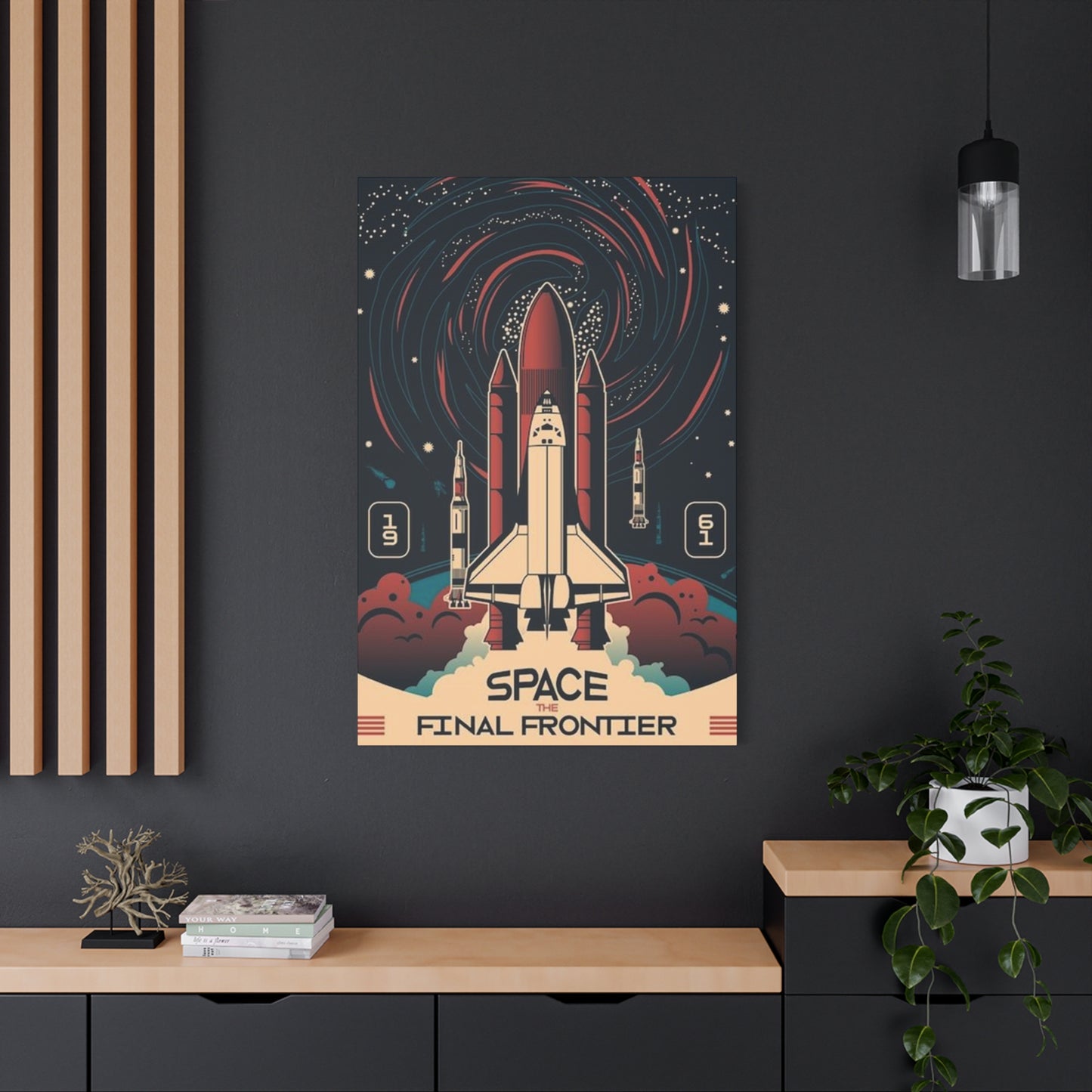
1961 The Space Frontier Wall Art & Canvas Prints
1961 The Space Frontier Wall Art & Canvas Prints
Couldn't load pickup availability
How 1961 The Space Frontier Wall Art Evolution of Iconic Artwork Collections
The year 1961 represented a watershed moment in human history when nations competed fiercely to conquer the cosmos. This competition between global superpowers created an unprecedented cultural phenomenon that extended far beyond scientific laboratories and launch pads. Artists, designers, and creative visionaries found themselves captivated by the possibilities that lay beyond our atmosphere, translating these dreams into visual masterpieces that would adorn homes, offices, and public buildings for decades to come.
The artistic response to this momentous year proved immediate and profound. As rockets pierced the sky and astronauts became household names, a new visual vocabulary emerged that captured the imagination of millions. This wasn't merely about documenting historical events; it was about expressing humanity's collective aspiration to reach beyond our planetary boundaries. The resulting artwork combined technical precision with artistic flair, creating pieces that served both as historical documents and as sources of inspiration.
What made this period particularly significant was how quickly the public embraced these themes. Within months of major achievements, illustrated pieces appeared in magazines, newspapers, and eventually as standalone decorative items. The hunger for these images reflected a society-wide fascination with what many perceived as humanity's greatest adventure. Families wanted to bring these cosmic dreams into their living rooms, educators sought to inspire students with colorful depictions of rockets and planets, and businesses recognized the marketing potential of associating their brands with this forward-looking imagery.
The artistic interpretations that emerged during this time weren't constrained by photographic realism alone. While some creators focused on accurate technical renderings of spacecraft and celestial bodies, others took more imaginative approaches. They depicted fantastical futures where humans lived among the stars, where sleek vehicles traversed the void between worlds, and where the mysteries of the universe were finally within grasp. This blend of scientific accuracy and speculative fiction created a rich tapestry of visual culture that defined an era.
Commercial artists and fine artists alike contributed to this explosion of cosmic creativity. Advertising agencies commissioned bold illustrations for products ranging from breakfast cereals to automobiles, all attempting to capture the excitement of the moment. Meanwhile, independent artists explored more personal interpretations of what this new frontier meant for humanity's place in the universe. The result was a diverse array of styles and approaches, all unified by their focus on the cosmos and human exploration thereof.
The technical limitations of printing and reproduction during this era actually contributed to the distinctive aesthetic that modern collectors now cherish. The color separations, halftone patterns, and printing techniques of the early 1960s gave these pieces a particular quality that cannot be exactly replicated with modern digital methods. These visual characteristics have become part of what makes authentic period pieces so desirable to contemporary enthusiasts who appreciate both the historical significance and the unique visual texture of mid-century printing.
How 1961 Marked the Dawn of Themed Artistic Expression
The twelve months of 1961 witnessed achievements that fundamentally altered humanity's relationship with the cosmos. When the first human successfully orbited our planet, it represented more than a technological triumph; it symbolized the beginning of a new chapter in human history. This achievement resonated through every aspect of culture, but perhaps nowhere more visibly than in the visual arts that proliferated in its wake.
Artists immediately recognized that they were witnessing history in the making. The imperative to document, celebrate, and interpret these events drove an extraordinary outpouring of creative work. Studios and independent creators worked tirelessly to produce images that captured not just the facts of what had happened, but the emotional and philosophical significance of these achievements. The resulting artwork ranged from straightforward documentary illustrations to highly stylized interpretations that emphasized the drama and grandeur of cosmic exploration.
This artistic movement drew inspiration from multiple sources. The streamlined aesthetics of mid-century modernism provided a foundation, while the optimistic futurism that characterized the era's worldview infused the work with a sense of possibility and wonder. Technical diagrams and engineering blueprints influenced composition and layout, lending an air of authenticity and scientific credibility to even the most imaginative pieces. Meanwhile, the bold graphics of contemporary advertising ensured that the images would be eye-catching and memorable.
The democratization of this imagery represented another significant development. Unlike fine art that might hang only in galleries or wealthy homes, these cosmic-themed creations appeared everywhere. Schools displayed them in classrooms and hallways. Libraries featured them in reading rooms. Businesses incorporated them into office décor. Even modest homes might have had at least one piece celebrating humanity's newest frontier. This widespread distribution meant that millions of people encountered these images daily, reinforcing the cultural importance of cosmic exploration.
Educational institutions particularly embraced this new visual language. Teachers recognized that these compelling images could spark student interest in science, mathematics, and engineering. Schools invested in sets of illustrated educational materials that explained rocket propulsion, orbital mechanics, and celestial navigation through clear, attractive graphics. These teaching aids served dual purposes: conveying information while also inspiring young minds to dream of careers in science and exploration.
The international dimension of this artistic phenomenon deserves recognition as well. While two superpowers dominated the actual competition beyond Earth, artists worldwide contributed to the visual culture surrounding it. Each nation brought its own aesthetic traditions and cultural perspectives to depicting cosmic themes. Japanese artists might incorporate elements of traditional printmaking, European designers drew on their continent's rich artistic heritage, and creators in other regions found ways to connect cosmic exploration with their own cultural narratives.
Commercial applications of this imagery proved enormously successful. Companies recognized that associating their products with cutting-edge exploration could enhance brand perception. Advertisements featured rockets, astronauts, and celestial bodies even when selling products with no connection to aerospace. A car might be shown racing alongside a rocket, a washing machine might be advertised with cosmic-age styling, and food products might promise to provide the energy needed for metaphorical journeys to the stars. This commercial embrace further embedded cosmic imagery into the visual landscape of everyday life.
Vintage Cosmic Prints: Celebrating the Exploration Frontier of 1961
The illustrated prints that emerged during this pivotal year represent some of the most sought-after collectibles in contemporary vintage markets. These pieces capture a moment when optimism about technological progress reached unprecedented heights, when the future seemed both thrilling and within reach. Collectors today prize these items not merely as decorative objects but as tangible connections to a transformative period in human history.
Authentic pieces from this era possess distinctive characteristics that set them apart from later reproductions. The paper quality, printing techniques, and color palettes all reflect the materials and methods available at the time. Experienced collectors can often identify genuine period pieces by examining these physical attributes. The slight imperfections, the particular way colors have aged, and the texture of the paper all contribute to the authentic character that makes these items valuable both monetarily and culturally.
The subject matter of these vintage prints varied widely while maintaining common thematic elements. Many depicted rockets at various stages of their missions: on launch pads with support structures surrounding them, ascending through clouds of exhaust and flame, orbiting high above the curved horizon of Earth, or returning through fiery atmospheric reentry. Others focused on astronauts, sometimes showing them in detailed spacesuits, other times depicting more imaginative scenes of humans working and living beyond Earth. Celestial bodies frequently appeared as well, with stylized renderings of the Moon, planets, and starfields providing dramatic backdrops.
The artistic styles employed in these vintage prints reflected the broader design trends of the early 1960s. Clean lines, bold colors, and simplified forms characterized much of the work. This aesthetic approach served practical purposes: it allowed for effective reproduction with the printing technology of the era, and it created images that remained legible and impactful even when reduced in size or reproduced in black and white. The style also conveyed a sense of modernity and progress that aligned perfectly with the subject matter.
Typography played a crucial role in these vintage pieces. The fonts selected, the layout of text elements, and the integration of words with images all contributed to the overall impact. Designers often chose sans-serif typefaces that echoed the streamlined, forward-looking aesthetic of the imagery. Text might announce a specific mission, provide inspirational slogans about exploration and discovery, or simply identify the celestial bodies depicted. The best examples achieved seamless integration of textual and visual elements.
Color choices in these vintage prints deserve particular attention. The printing processes of the early 1960s, while less sophisticated than modern techniques, produced characteristic color palettes that have become iconic. Deep blues and blacks represented the void of the cosmos. Bright reds and oranges captured the power of rocket engines. Silver and white depicted spacecraft and spacesuits. These colors weren't merely aesthetic choices; they became part of the visual language through which this era communicated its cosmic aspirations.
The condition and provenance of vintage prints significantly affect their value and desirability. Pieces that have been carefully preserved, avoiding excessive light exposure, moisture damage, and physical deterioration, command premium prices. Similarly, prints that come with documentation of their origin, whether from government programs, commercial studios, or educational institutions, carry additional historical value. Collectors who can trace the history of a particular piece often find that the story behind it enhances appreciation and worth.
Contemporary interest in these vintage prints extends beyond traditional collectors. Enthusiasts of mid-century design appreciate them as examples of period aesthetics. Historians value them as primary source documents revealing cultural attitudes toward exploration and technology. Designers draw inspiration from their bold graphics and color choices. This multifaceted appeal ensures continued demand and recognition of these pieces as significant cultural artifacts.
The Role of Artistic Expression in the Exploration Era
The relationship between artistic creation and cosmic exploration during this period was far more complex and bidirectional than simple documentation. Artists didn't merely record what scientists and engineers achieved; they helped shape public perception, generated support for continued efforts, and created the visual vocabulary through which society understood these achievements. In many ways, the artistic response to cosmic exploration became as important as the exploration itself in determining how these events influenced culture and consciousness.
Government programs recognized early on that compelling imagery could build public enthusiasm and political support. Official agencies commissioned artists to create interpretive works that made technical achievements accessible and exciting to general audiences. These officially sanctioned pieces balanced accuracy with appeal, ensuring that while they might take artistic license for dramatic effect, they remained fundamentally truthful to the realities of exploration. This collaboration between technical experts and creative professionals produced some of the era's most enduring images.
The propaganda value of cosmic-themed artwork cannot be ignored when examining this period. Both major powers in the cosmic competition understood that success wasn't measured solely in technical achievements but also in winning hearts and minds globally. Artwork celebrating national accomplishments in reaching beyond Earth served to demonstrate technological superiority, inspire patriotic pride, and project an image of progress and strength to international audiences. The imagery became a weapon in the broader ideological conflict of the time.
Beyond official channels, independent artists contributed their own interpretations of the cosmic frontier. Some created work that celebrated the achievements of the era with unrestrained enthusiasm. Others took more contemplative approaches, exploring philosophical questions about humanity's place in the universe. Still others used cosmic themes as metaphors for earthly concerns, drawing parallels between the challenge of exploring distant worlds and the need to solve problems on our own planet. This diversity of artistic perspectives enriched the cultural conversation surrounding exploration.
Science fiction had long imagined journeys beyond Earth, but the actual achievements of 1961 gave artists new credibility and inspiration. Previously, illustrations of rockets and astronauts had been pure fantasy; now they depicted real possibilities and accomplishments. This shift from imagination to reality energized the entire genre. Artists could draw on actual spacecraft designs, real mission profiles, and documented experiences of those who had ventured beyond the atmosphere. The boundary between science fiction and science fact became delightfully blurred.
Educational artwork served as a crucial bridge between technical reality and public understanding. Complex concepts like orbital mechanics, weightlessness, and rocket propulsion needed to be explained to audiences with varying levels of scientific literacy. Artists working in educational contexts developed ingenious visual solutions to these challenges, creating diagrams, cutaways, and sequential illustrations that made difficult concepts comprehensible. These educational pieces often became collectible in their own right, appreciated for their clarity and effectiveness.
The emotional resonance of cosmic-themed artwork from this era explains much of its lasting appeal. These images tap into fundamental human desires: the urge to explore, the dream of transcending earthly limitations, and the hope for a better future. When people display such artwork in their homes or offices, they're not just decorating; they're surrounding themselves with visual reminders of human achievement and possibility. This emotional dimension elevates the artwork beyond mere decoration to something more meaningful and personal.
Commercial artists adapted cosmic themes for countless applications beyond standalone prints. Package designs incorporated rockets and planetary imagery. Magazine covers featured dramatic illustrations of cosmic scenes. Book jackets for both fiction and nonfiction works displayed compelling artwork. Corporate logos and brand identities sometimes incorporated subtle cosmic references. This pervasive integration of exploration imagery into commercial design meant that even people who never purchased dedicated artwork encountered these visual themes regularly in their daily lives.
Designing with 1961 Frontier Prints
Incorporating vintage cosmic prints into contemporary living and working environments requires thoughtful consideration of multiple factors. These historical pieces carry significant aesthetic weight and cultural meaning, demanding display contexts that respect their importance while allowing them to enhance modern settings. When done successfully, the juxtaposition of mid-century exploration imagery with contemporary design creates dynamic, conversation-starting environments.
Selecting the right pieces for specific rooms involves understanding both the artwork itself and the character of the surroundings. A vibrant, bold print depicting a rocket launch might energize an office or study, while a more contemplative image of Earth from orbit could create a meditative atmosphere in a personal retreat. The scale of the artwork relative to the wall and room size matters enormously; a piece too small gets lost, while one too large can overwhelm. The goal is achieving balance where the artwork commands attention without dominating inappropriately.
Framing choices significantly impact how vintage prints present themselves. Period-appropriate frames can enhance authenticity, making the piece feel like a genuine artifact from its era. Contemporary frames, by contrast, can create interesting temporal dialogue, highlighting the enduring relevance of mid-century imagery. Materials matter too: wood frames might emphasize warmth and tradition, while metal frames can underscore the technological themes of the artwork itself. Glass or acrylic glazing protects the piece while allowing full visibility, though considerations about glare and UV protection must be addressed.
Lighting these pieces properly ensures they can be appreciated fully while protecting them from damage. Natural light, while beautiful, can cause fading and deterioration over time. Strategic placement away from direct sunlight, or the use of UV-filtering glazing, helps preserve the artwork. Artificial lighting offers more control; picture lights, track lighting, or even ambient room lighting can be adjusted to illuminate the piece effectively. The quality and color temperature of light bulbs affect how colors appear, so testing different options helps achieve the desired presentation.
Grouping multiple prints can create powerful visual statements. A collection of related pieces might trace the progression of a mission, showcase different artistic interpretations of similar themes, or represent various aspects of cosmic exploration. The arrangement matters greatly: symmetrical layouts convey order and formality, while asymmetrical compositions feel more dynamic and contemporary. Spacing between pieces should allow each to be appreciated individually while creating cohesive overall impact. Some collectors create entire gallery walls devoted to this theme, transforming a room into a celebration of the era.
Color coordination between artwork and surroundings enhances visual harmony. The characteristic color palettes of 1961 cosmic prints, with their bold primary colors and striking contrasts, can either complement or deliberately contrast with room colors. A monochromatic room might welcome the color punch of a vibrant vintage print, while a colorful environment might require more selective placement to avoid visual chaos. Some designers pull accent colors from the artwork to use in textiles, accessories, or other decorative elements, creating subtle connections throughout the room.
The architectural context influences display decisions as well. Mid-century modern homes, with their clean lines and open layouts, provide natural settings for these vintage prints, creating cohesive period environments. However, these pieces can work equally well in other architectural styles when placed thoughtfully. In traditional settings, they might provide refreshing contrast, injecting energy and modernity. In contemporary minimalist environments, a carefully chosen vintage print can serve as a focal point that adds character and historical depth.
Maintenance and preservation considerations affect both display and storage of valuable vintage prints. Controlling humidity and temperature helps prevent deterioration. Avoiding placement near heating vents, air conditioners, or sources of moisture protects against warping and mold. Regular inspection for signs of fading, foxing, or other damage allows for timely intervention. For particularly valuable pieces, consulting conservation professionals ensures proper care. Even display rotation, periodically replacing displayed pieces with stored ones, can extend the life of a collection while keeping the display fresh.
Iconic Cosmic Expression from the Early Exploration Age
Certain images from this pivotal year have achieved true iconic status, recognized even by those with minimal knowledge of cosmic exploration history. These masterworks transcend their original context to become universal symbols of human achievement and aspiration. Their power derives from multiple sources: exceptional artistic execution, perfect timing in capturing historical moments, and the way they crystallized complex ideas into single, unforgettable images.
The depiction of the first human in orbit represents perhaps the most recognizable image from this entire era. Various artistic interpretations exist, but the most successful share common elements: the figure of an astronaut, the curved horizon of Earth visible through a window or in the background, and often some indication of the spacecraft's interior. These images captured an achievement that seemed almost miraculous to contemporary audiences. An ordinary human being, someone's neighbor or colleague, had left Earth and looked back at our entire world from the void of the cosmos. Artists struggled to convey the magnitude of this accomplishment while keeping their imagery accessible and emotionally resonant.
Launch sequences provided another fertile ground for iconic imagery. The moment when a rocket leaves its pad, when years of planning and preparation culminate in a column of fire and a vehicle ascending skyward, contains inherent drama that artists eagerly captured. The best interpretations of launch scenes balanced technical detail with artistic interpretation. They showed the power of the engines, the complexity of the support structures, the scale of the vehicle, and somehow also conveyed the human significance of what was happening. These images often included spectators, emphasizing that these were collective achievements witnessed and celebrated by multitudes.
Celestial bodies themselves became subjects of iconic artistic treatment during this period. The Moon received particular attention, depicted both as a destination to be reached and as a mysterious presence in our sky. Artists showed it in various phases, from thin crescent to full disk, sometimes including details visible only through telescopes, other times presenting stylized renderings that emphasized its alien nature. Earth seen from afar emerged as another powerful subject, the blue and white sphere floating in darkness serving as a potent reminder of our planet's beauty and fragility.
Equipment and vehicles from this era possess such distinctive profiles that their silhouettes alone evoke the period. The rockets, with their sleek, bullet-like shapes and distinctive paint schemes, became instantly recognizable symbols. Capsules that carried astronauts had similarly iconic forms, their heat shields and parachutes making them unmistakable. Artists often depicted this hardware against dramatic backgrounds: launching through layers of cloud, orbiting above Earth's curve, or descending through fiery reentry. The hardware itself, rendered accurately but with artistic flair, became as much a character in these images as any human figure.
Portrait-style images of astronauts in their pressure suits created another category of iconic imagery. These pieces often showed the figure from the shoulders up, the reflective face plate of the helmet catching light or showing reflections. The suits themselves, with their various tubes, valves, and fittings, provided rich visual detail that artists emphasized. These portraits transformed astronauts into modern heroes, their faces often not visible behind visors but their bearing conveying courage and professionalism. Such images appeared on magazine covers, promotional materials, and as standalone artwork.
Abstract and stylized interpretations of cosmic themes sometimes achieved iconic status through their boldness and originality. Not all memorable artwork from this period attempted photorealistic representation. Some artists used geometric shapes, vibrant color fields, and symbolic elements to convey the essence of cosmic exploration without literal depiction. These pieces appealed to audiences who appreciated modernist aesthetics and who understood that exploration meant more than just technical achievement, it represented a shift in human consciousness and possibility.
Sequential imagery telling stories of missions or explaining technical processes produced several iconic series. These multi-panel works walked viewers through the stages of a mission, from preparation through launch, orbit, and return. Educational in purpose, the best examples also worked as compelling narratives, creating dramatic tension and resolution. Individual panels from these series sometimes took on independent iconic status, but the full sequences provided more complete and satisfying experiences.
The Visual Language of 1960s Cosmic Exploration
A distinct visual vocabulary emerged during the early 1960s that communicated concepts related to cosmic exploration. This language consisted of recurring symbols, compositional strategies, color associations, and stylistic approaches that, taken together, created immediately recognizable cosmic-themed artwork. Understanding this visual language enhances appreciation of period pieces and explains their continued influence on contemporary design.
Upward movement dominated compositional choices in this artwork. Rockets streaking skyward, arrows pointing toward the heavens, and perspective lines leading the eye upward reinforced the literal and metaphorical direction of cosmic exploration. This vertical emphasis aligned with deeply rooted cultural associations between height and achievement, heaven and transcendence. Artists exploited these associations, creating compositions that felt aspirational even before viewers consciously registered the specific subject matter.
The curve of Earth's horizon became a signature visual element of this era. Prior to this period, depictions of Earth typically showed either local landscapes or symbolic representations of the entire globe. The sight of Earth's curved edge against the black of the cosmos, captured by cameras beyond the atmosphere and then reimagined by artists, introduced a new and powerful visual motif. This curve simultaneously emphasized Earth's planetary nature and its beauty, creating images that worked on multiple emotional levels.
Stark contrasts characterized the color and tonal approaches of this artwork. The deep black of cosmic void provided dramatic backdrops for bright spacecraft, colorful planets, and luminous stars. This high contrast served practical purposes, ensuring images remained clear and impactful even when reproduced at small sizes or in less than ideal conditions. The aesthetic also conveyed the reality of the cosmic environment, where objects exist in harsh extremes of light and dark without atmospheric diffusion.
Flames and exhaust plumes received stylized treatment that became part of the visual language. Artists developed conventions for depicting rocket thrust: the brilliant core of white or yellow-white, surrounded by oranges and reds, with the outer edges perhaps shading into darker tones. These flames often showed motion through streaming shapes and sometimes included stylized shock diamonds that actual rocket exhaust produces. The treatment became so consistent that even cartoon versions were instantly recognizable as rocket fire.
Stars and celestial backgrounds followed certain patterns as well. Rather than attempting astronomical accuracy, most artists created stylized starfields that read clearly and dramatically. Stars appeared as points of light, often with simple four or six-pointed shapes to enhance visibility. Larger, brighter stars might receive more elaborate treatment. The distribution of stars across backgrounds tended toward decorative rather than accurate, creating balanced compositions rather than realistic arrangements. Some artists included nebulae or galaxies as additional visual interest, rendered in vibrant colors.
Technical diagrams and cutaway illustrations contributed specialized vocabulary to the visual language. These pieces showed the internal workings of rockets, the layout of capsules, or the mechanical operation of systems. They employed particular conventions: color coding to identify different systems, numbered callouts for components, arrows indicating flow or movement, and selective transparency to reveal internal details. While more technical than purely artistic, these illustrations influenced other artwork, which sometimes incorporated similar visual strategies.
Human figures, when included, typically appeared in ways that emphasized their role rather than individual identity. Astronauts might be shown as silhouettes, or with helmets obscuring features, or rendered in ways that made them representative of all explorers rather than specific individuals. This approach made the artwork more universal while also solving practical problems about likeness rights and avoiding dating the piece to specific personnel. The human presence served to provide scale, remind viewers of the anthropocentric nature of exploration, and create emotional connection points.
Streamlined, aerodynamic forms influenced depiction of everything from rockets to imagined future vehicles. Even objects that would never encounter atmospheric resistance might be rendered with swept-back lines and tapered shapes that suggested speed and modernity. This aesthetic choice reflected mid-century design philosophy more broadly, where streamlining had become synonymous with progress and sophistication across products from cars to kitchen appliances.
How 1961 Shaped Exploration-Inspired Artwork
The specific achievements and events of this single year had outsized influence on the artistic output that followed for decades. Artists working in subsequent years continuously referenced visual motifs, compositional approaches, and thematic concerns that crystallized during these twelve months. The year served as a touchstone, a reference point that defined what cosmic exploration looked like in the popular imagination.
The first successful orbit by a human being provided artists with the most significant single event to interpret. This achievement captured imaginations globally in ways that earlier, unmanned successes had not. The presence of a person, someone relatable, experiencing what had previously been pure speculation, made the achievement emotionally immediate. Artists responded with images that attempted to capture not just what happened but what it meant. Their interpretations ranged from triumphant celebrations to contemplative meditations on humanity's new relationship with the cosmos.
Subsequent missions later in the year built on this foundation, each adding new visual material. Additional orbital flights provided opportunities to show different perspectives, different moments in missions, different spacecraft positions relative to Earth. Artists who had rushed to interpret the first flight could now work with richer reference material, creating more detailed and varied interpretations. The accumulation of missions throughout the year meant a growing library of photographs, descriptions, and technical data that informed artistic creation.
The technological aesthetics that characterized 1961 equipment left lasting impressions on artistic depictions of cosmic themes. The specific shapes of rockets, the particular design of spacesuits, the appearance of control panels and instrumentation, all these elements appeared repeatedly in artwork from this period and influenced how later artists depicted even imaginary vehicles and equipment. The real hardware of 1961 became the template against which all cosmic imagery was measured.
Competition between nations intensified during 1961, adding urgency and drama to artistic interpretations. Artists working for different sides in this competition created imagery that celebrated their own achievements while sometimes implicitly or explicitly contrasting them with rival efforts. This competitive environment drove rapid innovation in visual approaches as each side sought imagery that would capture attention and convey superiority. The results benefited the entire field of cosmic-themed illustration, pushing creators to higher levels of creativity and technical execution.
Media coverage of 1961 events distributed certain images so widely that they became definitive. Photographs from missions appeared in newspapers and magazines globally, often reproduced in challenging conditions on cheap paper with limited color fidelity. Artists studied these images, sometimes creating artwork based directly on specific photographs. The most widely distributed photographs influenced collective memory of events, and artwork based on them reinforced particular visual interpretations of what happened.
Cultural optimism reached remarkable heights during 1961, and this psychological context shaped artistic output. The general public believed that cosmic exploration represented just the beginning of technological achievements that would transform human civilization. Artists channeled this optimism into their work, creating images that celebrated current achievements while gesturing toward even more remarkable futures. Their artwork captured not just what had been accomplished but what people believed would soon be possible.
Technical publications from this period provided detailed visual information that more specialized artists incorporated into their work. Engineering journals, government reports, and scientific papers included diagrams, specifications, and photographs that informed those creating more accurate, technically oriented artwork. This cross-pollination between technical documentation and artistic interpretation resulted in pieces that satisfied both aesthetic and informational purposes.
NASA and the Influence of 1961 on Artistic Expression
The American civilian program, while not the only source of artistic inspiration during this period, played an outsized role in generating and distributing cosmic-themed imagery. This organization understood from its inception that public support required public enthusiasm, and compelling visual communication proved essential to building that enthusiasm. The relationship between official programs and artistic creation was complex, involving commissioned work, appropriation of official imagery, and independent interpretation of public achievements.
Official photographers captured missions with increasing sophistication throughout 1961. These photographs served immediate documentary purposes but quickly became source material for artists across all media. The compositions, lighting, and perspectives captured by official cameras influenced how artists approached similar subjects. Some artists worked directly from these photographs, creating illustrations that honored the original images while adding interpretive elements. Others used official photography as reference while developing more dramatically altered compositions.
Commissioned artwork produced for official purposes represented some of the highest quality cosmic-themed illustration of the era. Agencies employed talented artists to create works for specific purposes: explaining technical concepts to congressional committees, generating promotional materials to build public support, or commemorating particular achievements. These commissioned pieces often balanced technical accuracy with visual appeal, satisfying both engineers who demanded precision and general audiences who wanted inspiring imagery. Many of these official artworks have become highly collectible.
Technical illustration for official publications developed its own sophisticated visual language. Manuals, reports, and educational materials required clear, accurate depictions of hardware, procedures, and concepts. The artists and illustrators who created these pieces developed expertise in making complex subjects comprehensible through visual means. While more utilitarian than fine art, the best technical illustrations possessed genuine aesthetic merit, their clarity and precision creating a kind of functional beauty.
Public relations materials generated by official programs distributed cosmic imagery broadly. Press kits for missions included photographs, diagrams, and artistic renderings. These materials reached journalists, educators, and other opinion leaders who then used them to inform their own communications. The imagery from official sources thus influenced countless derivative works as people outside the programs adapted, reinterpreted, or drew inspiration from official visuals.
Souvenir programs and commemorative materials produced around missions employed accomplished designers who created pieces intended for immediate distribution to large audiences. These programs might include artistic interpretations of spacecraft, mission patches rendered in bold graphics, or illustrated explanations of mission objectives and procedures. While ephemeral in intent, many of these pieces have survived and are now valued as period artifacts capturing the excitement surrounding particular missions.
Exhibits and displays at official visitor centers employed large-scale artistic installations to communicate the drama and significance of cosmic exploration. Artists working at institutional scale created murals, dioramas, and other immersive experiences. These permanent or semi-permanent installations reached millions of visitors over the years, shaping how multiple generations visualized cosmic exploration. The artistic approaches developed for these exhibits influenced other artists who saw them or encountered reproductions.
The archive of official imagery continues to inspire contemporary artists who have access to vast collections of historical photographs, films, and documents. Modern creators mine these resources for authentic details to incorporate into new work, whether faithful recreations of historical moments or imaginative pieces that blend period aesthetics with contemporary concerns. The official record thus maintains living influence decades after its creation.
The Aesthetic of Retro Cosmic Expression from 1961
The distinctive look of artwork from this period has become a recognizable aesthetic category with dedicated admirers and imitators. What initially represented cutting-edge modern design has, through the passage of time, transformed into retro styling that evokes nostalgia while retaining genuine artistic merit. Understanding what makes this aesthetic distinctive helps explain both its historical significance and its continuing appeal.
Color palettes from 1961 cosmic artwork followed certain patterns that now read as characteristically period. Technology and materials available for printing limited color options, but artists worked brilliantly within these constraints. Deep blues for cosmic backgrounds, bright reds and oranges for flames and danger markers, clean whites and silvers for spacecraft, and occasional accent colors for planets or design elements created a vocabulary of hues instantly recognizable as early 1960s cosmic illustration.
Typography choices contributed significantly to the overall aesthetic. Designers favored sans-serif fonts that conveyed modernity and technical sophistication. Letter spacing, word spacing, and the relationship between text and image all followed conventions that seem distinctly period today. Headlines might use bold, condensed faces for impact, while body text maintained high legibility. The integration of text with illustration achieved particular sophistication, with words often becoming visual elements rather than mere supplements to images.
Printing technologies and their limitations created visual characteristics that have become valued as aesthetic features rather than technical compromises. Halftone patterns visible under magnification, slight registration errors in multi-color printing, and the particular texture of period paper stocks all contribute to authentic period pieces' distinctive appearance. Modern reproductions, even when capturing the design accurately, often miss these subtle physical qualities that connoisseurs prize.
The composition and layout principles employed by 1961 designers reflected both artistic traditions and contemporary innovations. Many pieces used dynamic, asymmetrical compositions that suggested movement and modernity. Others employed more classical balance for gravitas and stability. Negative space received careful consideration, with areas free of detail providing visual rest and emphasizing key elements. The relationship between foreground and background, the use of overlapping elements, and the guidance of viewer attention through the composition all demonstrated sophisticated understanding of visual communication.
Line quality in illustrations from this period had particular character. Many artists used clean, confident lines with consistent weight, creating graphics that reproduced well and communicated clearly. Others employed more varied line work, using thick and thin strokes for emphasis and dimensional suggestion. The limitations of reproduction technology encouraged deliberate line work rather than loose, sketchy approaches. This necessity produced artwork with crisp definition that remains striking decades later.
Texture and pattern enriched many pieces from this era. Artists used stippling, cross-hatching, and other techniques to create tonal variations and surface interest. Mechanical patterns suggested technological subjects, while more organic textures might appear in atmospheric effects or planetary surfaces. These textural elements added visual richness without requiring complex color printing, making sophisticated effects achievable within practical constraints.
The illusion of dimension in flat prints challenged artists who wanted to convey the three-dimensional reality of vehicles, equipment, and celestial phenomena. Techniques like foreshortening, atmospheric perspective, and strategic shading created depth convincingly. Some pieces employed more graphic, flattened approaches that embraced the two-dimensional nature of the medium, creating bold, poster-like effects. Both approaches have merit and represent valid artistic choices for different purposes and audiences.
Symbolic elements appeared throughout this artwork, adding layers of meaning beyond literal representation. Stars might represent aspirations or achievements. Arrows suggested trajectory and progress. Circles and orbits symbolized cycles and continuity. Radiating lines conveyed energy and power. Artists deployed these symbols deliberately, creating works that communicated on multiple levels simultaneously. Viewers could appreciate the surface imagery while also engaging with these deeper symbolic dimensions.
1961 Exploration: A Golden Era for Illustrated Expression
Historians and collectors frequently characterize 1961 as a golden age for cosmic-themed illustrated artwork. This assessment recognizes both the quality of work produced during this period and the unique historical circumstances that fostered such creative output. Multiple factors converged to create conditions exceptionally favorable for artists working in this genre, resulting in a body of work that remains influential and collectible decades later.
The newness of actual cosmic exploration meant everything was fresh and exciting. Artists weren't illustrating long-familiar subjects but rather interpreting events that seemed almost miraculous to contemporary audiences. This novelty energized creative work, as artists felt they were participating in something historically significant. The sense of documenting or interpreting watershed moments in human achievement added gravity and purpose to their efforts.
Financial resources flowed into cosmic programs during this period, and some of that funding supported artistic creation. Government agencies commissioned artwork for various purposes. Corporations associated with programs sponsored artistic projects. Publications covering these topics invested in high-quality illustration. This financial support allowed talented artists to devote significant time and energy to cosmic subjects, producing work of exceptional quality and detail.
Technological capabilities for reproduction and distribution reached levels that could do justice to sophisticated artwork while remaining cost-effective enough for broad distribution. Offset printing, improved paper stocks, and advancing color separation techniques meant that artwork could reach audiences in high-quality reproductions. This capability encouraged artists to create ambitious, detailed pieces knowing their work could be effectively reproduced and distributed.
Cultural unity around cosmic themes during this period created large, enthusiastic audiences for related artwork. The general public followed missions closely, and demand for imagery related to exploration remained strong. Publishers, manufacturers of decorative items, and other commercial entities recognized this demand and sought artwork to meet it. Artists thus enjoyed receptive markets for their work across multiple channels.
Competition between artistic studios and individual artists drove innovation and quality improvements. As cosmic-themed artwork proliferated, creators sought to distinguish their work through superior execution, innovative approaches, or distinctive styles. This competitive environment raised overall standards, as pedestrian work got lost amid exceptional pieces. Artists studied each other's work, learning from successful approaches while seeking to develop unique voices.
Cross-pollination between fine art and commercial art enriched the field. Traditional boundaries between these domains became permeable as established artists brought fine art sensibilities to commercial projects while commercial illustrators developed work that transcended mere functionality. This mixing of approaches and audiences created dynamic creative environment where unexpected innovations could emerge.
Share